Terminal Cleaning for Healthcare Facilities on Long Island: Professional Protocols & Compliance
According to the CDC, approximately 1 in 31 hospital patients is affected by at least one healthcare-associated infection on any given day. For healthcare administrators in Nassau and Suffolk Counties, these data points represent more than just statistics; they signify high-stakes risks to patient safety and facility liability. You know that standard janitorial maintenance cannot address the persistent threat of MRSA or C. diff. Achieving clinical-grade results requires a specialized approach to terminal cleaning for healthcare facilities Long Island that treats disinfection as a technical protocol rather than a simple chore.
You likely feel the pressure of upcoming regulatory surveys and the need for absolute consistency in your environmental services. This guide provides a detailed analysis of infection control standards and the documentation necessary to satisfy NYS DOH and OSHA inspections. We will outline the essential steps for zero-gap infection control, the requirements of the NYS Green Cleaning Law, and how a reliable partner functions as a seamless extension of your clinical team to ensure every patient discharge leaves a room that's truly safe and compliant. By prioritizing technical precision and specialized medical facility cleaning, you can protect your facility's reputation and operational continuity.
Key Takeaways
- Define the technical standards required to break the transmission cycle of pathogens such as MRSA and C. diff.
- Implement methodical decontamination workflows, including top-to-bottom and clean-to-dirty directional movement, to prevent cross-contamination.
- Maintain full regulatory compliance and zero-gap infection control through professional terminal cleaning for healthcare facilities Long Island.
- Leverage the operational stability and technical insight of a local partner with decades of experience in clinical environments.
- Standardize documentation and protocols to ensure your facility is prepared for any upcoming regulatory inspections or surveys.
Table of Contents
The Technical Definition of Terminal Cleaning in Healthcare Environments
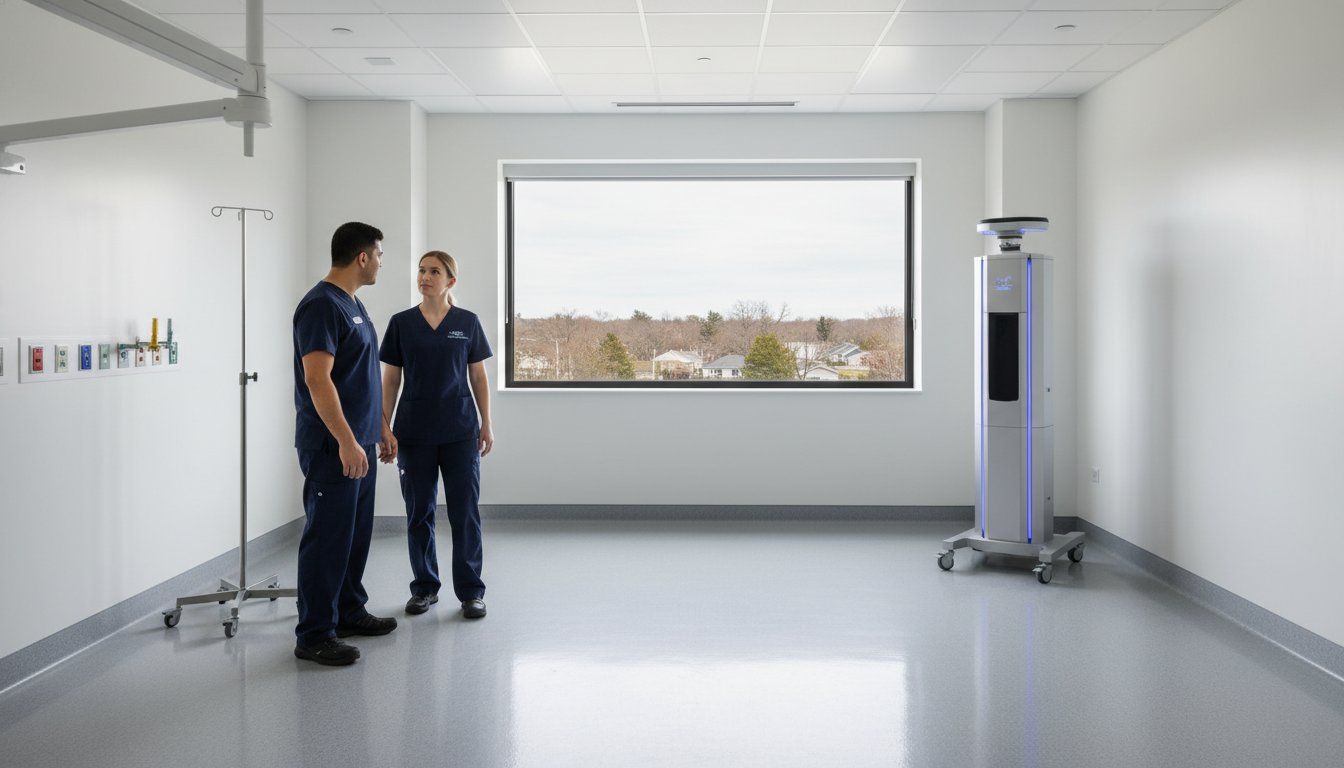
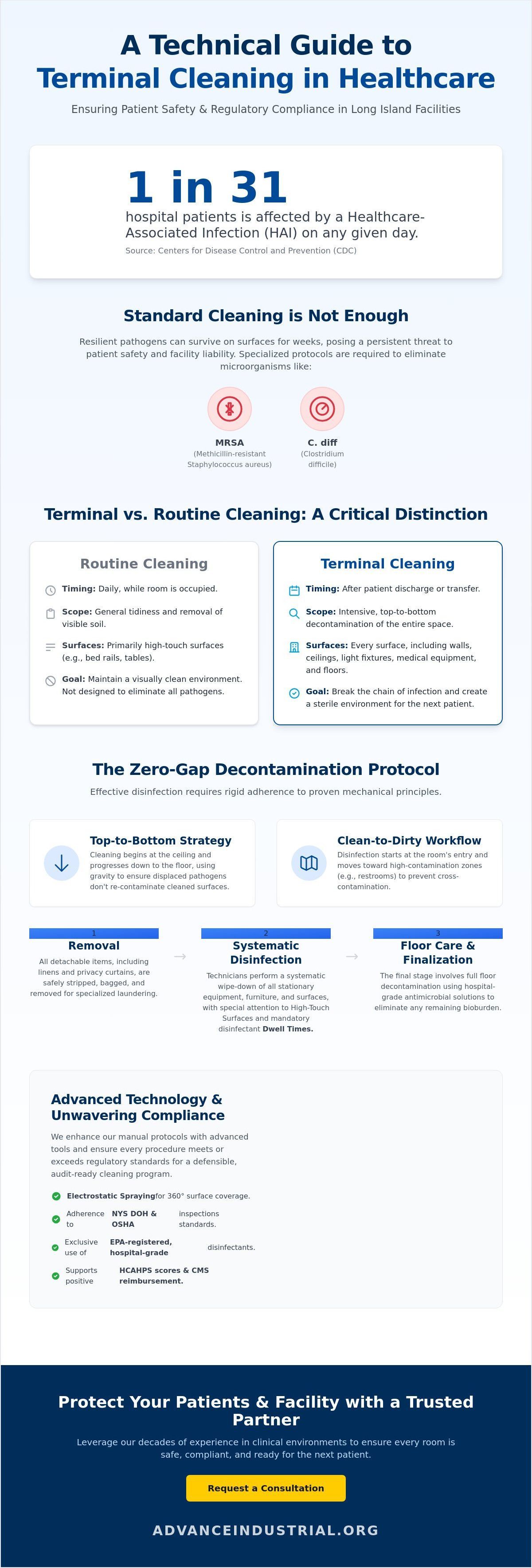
Terminal cleaning is a specialized decontamination procedure performed after a patient is discharged or transferred from a clinical space. Unlike standard maintenance, this process involves the intense disinfection of every surface within the environment to prevent the transmission of pathogens. For acute care hospitals and outpatient surgical centers, implementing rigorous terminal cleaning for healthcare facilities Long Island is a critical operational requirement. The primary objective is to break the chain of infection, neutralizing resilient microorganisms like Clostridium difficile (C. diff) and Methicillin-resistant Staphylococcus aureus (MRSA) that can survive on surfaces for weeks.
According to The Technical Definition of Terminal Cleaning, the procedure is far more intensive than daily custodial tasks. It serves as a comprehensive reset for the room, ensuring the next occupant enters a sterile environment. This high-level disinfection is essential for maintaining the integrity of clinical outcomes in high-traffic medical centers across Nassau and Suffolk Counties.
Terminal vs. Routine Cleaning: Understanding the Stakes
Routine daily cleaning focuses on visible soil and high-touch areas while the patient is still in the room. Terminal disinfection goes deeper. It includes the sterilization of medical equipment, light fixtures, and every horizontal surface from the ceiling to the floor. Routine dusting is insufficient for preventing Healthcare-Associated Infections (HAIs) because it doesn't address the microscopic bioburden left behind. Efficient terminal protocols don't just protect patients; they also maintain operational throughput. When a room is processed correctly the first time, clinical teams can transition new patients without delays or safety concerns.
Regulatory Drivers: CMS and New York DOH Standards
Cleanliness directly impacts a facility's financial health through HCAHPS scores and CMS reimbursement rates. Patient perceptions of a sterile environment influence these metrics, making technical precision a financial necessity. To meet New York State sanitation codes, providers must use EPA-registered disinfectants that are specifically rated for the pathogens prevalent in clinical settings. Adhering to these standards ensures that terminal cleaning for healthcare facilities Long Island remains compliant with both state and federal oversight.
Methodical Procedures for Terminal Disinfection and Decontamination
Executing effective terminal cleaning for healthcare facilities Long Island requires rigid adherence to mechanical principles. We utilize a top-to-bottom strategy because gravity dictates the movement of microscopic debris. By beginning at the ceiling and progressing downward to the floor, our teams ensure that no displaced pathogens settle on surfaces that have already been treated. This hierarchical approach is paired with a clean-to-dirty workflow. Technicians start disinfection at the room's entry and move toward high-contamination zones, such as the restroom. This sequence prevents the transfer of biological contaminants from soiled areas into sterile patient zones.
High-touch surfaces (HTS) receive the highest level of scrutiny. Bed rails, nurse call buttons, and medical equipment interfaces are critical vectors for cross-contamination. For these surfaces, the science of dwell time is non-negotiable. Every chemical agent has a specific contact time required to achieve total pathogen eradication. Our protocols ensure disinfectants remain wet on surfaces for the full duration specified by the EPA and the manufacturer to guarantee clinical safety.
Step-by-Step Discharge Cleaning Protocol
Efficiency in discharge cleaning is achieved through a repeatable, multi-phase sequence:
- Removal: All detachable items, including linens and privacy curtains, are stripped and bagged for specialized laundering.
- Disinfection: Technicians perform a systematic wipe-down of all stationary medical equipment, furniture, and cabinetry.
- Floor Care: The final stage involves decontamination using hospital-grade antimicrobial solutions to eliminate floor-level bioburden.
Advanced Disinfection Technologies
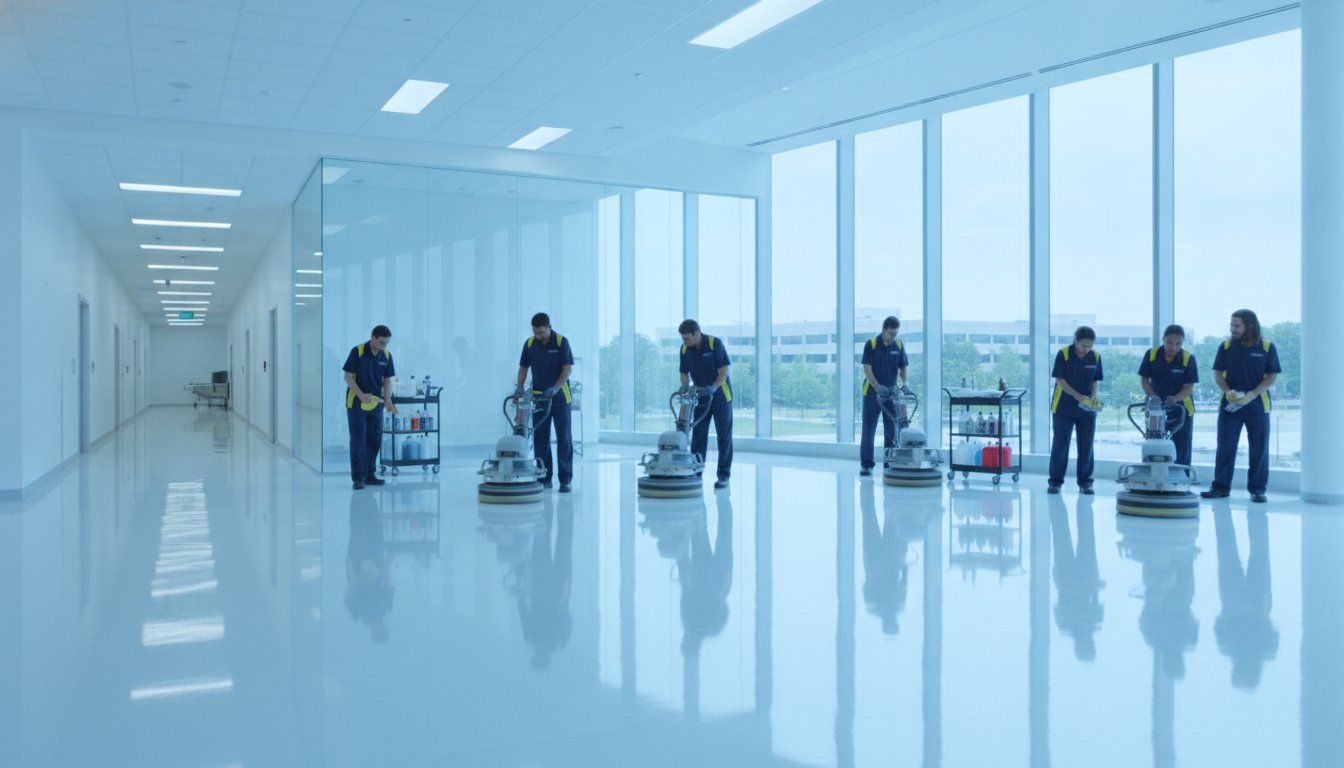
We incorporate advanced tools like electrostatic spraying to enhance terminal cleaning for healthcare facilities Long Island , ensuring 360-degree coverage of recessed or complex surfaces. This technology wraps disinfectant around objects that manual wiping might miss. Throughout these processes, we maintain strict HIPAA compliance. Our staff is trained to protect patient privacy while cleaning sensitive areas like nurse stations or administrative document centers. For organizations seeking a reliable partner for comprehensive medical facility cleaning, technical precision remains the only acceptable standard.
Selecting a Terminal Cleaning Partner on Long Island
Local proximity in Nassau and Suffolk Counties is a logistical necessity for effective infection control. When an outbreak occurs or a high-risk patient is discharged, healthcare administrators require a rapid response that only a regional partner can provide. Selecting a provider with 40+ years of industrial experience ensures that your facility benefits from a partner who understands the high stakes of operational downtime. Reliability in terminal cleaning for healthcare facilities Long Island is built on decades of technical refinement and a deep understanding of the local regulatory environment, including specific New York State Department of Health expectations.
A vendor's value is defined by the rigor of their training programs. Procurement professionals must evaluate whether a team truly understands bloodborne pathogen protocols and the correct application of Personal Protective Equipment (PPE). Advance Industrial Maintenance operates as a collaborative partner rather than a simple service provider. We integrate with your clinical team to maintain the essential infrastructure required for ongoing industrial and medical stability. For organizations with facilities in other regions, partnering with specialized providers like Miami 305 Plumbing ensures that even emergency infrastructure needs are met with a focus on hygiene and safety.
The Importance of Specialized Training and Certification
Utilizing untrained janitorial staff for clinical environments creates significant liability risks. Cross-contamination and improper chemical use can lead to poor patient outcomes and regulatory fines. Professional documentation and detailed compliance logs are vital during Joint Commission surveys. These records provide the technical proof of performance that inspectors require, demonstrating a steadfast commitment to safety standards.
Advance Industrial: Solutions for Suffolk and Nassau Facilities
Our Bohemia-based operations allow for rapid deployment across the entire Long Island region. We provide a comprehensive suite of services ranging from routine medical facility cleaning to high-intensity terminal projects. This all-encompassing resource model ensures consistency across your entire footprint. By prioritizing precision engineering and dependable logistics, we help maintain the high standards your operation demands. To secure the long-term success of your infection control strategy, partner with Advance Industrial for reliable healthcare sanitation and professional terminal cleaning for healthcare facilities Long Island.
Strengthening Infection Control Through Technical Precision
Effective infection control requires a transition from general maintenance to technical decontamination protocols. We've established that terminal cleaning is a high-stakes clinical reset that demands methodical workflows and chemical precision to eliminate resilient pathogens like C. diff and MRSA. For administrators in Nassau and Suffolk Counties, maintaining these rigorous standards is vital for both patient outcomes and regulatory compliance. Professional terminal cleaning for healthcare facilities Long Island ensures that every patient discharge is followed by a sterile environment that meets all state health codes.
Securing a partner with 40+ years of professional maintenance experience on Long Island provides the operational stability your clinical team needs. Our staff is rigorously trained in OSHA, HIPAA, and bloodborne pathogen standards to ensure every environment meets clinical-grade requirements. With our Bohemia-based headquarters, we provide localized support that understands the specific demands of New York State regulatory surveys. This technical expertise functions as a seamless extension of your own staff, prioritizing safety and efficiency in every room. Request a Technical Consultation for Your Facility’s Terminal Cleaning Needs to ensure your environment remains safe and compliant. We look forward to supporting your ongoing operational success.
Frequently Asked Questions
What is the standard dwell time for hospital-grade disinfectants during terminal cleaning?
Dwell time depends on the specific EPA-registered disinfectant used, typically ranging between 1 and 10 minutes. Technicians must ensure the surface remains visibly wet for the entire duration specified by the manufacturer to achieve the required log reduction of pathogens. For resilient spores like C. diff, the dwell time is often significantly longer than for standard vegetative bacteria.
How does terminal cleaning differ for an Operating Room versus a standard patient room?
Terminal cleaning for an Operating Room (OR) occurs at the end of every day regardless of the patient's infectious status, while standard patient rooms only receive this treatment upon discharge or transfer. The OR protocol involves the decontamination of every item within the sterile field, including anesthesia carts and surgical lamps. This rigorous standard for terminal cleaning for healthcare facilities Long Island ensures the surgical environment is reset for the next day's procedures.
Does terminal cleaning include the maintenance of specialized medical flooring?
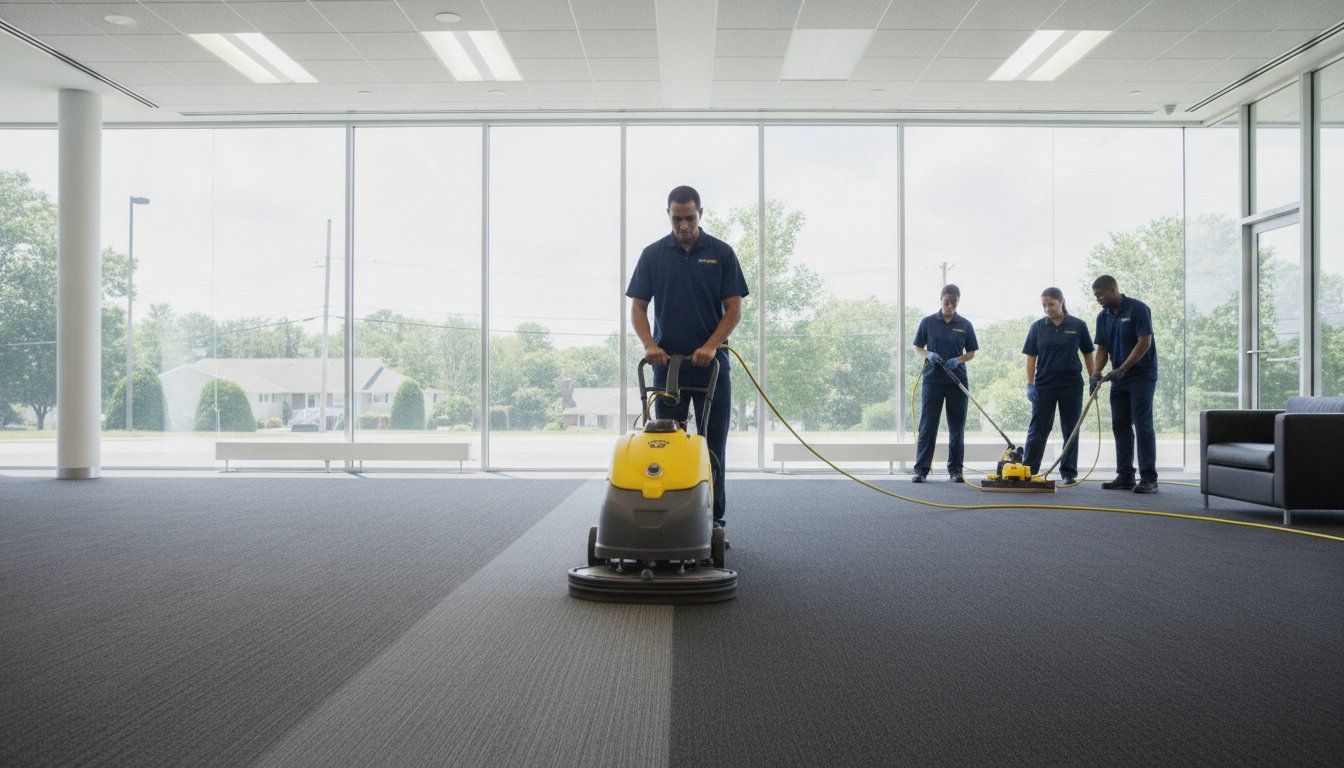
Terminal cleaning includes the decontamination of floors using antimicrobial solutions, but it doesn't replace periodic floor stripping and waxing. These deeper maintenance tasks are essential for preserving the integrity of medical-grade vinyl or epoxy surfaces. Regular floor care prevents the development of microscopic cracks where pathogens can sequester, supporting the overall success of terminal disinfection protocols.
How often should a healthcare facility on Long Island audit its terminal cleaning protocols?
Healthcare facilities should perform internal audits of their terminal cleaning for healthcare facilities Long Island at least once per month. Quarterly comprehensive reviews are also recommended to ensure documentation is ready for Joint Commission or NYS DOH inspections. These audits verify that staff are adhering to dwell times and using the correct PPE, which mitigates liability and improves patient safety metrics.