Commercial Floor Stripping and Waxing in Long Island: The Definitive Facility Guide
Most facility managers view floor maintenance as a standard janitorial task, but improper chemical application is often the primary reason your surfaces look aged and yellowed despite daily mopping. When you invest in commercial floor care , you're not just paying for a temporary shine. You're securing a technical restoration process designed to combat the unique environmental abrasives found across Nassau and Suffolk Counties.
It's frustrating to see persistent wax buildup in corners or deal with the increased slip-and-fall liability that comes with degraded finishes. You need a solution that balances aesthetic excellence with strict operational safety. This guide explains how professional floor restoration protects your Long Island facility's assets, improves safety, and eliminates the 'yellowing' effect caused by improper maintenance. We'll explore the technical requirements for achieving a high-gloss, durable finish while maintaining compliance with current OSHA standards and updated Green Seal GS-40 regulations. By the end, you'll understand how to extend your flooring's lifespan and meet sanitation standards without disrupting your essential business hours.
Key Takeaways
- Identify the technical limitations of standard mopping and why chemical restoration is required to remove oxidized, yellowed wax layers.
- Execute commercial floor stripping and waxing Long Island protocols that specifically address regional environmental stressors like coastal sand and alkaline ice melt.
- Recognize the critical role of pH testing and neutralization in the restoration process to ensure long-term finish adhesion and durability.
- Maintain operational safety and regulatory compliance by adhering to current OSHA walking-working surface standards.
- Protect high-traffic facility assets through a structured maintenance alliance that prioritizes technical precision over superficial cleaning.
Table of Contents
Why Standard Mopping Fails: The Science of Floor Stripping and Waxing
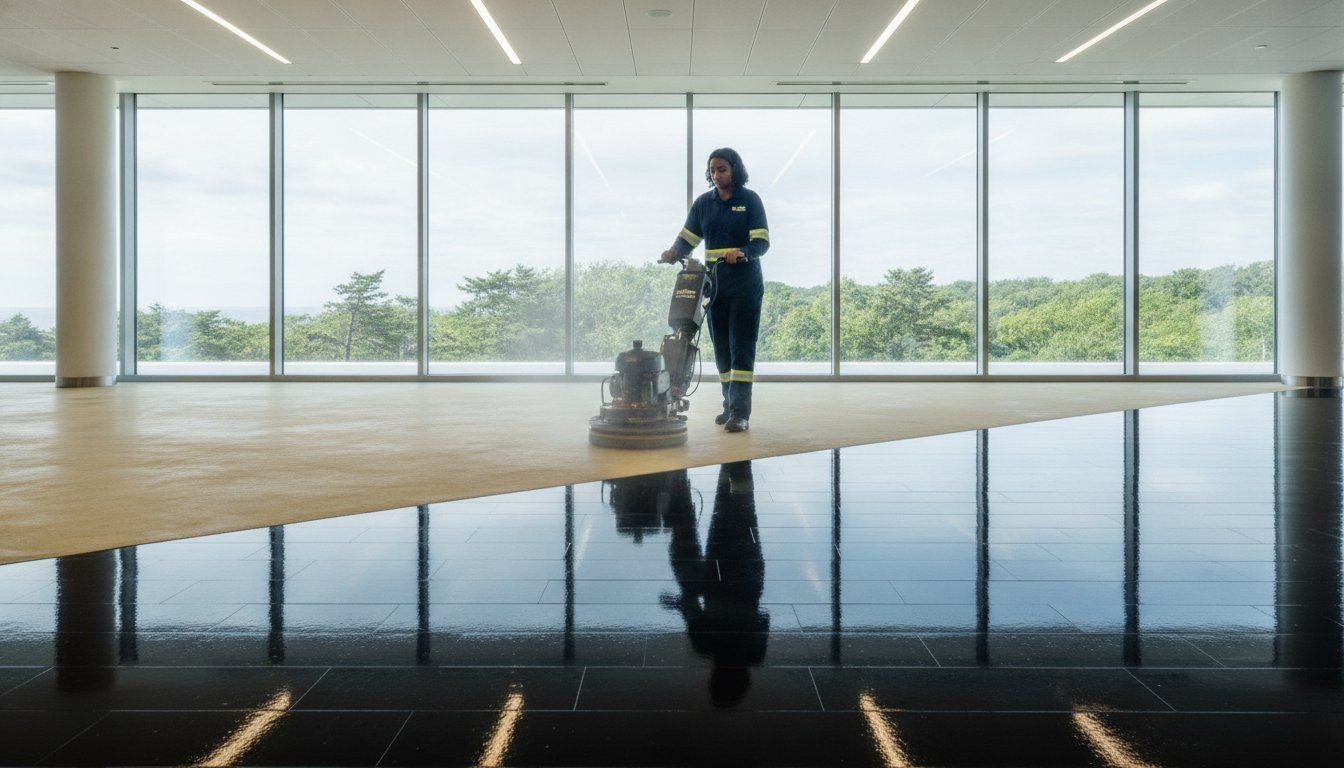
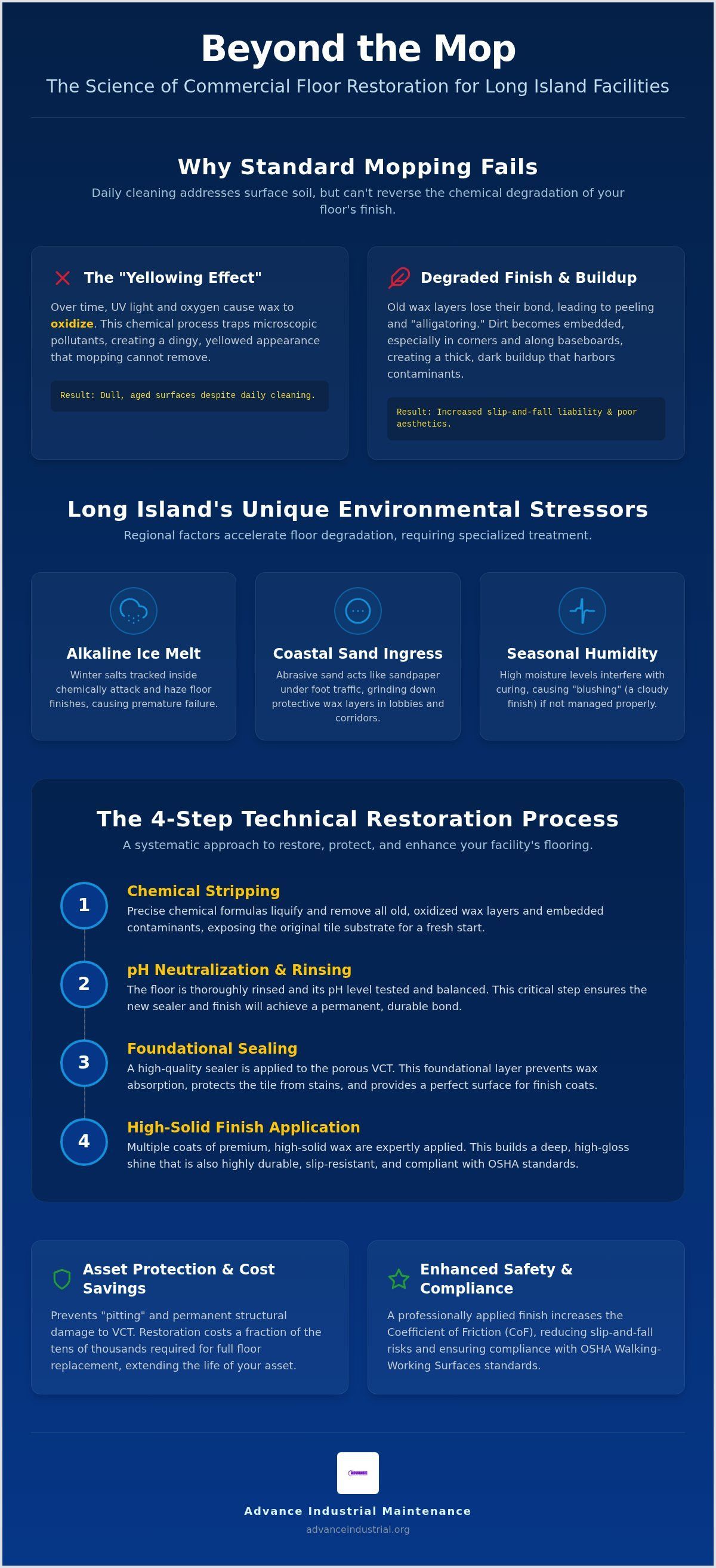
Standard janitorial protocols often fall short because they address surface soil rather than the integrity of the finish itself. Floor stripping is the precise chemical removal of old, degraded wax layers and embedded contaminants that accumulate over time. While daily floor cleaning methods remove loose debris, they can't reverse the "yellowing effect." This dingy appearance occurs when UV light and oxygen cause wax to oxidize, trapping microscopic pollutants within the finish. Only a professional commercial floor stripping and waxing Long Island service can liquify these layers to reveal the original tile substrate.
Applying a floor sealer is a critical prerequisite for lasting results. Vinyl Composition Tile (VCT) is naturally porous; without a foundational sealer, wax won't bond correctly and will eventually peel. Beyond aesthetics, professional restoration increases the Coefficient of Friction (CoF). This technical metric is vital for maintaining compliance with OSHA Walking-Working Surfaces standards, effectively reducing slip-and-fall liability in high-traffic Long Island offices and medical facilities.
Identifying When Your Facility Needs Restoration
Facility managers should monitor for "alligatoring" textures or thick, dark buildup along baseboards. If scuff marks remain visible after high-speed buffing, the finish has reached its saturation point. You can perform a simple "scrape test" by using a plastic edge to gently scratch an inconspicuous area. If the wax flakes or peels away easily, the bond has failed and the floor requires full restoration.
Asset Protection vs. Replacement Costs
Neglecting maintenance leads to "pitting," where abrasive grit grinds directly into the VCT, causing permanent structural damage. The financial logic for regular commercial floor stripping and waxing Long Island is clear. A targeted maintenance project costs a fraction of the tens of thousands required for a full floor replacement. Consistent care ensures your flooring remains a durable asset rather than a mounting liability.
Long Island Environmental Challenges for Commercial Flooring
Long Island’s geography presents specific technical hurdles for floor maintenance that generic cleaning services often overlook. In commercial hubs like Melville and Hauppauge, winter ice melt chemicals are a primary concern for facility managers. These alkaline salts chemically attack floor finishes, causing premature degradation and a persistent hazing that standard mopping cannot resolve. Coastal areas face the additional challenge of sand ingress. This abrasive material acts like sandpaper under foot traffic, grinding down wax layers in high-traffic lobbies and corridors.
Adhering to professional floor care standards is essential to mitigate these regional variables. Seasonal humidity across Nassau and Suffolk counties further complicates the restoration process. High moisture levels extend the necessary curing time for each coat of finish. Rushing this stage leads to "blushing," where moisture becomes trapped beneath the wax, resulting in a cloudy or streaked appearance. Technical precision requires monitoring these environmental conditions to ensure a stable, high-gloss bond. For facilities requiring specialized care, our medical facility cleaning protocols integrate these environmental considerations into a comprehensive sanitation strategy.
High-Traffic Zones in Suffolk and Nassau Counties
Retail corridors and medical waiting rooms often experience "walk-off" mat failure during peak winter months. When mats become saturated with salt and sand, contaminants spread quickly across the floor. Managing this requires a resilient finish that can withstand heavy friction. Strategic commercial floor stripping and waxing Long Island protocols focus on reinforcing these entry points to prevent the underlying tile from pitting or staining.
Scheduling for Operational Continuity
Operational continuity is a priority for businesses in Bohemia and surrounding industrial parks. Executing commercial floor stripping and waxing Long Island after hours allows for undisturbed chemical curing. This logistical planning ensures the floor is fully hardened and safe for foot traffic by the start of the next business day, preventing downtime and maintaining facility safety standards.
The Advance Industrial Process: 40 Years of Technical Authority
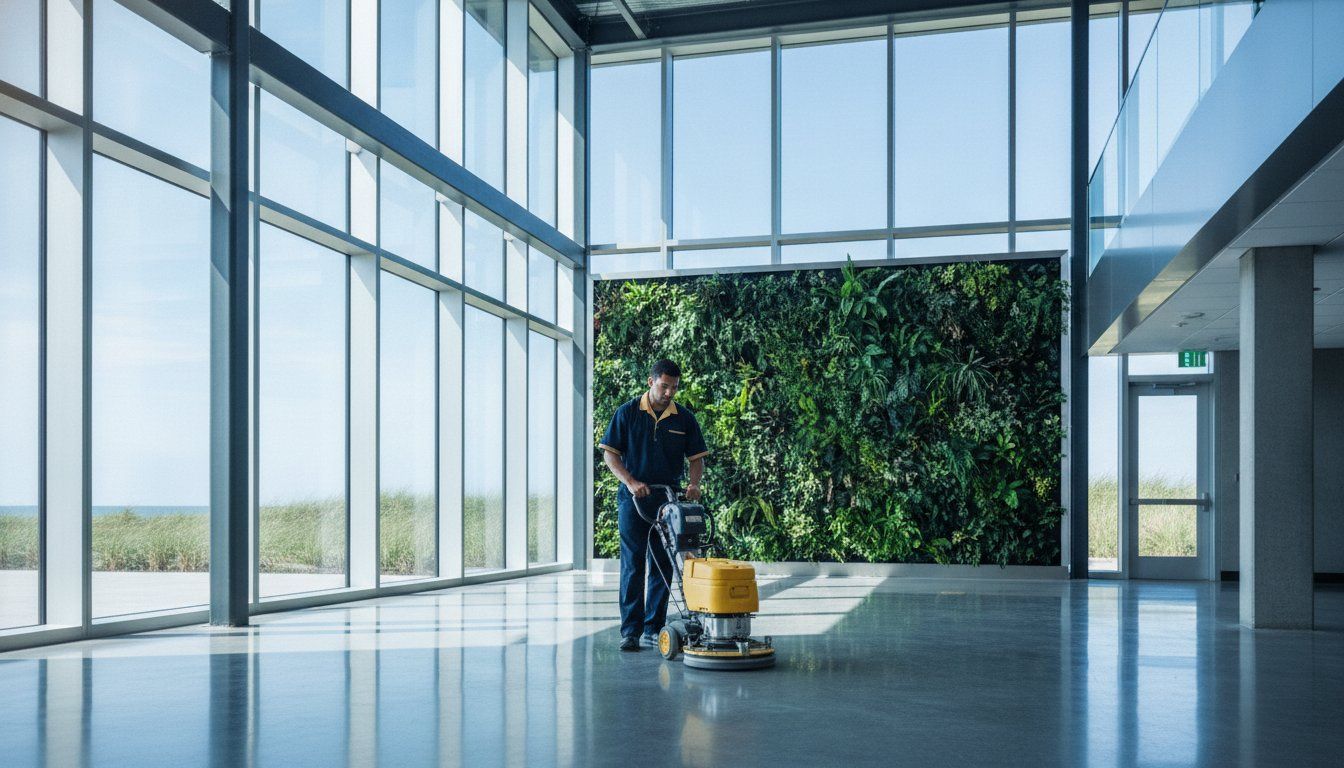
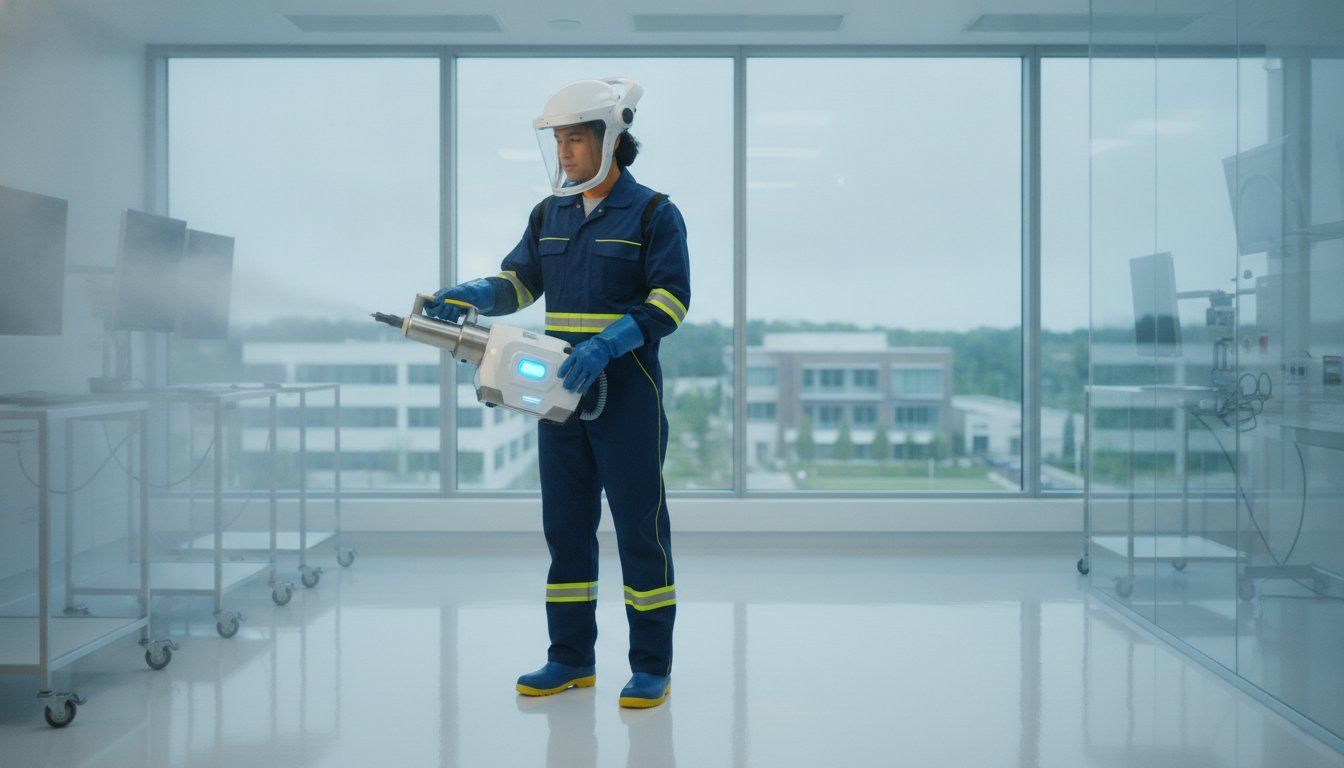
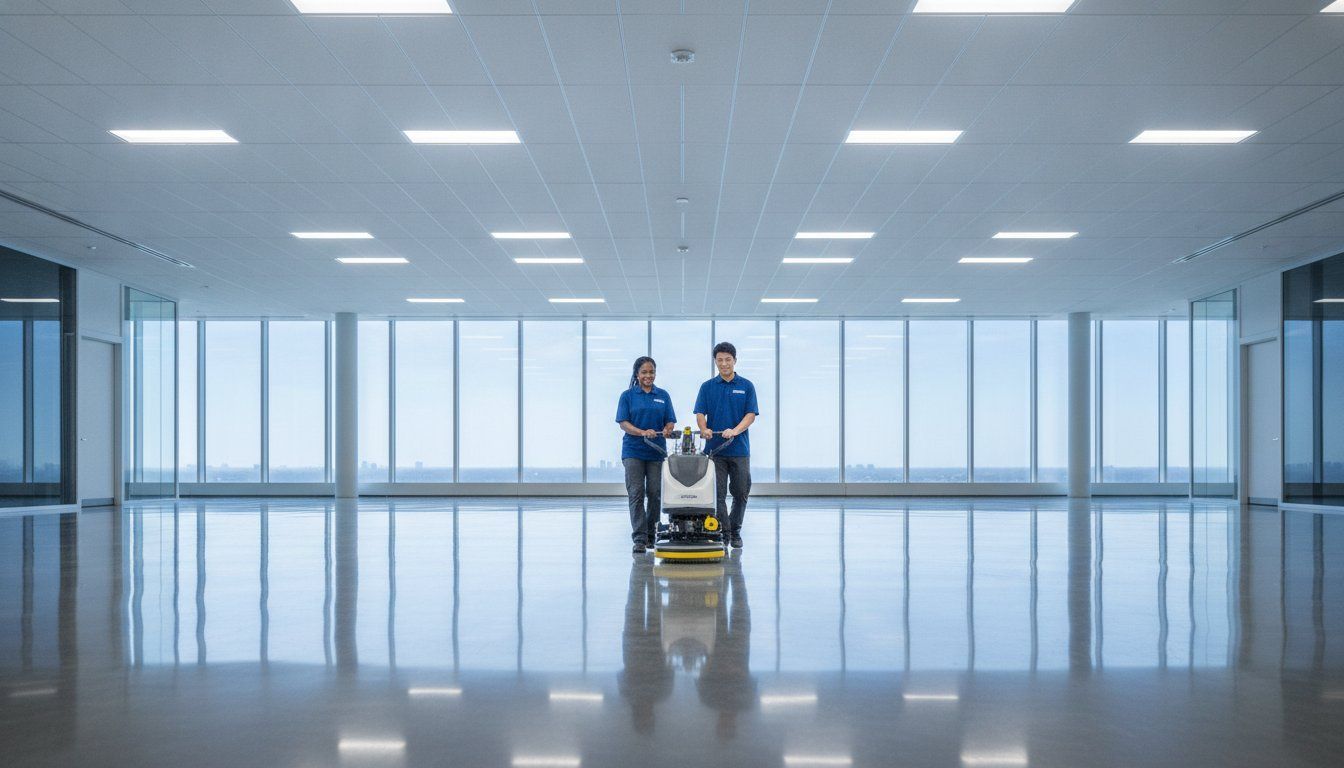
Commercial Cleaning Services Advance Industrial Maintenance leverages 40 years of field experience in Bohemia to deliver a restoration process that prioritizes technical precision over speed. Our commercial floor stripping and waxing Long Island service begins with the application of high-pH chemical strippers. These agents are formulated to liquify legacy finishes and embedded soils without compromising the structural integrity of the tile. Managing these chemicals requires expert skill, as improper handling can lead to substrate damage or health risks for facility occupants.
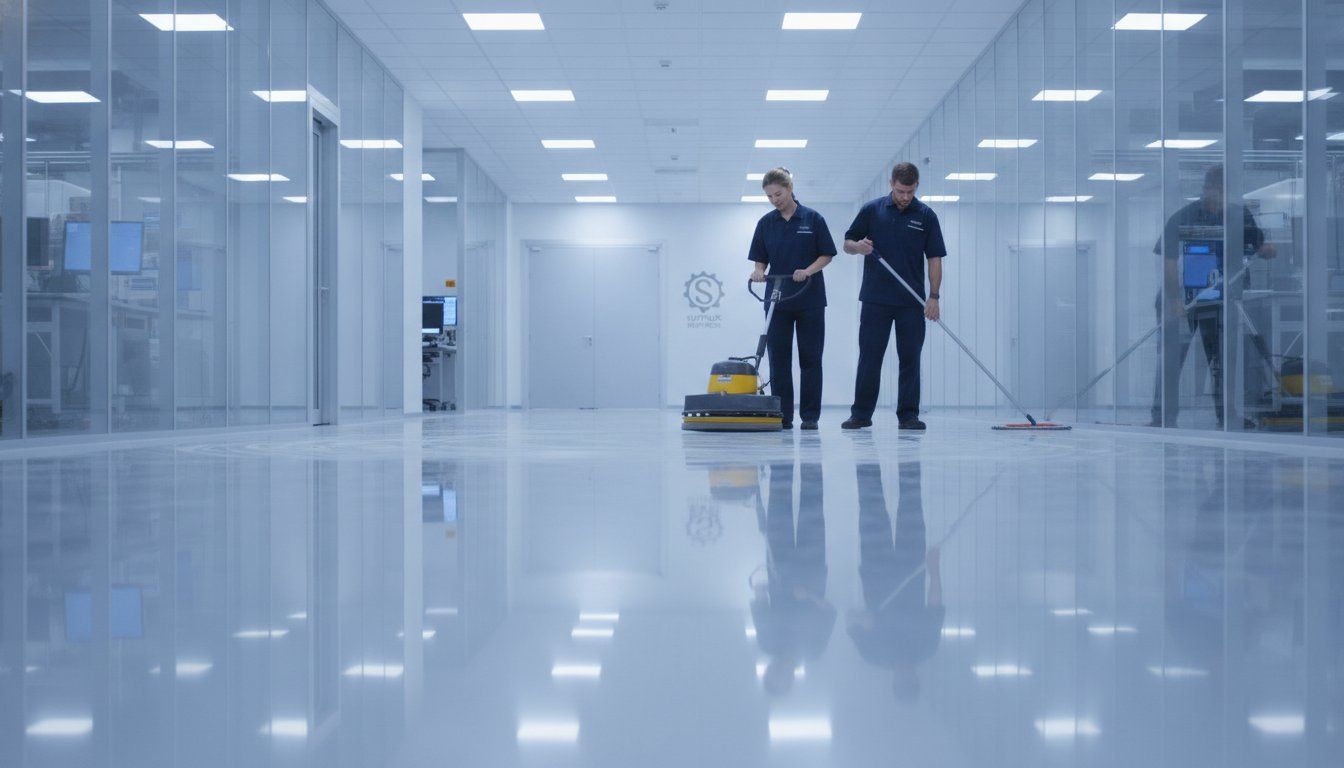
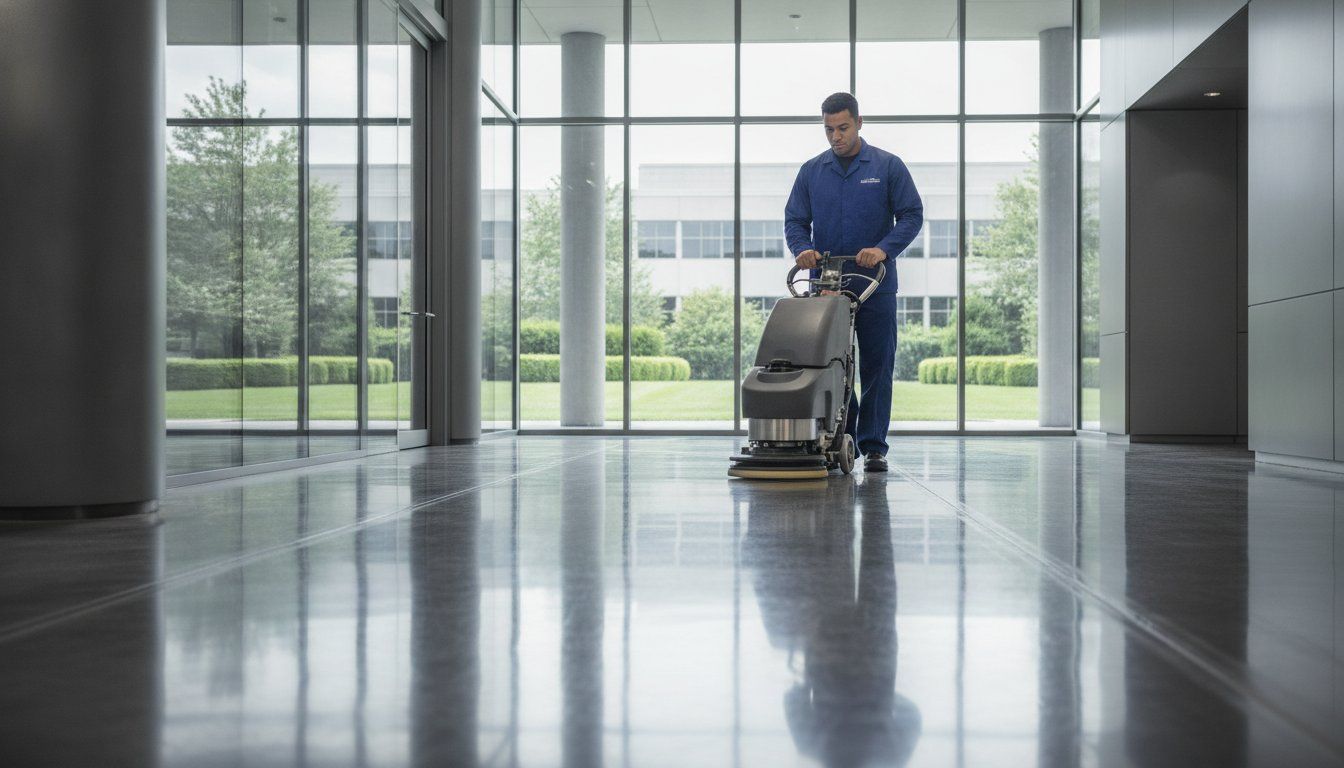
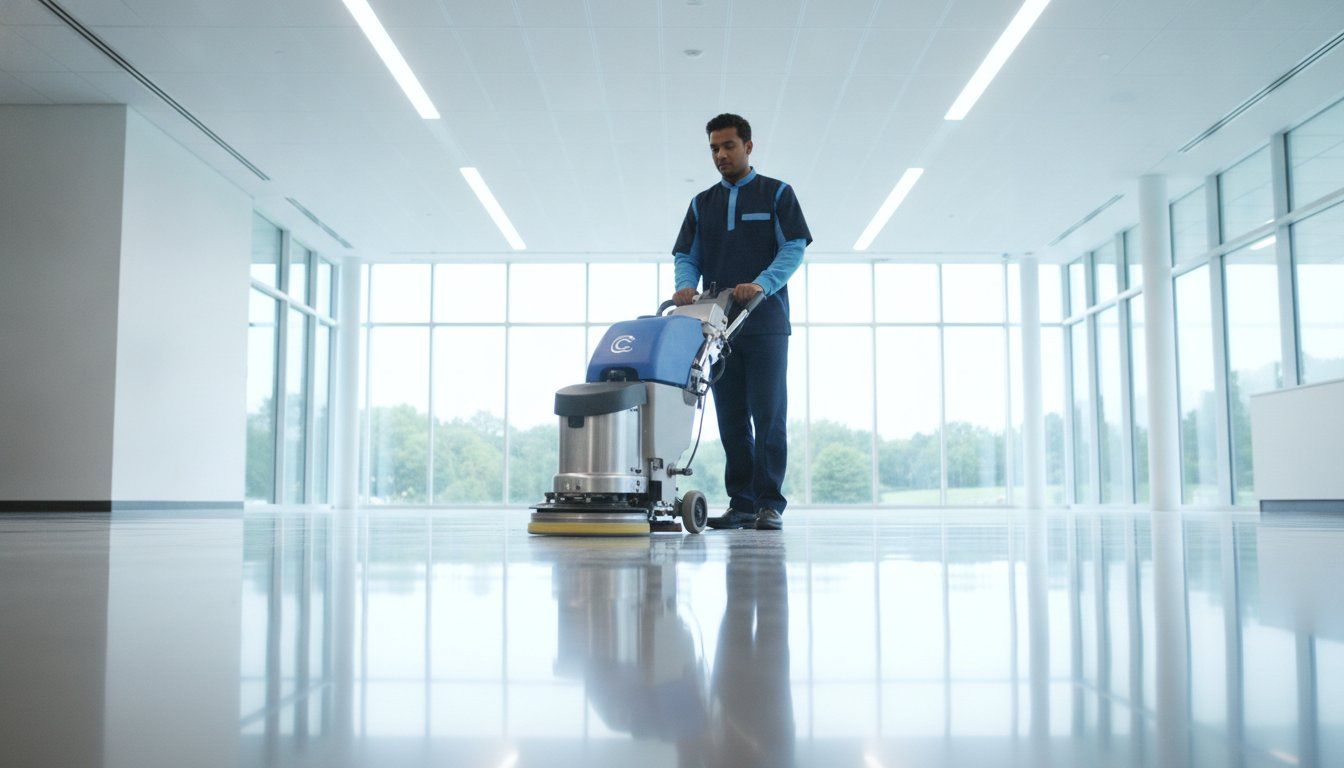
The most critical phase, often overlooked by less experienced vendors, is chemical neutralization. Because stripping agents are highly alkaline, they leave a residue that prevents new wax from adhering. We perform double-rinsing and rigorous pH testing to ensure the floor is chemically neutral before the first coat of sealer is applied. This focus on safety and efficacy aligns with technical findings in the CDC Health Hazard Evaluation regarding the management of industrial floor care chemicals. Once neutralized, we apply 3 to 5 coats of high-solids wax to ensure industrial-grade durability. We use low-speed scrubbers for mechanical agitation during stripping and high-speed burnishers to achieve a durable, high-gloss finish.
Our Step-by-Step Restoration Protocol
- Step 1: Preparation and Edging . We protect baseboards and fixed furniture with precision masking and use hand-stripping tools for corners where machines can't reach.
- Step 2: Chemical Dwell and Agitation . Stripping solution is allowed sufficient dwell time to penetrate old finish before being agitated by heavy-duty industrial scrubbers.
- Step 3: Slurry Extraction . We utilize high-capacity vacuums to remove the liquified wax slurry, followed by a double-neutralizing rinse to prep for finish adhesion.
Post-Service Care and Maintenance
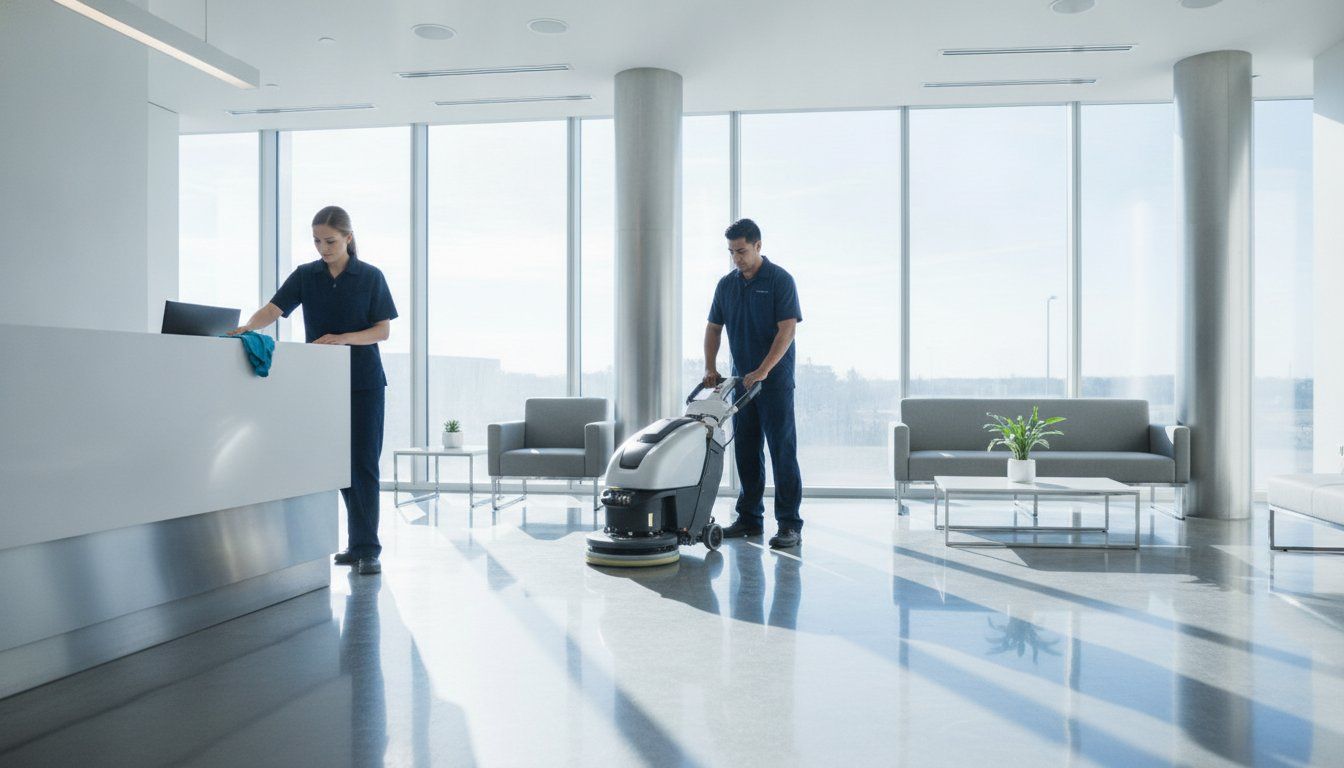
Maintaining a professional finish requires more than routine mopping. We recommend a structured "buff and burnish" schedule to repair minor surface scratches and restore the floor’s reflective properties. It's vital to use neutral-pH cleaning agents, as harsh chemicals will prematurely dull the wax and strip away the protective barrier. For a comprehensive strategy tailored to your facility’s specific needs, schedule a professional floor assessment with Advance Industrial today.
Secure Your Facility’s Infrastructure Through Technical Restoration
Maintaining high-traffic surfaces requires more than superficial care. You've seen how chemical neutralization and regional factors like coastal sand affect your flooring's lifespan. Prioritizing technical precision over standard mopping protects your physical assets. It also ensures ongoing compliance with safety standards. A structured restoration approach eliminates the yellowing effect and restores the industrial strength of your facility's foundation.
Advance Industrial Maintenance provides the pragmatic solutions required for these complex operational challenges. As a locally owned and operated partner in Bohemia with over 40 years of industry experience, we understand the high stakes of operational efficiency. Our specialized high-traffic floor equipment and rigorous protocols ensure that your commercial floor stripping and waxing Long Island project results in a durable, high-gloss finish. We focus on results that support your long-term success without disrupting your essential business hours.
Establishing a collaborative alliance for your building's health starts with an expert assessment. Request a Free Floor Maintenance Quote for Your Long Island Facility to secure a dependable partner for your maintenance needs. We look forward to ensuring your facility remains a safe and professional environment for years to come.
Frequently Asked Questions
How long does the floor stripping and waxing process take for a typical Long Island office?
The timeframe for a typical project depends on square footage and the complexity of the existing wax buildup. Most commercial floor stripping and waxing Long Island projects are completed within a single overnight or weekend shift. This window accounts for chemical dwell time, thorough neutralization, and the application of multiple finish coats that require specific intervals for proper drying and adhesion.
Will the chemicals used in floor stripping have a strong odor that affects my employees?
Stripping chemicals possess distinct industrial odors, but advanced formulations and proper ventilation protocols significantly reduce their impact. We prioritize the use of high-efficiency equipment and air circulation to manage indoor air quality during the process. Scheduling the service during facility downtime ensures that any residual scents dissipate before staff and visitors return to the environment.
How often should commercial floors in Nassau or Suffolk County be stripped and waxed?
Professional standards suggest that high-traffic floors in Nassau and Suffolk Counties undergo full restoration every 12 to 24 months. The exact frequency depends on the volume of foot traffic and the degree of environmental stressors like coastal sand or winter salt. Regular maintenance, such as high-speed burnishing, can help preserve the finish integrity between these more intensive stripping cycles.
Can you perform floor maintenance on weekends or after-hours to avoid business disruption?
After-hours and weekend scheduling is a standard industry protocol designed to prevent operational downtime. This timeframe is essential because it provides the undisturbed environment required for chemical stripping and the subsequent curing of high-solids wax. We work with facility managers to align these maintenance cycles with specific operational requirements, ensuring the floor is fully restored and safe for foot traffic before business resumes.