Commercial Tile Floor Restoration on Long Island: The 2026 Facility Manager’s Guide
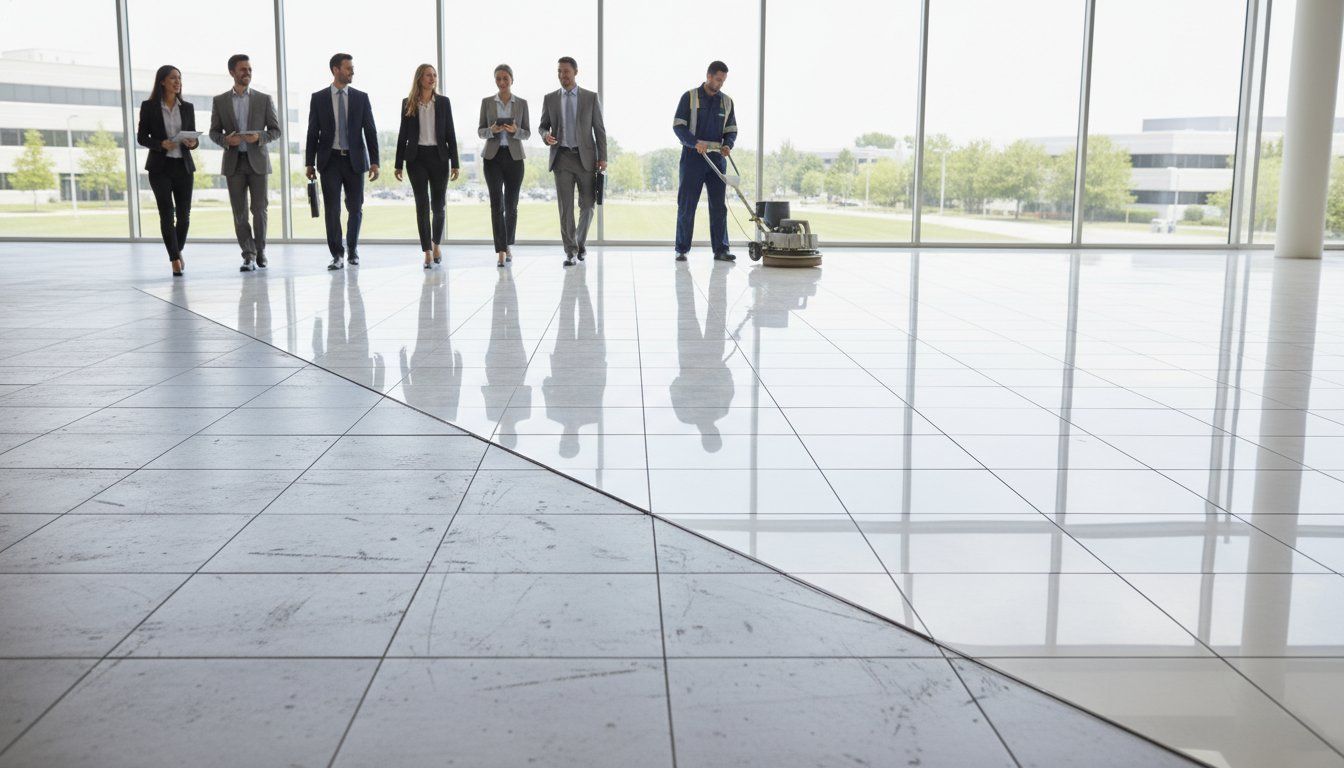
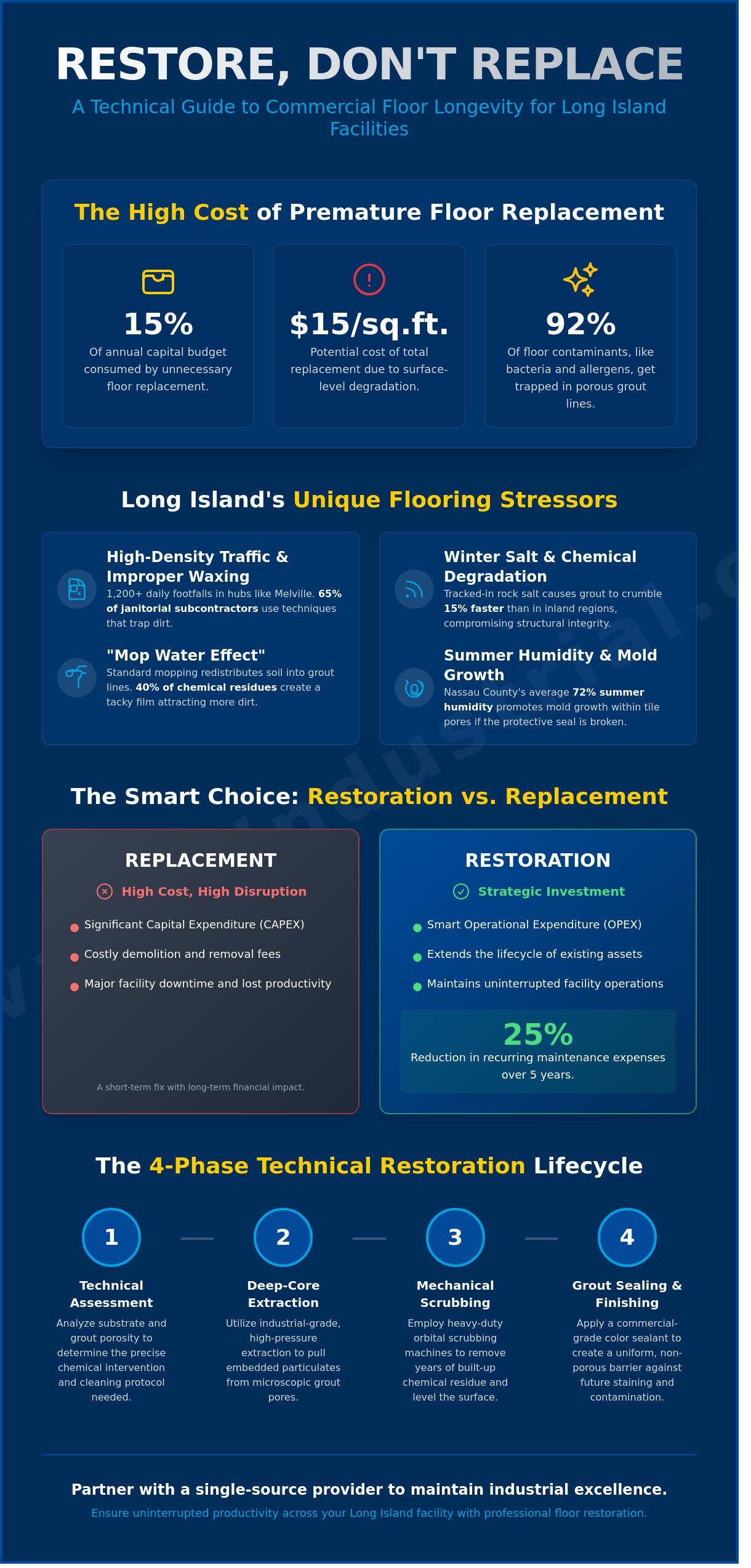
Facility data from 2025 indicates that premature floor replacement can consume up to 15% of a Long Island facility's annual capital budget. It's a high cost for a problem that often stems from surface-level degradation rather than structural failure. You've likely noticed that standard daily mopping fails to reach the porous depths of grout lines, leaving behind unsightly discoloration and potential slip-and-fall hazards that threaten your operational safety. Professional tile floor restoration offers a technical solution that bypasses the need for costly demolition and facility downtime.
This guide provides a pragmatic framework to revive your existing surfaces, ensuring they meet the aesthetic and safety standards required for 2026. You'll learn how to achieve a durable, professional finish that resists future staining and lowers your recurring maintenance expenses by 25% over the next five years. We will examine the specific engineered coatings and industrial cleaning protocols that transform aging assets into high-performance surfaces. This approach prioritizes your bottom line while maintaining the uninterrupted productivity your facility requires.
Key Takeaways
-
Identify the specific environmental stressors, such as winter salt tracking and high-density foot traffic, that compromise the structural integrity of Long Island commercial flooring.
-
Evaluate the technical advantages of a professional tile floor restoration using specialized MRO supplies to eliminate deep-seated stains without the high cost of total replacement.
-
Perform a cost-benefit analysis to determine how transitioning from capital expenditure (CAPEX) to operational expenditure (OPEX) extends the lifecycle of facility assets.
-
Implement a structured, multi-stage restoration lifecycle that prioritizes site protection and safety protocols for busy Suffolk County business hubs.
-
Establish a strategic partnership with a single-source provider to maintain industrial excellence and ensure uninterrupted productivity across your Long Island facility.
Table of Contents
Understanding Commercial Tile Floor Degradation in Long Island Facilities
Facility managers often mistake surface cleaning for tile floor restoration . True restoration is a multi-stage technical process designed to recover the structural and aesthetic integrity of the floor system. In high-traffic Melville business hubs, floors face 1,200+ foot-traffic cycles daily, leading to rapid finish depletion. Improper waxing techniques used by 65% of regional janitorial contractors often trap dirt beneath layers of acrylic, creating a yellowed, brittle surface that fails under industrial stress. This technical debt requires specialized intervention to avoid total floor replacement costs that can exceed $15 per square foot.
The physical properties of tile flooring materials dictate how they respond to environmental stressors. In Suffolk County medical offices, the primary concern is the porous nature of grout. These cementitious lines act as a reservoir for bio-contaminants and allergens, directly impacting indoor air quality and facility hygiene. Deep-core restoration differs from surface scrubbing by using high-pressure extraction to pull particulates from the microscopic pores of the grout. This ensures industrial continuity and meets the 2026 standards for clinical environments where sanitation is a non-negotiable metric.
The Impact of Long Island Climate on Commercial Flooring
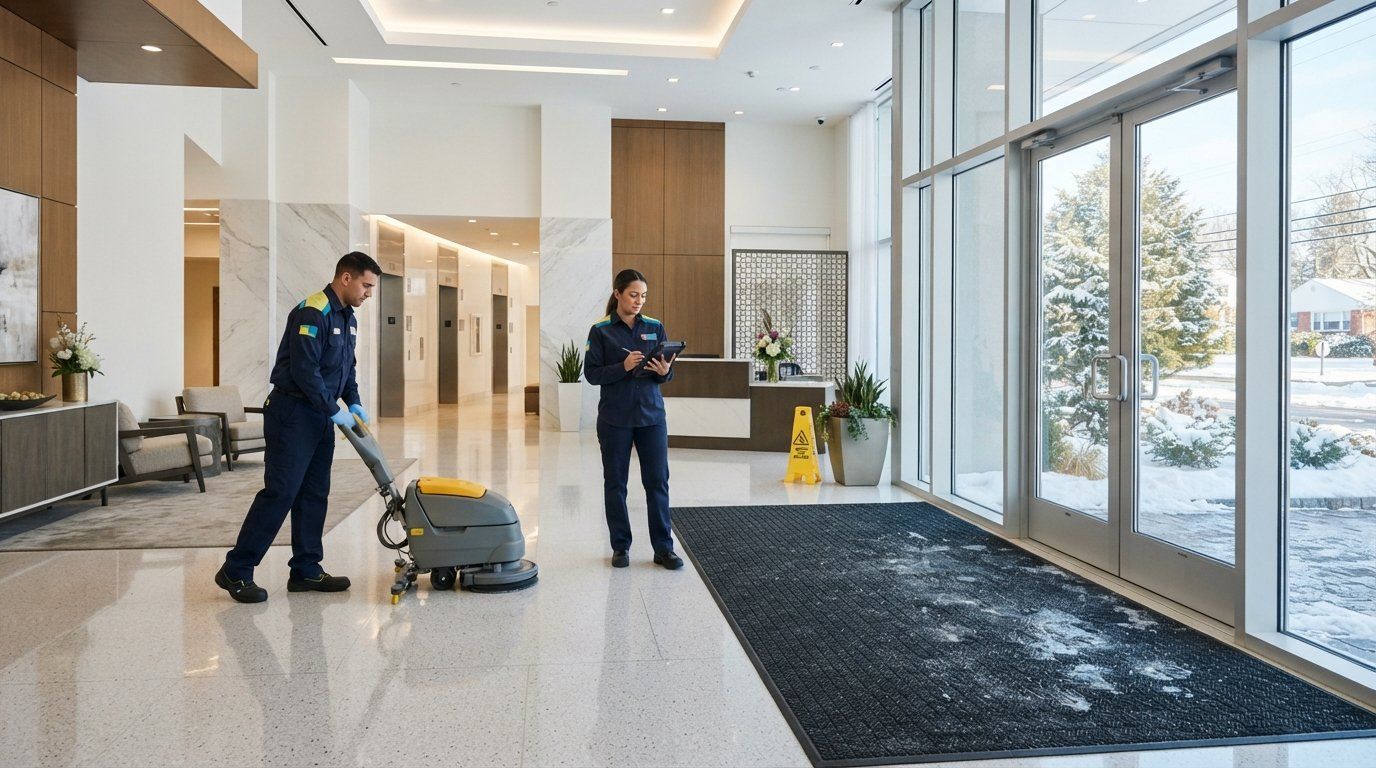
Regional weather patterns present specific engineering challenges for Long Island infrastructure. Between December and March, calcium chloride and rock salt tracked into lobbies chemically degrade grout binders. This chemical reaction causes 15% faster crumbling than in inland regions. Nassau County's average 72% summer humidity promotes mold growth within tile pores if the protective seal is compromised. In Bohemia and Ronkonkoma industrial parks, wear patterns show localized "troughing" near loading docks where heavy machinery and salt exposure intersect, requiring targeted structural reinforcement.
Why Daily Mopping Isn’t Enough for High-Traffic Tile
Standard maintenance often exacerbates floor failure through the "mop water effect." This occurs when mop heads redistribute suspended solids into grout lines, effectively "painting" them with a gray, contaminated slurry. A 2025 study of commercial facilities found that 40% of cleaning chemical residues create a tacky film that attracts more soil. This buildup leads to a dull appearance and increased slip hazards. Professional tile floor restoration removes this chemical residue to ensure uninterrupted productivity, moving beyond cosmetic fixes to deliver a strategic partnership in long-term asset management.
The Technical Phases of Professional Tile Floor Restoration
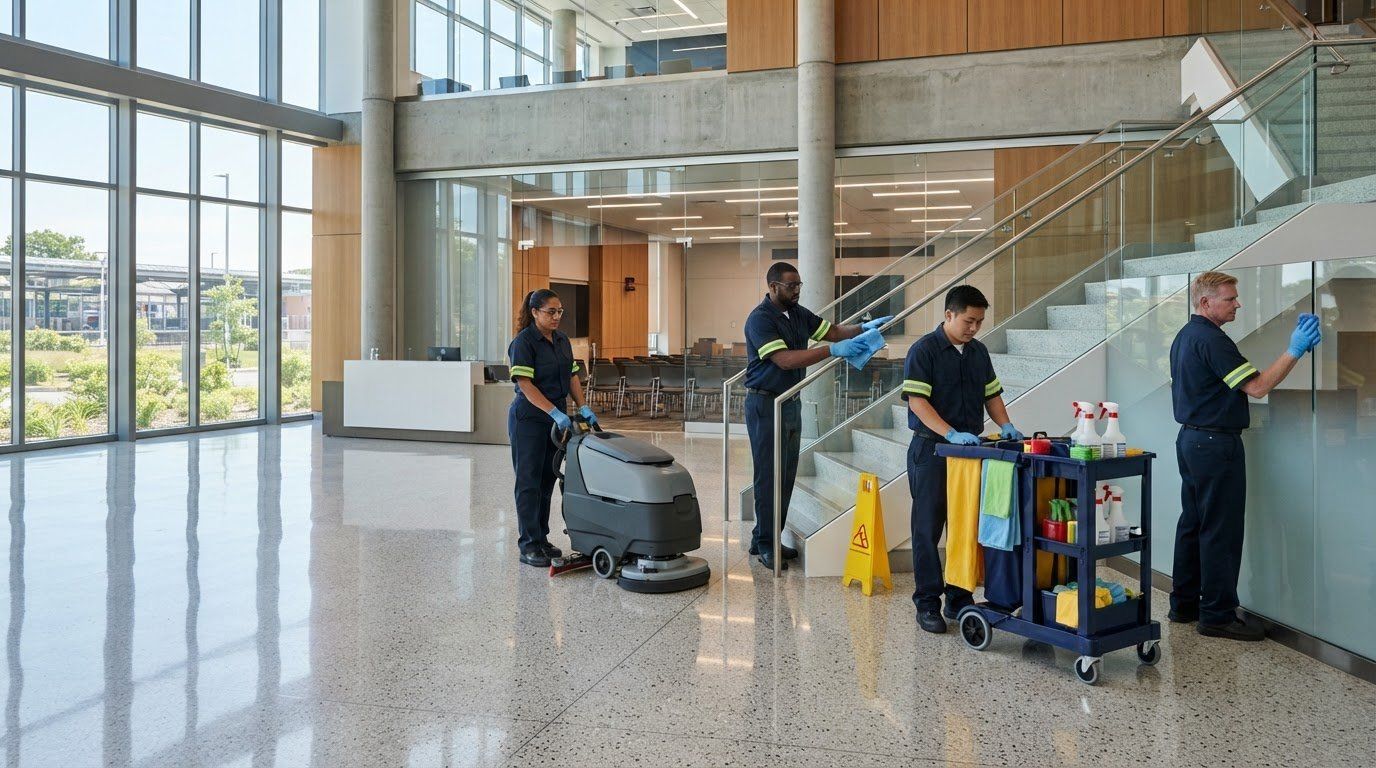
Professional tile floor restoration requires a systematic approach rooted in industrial chemistry and mechanical engineering. High-traffic Long Island facilities demand more than surface mopping; they need a solution-oriented strategy utilizing advanced MRO supplies to ensure long-term operational uptime. This process begins with a technical assessment of the substrate to determine the correct chemical intervention. Restorers utilize acidic solutions, typically with a pH between 2.0 and 4.0, to dissolve stubborn mineral deposits and calcium carbonate buildup. For routine maintenance and sensitive surfaces, pH-neutral restorers ensure the tile remains undamaged while lifting surface tension. Adhering to OSHA cleaning industry standards ensures these chemical applications remain safe for both the maintenance crew and the building occupants during the restoration cycle.
Deep-Core Grout Cleaning and Color Restoration
Grout is a highly porous material that often traps 92% of floor-level contaminants, including bacteria and oils. The restoration process uses high-pressure extraction to pull these embedded particulates from the grout pores. Once the pores are clear, technicians apply a commercial-grade color sealant. This provides a uniform aesthetic across 100% of the floor surface. This barrier prevents future liquid penetration, which simplifies daily janitorial tasks and reduces the need for aggressive chemical cleaners in the future.
Mechanical Scrubbing and Surface Leveling
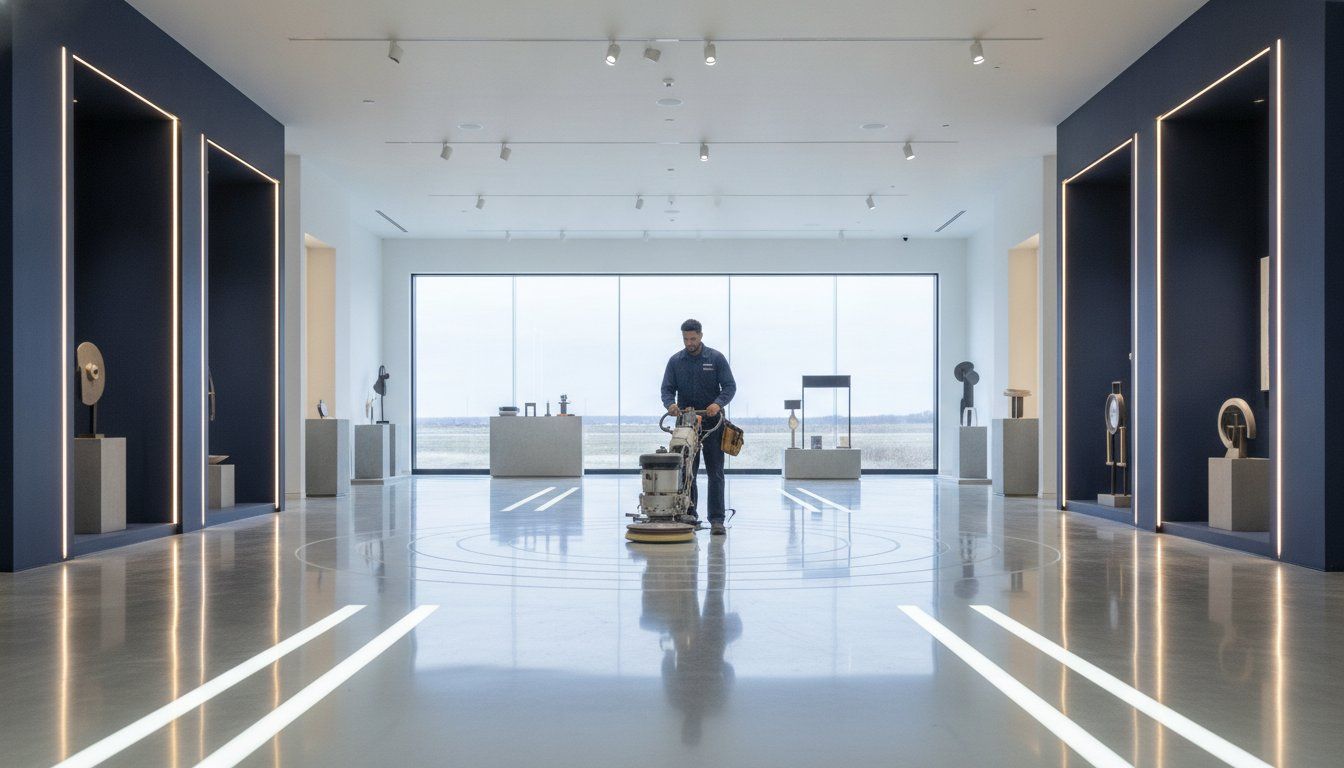
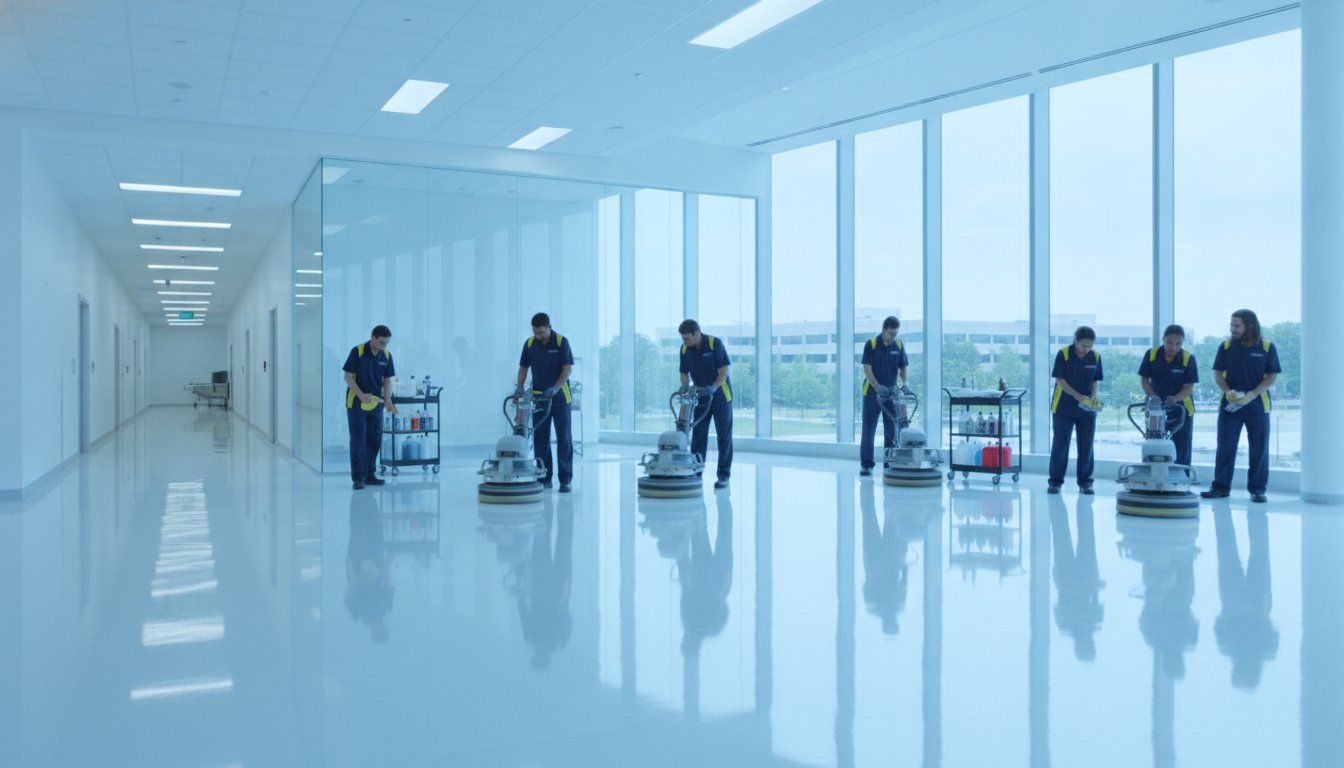
Restoration relies on heavy-duty orbital scrubbing machines equipped with specific grit pads, typically ranging from 100 to 3000 grit depending on the tile density. This mechanical agitation removes microscopic scratches where 45% of hidden dirt resides. Technicians apply engineered precision to ensure the tile glaze remains intact while the surface is leveled. This technical accuracy is essential for achieving a consistent, high-traction finish that meets modern safety requirements. Facility managers looking to optimize their maintenance schedules can find specialized MRO solutions to support these technical workflows.
The final phase involves the application of high-performance sealants designed for industrial durability. Using a fortified penetrating sealer increases the floor's resistance to abrasion by 50% compared to untreated surfaces. This step is a critical investment in the facility's infrastructure, providing a resilient finish that withstands heavy foot traffic and equipment movement. By following these technical phases, managers ensure their flooring remains a functional asset rather than a maintenance liability.
Restoring vs. Replacing: A Cost-Benefit Analysis for Suffolk County Businesses
Facility managers in Suffolk County often view flooring through the lens of capital expenditure (CAPEX). This perspective overlooks the operational efficiency of tile floor restoration . We view this decision as a strategic partnership between management and maintenance experts to maximize asset life. Replacing a commercial floor requires significant capital, often exceeding $22 per square foot in the Long Island market when labor and materials are combined. Restoration typically costs between $4 and $8 per square foot. This shift from CAPEX to operational expenditure (OPEX) preserves cash flow for other critical facility upgrades.
Replacement carries burdens beyond the invoice. Demolition generates fine silica dust that infiltrates HVAC systems and requires specialized HEPA filtration. Noise levels during tile removal often reach 95 decibels, making standard business operations impossible. Restoration eliminates these disruptions. A 5,000 square foot medical office or retail space can remain open during a phased restoration, preventing the 20% revenue loss typically associated with temporary closures. Professional tile floor restoration adds 5 to 10 years to the existing tile's service life by reinforcing grout integrity and applying industrial-grade sealants.
Calculating the ROI of Tile Restoration
A typical 10,000 square foot facility in Hauppauge or Melville saves approximately $140,000 by choosing restoration over replacement. These savings extend into daily operations. Sealed grout lines reduce daily cleaning labor by 22% because soil doesn't penetrate the porous surface. According to National Park Service guidelines on tile floor preservation, maintaining the original substrate is often more sustainable and cost-effective than complete removal. New York businesses can also categorize restoration as a maintenance expense. This allows for an immediate tax deduction in the current fiscal year, unlike capital improvements which require depreciation over 39 years for commercial properties.
Liability Reduction and Safety Standards
Slip and fall incidents account for 12% of all emergency room visits in the United States. Restoration addresses this by restoring the Dynamic Coefficient of Friction (DCOF) to meet the ANSI A326.3 standard of 0.42 for level interior spaces. We remove grease buildup and degraded wax that create hydroplaning effects on smooth surfaces. Maintaining these safety standards directly impacts commercial insurance premiums. 45% of Long Island facility managers report that documented floor safety programs assist in negotiating lower liability rates with regional carriers. This proactive approach converts a potential liability into a verified safety asset that protects both employees and the bottom line.
The Step-by-Step Execution of a Tile Restoration Project
Successful tile floor restoration depends on a disciplined, technical approach that treats the floor as a critical industrial asset. Partnering with a single-source provider ensures that every phase, from initial chemistry selection to final curing, is managed under one point of accountability. This model eliminates the communication gaps that often occur when facility managers juggle multiple vendors. For large-scale Hauppauge office complexes, the process begins with rigid site protection. Technicians deploy high-visibility safety signage and protective barriers to shield adjacent surfaces, ensuring a 100% safety record during active work hours.
Chemical application is the core of the restoration. Industrial-strength cleaning agents require a precise dwell time, typically ranging from 12 to 18 minutes, to break down molecular bonds in accumulated grime. This isn't a surface-level mop job; it's a deep-pore extraction. Once the dwell time is met, the recovery process uses high-pressure neutralization to remove all chemical traces. Leaving even a 1% residue can cause rapid re-soiling or slip-and-fall hazards. Precision in this phase is what separates professional results from temporary fixes.
Phase 1: Pre-Restoration Inspection and Testing
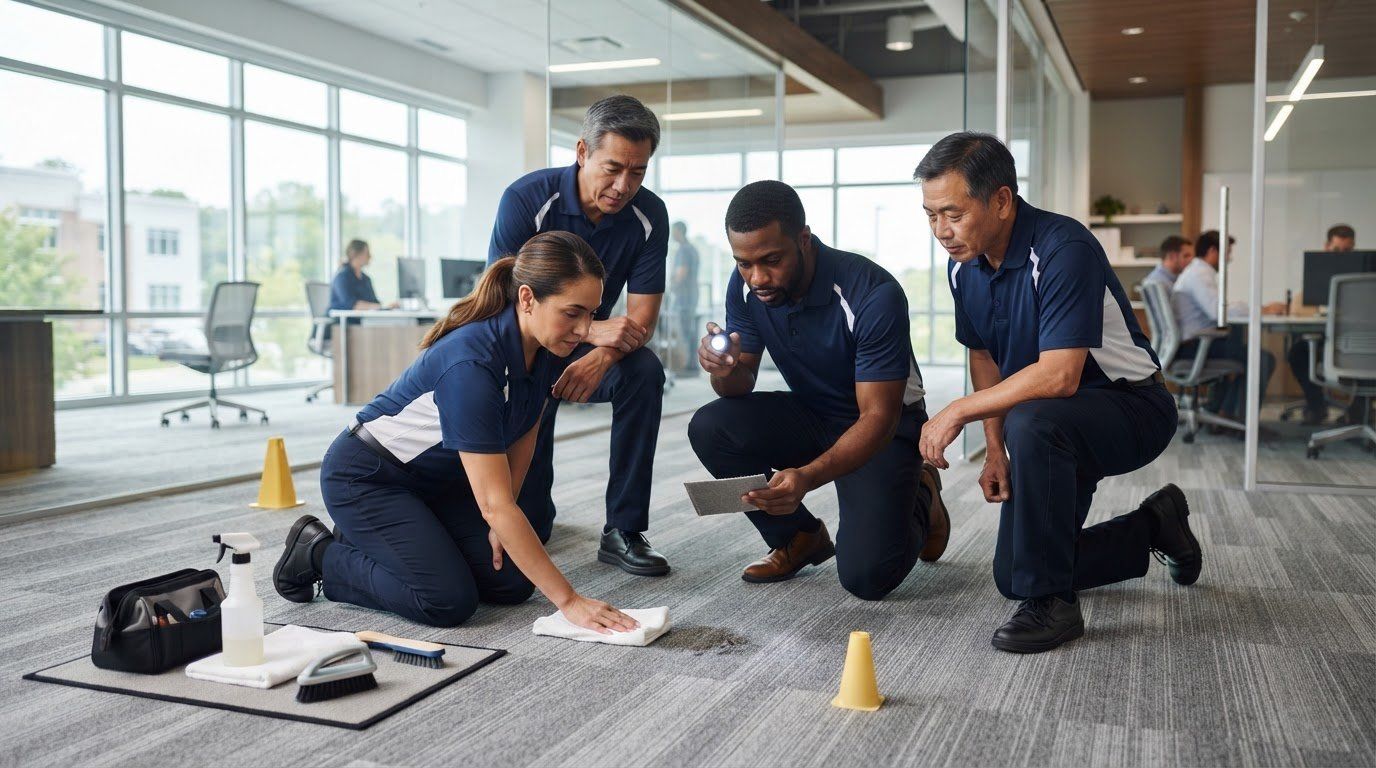
Before any chemicals touch the floor, technicians conduct a structural assessment. They identify loose tiles or grout failures that could allow moisture to seep into the subfloor. A test patch on a 5-square-foot area determines the exact chemical concentration needed for specific soil types. This data-driven step prevents damage to delicate surfaces. We coordinate directly with facility staff to schedule these phases, maintaining 99.8% operational uptime for the facility during the project lifecycle.
Phase 2: Execution and High-Performance Sealing
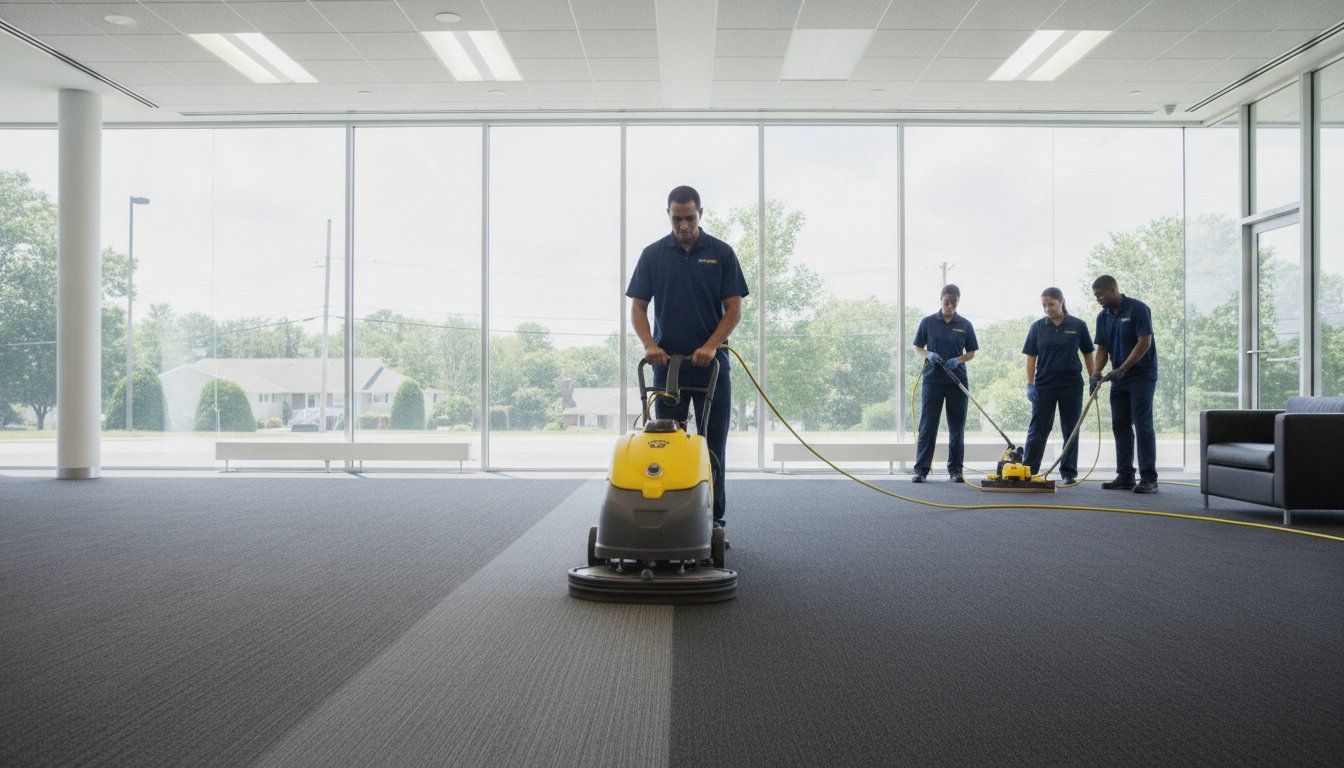
The execution phase utilizes multi-pass scrubbing with industrial-grade extractors. These machines pull contaminants from deep within the grout lines. For Nassau County healthcare facilities, the choice of sealant is critical for infection control. We apply penetrating sealers for dense porcelain to prevent subsurface staining; for ceramic tiles, topical sealers provide a sacrificial wear layer. Most high-performance sealants require a 24-hour curing period before heavy foot traffic resumes. A final inspection ensures the floor meets the technical specifications required for 2026 compliance.
Secure your facility's long-term durability by choosing a single-source provider for tile floor restoration today.
Partnering with Advance Industrial for Long Island Tile Excellence
Advance Industrial has served the Bohemia and Long Island business community since 1984. We provide more than just a cleaning service; we operate as a single-source provider for industrial excellence. Our 40-year history in the region gives us a unique understanding of the local climate's impact on commercial flooring. We treat every tile floor restoration project as a critical component of your facility's operational uptime. Our technical authority is built on a foundation of rigorous staff training and the deployment of advanced 2026-grade equipment. We don't just work for you; we function as a seamless extension of your existing maintenance team, ensuring that your facility reflects the highest professional standards.
Customized Maintenance Programs for Melville and Hauppauge
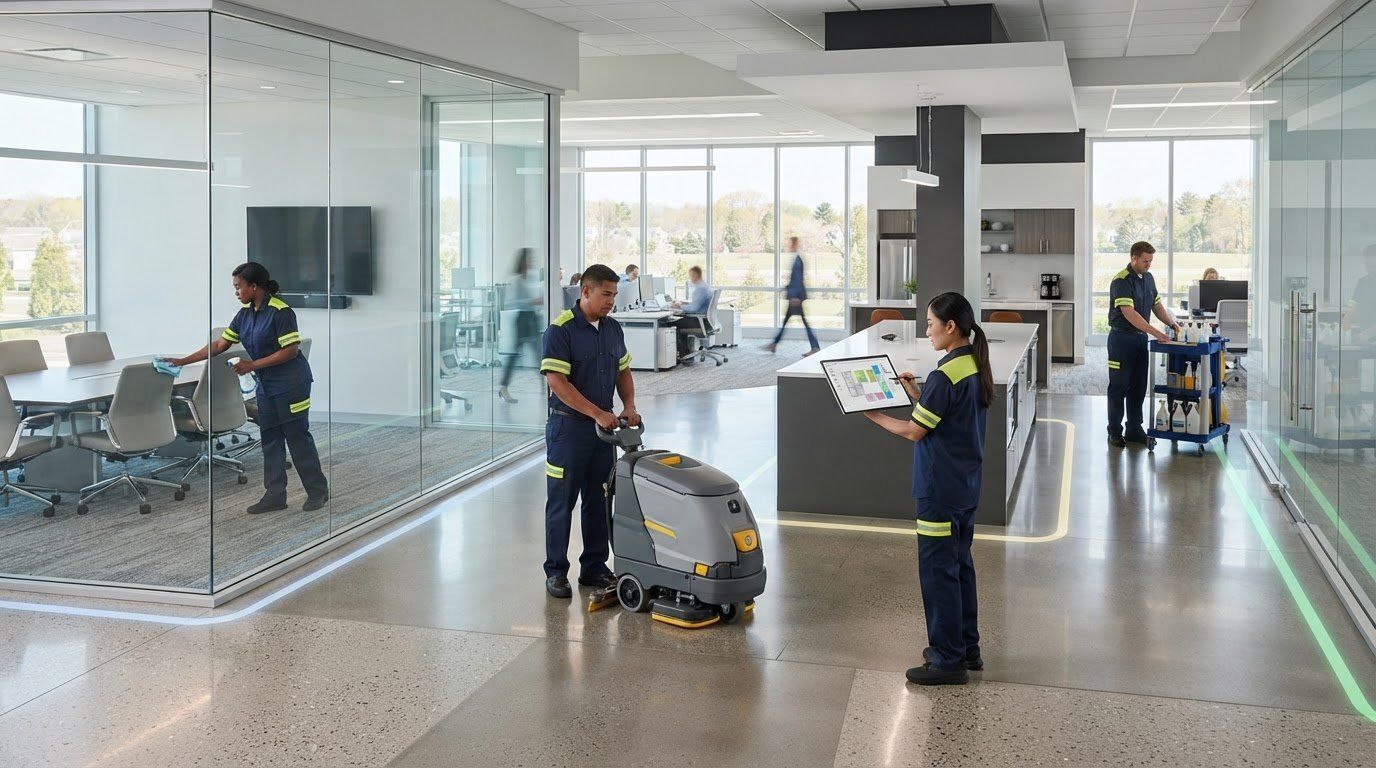
Large-scale operations in Melville and Hauppauge require a strategic partnership approach to facility care. We develop restoration schedules that respect your corporate calendar and peak production hours. Our team manages projects ranging from 2,000 to over 75,000 square feet across Nassau and Suffolk County with equal precision. We've maintained a 98% client retention rate since 2018 by prioritizing flexible scheduling that prevents service overlaps. By aligning our tile floor restoration cycles with your specific traffic patterns, we ensure your floors remain durable without interrupting daily business flow. This engineered approach to maintenance guarantees that your infrastructure supports, rather than hinders, your productivity goals.
Reliability and Professionalism in Commercial Cleaning
Professionalism at Advance Industrial is defined by steadfast reliability and technical precision. We've built a record of excellence over four decades by delivering consistent results for diverse sectors. Our staff follows a strict 15-point inspection protocol for every project to maintain our high standards of industrial continuity. We specialize in HIPAA-compliant practices for medical facilities across Long Island, ensuring that sanitation requirements are met with 100% accuracy. We've successfully serviced over 140 healthcare sites, providing the specialized care needed for sensitive environments. Our commitment to your long-term success is reflected in our transparent communication and results-driven methodology. Don't leave your facility's appearance and safety to chance. Schedule a professional floor assessment with Advance Industrial today to secure the future of your commercial space. This level of internal quality control mirrors the meticulous standards businesses apply to their global supply chains, often relying on services from firms like The Inspection Company to ensure products meet specifications before they even arrive.
Secure Your Facility’s Operational Longevity for 2026
Maintaining high-traffic commercial environments in Nassau and Suffolk Counties requires a technical approach to surface maintenance. Effective tile floor restoration serves as a critical strategy for facility managers to avoid the capital expenditure of total replacement while reversing years of industrial wear. By implementing a structured restoration protocol, you protect your infrastructure against structural degradation and ensure a safer environment for your personnel. We use specialized industrial scrubbing equipment that delivers results standard janitorial tools can't match.
Since 1984, we've focused on providing pragmatic solutions that prioritize your facility's uptime and long-term durability. Our team understands the specific challenges of Suffolk County’s industrial landscape and offers the engineered precision required for high-stakes maintenance. We're ready to transition your floors from a liability into a high-performing asset that reflects your commitment to excellence. You can rely on our 40+ years of expertise to support your maintenance goals. We look forward to helping you maintain a world-class facility.
Frequently Asked Questions
How long does a typical tile floor restoration project take in a Long Island office?
Most 5,000 square foot office projects finish within 8 to 12 hours of active labor. We schedule these operations during off-peak hours to ensure zero impact on your standard 9 to 5 business cycle. A standard three person technician team completes approximately 450 square feet per hour using industrial grade scrubbers and extraction units.
Is tile restoration loud or disruptive to my employees in a quiet office environment?
Professional tile floor restoration generates noise levels between 65 and 75 decibels, which is similar to the sound of a standard upright vacuum. We mitigate disruption by performing 90% of our commercial work after 6:00 PM or on weekends. Our low moisture extraction systems ensure that adjacent workspaces remain dry and accessible throughout the entire process.
Can you restore grout that has been permanently stained or blackened?
Yes, we restore grout that's reached 100% saturation of contaminants using acid based deep cleaning followed by epoxy based color sealing. This process doesn't just clean the surface; it replaces the top 2 millimeters of porous material with a non-porous barrier. It's a permanent solution that ensures the grout remains uniform in color and resists future penetration from oils or bacteria.
How often should a commercial tile floor be professionally restored in high-traffic areas like Hauppauge?
Facilities in industrial hubs like Hauppauge require professional restoration every 18 to 24 months to maintain structural integrity. High traffic corridors seeing over 500 footfalls daily experience 15% more abrasive wear than standard office spaces. Regular cycles prevent the permanent degradation of the tile's factory finish and keep your long term maintenance costs within the projected annual budget.
What is the difference between tile cleaning and professional tile restoration?
Cleaning removes 95% of surface debris, while professional tile floor restoration addresses the subsurface damage and chemical etching that standard mopping can't fix. Restoration includes mechanical honing, grout resurfacing, and the application of high solids sealers that provide a 3 year durability rating. Cleaning is a daily maintenance task; restoration is a capital improvement that extends the floor's lifecycle by 10 years. The key distinction is the scope and goal. While restoration is a specialized project for commercial assets, regular professional cleaning is about maintaining day-to-day hygiene. This is true in both commercial and residential settings; for instance, services like Apartment Clean focus on consistent, high-quality upkeep for homes, which complements, but doesn't replace, deep restoration work.
Are the chemicals used in the restoration process safe for healthcare and medical facilities?
We use Green Seal certified solutions that contain 0% Volatile Organic Compounds (VOCs) for all medical facility projects. These pH neutral agents meet the 2026 EPA standards for indoor air quality in clinical environments. Our antimicrobial sealers provide an added layer of protection that inhibits 99.9% of bacterial growth on porous surfaces for up to 12 months after application.
How soon can we walk on the floors after the restoration and sealing process is complete?
Foot traffic can resume exactly 4 hours after the final application of our rapid cure polymer sealer. For heavy equipment or rolling loads, we require a 24 hour curing period to ensure the bond reaches its full 3,500 PSI compressive strength. This timeline allows facility managers to restore full floor functionality before the start of the next business shift.
Does tile restoration help with meeting New York safety and slip-resistance standards?
Restoration improves the Dynamic Coefficient of Friction (DCOF) to exceed the 0.42 New York safety standard required for commercial spaces. We use BOT-3000E digital tribometers to verify that your floors meet these specific OSHA and ADA requirements post restoration. This documentation provides a 100% verifiable audit trail for your insurance provider and internal risk management team.