Non-Toxic Office Cleaning Solutions: A Commercial Facility Buying Guide
Deploying high-performance sanitation no longer requires compromising occupant health or risking regulatory non-compliance under New York's strict chemical limits. Procurement professionals often face the difficult task of balancing rigorous disinfection protocols with employee wellness demands. It's vital to implement validated non-toxic office cleaning solutions that maintain facility safety metrics without causing sub-par results or operational downtime.
We agree that filtering out vague greenwashing claims requires deep technical scrutiny and reliable data. This guide reveals how to evaluate and implement non-toxic commercial cleaning solutions that protect office health without compromising on industrial-strength sanitation. You'll gain a clear framework for verifying third-party certifications like Green Seal GS-37 and establishing a dependable maintenance partnership that ensures long-term operational continuity.
Key Takeaways
- Define commercial-grade standards within your facility management framework by transitioning from volatile organic compounds to stable bio-based alternatives.
- Implement a rigorous chemical audit process to eliminate greenwashing and verify certified non-toxic office cleaning solutions that meet industrial safety metrics.
- Optimize logistical execution across Nassau and Suffolk Counties by integrating sustainable protocols into recurring janitorial service schedules.
- Maintain high operational standards and protect facility asset longevity through a strategic alliance with a seasoned commercial maintenance partner.
Table of Contents
Evaluating Non-Toxic Office Cleaning Solutions for Commercial Facilities
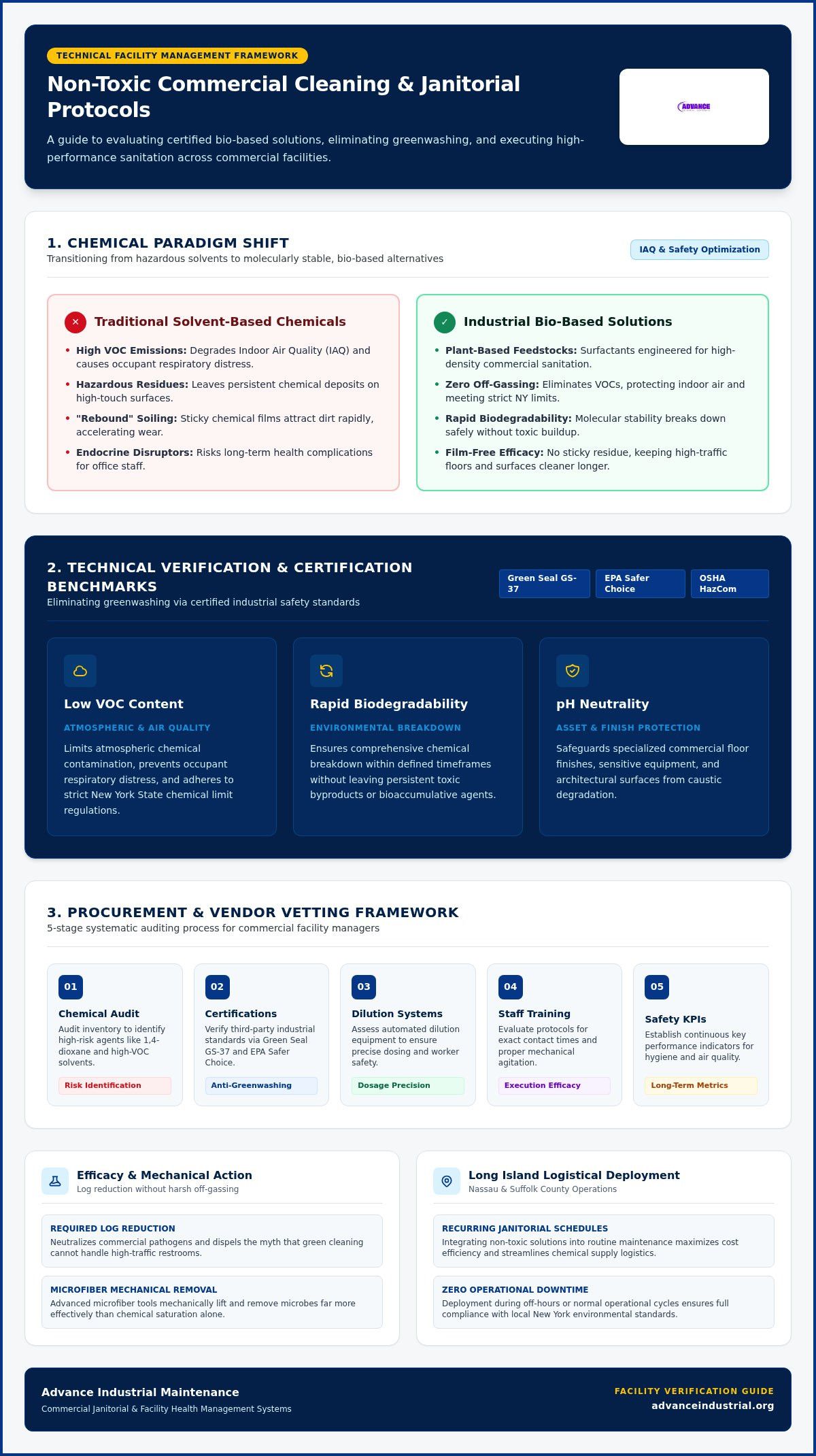
Commercial facility management requires a technical shift from traditional solvent-based chemicals to advanced bio-based alternatives. Unlike residential products, non-toxic office cleaning solutions must deliver industrial-strength performance while eliminating volatile organic compounds (VOCs). These VOCs often degrade indoor air quality (IAQ) and lead to long-term health issues for office occupants. By utilizing surfactants derived from plant-based feedstocks, facilities can achieve high-density sanitation without the risk of hazardous chemical residues or respiratory irritants.
Maintaining high standards for office health involves analyzing the molecular stability of cleaning agents. Green cleaning protocols prioritize ingredients that biodegrade rapidly and lack endocrine disruptors. This pragmatic approach ensures that high-traffic surfaces remain disinfected without creating "rebound" soiling caused by sticky chemical films. Effective procurement focuses on products that balance environmental safety with the mechanical requirements of commercial-grade floor care and janitorial systems. It's about operational continuity and occupant wellness.
Regulatory Frameworks and Green Certifications for Office Maintenance
Procurement professionals rely on third-party validation to eliminate greenwashing and ensure technical authority. The Green Seal GS-37 standard and the EPA Safer Choice program provide rigorous, science-based benchmarks for industrial efficacy. These certifications ensure that non-toxic office cleaning solutions align with OSHA Hazard Communication standards. Facility managers must verify Safety Data Sheets (SDS) for these critical indicators:
- Low VOC Content: Limits atmospheric contamination and respiratory distress.
- Biodegradability: Ensures chemical breakdown within specific timeframes.
- pH Neutrality: Protects specialized floor finishes and sensitive equipment.
Relying on these frameworks protects the workforce, streamlines compliance, and preserves physical assets. It's a necessary step for any high-performance operation.
Commercial Buying Guide: Selecting Green Cleaning Systems and Vendors
Procurement managers require a systematic framework to vet commercial vendors and implement sustainable procurement. First, audit current chemical inventories to identify high-risk toxic agents like 1,4-dioxane or high-VOC solvents. Second, eliminate greenwashing pitfalls by verifying third-party industrial certifications for non-toxic office cleaning solutions via EPA's Safer Choice program or Green Seal GS-37. Third, assess vendor dilution equipment and concentrated chemical safety protocols to ensure precise dosing and minimize workforce exposure.
Fourth, evaluate staff training programs regarding exact contact times and proper mechanical agitation. Fifth, establish ongoing key performance indicators (KPIs) for facility cleanliness and safety metrics. This structured vetting process guarantees that your green procurement initiatives deliver measurable operational results. It's a reliable way to protect your facility. Aligning with an experienced provider of commercial janitorial services ensures these rigorous safety standards are maintained consistently across your entire regional footprint.
Efficacy Testing: Balancing Pathogen Control with Environmental Health
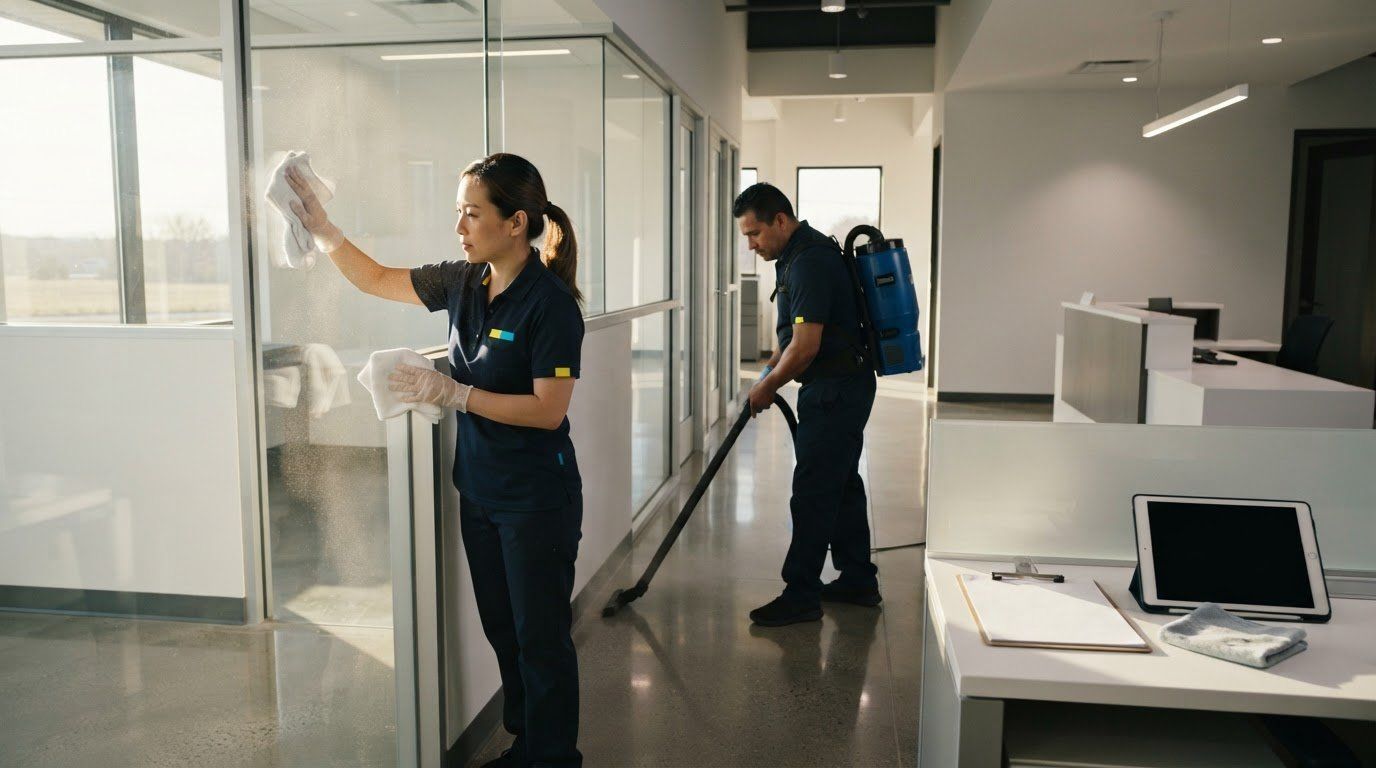
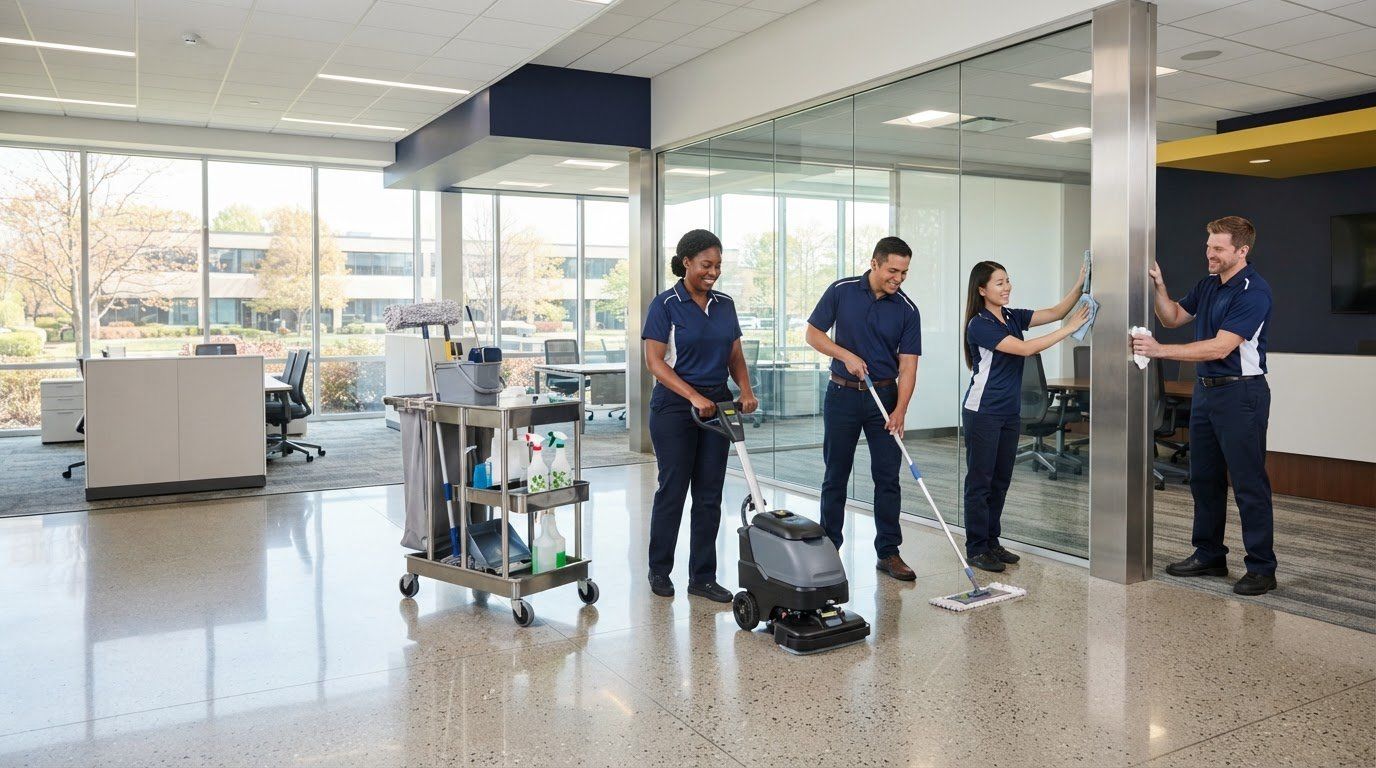
Industrial-grade non-toxic office cleaning solutions achieve the required log reduction rates to neutralize pathogens in commercial spaces without harsh off-gassing. Combining these solutions with the mechanical action of advanced microfiber tools removes microbes more effectively than traditional chemical saturation methods. This advanced technical approach dispels the common misconception that green alternatives compromise high-traffic restroom sanitation. Relying on scientifically validated protocols maintains sterile environments, optimizes indoor air quality, and protects long-term asset integrity across your real estate portfolio.
Implementing Sustainable Janitorial Protocols in Long Island Offices
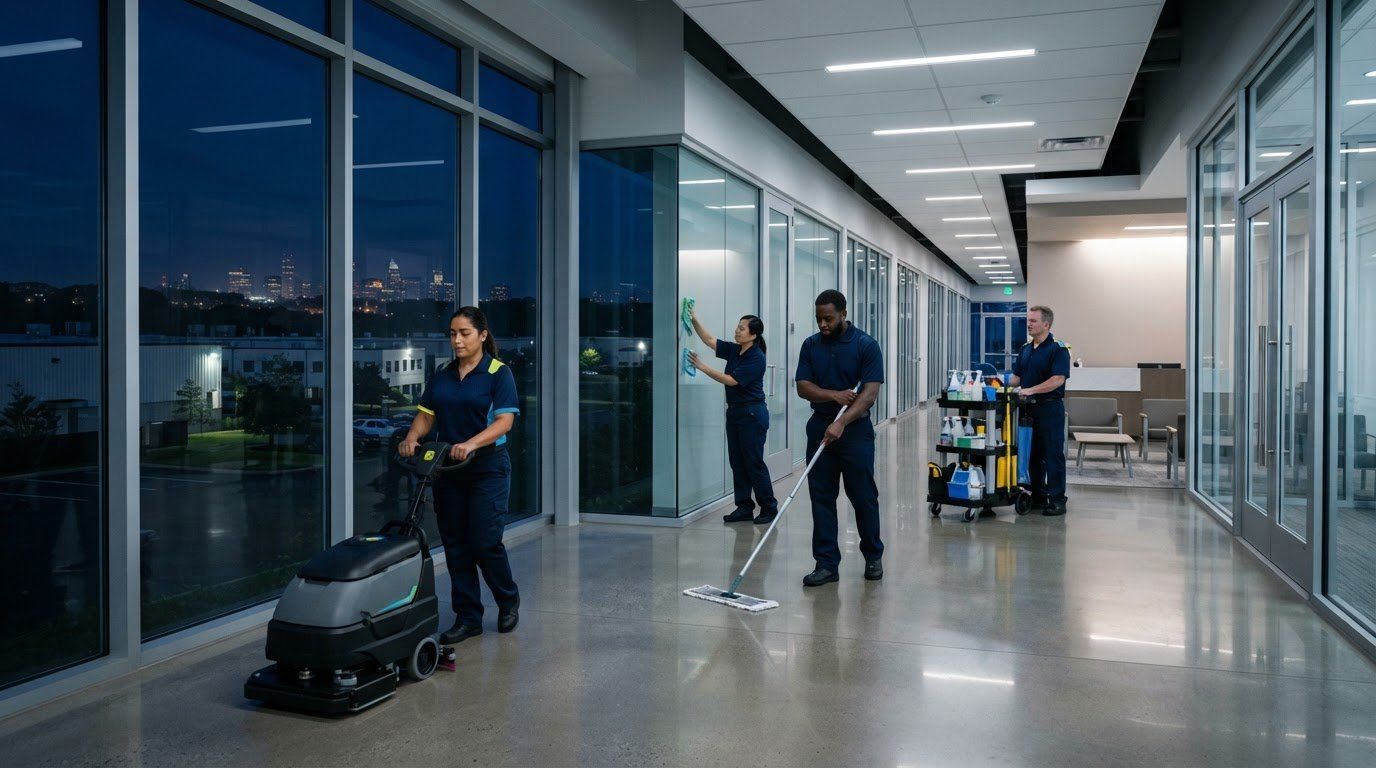
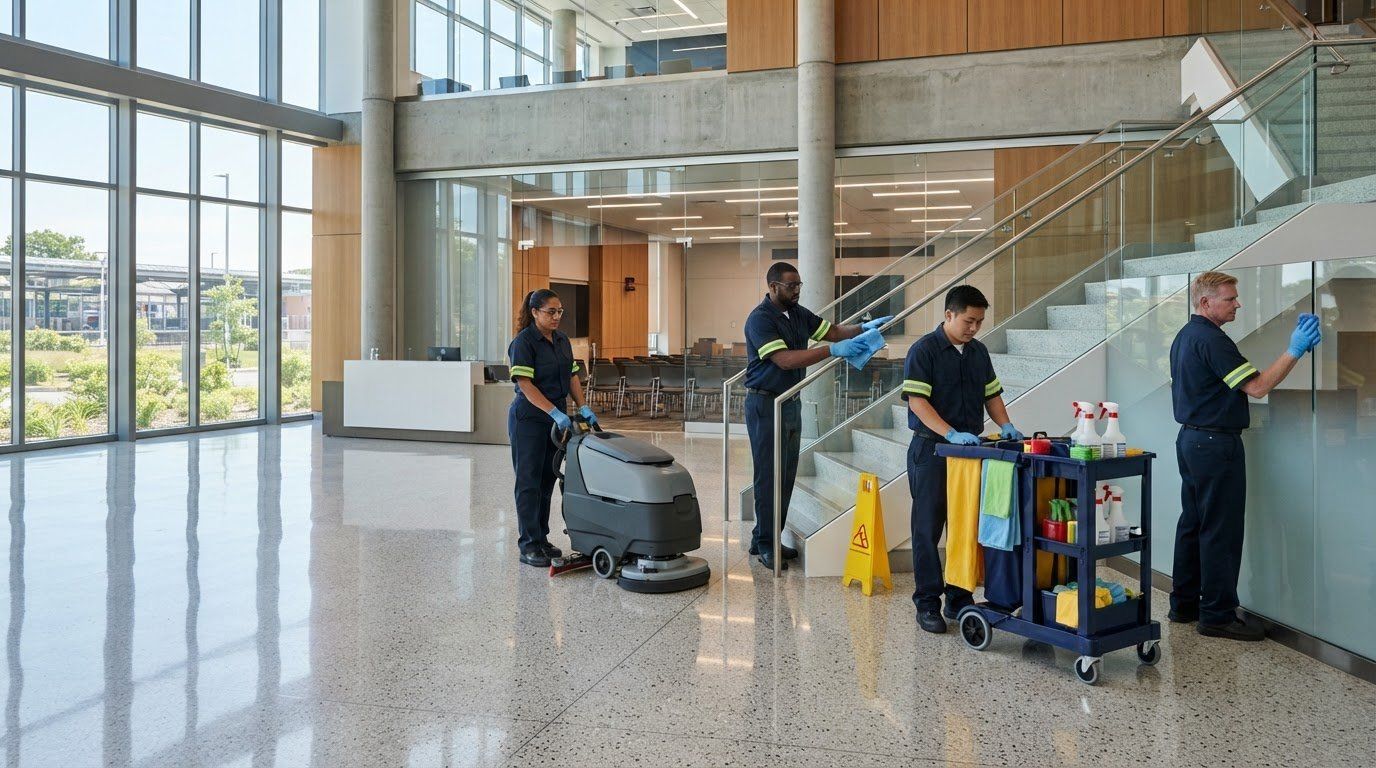
Logistical execution across Nassau and Suffolk Counties requires a disciplined approach to facility maintenance. It's vital to integrate non-toxic office cleaning solutions into recurring janitorial service schedules to maximize cost efficiency and streamline supply logistics. This transition eliminates the need for harsh solvents while ensuring adherence to local environmental standards. Efficient scheduling allows for the seamless deployment of bio-based agents without disrupting standard business hours or increasing operational downtime.
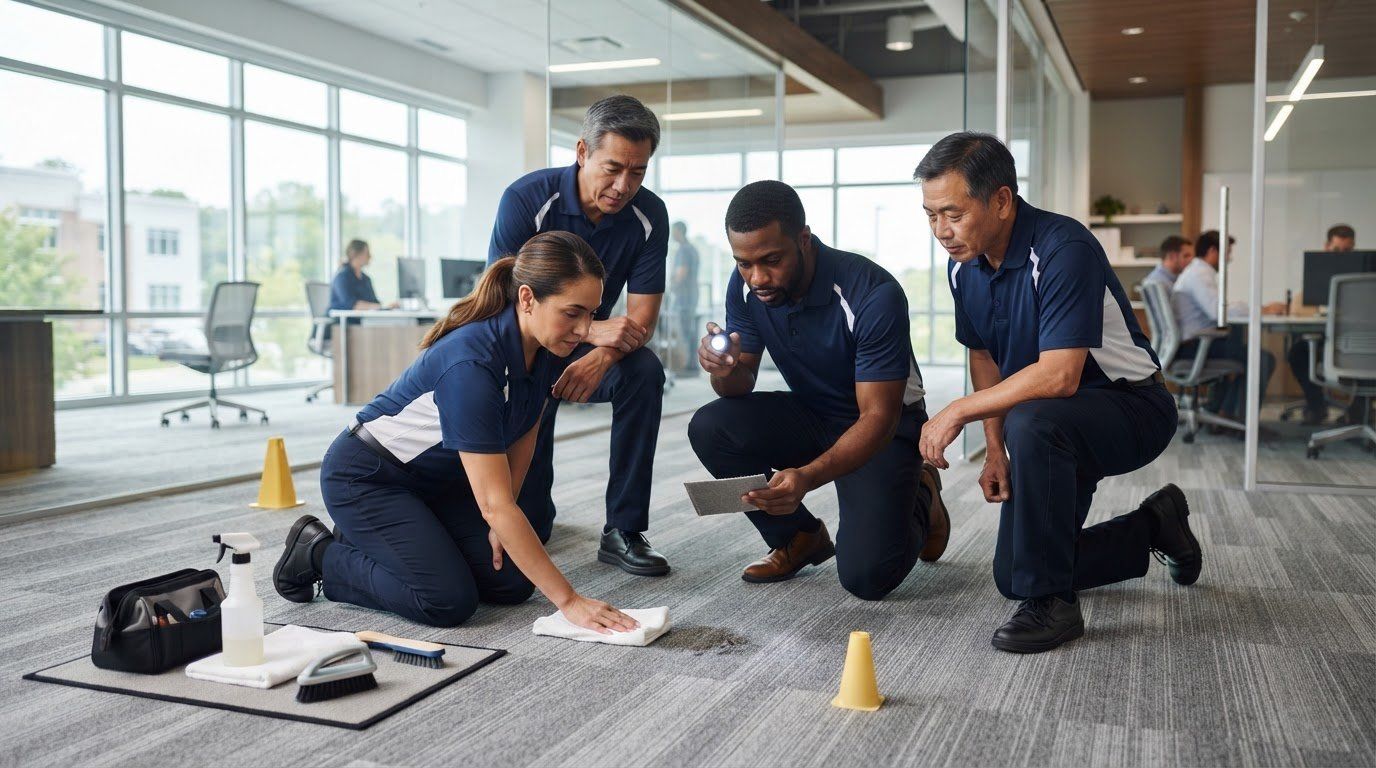
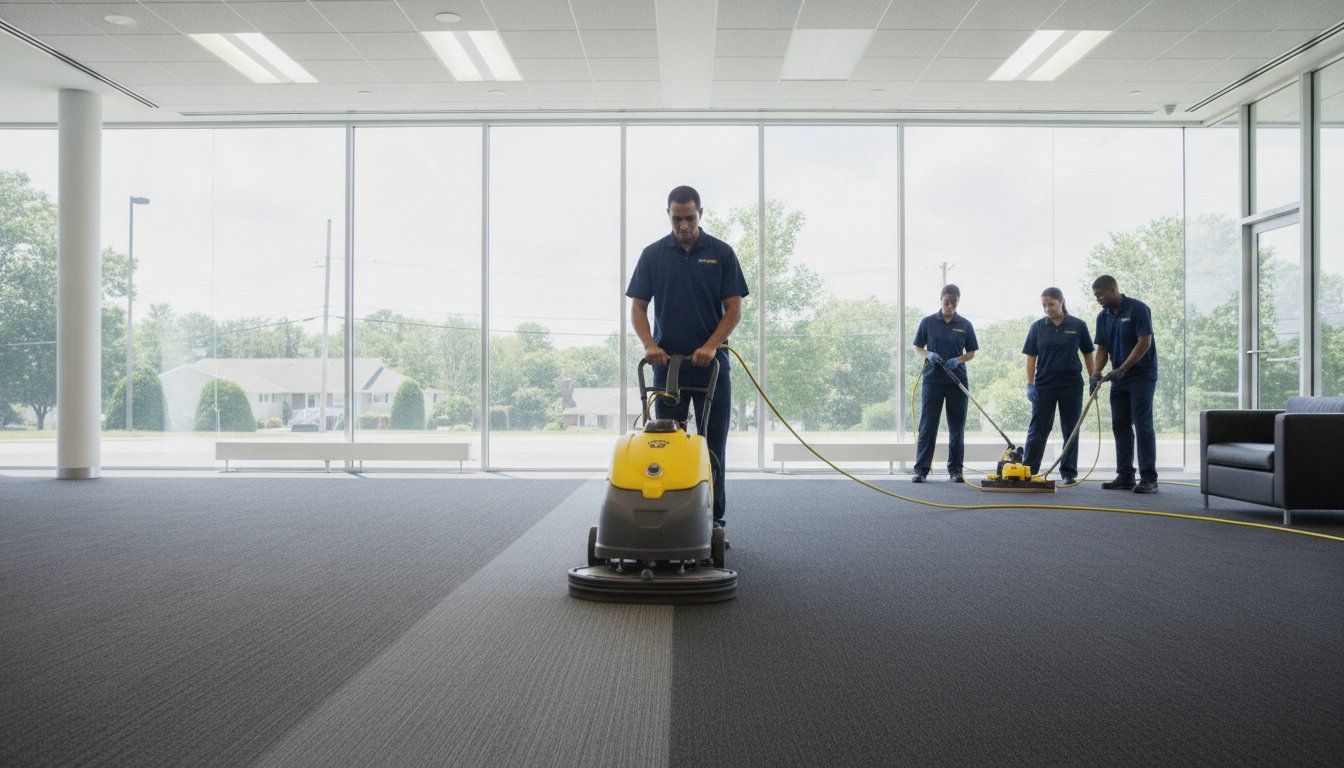
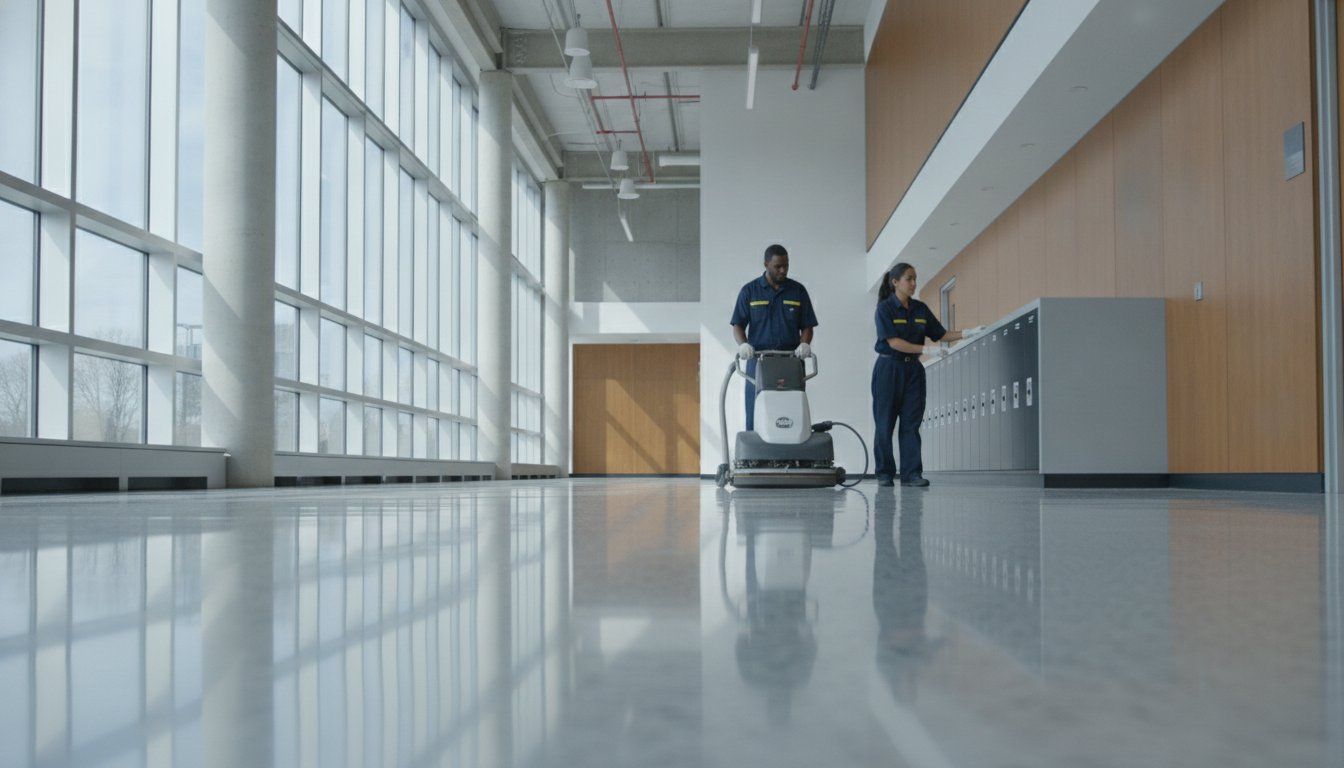
Specialized maintenance extends to high-density surfaces like commercial carpeting and tile. Utilizing low-emission, non-toxic office cleaning solutions during extraction techniques preserves carpet fibers and prevents the accumulation of hazardous residues. These protocols mitigate negative health and environmental impacts by improving indoor air quality and extending asset longevity. Daily office cleaning routines must also align with rigorous waste stream management. Proper recycling sorting and sustainable disposal methods ensure that the facility’s environmental footprint remains minimal while maintaining peak sanitation levels.
Partnering for Long-Term Facility Operational Stability
Custom maintenance programs are essential for protecting corporate assets and reducing long-term liability risks. Partnering with a seasoned provider like Commercial Cleaning Services Advance Industrial Maintenance, which brings over 40 years of regional expertise, ensures your facility benefits from advanced commercial maintenance protocols developed since 1984. Procurement managers should establish collaborative alliances with certified specialists who understand the unique demands of Long Island’s industrial landscape. It's this level of dependability that transforms a standard vendor relationship into a strategic extension of your operational team, ensuring consistent facility stability through professional janitorial services.
Securing Long-Term Operational Stability through Sustainable Maintenance
Transitioning to non-toxic office cleaning solutions is a pragmatic strategy that protects building occupants and preserves physical assets. By adhering to the vetting frameworks and certification standards outlined in this guide, procurement managers can eliminate greenwashing risks and ensure regulatory compliance. It's about establishing a baseline of health and safety that supports long-term industrial stability without sacrificing disinfection efficacy or operational uptime.
Commercial Cleaning Services Advance Industrial Maintenance offers the technical authority and logistical support required for high-density corporate environments. Our over 40 years of Long Island commercial cleaning expertise and comprehensively trained professional janitorial staff ensure that your tailored corporate maintenance programs are executed with precision. Establish a Certified Green Cleaning Protocol with Commercial Cleaning Services Advance Industrial Maintenance to stabilize your facility’s health metrics and protect your investment. We look forward to being your dependable partner in operational success.
Frequently Asked Questions
Are non-toxic office cleaning solutions as effective as traditional chemical agents?
Commercial-grade non-toxic office cleaning solutions are highly effective and meet industrial sanitation requirements. These bio-based agents utilize advanced surfactants to achieve necessary log reduction rates for pathogens without hazardous residues. When combined with mechanical agitation and proper contact times, they provide a level of cleanliness that equals or exceeds traditional solvent-based chemicals while improving indoor air quality for facility occupants.
How do green cleaning protocols impact commercial facility maintenance costs?
Green cleaning protocols typically reach cost parity with traditional methods through the use of concentrated chemical systems and precision dilution equipment. Implementing non-toxic office cleaning solutions reduces long-term facility costs by preserving building assets like flooring and carpets. Additionally, improved indoor air quality can lower employee absenteeism, providing a pragmatic advantage for regional procurement managers focused on operational efficiency and overall facility stability.
What certifications should I look for in commercial non-toxic cleaning products?
Facility managers should prioritize products with third-party industrial certifications to ensure technical efficacy and safety. Look for the Green Seal GS-37 standard, which is specifically designed for industrial and institutional use. Other reliable markers include the EPA Safer Choice label and EcoLogo certification. These science-based benchmarks verify that cleaning agents meet rigorous standards for human health, environmental impact, and mechanical performance.
Can non-toxic cleaning programs help our facility achieve LEED certification?
Implementing a non-toxic cleaning program is a critical step toward achieving LEED certification for your Long Island facility. These solutions contribute points under the Indoor Environmental Quality and Sustainable Purchasing categories. By documenting the use of certified green chemicals and high-performance janitorial equipment, facility managers demonstrate a commitment to environmental stewardship that satisfies the rigorous requirements of the U.S. Green Building Council.