Professional Cleaning Staff Uniforms for a Trusted Business Image
Polos aren’t automatically the more professional choice. A professional image and uniformed cleaning staff go together when uniforms suit the work, fit well, and stay clean and presentable. Polos create a more structured look for customer-facing teams, while T-shirts offer a simple option for active cleaning duties.
Either can work. The key is balancing appearance with breathable, durable fabric and enough freedom to move comfortably. This article explains how uniforms help customers identify cleaning staff, what to prioritize in fit and fabric, and how to choose between polos and T-shirts for your team.
Key Takeaways
- Consistent branding on workwear can reinforce company recognition while helping customers distinguish staff from other people on site.
- Compare garments by durability, ease of cleaning, and suitability for the tasks your team performs.
- Clear standards for uniform care, appearance, and replacement help keep presentation consistent across the team.
- When workplace cleaning needs extend beyond staff presentation, understand how a dedicated office cleaning service can support a well-maintained business environment.
Table of Contents
Uniforms as a branding and marketing tool
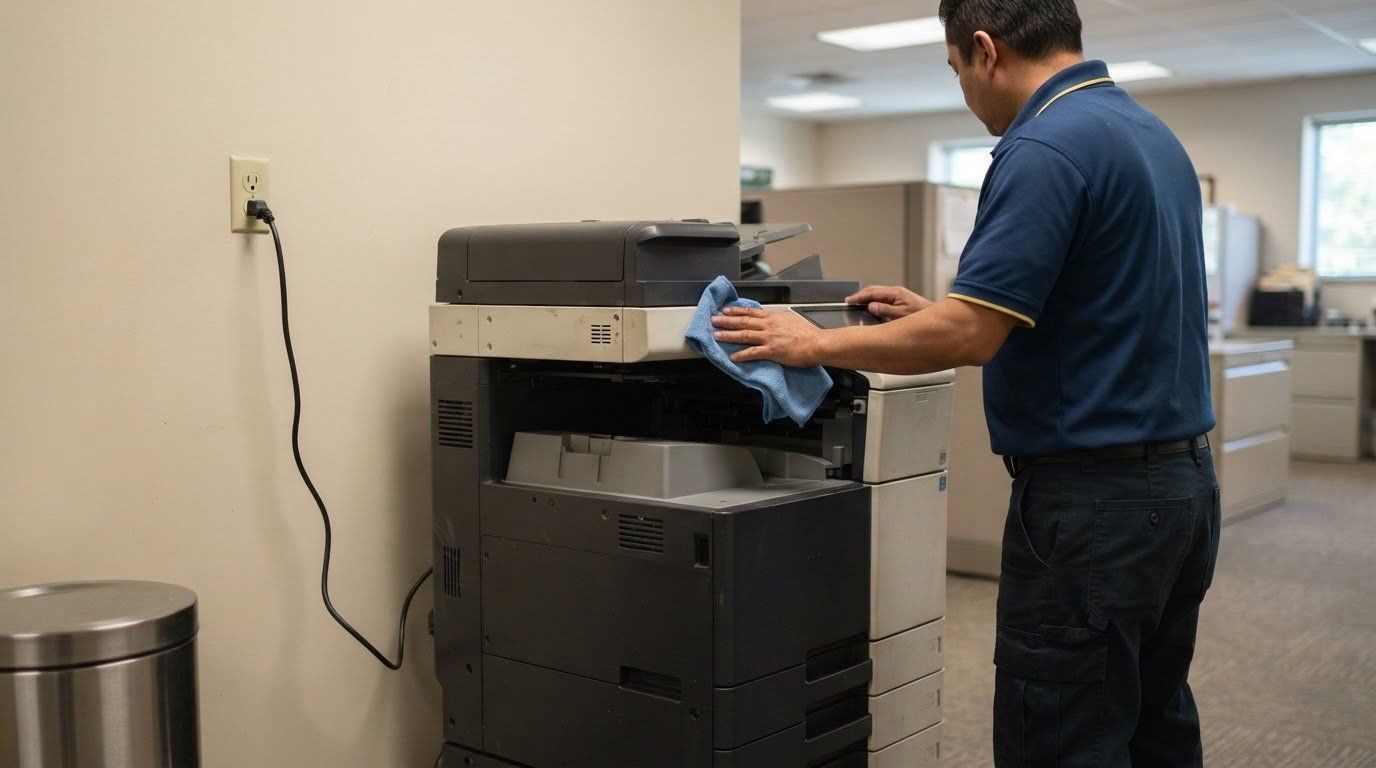
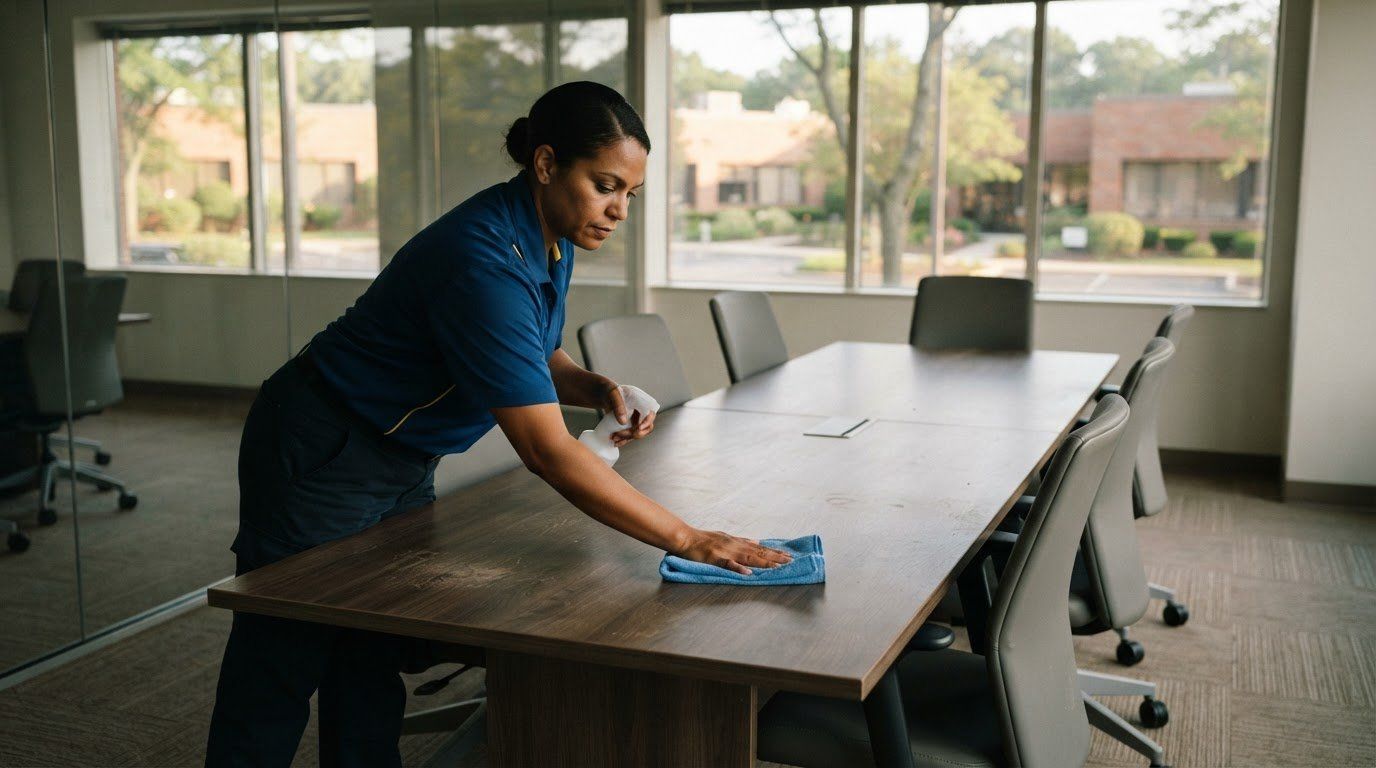
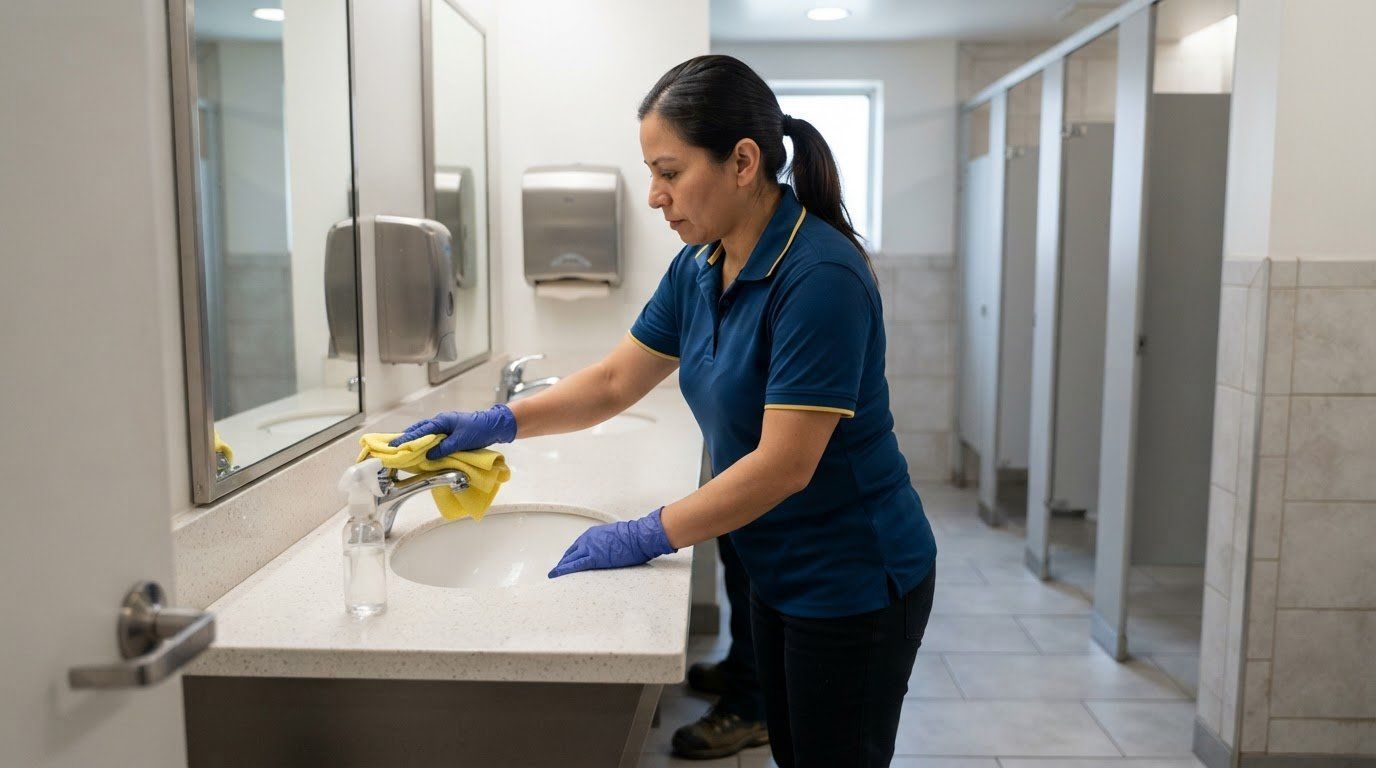
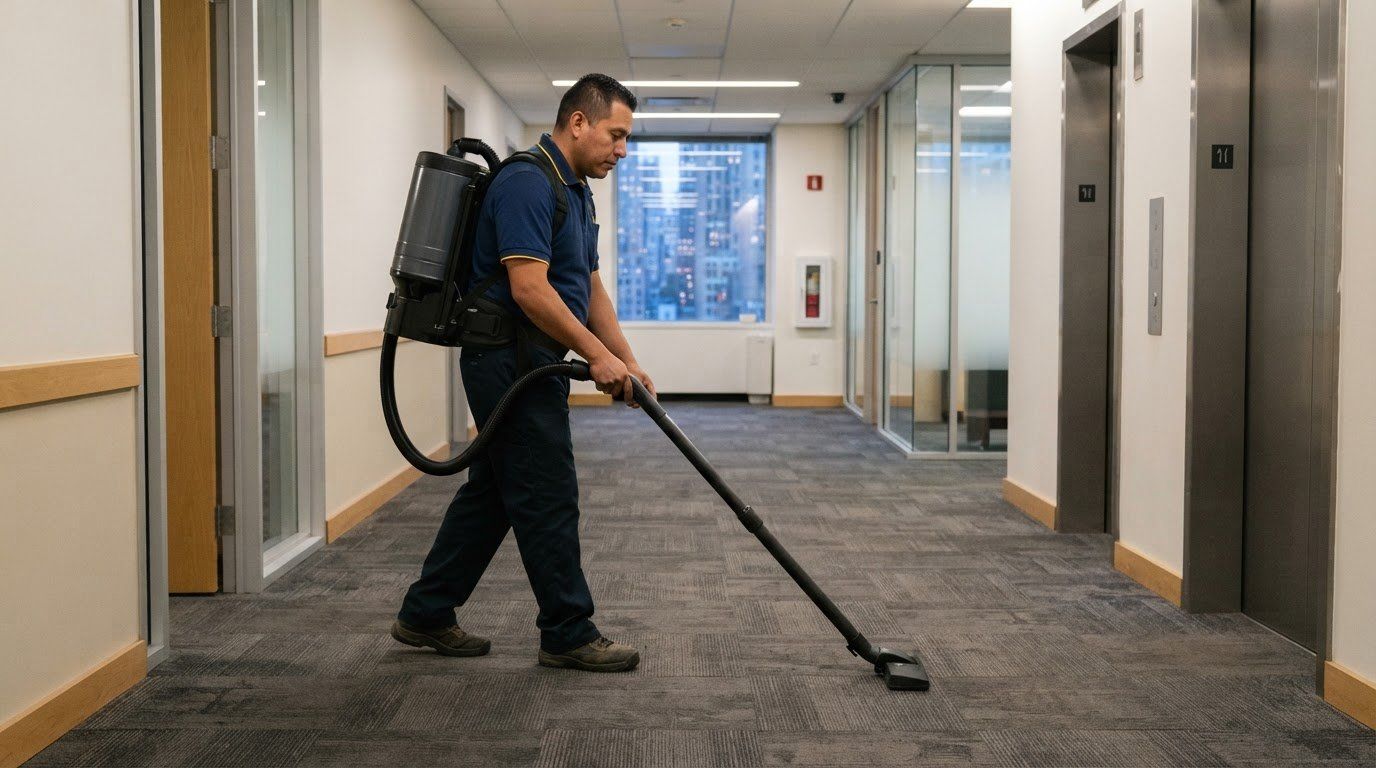
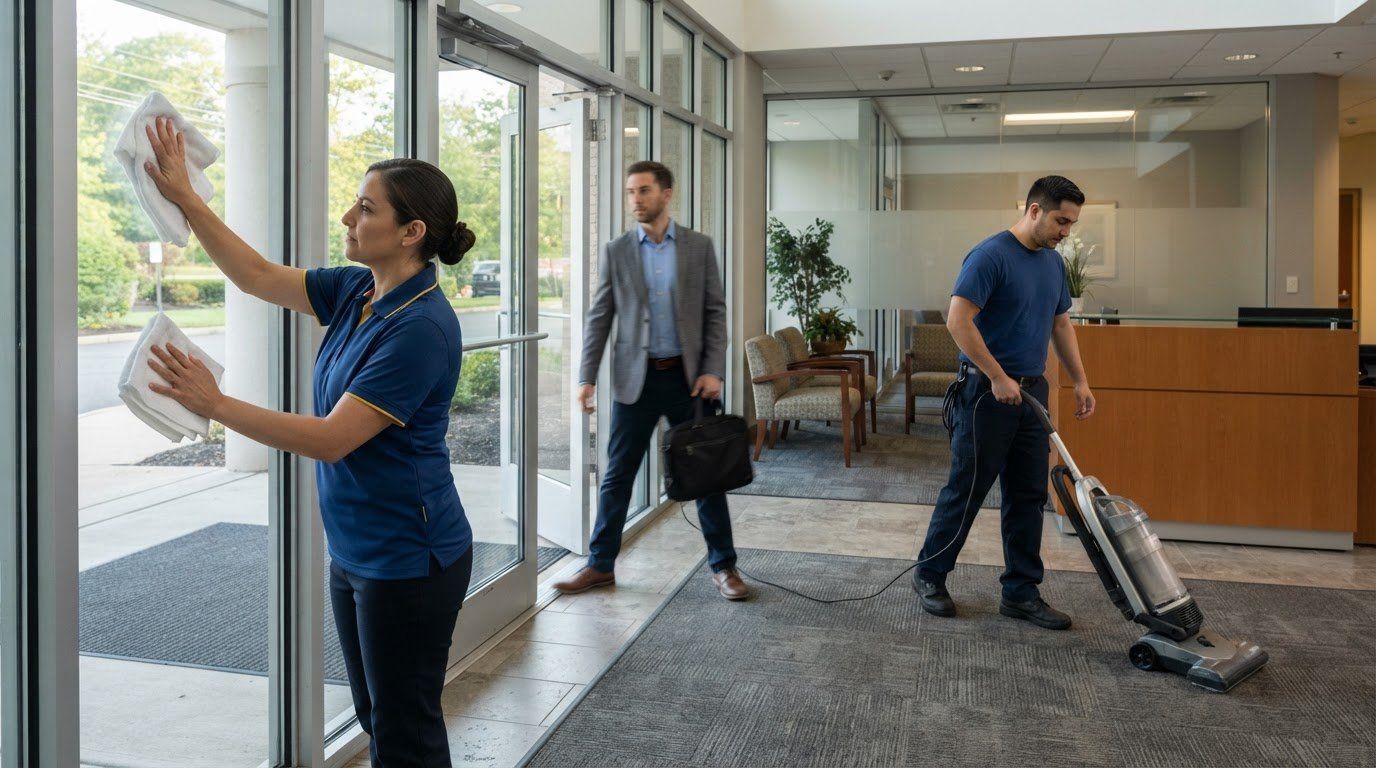
Uniformed cleaners are easier to recognize as authorized personnel than staff in ordinary clothing. In a shared office, matching shirts and a visible logo give visitors a clear cue.
Uniforms and Brand Recognition
Uniforms turn staff clothing into a consistent brand marker. Matching shirts with the company name and logo can make a cleaning team recognizable across its service locations. That visibility can reinforce brand awareness in the community, especially when employees travel between customer sites. A left-chest logo around 3.5 inches gives customers a clear identifier without dominating the garment. It also connects cleaning work in a facility with the company responsible for it.
Customer Perceptions of Uniformed Staff
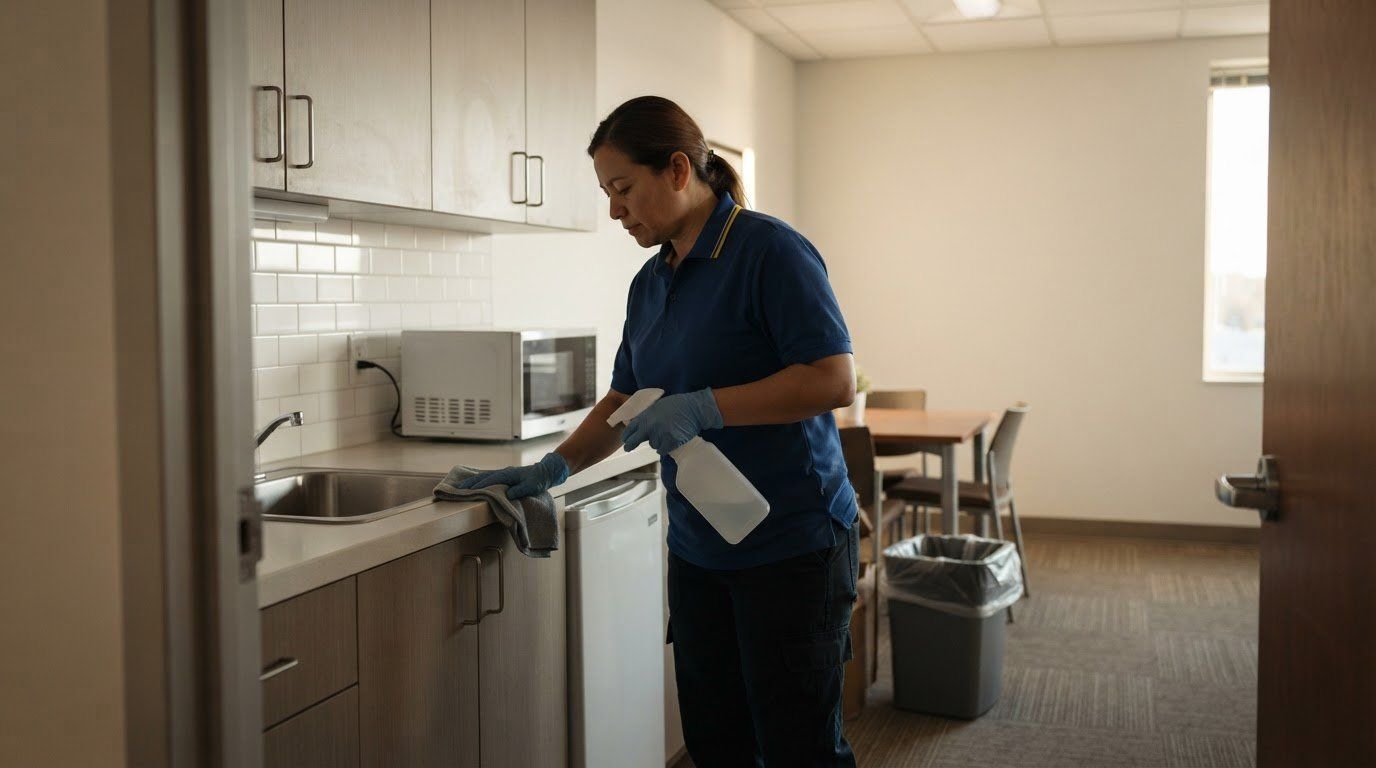
Customer perception is shaped by visible cues, including whether a cleaner appears authorized. A uniform gives customers a recognizable point of reference; an employee in ordinary clothing may be harder to distinguish from visitors or other workers. For example, a matching shirt can clarify who is assigned to clean a reception area. That distinction matters in workplaces where staff enter occupied rooms and customers need to identify them quickly.
Professional Image and Customer Confidence
Professional image is the impression created by an employee’s appearance and consistency on site. A clean, well-maintained uniform signals care and attention to detail, while matching garments can make a crew look coordinated. Managers can support that standard with clear rules for clean clothing, visible logos, and suitable accessories. Consistent presentation gives employees a shared visual identity and can strengthen pride in representing their team.
Janitor and cleaning staff uniforms
Choose uniforms for movement, comfort, and the cleaning tasks employees perform. Fabric, fit, laundering, and protective equipment all affect daily use.
Choosing Uniforms for Cleaning Tasks
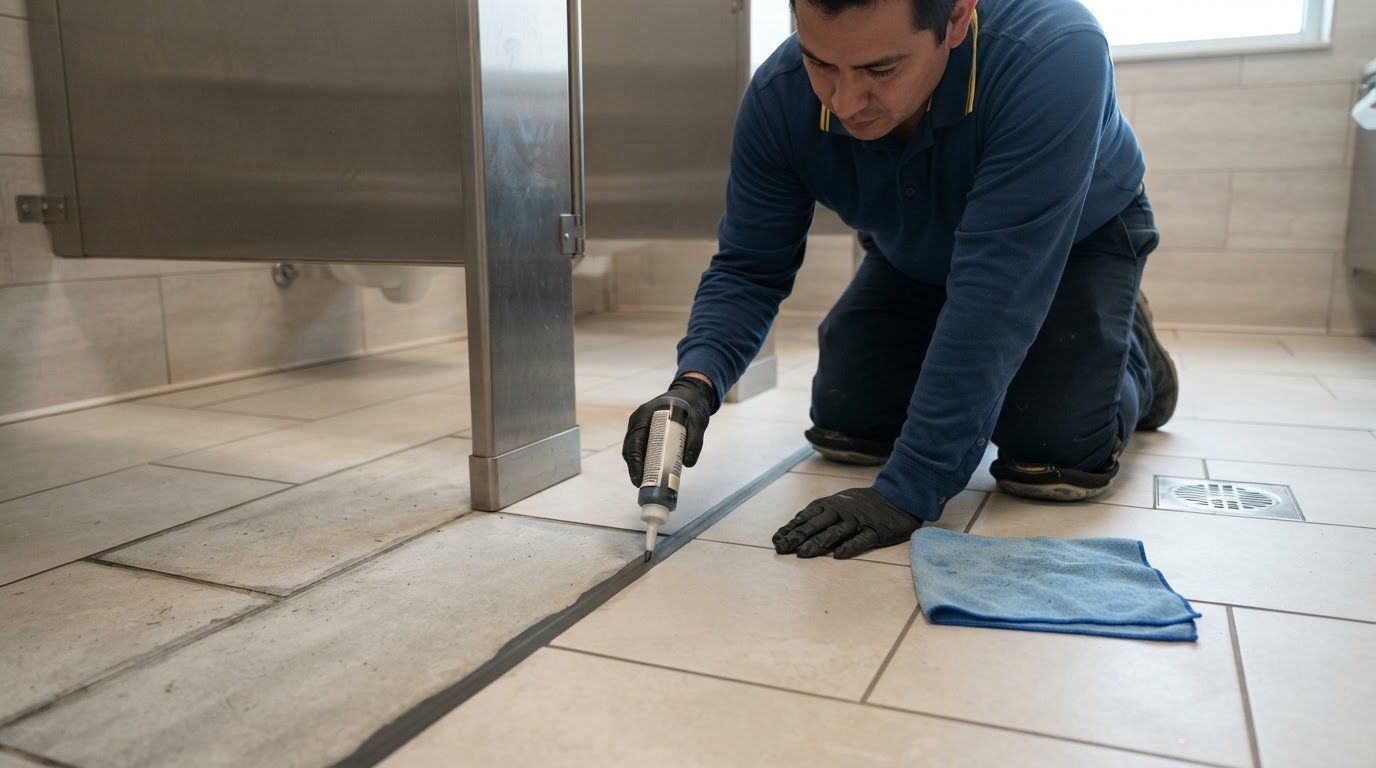
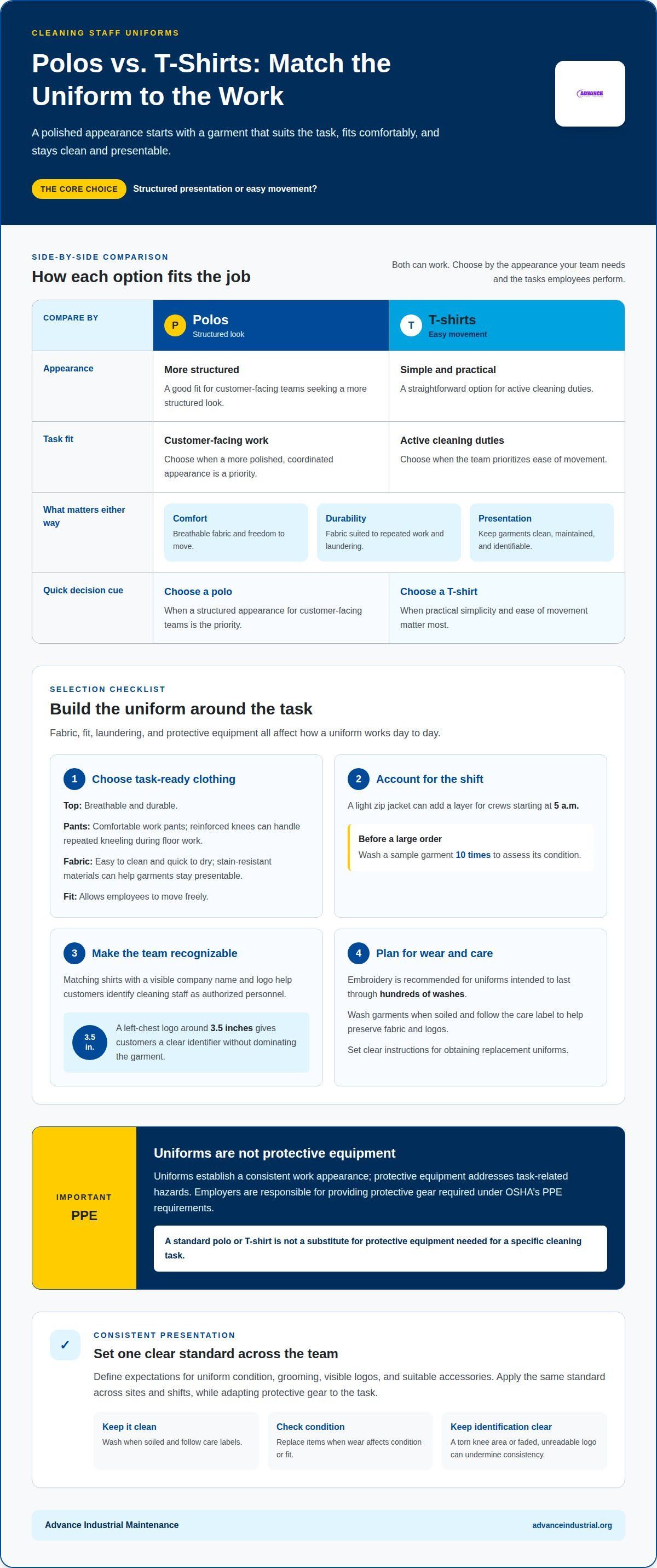
A practical cleaning uniform pairs a breathable, durable top with comfortable work pants. Polos create a structured appearance; T-shirts suit teams that prioritize ease of movement. For floor work, reinforced knees can handle repeated kneeling, while stain-resistant materials can help garments stay presentable. Choose easy-to-clean fabrics that dry quickly, and make sure each garment allows employees to move freely.
Match the garment to the shift and task. A light zip jacket can add a layer for crews starting at 5 a.m. Before placing a large order, wash a sample garment ten times to assess its condition. Embroidery is recommended for uniforms intended to last through hundreds of washes.
Uniforms and Protective Equipment
Uniforms establish a consistent work appearance; protective equipment addresses task-related hazards. Employers are responsible for providing protective gear required under OSHA’s PPE requirements. A standard polo or T-shirt isn’t a substitute for protective equipment needed for a specific cleaning task.
Wash garments when soiled and follow the care label to help preserve fabric and logos. Set clear instructions for obtaining replacement uniforms, and replace items when wear affects their condition or fit. For example, a torn knee area or a faded, unreadable company logo can undermine a consistent uniform standard.
What makes a professional image important for cleaning staff?
A cleaning crew’s appearance affects how customers interpret its work before a task is complete. Clean uniforms, consistent grooming, and clear identification help show that employees represent an organized operation. For example, a visitor entering an office can distinguish a uniformed cleaner from someone without a visible work role. That clarity can reduce uncertainty when staff move through occupied spaces.
The professional image created by uniformed cleaning staff also depends on conduct. A uniform can identify an employee, but respectful communication and attention to the work area reinforce that impression. In a reception area, a cleaner who wears the designated uniform, keeps supplies orderly, and avoids blocking visitor access presents a coordinated service. Appearance and behavior work together; clothing alone cannot demonstrate the quality of completed work.
Consistent standards give employees a practical reference for representing their team. Set expectations for uniform condition, grooming, and appropriate accessories, then apply them across shifts. For instance, a supervisor can include uniform appearance in a team briefing alongside site-specific instructions. This reduces guesswork about what to wear and helps employees understand how they represent the organization at customer locations.
Use the same standard for every site, while adapting protective gear to the task. Customers then see a recognizable team rather than unrelated individuals, and employees have a clear basis for presenting themselves. For office environments that need dependable cleaning support, discuss your office cleaning needs with the team.
Commercial Cleaning Services Advance Industrial Maintenance: Office Cleaning
Commercial Cleaning Services Advance Industrial Maintenance provides Office Cleaning for businesses that need professional cleaning support in the workplace. Consider this service when your team needs help maintaining shared offices, work areas, and customer-facing spaces alongside its operational priorities.
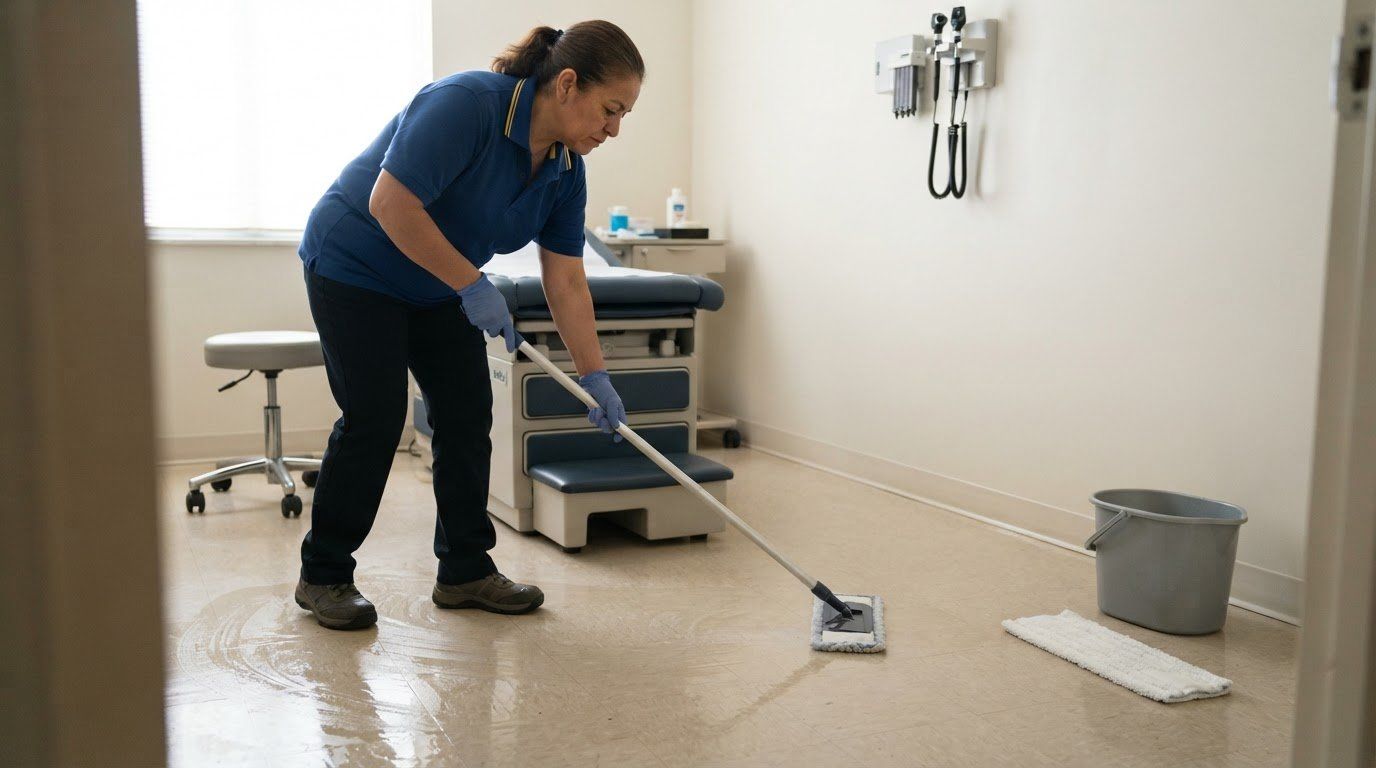
Cleaning needs can also involve specific facility tasks. Advance Industrial Maintenance offers Medical Facility Cleaning, Floor Stripping and Waxing, and Window Cleaning. These services address distinct requirements, from maintaining medical environments to caring for floors and windows. Start by identifying the facility and the work required.
For office cleaning support, contact Commercial Cleaning Services Advance Industrial Maintenance.
Set a Consistent Standard for Your Workplace
Make uniform expectations part of your wider workplace presentation standard. Choose clothing that suits the tasks, define how employees maintain it, and apply the same expectations across work areas. Professional image and uniformed cleaning staff work best together when appearance supports the customer experience throughout the facility.
That standard works alongside a clean, well-maintained environment. Commercial Cleaning Services Advance Industrial Maintenance offers Office Cleaning, Medical Facility Cleaning, and Floor Stripping and Waxing. These services support businesses addressing workplace cleaning, medical facility needs, or floor maintenance as part of their facility operations.
To discuss cleaning support for your workplace, contact Commercial Cleaning Services Advance Industrial Maintenance. A clear plan for staff presentation and facility care gives your team a practical foundation for a trusted business image.
Frequently Asked Questions
Should cleaners wear polos or t-shirts?
Choose polos for customer-facing duties and T-shirts for work that prioritizes easy movement. A company can use one style across the full team or assign styles by role, provided employees remain easy to identify. For example, cleaners who regularly interact with office visitors may wear polos, while staff focused on back-of-house tasks wear T-shirts in the same colors.
Should cleaning uniforms have employee names on them?
Employee names are optional; a clear company identifier may be enough for customers to recognize cleaning staff. A first-name badge can make direct interactions easier, such as when an office employee needs to direct a cleaner to a specific room. Keep the badge readable and consistent, and decide whether names suit the access and customer-interaction needs of each workplace.
What should a cleaning company uniform include?
A cleaning uniform should include a suitable work top, comfortable bottoms, and a visible company identifier. Add task-appropriate protective equipment based on the work being done. For example, a cleaner assigned to floor care may need different protective gear from an employee handling routine office tasks. Set a baseline uniform standard, then define task-specific additions for each role.
What are the benefits of uniformed cleaning staff for customer trust and brand image?
Uniforms give customers a consistent point of reference when they need to identify or speak with cleaning staff. In a multi-tenant office, a recognizable team can help occupants direct a maintenance request to the right people. Consistent appearance also makes the business identity visible during routine service visits, supporting a coordinated impression throughout the workplace.
What should cleaning companies consider when adding logos or name badges to uniforms?
Prioritize readability, placement, and compatibility with daily work. A logo should contrast clearly with the garment color and remain visible during normal movement. Position badges where customers can read them without interfering with work or protective equipment. Consider laundering, too: securely attached branding can stay in place through repeated care, while detachable badges can be removed before washing.