Commercial Cleaning for Sensitive Equipment in Workplaces
A clean workspace shouldn’t come at the cost of a damaged control panel or instrument. Commercial cleaning for sensitive equipment starts with matching the cleaner to the device and work environment, keeping chemicals separate, and switching off and unplugging equipment before cleaning. Bleach, ammonia, and abrasive products can damage sensitive surfaces or components, so a one-product-fits-all approach can cause problems.
A cleaning routine should support hygiene and operational continuity. Protect equipment while addressing the surrounding workplace, without exposing devices to incompatible chemicals or excess moisture.
This article explains how to choose cleaners for different work environments, avoid mixing products, and prepare and isolate equipment before cleaning. It also covers how a planned cleaning approach can fit into broader commercial maintenance.
Key Takeaways
- Keep bleach, ammonia, and abrasive cleaners away from sensitive equipment, and never mix cleaning products.
- Switch off and unplug electronic devices before cleaning, and keep moisture away from openings and components.
- Choose cleaning products and methods to suit the equipment and the conditions in its work environment.
- Coordinate equipment care with broader workplace cleaning to support a hygienic space and protect operational continuity.
Table of Contents
Chemical safety and avoiding mixed cleaners
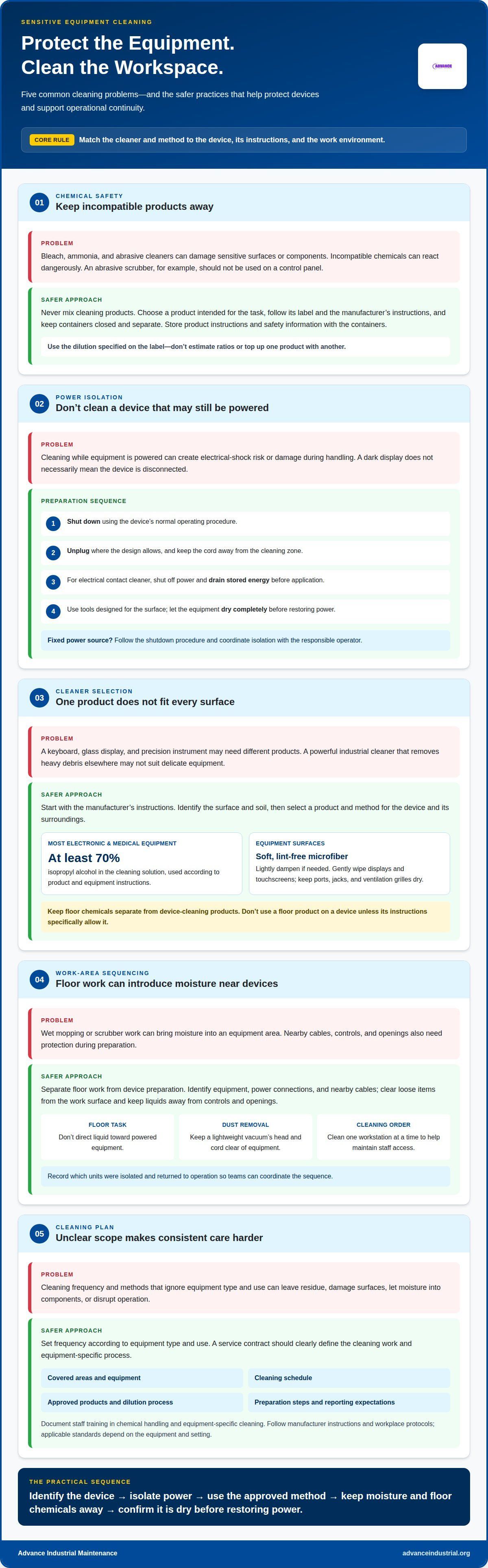
Keep bleach, ammonia, and abrasive cleaners away from sensitive equipment. Never combine products: incompatible chemicals can react dangerously, while harsh ingredients may damage surfaces and components. For example, don’t use an abrasive scrubber on a control panel. Choose a cleaner suited to the device and work setting, and follow the manufacturer’s cleaning instructions.
For commercial cleaning chemicals, use clearly labeled products intended for the task. Keep containers closed and separate, and store product instructions and safety information with them. Follow label precautions when handling solvents and chemicals, and prevent spills near equipment openings. A dispensing system should provide the dilution specified on the label; don’t estimate ratios or top up one product with another.
No single certification applies to every equipment type and workplace. Set requirements for documented staff training in chemical handling and equipment-specific cleaning procedures. In the United States, applicable standards depend on the equipment and setting. Use manufacturer instructions and workplace protocols to guide product selection and handling.
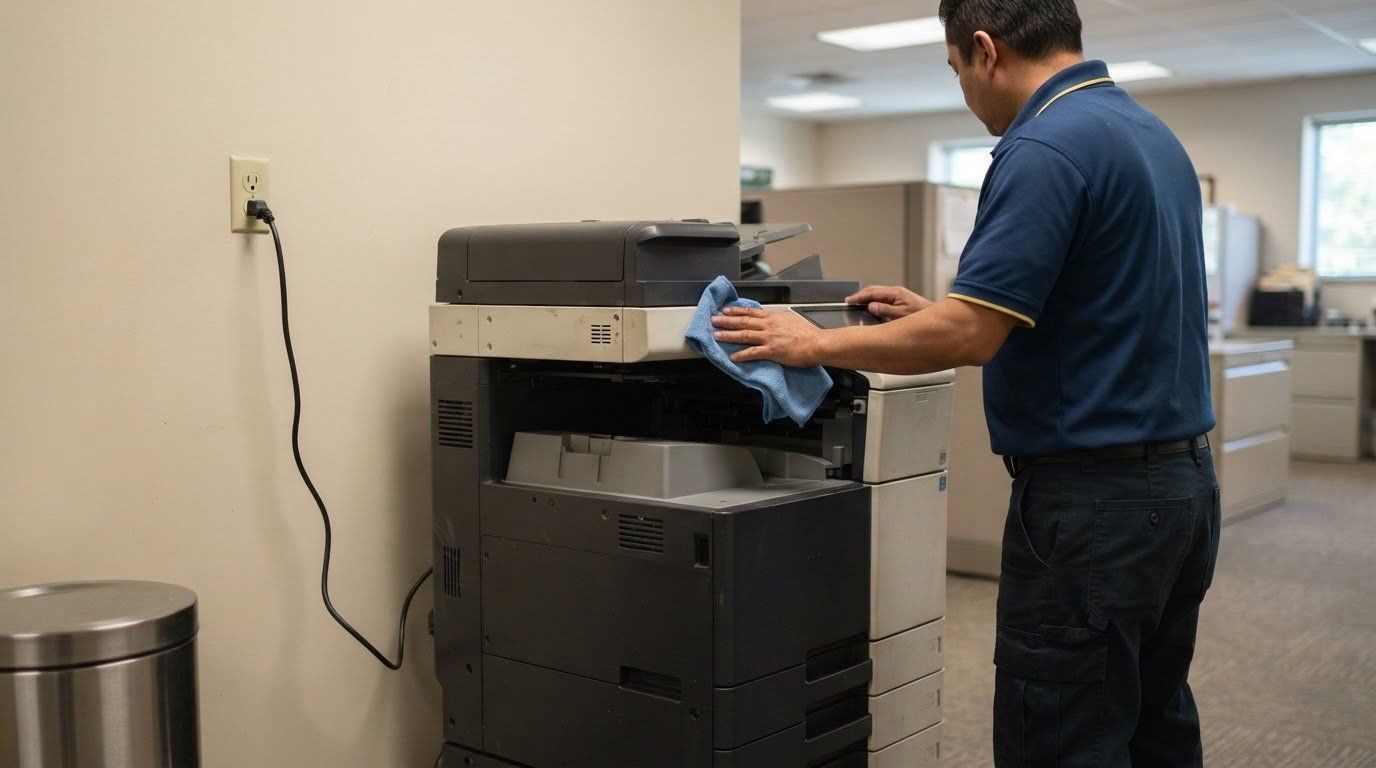
To clean electronics or precision equipment safely, identify an approved product and apply it to a soft cloth, not directly to the device. Keep moisture away from ports, jacks, and ventilation grilles. Avoid bleach, ammonia, and abrasive cleaners, and let surfaces dry before operating the equipment.
Set cleaning frequency according to equipment type and use. Shared workstation peripherals may need a different schedule from precision instruments in a controlled area. Improper cleaning can leave residue, damage surfaces, let moisture into components, or disrupt operation. A service contract should define the covered areas and equipment, schedule, approved products, dilution process, preparation steps, and reporting expectations.
Power isolation and equipment preparation
Switch off and unplug an electronic device before cleaning. This reduces electrical-shock risk and helps prevent damage during handling. For equipment connected to a fixed power source, follow its shutdown procedure and coordinate isolation with the responsible operator. Never assume a dark display means the device is disconnected.
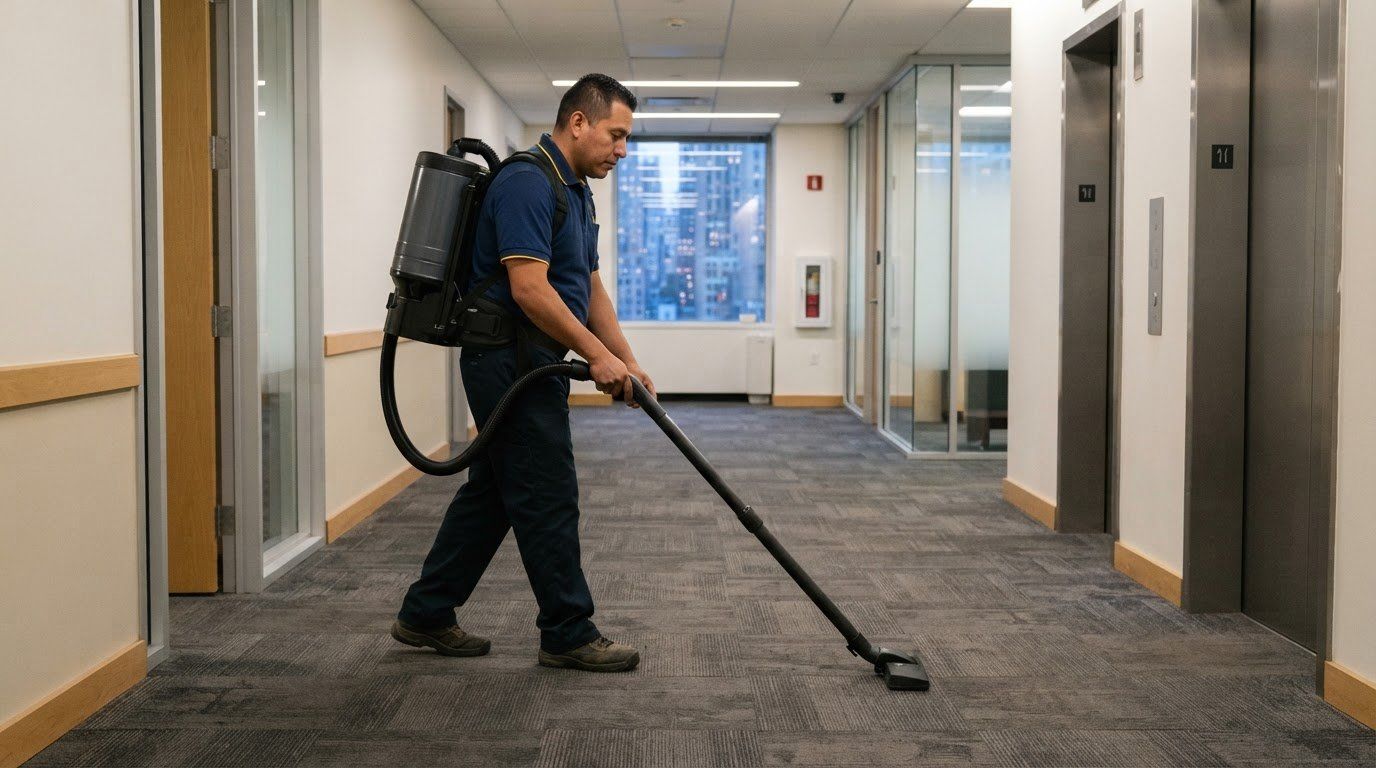
Prepare the work area before bringing in cloths, cleaning tools, or a vacuum. Identify the equipment, its power connection, and nearby cables. Move loose items from the immediate work surface, and keep liquids away from controls and openings. A lightweight vacuum can remove dust from nearby floors, but keep its head and cord clear of equipment.
- Shut down the device using its normal operating procedure.
- Unplug it where the design allows, then keep the cord away from the cleaning zone.
- For electrical contact cleaner, shut off power and drain stored energy before application.
- Use tools specifically designed for the surface, then allow the equipment to dry completely before restoring power.
A consistent preparation process is especially useful where devices are cleaned frequently. Record which units were isolated and returned to operation so teams can coordinate the sequence. For example, clean one workstation at a time rather than leaving several devices disconnected. This helps staff maintain access as cleaning proceeds.
Separate floor work from device preparation. A scrubber or wet-mopping task can introduce moisture into the area, so complete it without directing liquid toward powered equipment. Aligning equipment isolation with coordinated workplace cleaning helps keep the cleaning sequence organized.
Make power isolation the first preparation step to reduce electrical-shock risk. Unplug electronic devices before cleaning to help prevent damage during handling.
Cleaner selection for the work environment
Match each cleaning solution to the device and its surroundings. Start with the manufacturer’s cleaning instructions, then identify the surface and soil to be removed. A keyboard, glass display, and precision instrument may require different products. Don’t assume a powerful industrial cleaner suits delicate devices just because it removes heavy debris elsewhere.
For most electronic and medical equipment, use a cleaning solution containing at least 70% isopropyl alcohol. Apply it according to product directions and equipment instructions. Keep chemicals intended for floors separate from products used on devices. This distinction matters in settings where a scrubber or other floor machine handles construction dust, grime, or tracked debris.
Cleanrooms and sensitive equipment require controlled methods that limit residue, debris, and excess moisture. Use a soft, lint-free microfiber cloth on equipment surfaces, lightly dampened if needed. Gently wipe touchscreens and displays in circular motions, keeping ports, jacks, and ventilation grilles dry.
Choose a floor-cleaning method suited to the room’s layout and soil. A compact space with construction dust may call for targeted vacuuming and careful edge work, while larger floors may need a machine designed for that environment. Don’t use a floor product on device surfaces unless its instructions specifically allow it.
For consistent results, keep device cleaning separate from floor work, label dispensing containers, and follow each product’s dilution directions. These steps help prevent chemical transfer between tasks and support efficient cleaning in mixed-use spaces. A cleaning plan should account for equipment, surfaces, debris, and room operations.
Discuss workplace cleaning to align floor care with equipment-sensitive areas.
Commercial Cleaning Services Advance Industrial Maintenance
Commercial Cleaning Services Advance Industrial Maintenance helps keep the workplace around sensitive equipment clean and orderly. Its Office Cleaning and Medical Facility Cleaning services address the broader environment, while equipment-specific cleaning should follow device instructions and facility protocols.
Use a coordinated cleaning service when floors, shared spaces, or high-touch areas need attention alongside equipment zones. Clear task boundaries distinguish general workplace cleaning from device care, reducing the chance that unsuitable products or methods reach sensitive components. Discuss work areas, access needs, and priorities so the service fits your facility’s operations.
For dependable commercial cleaning as part of ongoing maintenance, contact Commercial Cleaning Services Advance Industrial Maintenance to discuss your facility’s needs.
Build a Cleaning Plan Around Equipment Care
Protecting sensitive devices depends on a cleaning plan suited to their surroundings and operating needs. Keep equipment-specific care distinct from general facility maintenance, and coordinate tasks so workplace cleaning supports reliable operations. Commercial cleaning for sensitive equipment works best when responsibilities and device-care procedures are clearly defined.
Commercial Cleaning Services Advance Industrial Maintenance supports cleaner work environments with Office Cleaning, Medical Facility Cleaning, and Floor Stripping and Waxing. These services address facility needs around equipment without replacing the device-specific procedures required by its manufacturer.
Set your next step by identifying the spaces that need routine attention and how cleaning should fit facility operations. Contact Commercial Cleaning Services Advance Industrial Maintenance to discuss your workplace cleaning needs and move toward a practical plan.
Frequently Asked Questions
What does commercial cleaning for sensitive equipment include?
Define the scope to cover equipment exteriors and nearby work areas, without treating cleaning as repair or internal servicing. For example, a plan can identify included workstations, who provides device-specific instructions, and how completed tasks are recorded. Keep equipment cleaning separate from general facility maintenance so responsibilities stay clear.
What chemicals and tools are safe for cleaning sensitive equipment?
Use products approved for the specific device and its materials, along with clean, soft microfiber cloths. Keep separate cloths for screens and other surfaces, and replace any cloth that collects grit. Don’t reuse a cloth or tool from floors on a keyboard or instrument, as it can transfer debris or cleaning residue.
How should a business choose a commercial cleaner for sensitive equipment?
Choose a cleaner that fits written equipment-care procedures, and define the boundary between device surfaces and surrounding facility areas. Set a scope covering access, task records, and coordination with staff responsible for the equipment. On Long Island, Commercial Cleaning Services Advance Industrial Maintenance provides Office Cleaning and Medical Facility Cleaning for the broader workplace environment.
How often should sensitive equipment and controlled areas be cleaned?
Set the schedule according to equipment type and use. Shared workstation peripherals may need a different cleaning frequency from precision instruments in controlled areas.