Hard Surface Floor Disinfection Protocols: How Contact Time and Cleaning Matter
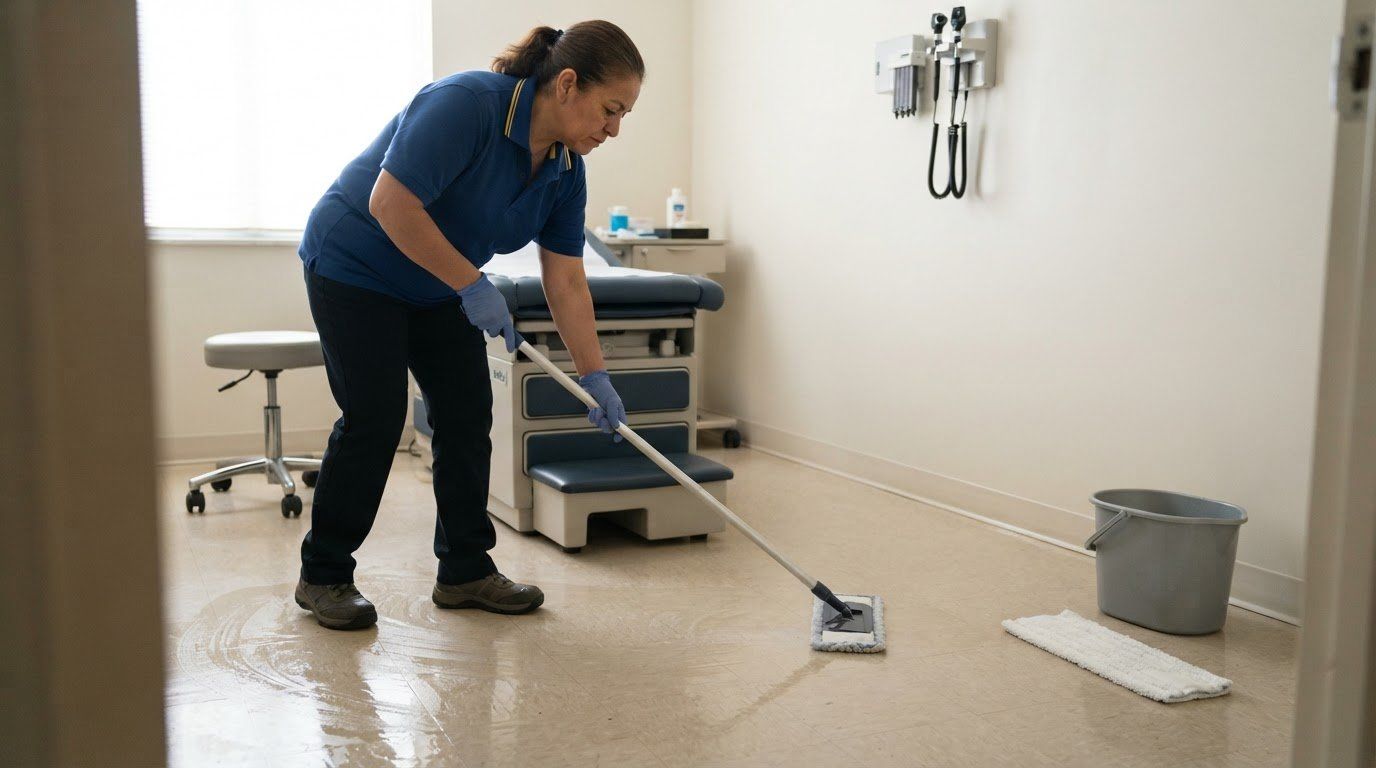
A disinfectant can be the right chemistry and still miss its mark if the floor isn’t clean or the surface doesn’t stay wet for the label’s contact time. Effective hard surface floor disinfection protocols start by removing soil, then matching the disinfectant’s claimed efficacy and required contact time to the organisms and floor material involved.
It’s easy to focus on a product’s name, but performance depends on using it on a properly cleaned surface and whether the floor can tolerate it. This guide explains how disinfectants work, why cleaning comes first, and how to assess efficacy, contact time, and material compatibility to support consistent disinfection without avoidable surface damage.
Key Takeaways
- Match a disinfectant’s labeled efficacy to the organisms and use conditions the floor must address.
- Plan for the full labeled wet contact time; a surface that dries too soon may not receive the intended treatment.
- Account for floor-material compatibility when selecting a product to reduce the risk of surface damage.
- Use a consistent sequence for routine treatment and spills, including fresh solutions prepared according to the manufacturer’s instructions.
Table of Contents
Choosing disinfectants by efficacy, contact time, and material compatibility
Choose a product based on its labeled efficacy, required wet contact time, and compatibility with the floor. The appropriate choice depends on the organisms involved and the conditions of use.
Registered Products and Healthcare Guidelines
An EPA-registered disinfectant is a product whose label identifies approved uses and directions for hard, nonporous surfaces. Match the label’s efficacy claims to the target organisms, since low-level products address different microbes than sporicidal products. For noncritical patient-care cleaning and disinfection, CDC guidance specifies at least 1 minute of contact time. CDC also advises preparing fresh cleaning or EPA-registered disinfecting solutions daily and following manufacturer instructions. In healthcare settings, CDC identifies inorganic chlorine solution for spot-disinfecting floors.
Dilution and Floor Application
Dilution means combining a concentrate with water according to the ratio on the product label. Apply the prepared solution across the intended floor area, then keep the surface visibly wet for the labeled contact time. If it dries early, the required exposure may not be achieved. Use a method that covers the area evenly, and follow label directions for application, protective equipment, and ventilation. Don’t mix cleaners or disinfectants, as mixing can alter their concentration and performance. Alcohol-based products also lack cleaning properties and may be incompatible with some plastics.
Schools, restaurants, and healthcare facilities should select products based on floor material, soil, traffic, and intended use. Healthcare areas may require efficacy against specific organisms; school corridors and restaurant floors also need a compatible product used according to its label.
Disinfection frequency depends on facility use, contamination, and the established cleaning schedule. Clean routinely, and promptly disinfect spills of blood or other potentially infectious materials. Floor compatibility matters: sodium hypochlorite can be corrosive, while bacterial spores may require a product with proven sporicidal activity.
Cleaning before disinfection
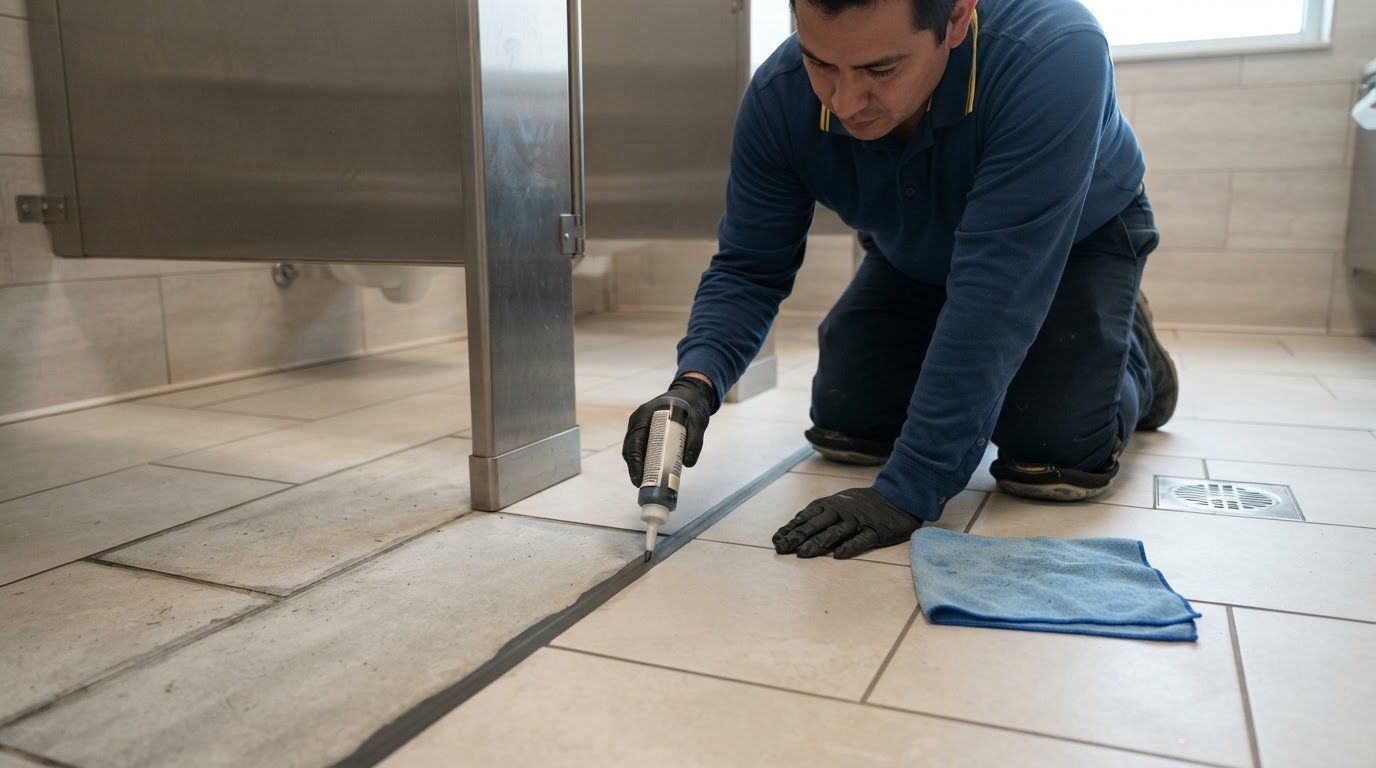
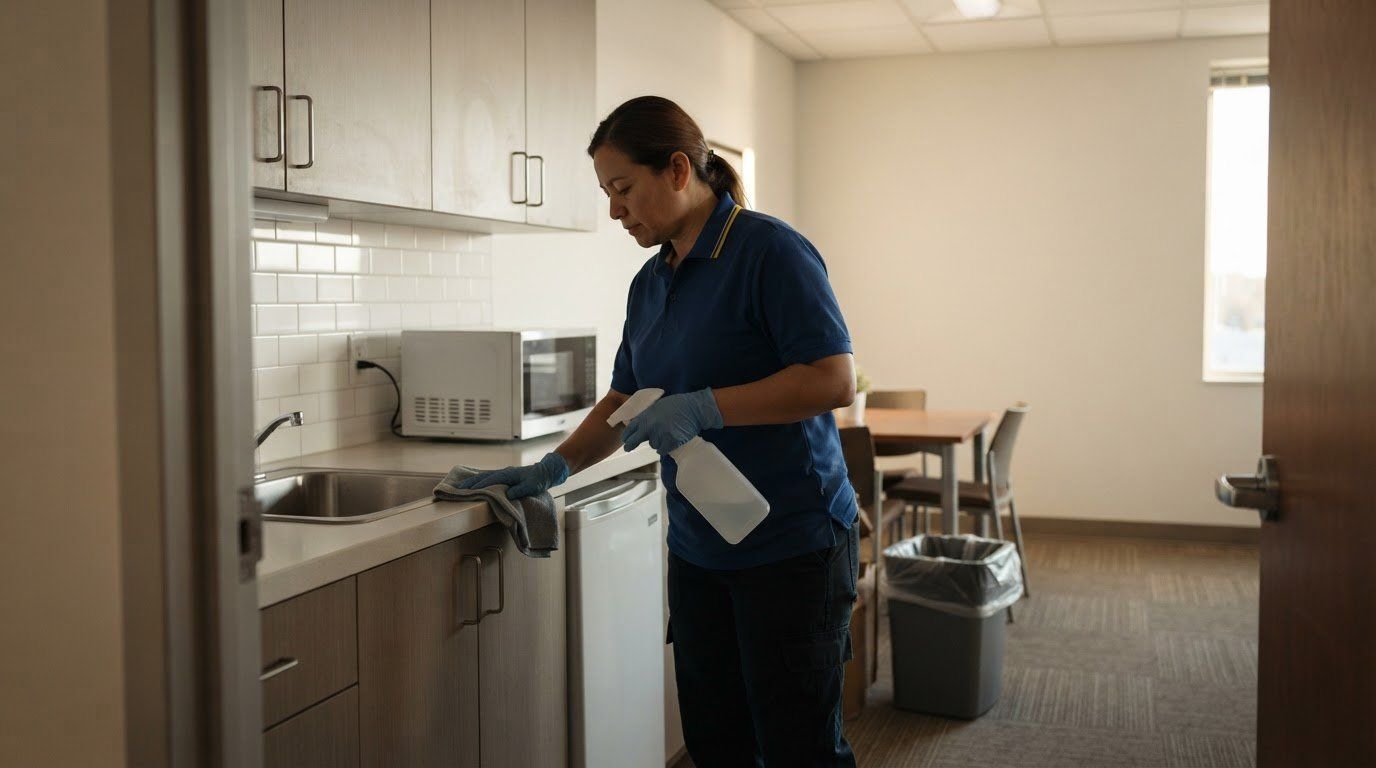
Cleaning removes visible soil and residue before disinfectant is applied. This matters because disinfectants work as intended only on clean surfaces. Food residue, dust, or tracked-in grime can interfere with contact between the product and the floor. For example, remove soil from a spill area before beginning the disinfection step.
Use a consistent sequence to limit soil transfer across a room. Between operating room procedures, clean from high surfaces to low surfaces, then from cleaner areas toward dirtier ones. This helps prevent debris from being carried back onto surfaces already addressed. Do floor work after higher surfaces so loosened material can be removed during the floor-cleaning pass.
Visible contamination changes the sequence. Dental surfaces with visible soil must be cleaned before disinfection, rather than treated with disinfectant alone. In veterinary operating rooms, mop floors after each case. At the end of the day, move standing equipment so the entire operating room floor can be cleaned, including areas normally blocked by carts or equipment.
Match cleaning tools and work patterns to the room’s condition. Remove soil from heavily soiled sections before applying disinfectant; using more disinfectant does not replace cleaning. Work methodically across the floor, and avoid moving from a dirty zone back to a cleaned one. This helps make the disinfection pass more consistent across the treated area.
For facilities managing recurring floor-soil challenges, facility cleaning support can help maintain a consistent cleaning sequence.
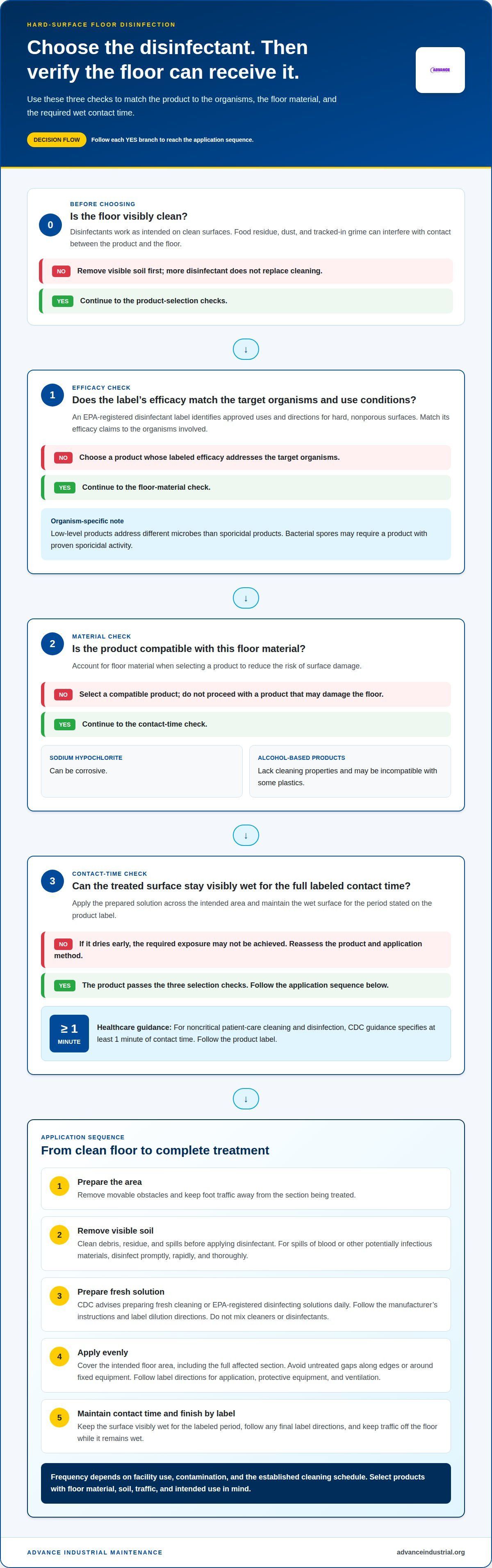
What are the steps for disinfecting hard surface floors?
A reliable floor-disinfection sequence controls soil removal, solution preparation, coverage, and contact time. For a blood spill or other potentially infectious material, disinfect the affected area rapidly and thoroughly.
- Prepare the area. Remove movable obstacles and keep foot traffic away from the section being treated. This gives the cleaning pass clear access and prevents people from walking across a wet floor.
- Remove visible soil. Clean debris, residue, and spills before applying disinfectant. For example, remove tracked-in dirt or food residue so it doesn’t remain between the floor and the disinfectant solution.
- Prepare fresh solution. The Centers for Disease Control and Prevention (CDC) advises preparing fresh cleaning or EPA-registered disinfecting solutions daily and following the manufacturer’s instructions. Use the label’s dilution and application directions.
- Apply evenly. Cover the intended floor area with the prepared solution, including the full affected section of a spill. Avoid leaving untreated gaps along edges or around fixed equipment.
- Maintain the labeled contact time. Keep the surface visibly wet for the period stated on the product label. If it dries before that time, the floor may not receive the required exposure.
- Complete the treatment. Follow the label’s directions for any final steps, and keep traffic off the floor while it remains wet. For a spill, ensure the affected area receives thorough treatment rather than only wiping away visible fluid.
Consistent execution matters in occupied facilities, where untreated edges or rushed application can interrupt coverage. For support with a repeatable floor-disinfection process, arrange professional floor disinfection.
Commercial Cleaning Services Advance Industrial Maintenance: Disinfection Services
Commercial Cleaning Services Advance Industrial Maintenance provides Disinfection Services for facilities that need structured floor and surface sanitation. Use the service when routine cleaning alone doesn’t meet your facility’s disinfection needs or when consistent procedures matter across occupied commercial spaces.
For healthcare environments, Medical Facility Cleaning supports the broader sanitation demands of patient-care settings. Floor condition matters too: Floor Stripping and Waxing addresses maintenance needs that are distinct from disinfection. Matching the work to the facility helps align cleaning and floor care with operational requirements.
Contact Commercial Cleaning Services Advance Industrial Maintenance to discuss your facility’s disinfection needs.
Build a Floor-Care Plan That Holds Up
Make disinfection a defined part of facility operations, with responsibilities and cleaning priorities suited to each space. Revisit the plan when floor condition or room use changes, and keep maintenance decisions aligned with facility needs. Consistent hard surface floor disinfection protocols support a more controlled approach to ongoing sanitation.
Commercial Cleaning Services Advance Industrial Maintenance offers Office Cleaning and Medical Facility Cleaning for commercial environments, along with Floor Stripping and Waxing for floor maintenance. These services can support a coordinated facility-care plan when routine cleaning and floor upkeep need to work together.
Contact Commercial Cleaning Services Advance Industrial Maintenance to discuss your facility’s cleaning and floor-care needs.
Frequently Asked Questions
How does a disinfectant actually work?
A disinfectant’s active ingredient damages or inactivates susceptible microorganisms on a treated surface. Its specific effect depends on the ingredient and the organisms included in the product’s efficacy claims. For example, a product effective against some viruses may not have sporicidal activity. This distinction matters in clinical areas, where the target organism affects product selection.
What active substances are used in hospital disinfectants?
Hospital disinfectants can use active substances such as sodium hypochlorite or alcohol. These ingredients differ in efficacy and surface compatibility. Sodium hypochlorite can be corrosive, while alcohol-based liquids may be incompatible with some plastics and do not clean surfaces. The product label identifies its active ingredient and intended use, helping facilities match the chemistry to the surface and treatment need.
What essential questions should I ask when choosing a hospital disinfectant?
Check which organisms the product is effective against, whether its label covers the floor material, and how long the surface must remain wet. Also consider whether the task involves routine treatment or a specific contamination concern, such as bacterial spores. These criteria make hard surface floor disinfection protocols more precise by aligning product performance with the floor and treatment need.
Why do hospital disinfection protocols matter?
Hospital protocols establish a consistent approach to treating floors and other environmental surfaces. Without defined product selection, application, and timing, staff may handle the same task differently. For example, a spill response needs a clear process for isolating and treating the affected area. Consistent hard surface floor disinfection protocols help teams coordinate work across patient rooms, procedure areas, and shared spaces.
How should floors be cleaned before disinfection?
Remove debris and visible residue using a cleaning method suited to the floor, then address edges and areas around equipment where soil can collect. For example, move a standing cart to clean beneath it rather than disinfecting only the exposed pathway. Use a controlled work pattern so cleaning tools don’t carry loosened soil back across sections already cleaned.