How to Improve Office Air Quality With Better Cleaning

What if the dust on office blinds and floors is part of the air-quality problem? Improving office air quality with better cleaning starts with removing dust and other particulates from surfaces, flooring, and window coverings, while keeping ventilation clear. The U.S. Environmental Protection Agency says indoor air can be two to five times more polluted than outdoor air.
It’s reasonable to focus on ventilation when office air feels stale, but routine cleaning matters too. Dust and debris collect on overlooked surfaces and can become airborne as people move through the workplace. A consistent cleaning plan helps control these sources and supports a cleaner working environment.
Learn how indoor air quality can affect focus and productivity, which cleaning tasks make a practical difference, and how surface, floor, and blind care fit into an office cleaning routine. This guide also explains why cleaning and ventilation work best together as parts of workplace maintenance.
Key Takeaways
- Indoor air conditions can affect employee focus and day-to-day performance, making workplace air quality an operational concern.
- Learn why ventilation and cleaning work together to support a healthier-feeling office environment.
- Regularly clean surfaces, floors, and blinds to help reduce dust and other particles in the workspace.
- See how professional office cleaning can support a consistent cleaning routine across the workplace.
Table of Contents
1. How Does Air Quality Affect Worker Productivity?
The United States Environmental Protection Agency says employees spend nearly 90% of their time indoors. The same agency says indoor air can be 2-5 times more polluted than outdoor air. That makes indoor air quality a practical workplace concern, not just a comfort issue.
Dust, pollen, mold, and other biological particles can circulate or settle around work areas. Headaches, respiratory problems, coughing, or fevers that occur at work and ease at home may point to an indoor air quality issue. These symptoms can disrupt concentration and make it harder for employees to complete routine tasks.
VOCs are another possible source of indoor pollution. They can be emitted by thousands of products, including paints, furniture, and finishes. Choosing low-VOC options can reduce pollution at its source. Some cleaning products made with pine or citrus oils contain terpenes, which may react with nearby materials and create formaldehyde.
Office plants may make a workspace more pleasant, but they can’t replace mechanical ventilation or air purification systems. They’re not a substitute for managing pollutants or maintaining the HVAC system. Keep vents clear and address dust and debris, while treating plants as a secondary measure.
Productivity depends on more than air quality, but discomfort or symptoms can make focused work harder. A practical approach combines source reduction, ventilation, and consistent cleaning. For example, reducing dust on desks and choosing materials with lower emissions address different pollution sources. Cleaning helps manage indoor particles, while ventilation circulates air through the workplace.
2. Air quality effects on employee focus and productivity
Poor air quality can make it harder to concentrate, especially when discomfort or odors interrupt a task. Indoor pollution can come from cleaning products, furnishings, printers, and other materials. Volatile organic compounds, or VOCs, are one group of pollutants that may be released by products used or stored in the office.
Reduce avoidable sources by choosing lower-emission cleaning products and office supplies. The United States Environmental Protection Agency’s Safer Choice label can help businesses identify cleaning products designed to minimize risks. Review product labels and choose options that disclose ingredients and give clear use instructions. Low-emission paint, furniture, and finishes can also limit indoor pollution sources.
During and after office cleaning, keep HVAC vents open and unblocked. When outdoor air conditions allow, opening doors or windows for 30 minutes a day can support indoor air quality. Keep filters maintained as part of the building’s ventilation plan, since airflow and cleaning address different parts of the problem.
Professional cleaning can support this approach by removing settled dust and using products suited to the workplace’s needs. Eco-friendly wording alone doesn’t establish a product’s emissions or suitability, so product selection should focus on ingredients, use directions, and the task. A practical plan for improving office air quality with better cleaning pairs routine soil removal with thoughtful product choices and ventilation. For a structured workplace cleaning routine, consider professional office cleaning as part of ongoing facility maintenance.

3. Cleaning office surfaces, floors, and blinds
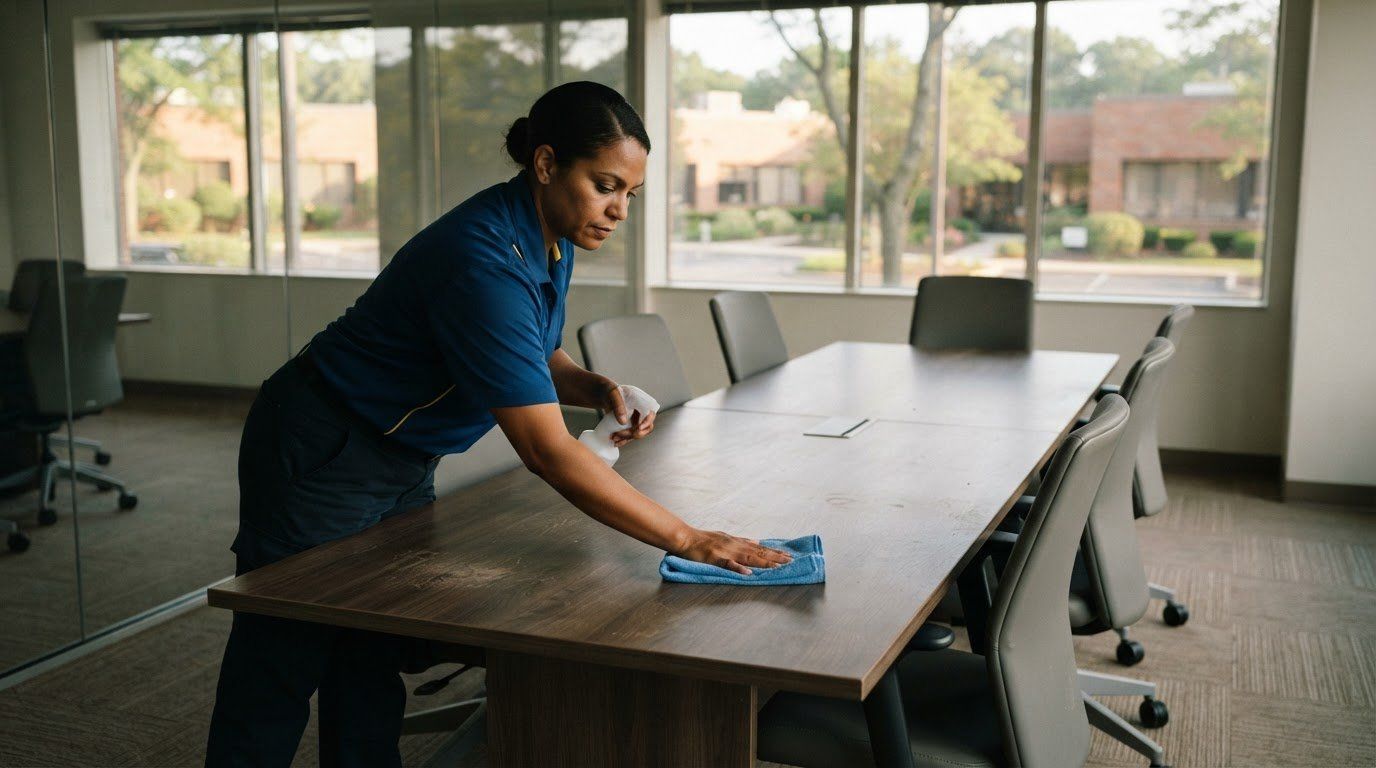
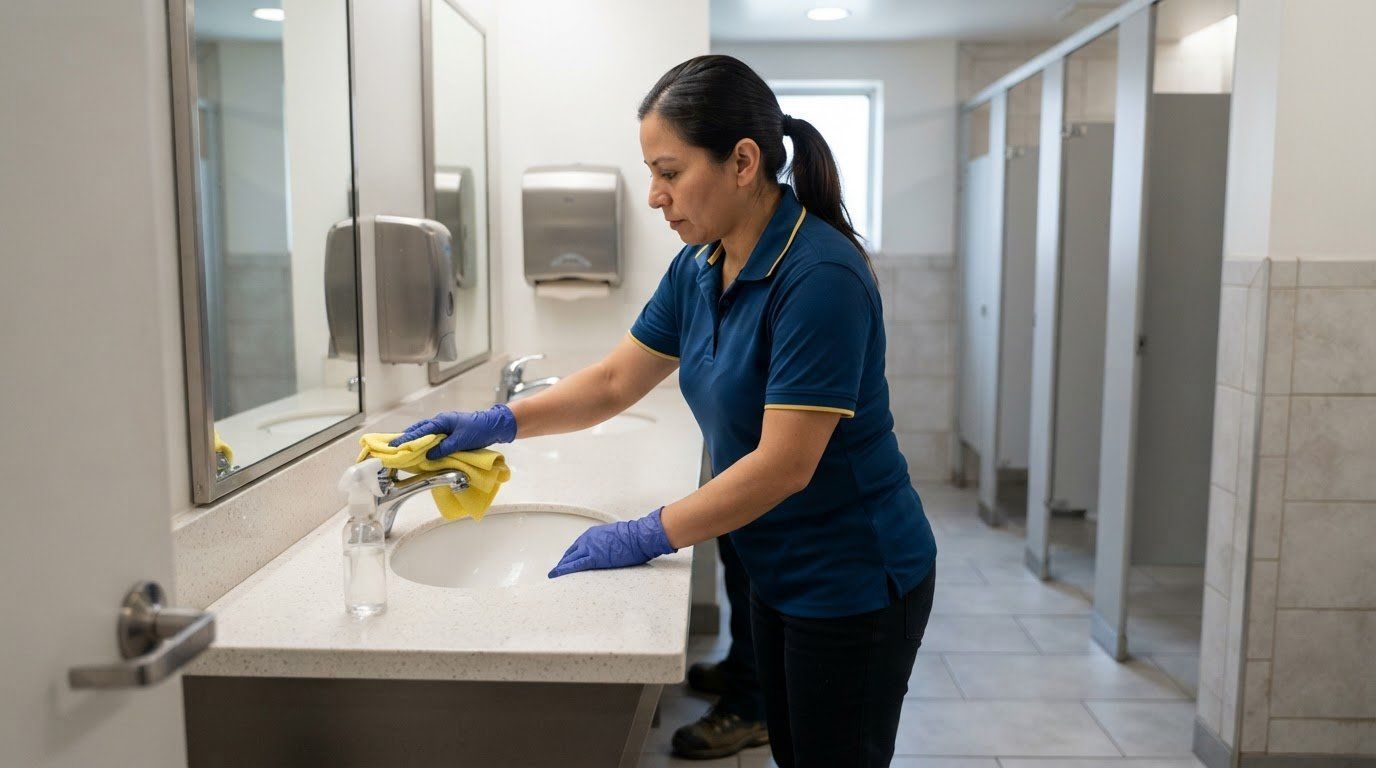
Office cleaning practices that reduce indoor particles include regularly dusting desks, shelves, and blinds, then vacuuming floors. Use methods that capture dust rather than spreading it around the workplace. Clear clutter so surfaces and floor edges are accessible, and clean spills or leaks promptly to limit conditions that can support mold growth.
There is no single cleaning frequency that suits every office. Set schedules for carpets, floors, vents, and upholstery according to foot traffic, visible soil, material type, and how quickly dust returns. Busy entrances may need more frequent floor care than lightly used rooms. Keep vents unobstructed and include ventilation components in the building’s maintenance plan.
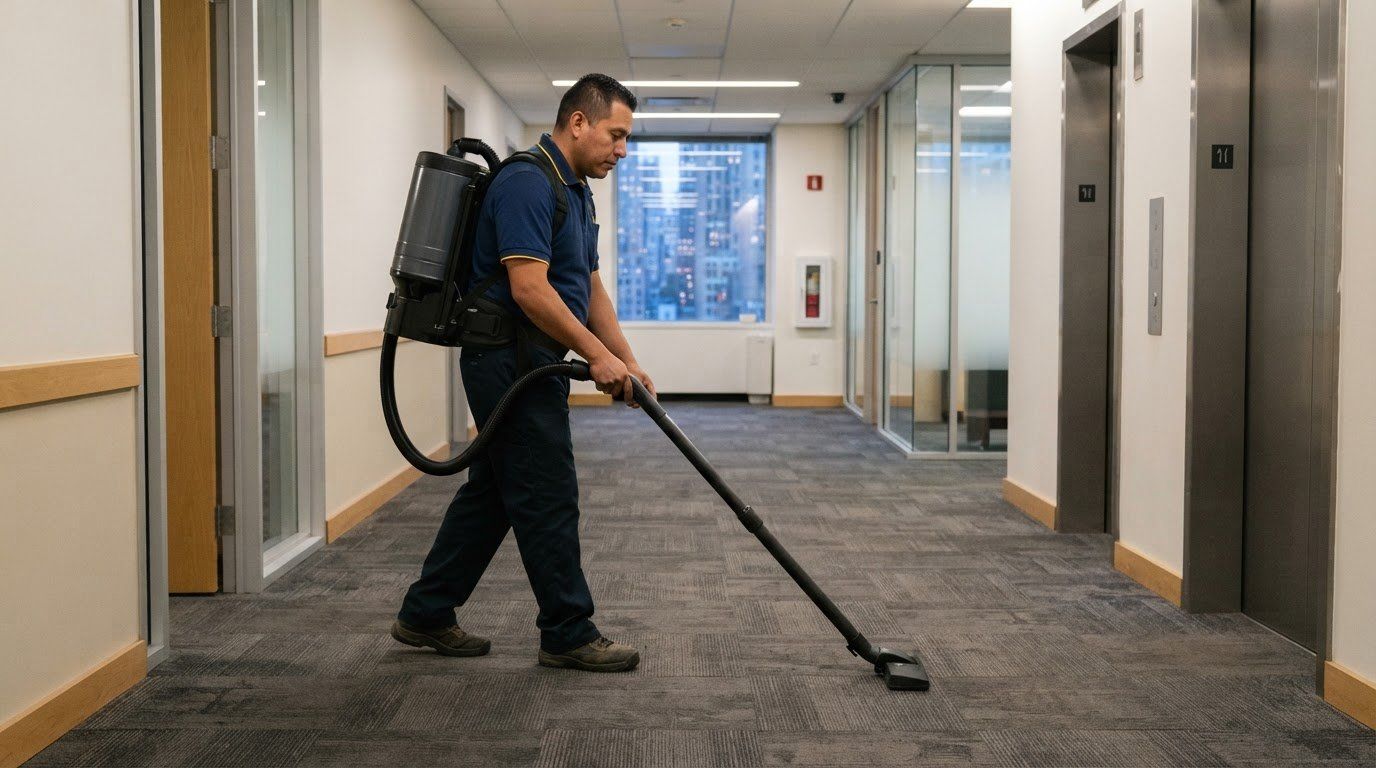
For carpets and upholstery, routine vacuuming removes settled debris, while deeper cleaning can address accumulated soil. Dust blinds regularly because their slats can collect particles that become airborne during normal use. Include high-touch surfaces in the hygiene routine, but don’t treat surface cleaning as a way to prevent every disease or replace other workplace health measures.
Cleaning supports air quality best alongside sound building practices. Maintain air filters as directed for the HVAC system, and keep ventilation grilles clear so air can circulate. Manage humidity and address water damage promptly, since damp materials can encourage mold growth. Plants may add greenery, but they don’t replace ventilation or filtration. A consistent task schedule helps staff clean efficiently and avoid missed areas.
For a coordinated approach to office floors and surfaces, arrange professional cleaning support.
Commercial Cleaning Services Advance Industrial Maintenance: Office Cleaning
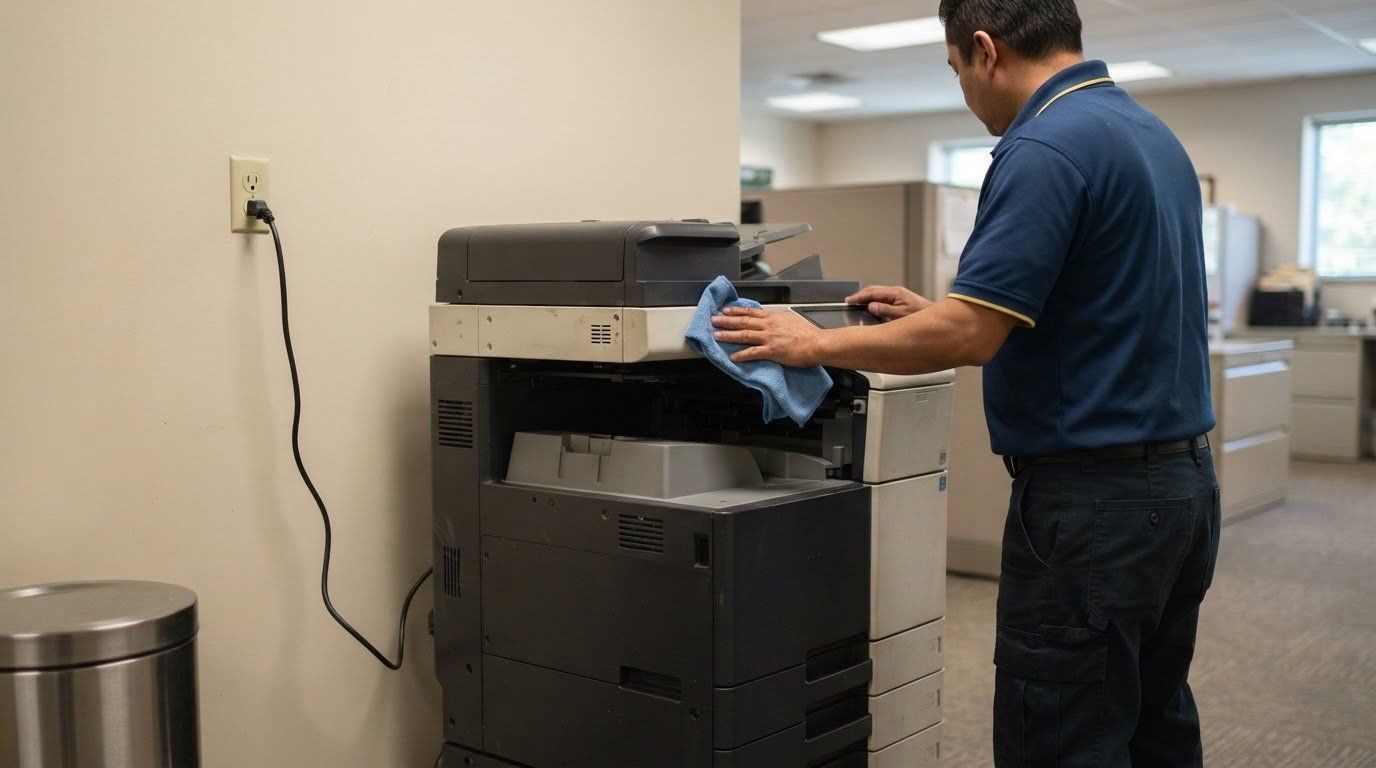
Commercial Cleaning Services Advance Industrial Maintenance provides office cleaning to support consistent care of workplace surfaces and floors. A structured cleaning service can help when routine upkeep is difficult to maintain or dust and soil build up across shared areas.
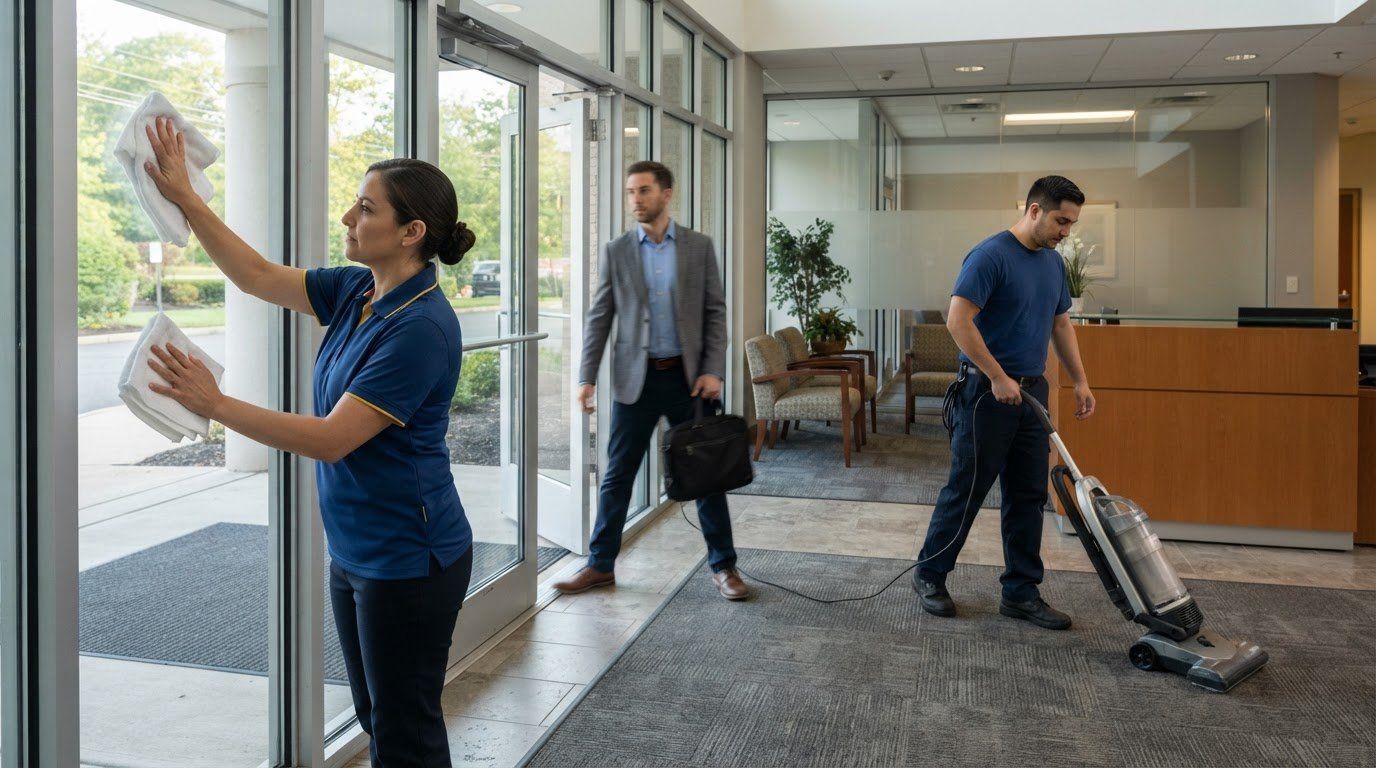
Cleaning can include desks, floors, and other frequently used spaces. Floor Stripping and Waxing supports hard-floor maintenance, while Window Cleaning helps care for interior and exterior glass. These services complement a workplace cleaning plan, but they don’t replace ventilation or HVAC maintenance.
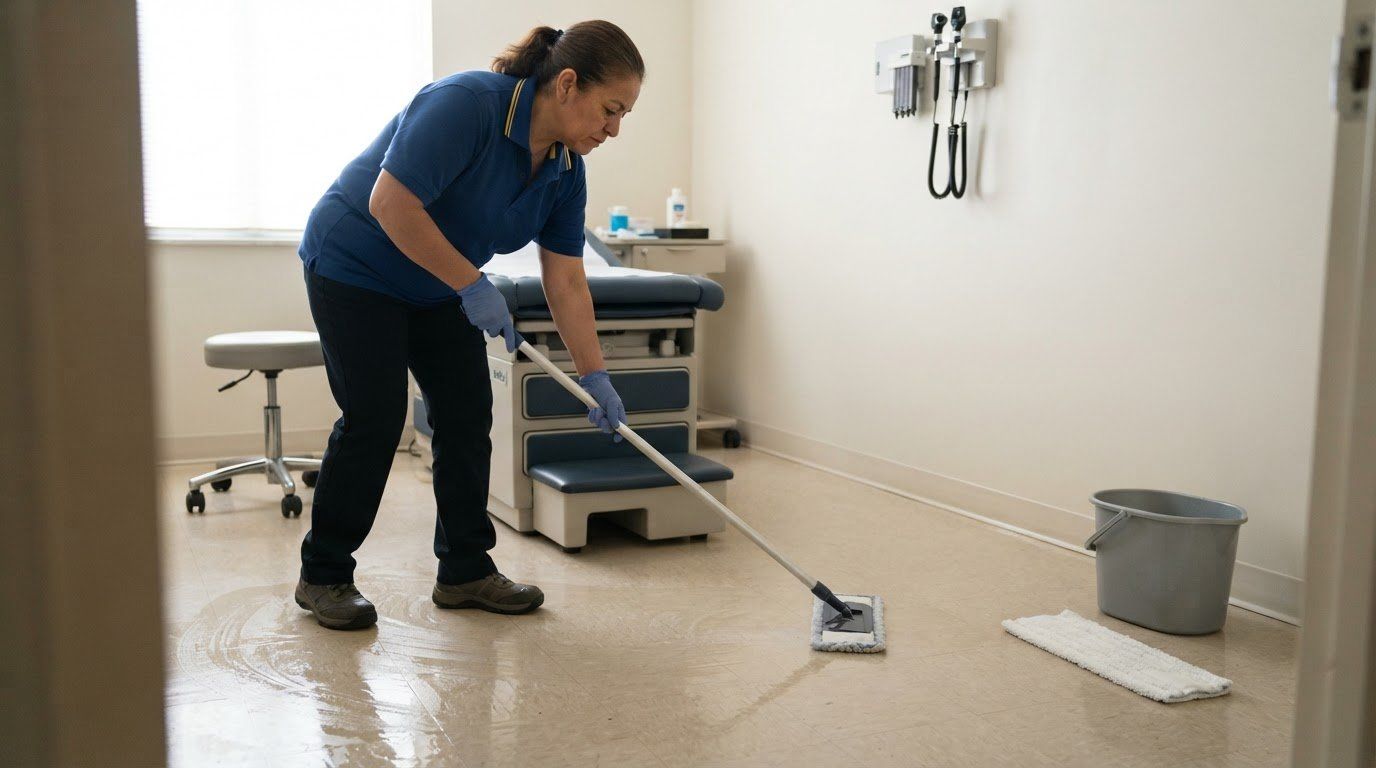
For facilities with specialized requirements, Medical Facility Cleaning is also available. The appropriate cleaning scope depends on the building, floor types, and operational needs. Contact Commercial Cleaning Services Advance Industrial Maintenance to discuss office cleaning for your workplace.
Build Air Quality Into Your Workplace Routine
Make cleaner indoor air an ongoing facility priority, not a one-time task. Improving office air quality with better cleaning starts with a consistent scope: identify dust-prone areas, prioritize floors and shared surfaces, and coordinate cleaning with building ventilation practices.
Commercial Cleaning Services Advance Industrial Maintenance provides Office Cleaning, Medical Facility Cleaning, and Floor Stripping and Waxing for different facility needs. The right scope depends on your workplace, flooring, and operational requirements. A dependable cleaning plan helps align maintenance tasks with daily use.
For support planning cleaning around your facility’s needs, contact Commercial Cleaning Services Advance Industrial Maintenance. A clear next step can help your team build a practical routine and keep workplace maintenance moving forward.
Frequently Asked Questions
How to improve office air quality?
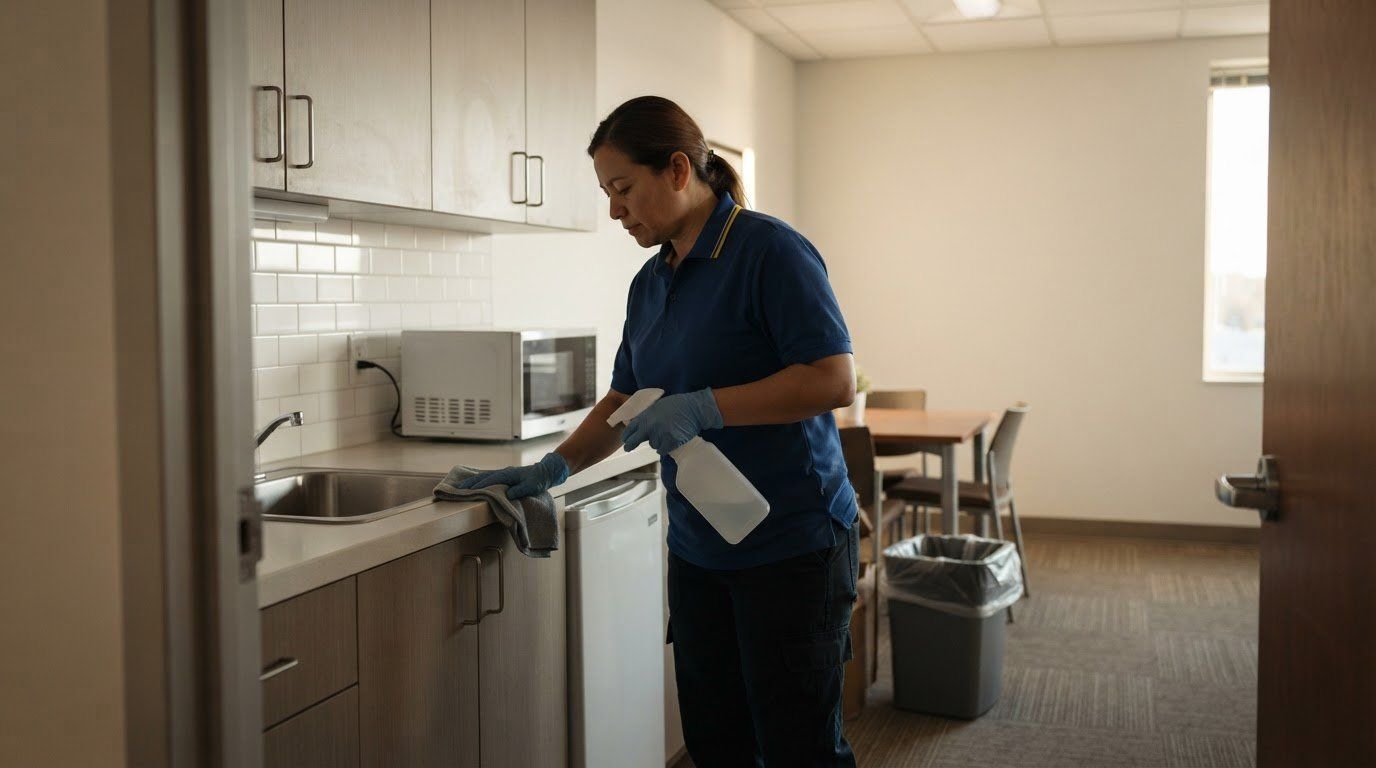
Improve office air quality by reducing pollutant sources and maintaining building systems alongside regular cleaning. Store cleaning supplies properly, remove waste from shared kitchens, and report water leaks before moisture spreads. Coordinating facility maintenance with cleaning helps address issues that surface cleaning alone can’t resolve, such as poor airflow or persistent odors.
How to determine indoor air quality issues?
Look for patterns in employee reports and conditions across office areas. Note where odors, discomfort, visible dampness, or stale air occur, and whether they persist at particular times or in specific rooms. An indoor air quality assessment can examine airflow, humidity, odors, leaks, standing water, water damage, and possible mold growth.
Does Poor Indoor Air Quality Violate OSHA Standards?
Poor indoor air quality alone doesn’t establish whether an OSHA standard has been violated. That determination depends on the specific workplace hazard, exposure conditions, and applicable requirement. An odor or dust complaint is a reason to investigate, not proof of a violation. Identify the suspected contaminant and assess the workplace conditions before drawing conclusions about compliance.
How Does Air Quality Affect Worker Productivity?
Air quality can affect productivity when uncomfortable conditions interrupt concentration or make routine tasks harder to sustain. For example, persistent odors or irritation may distract employees during detailed work. Facility teams can document reports by location and time, then compare those patterns with ventilation conditions and maintenance records to identify issues that need attention.
What Are the Major Indoor Pollutants?
Indoor pollutants include biological agents such as mold, bacteria, viruses, pollen, and dust mites. Other examples include volatile organic compounds from products and materials, airborne particles, smoke, carbon monoxide, and radon. Because their sources differ, identifying a likely pollutant helps determine whether the response should focus on moisture, product choices, ventilation, or another building condition.