Warehouse Floor Scrubbing on Long Island: Choosing a Scrubber
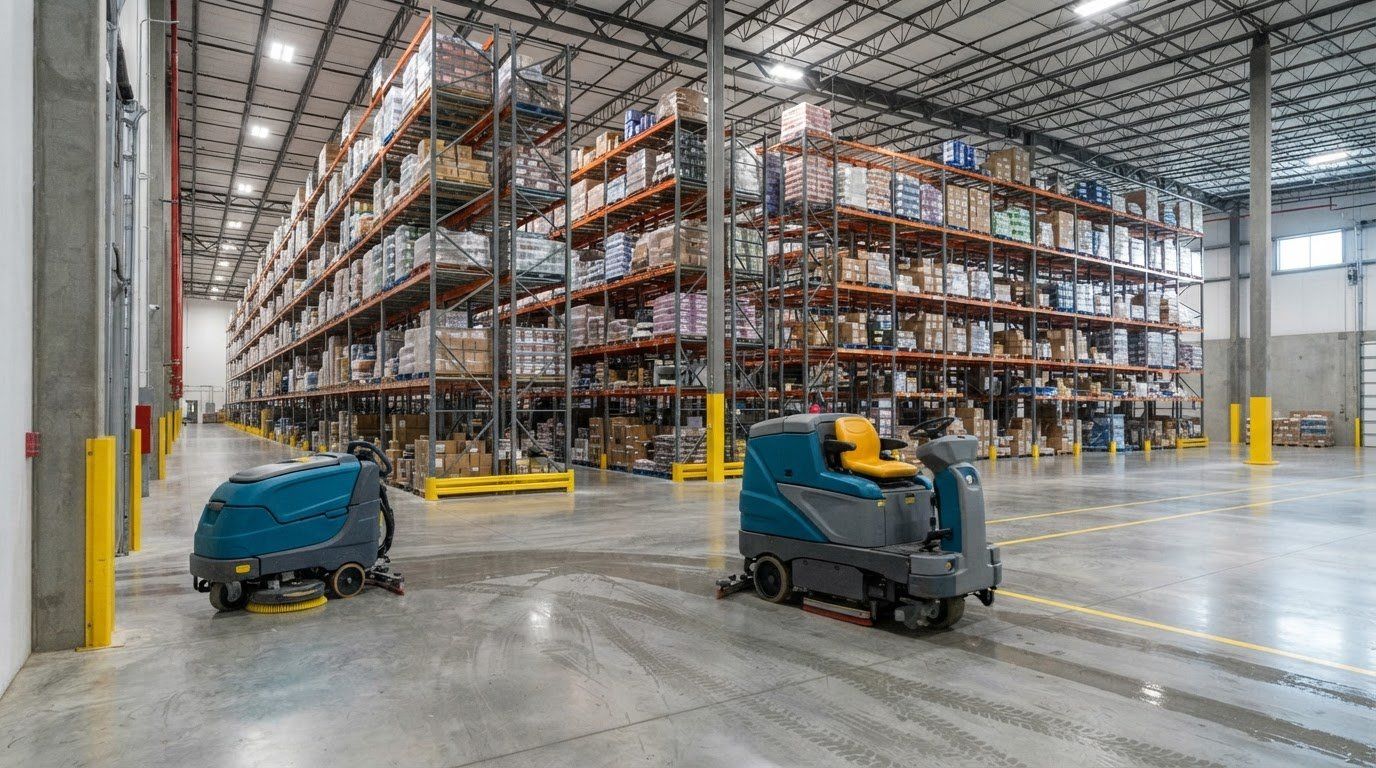
The largest scrubber isn’t automatically the best choice. For warehouse floor scrubbing on Long Island, walk-behind machines suit small and medium-sized warehouses, while ride-on scrubbers are generally better for large facilities where cleaning speed matters. The right fit depends on floor area, aisle clearance, surface, soil and cleaning frequency.
Choosing equipment is a practical balance: the machine must clean effectively without slowing warehouse operations. This guide compares six scrubber options, explains how they perform on different floor surfaces and outlines the factors to consider when matching equipment to your facility. It also covers professional warehouse floor scrubbing in Nassau and Suffolk Counties, helping Long Island businesses assess what their operations need.
Key Takeaways
- Compare scrubber formats against the warehouse layout to avoid choosing a machine that limits access or slows routine cleaning.
- Match the brush or pad approach to the floor surface and the type of soil that builds up.
- Review how Long Island service coverage fits your facility’s location and cleaning needs.
- Consider professional floor care when maintaining warehouse floors is competing with core operational work.
Table of Contents
What Type of Floor Scrubber Is Best for a Warehouse?
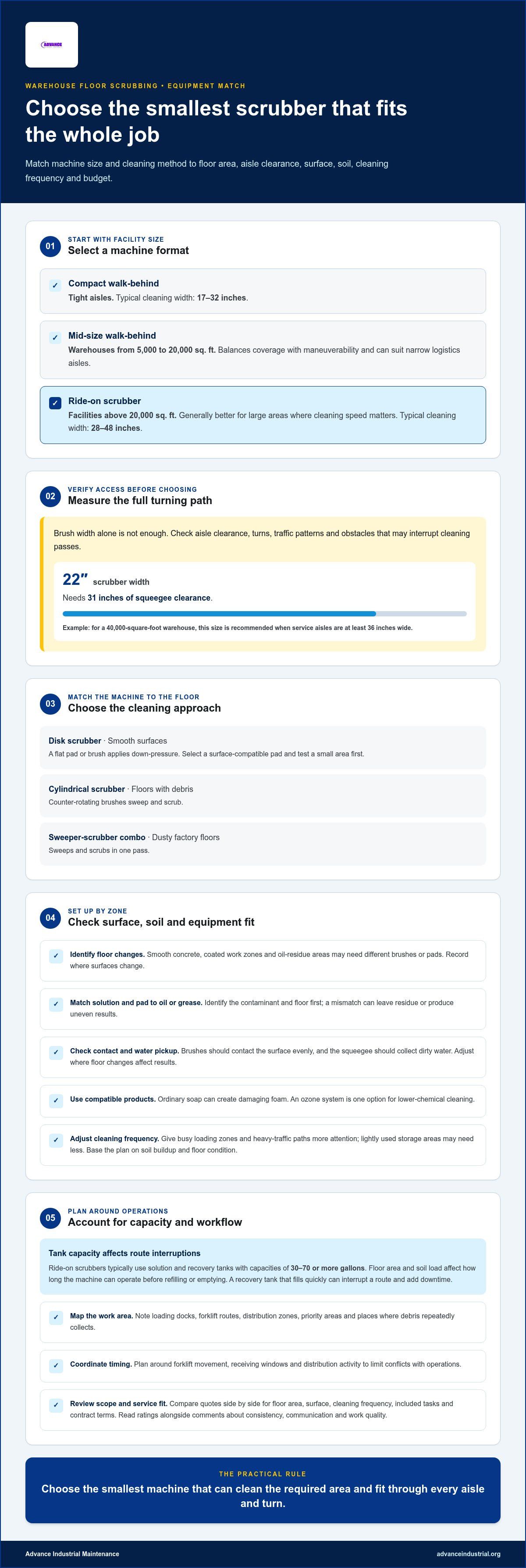
Match the machine to floor area, aisle width, surface, soil, cleaning frequency and budget. Walk-behind scrubbers usually suit warehouses between 5,000 and 20,000 square feet, including narrow logistics aisles. Facilities above 20,000 square feet usually benefit more from ride-on machines, which cover larger areas efficiently.
Check the full turning path, not just the brush width. A 22-inch scrubber needs 31 inches of squeegee clearance. For a 40,000-square-foot warehouse, that size is recommended when service aisles are at least 36 inches wide. Mid-size facilities should also consider traffic patterns and obstacles that interrupt cleaning passes.
| Option | Best fit | Key consideration |
|---|---|---|
| Compact walk-behind | Tight aisles | 17-32-inch typical cleaning width |
| Mid-size walk-behind | 5,000-20,000 sq. ft. | Balance coverage with maneuverability |
| Ride-on | Above 20,000 sq. ft. | 28-48-inch typical cleaning width |
| Disk scrubber | Smooth surfaces | Flat pad or brush applies down-pressure |
| Cylindrical scrubber | Floors with debris | Counter-rotating brushes sweep and scrub |
| Sweeper-scrubber combo | Dusty factory floors | Sweeps and scrubs in one pass |
Choose the smallest machine that can clean the required area and fit through every aisle and turn.
Compare service quotes side by side, checking floor area, surface, cleaning frequency, included tasks and contract terms. Read ratings alongside comments about consistency, communication and work quality.
Set professional scrubbing frequency according to traffic, soil buildup and floor condition. Busy loading zones may need more attention than lightly used storage areas.
An ozone system is one option for lower-chemical cleaning. Use products compatible with both the scrubber and floor surface, since ordinary soap can create damaging foam.
Schedule scrubbing more often where heavy traffic and soil accumulate, and less often in lightly used storage areas. Adjust the plan to the floor’s condition.
Long Island service area
Warehouse floor scrubbing on Long Island covers commercial facilities in Nassau and Suffolk Counties. A practical service plan starts by locating the facility, mapping its floor area, and identifying loading docks, forklift routes, and distribution zones. Those details show which work areas need routine cleaning and where debris tends to collect.
In a Nassau distribution facility, for example, receiving lanes may collect different soil than storage aisles. In Suffolk, a manufacturing floor may need a plan that accounts for production traffic and equipment access. Sharing the layout and priority areas helps define a workable scope around logistics.
Equipment capacity also affects how a cleaning plan fits a site. Ride-on scrubbers typically use solution and recovery tanks with capacities of 30-70 or more gallons. Tank size influences how long a machine can operate before refilling or emptying, so the floor area and soil load matter. A recovery tank that fills quickly can interrupt a cleaning route and add downtime.
Emergency or after-hours warehouse scrubbing requires specific scheduling and shouldn’t be assumed as part of routine maintenance. For an active spill, follow the facility’s established response process; scheduled floor cleaning is not emergency dispatch. Plan service around forklift movement, receiving windows and distribution activity to limit conflicts with operations.
Before setting a recurring plan, mark the floor zones that need priority attention, note heavy-traffic paths and identify areas where debris repeatedly builds up. This gives facility managers a clear basis for coordinating cleaning across Nassau or Suffolk County operations.
Scrubber use on different floor surfaces
Start by identifying each floor type and assessing its condition. Smooth concrete, a coated work zone and a surface with oil residue may require different brushes or pads. Record where surfaces change, then match the scrubber setup to each zone instead of treating the whole facility as uniform.
Disk scrubbers use flat pads or brushes to apply down-pressure, making them suitable for smooth floors. Choose a compatible pad for the surface, then test it on a small area. Check soil removal and the floor’s finish before using that setup across the full cleaning route.
Oil and grease stains require a cleaning solution and floor pad suited to both the contaminant and the surface. A mismatch can leave residue or produce uneven results. Identify the contaminant first, then match the solution and pad to the floor. In large warehouses with mixed-use zones, document the setup for each area so operators can change machines or attachments accurately.
- Smooth surfaces: Consider a disk model with a suitable flat pad or brush.
- Oil or grease: Match the cleaning solution and pad to the stain and floor.
- Changing floor types: Use custom brushes and squeegees tailored to each surface.
- Smaller work zones: A compact scrubber operated from behind can support controlled cleaning around obstacles.
Before routine cleaning, check that the brushes contact the surface evenly and the squeegee collects dirty water. Adjust the setup where a change in floor type affects results. This helps prevent residue from being carried into adjoining warehouse areas.
Commercial Cleaning Services Advance Industrial Maintenance: Office Cleaning
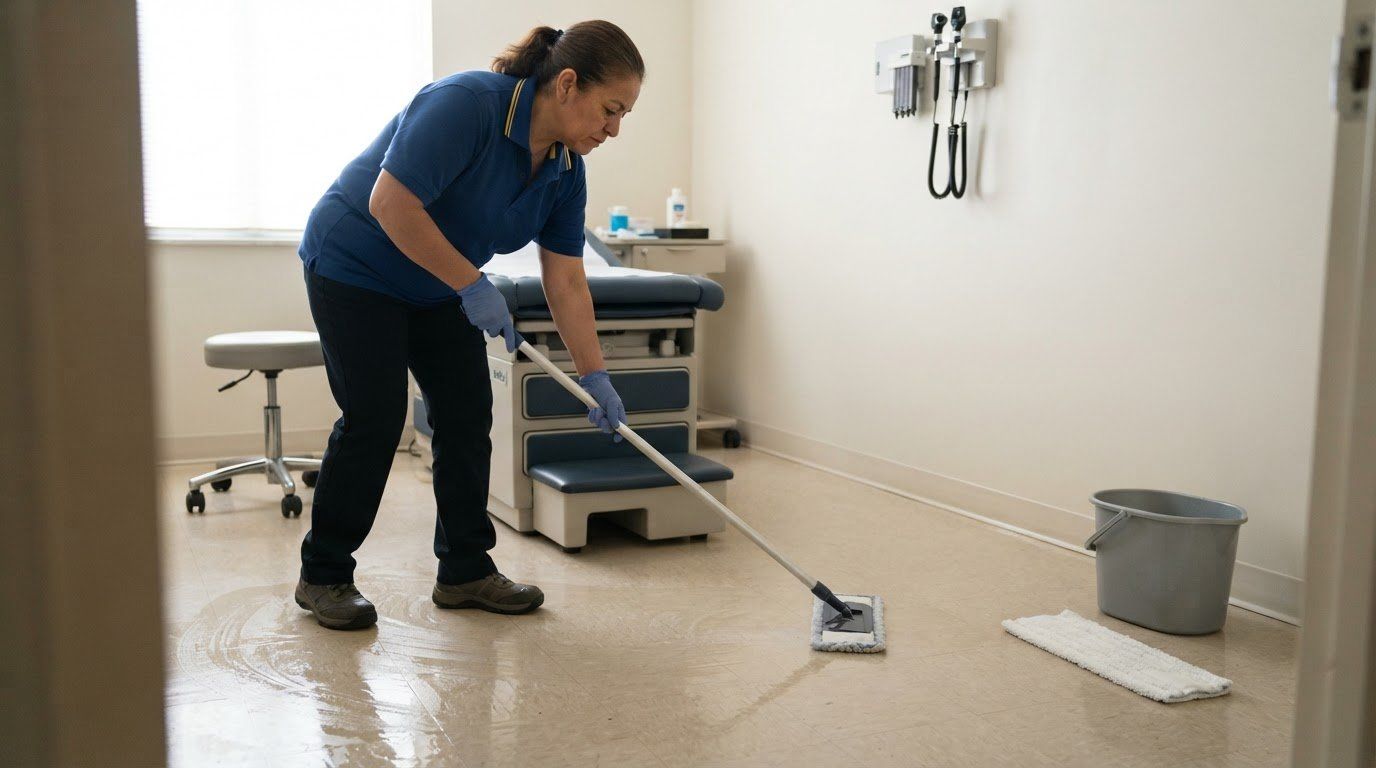
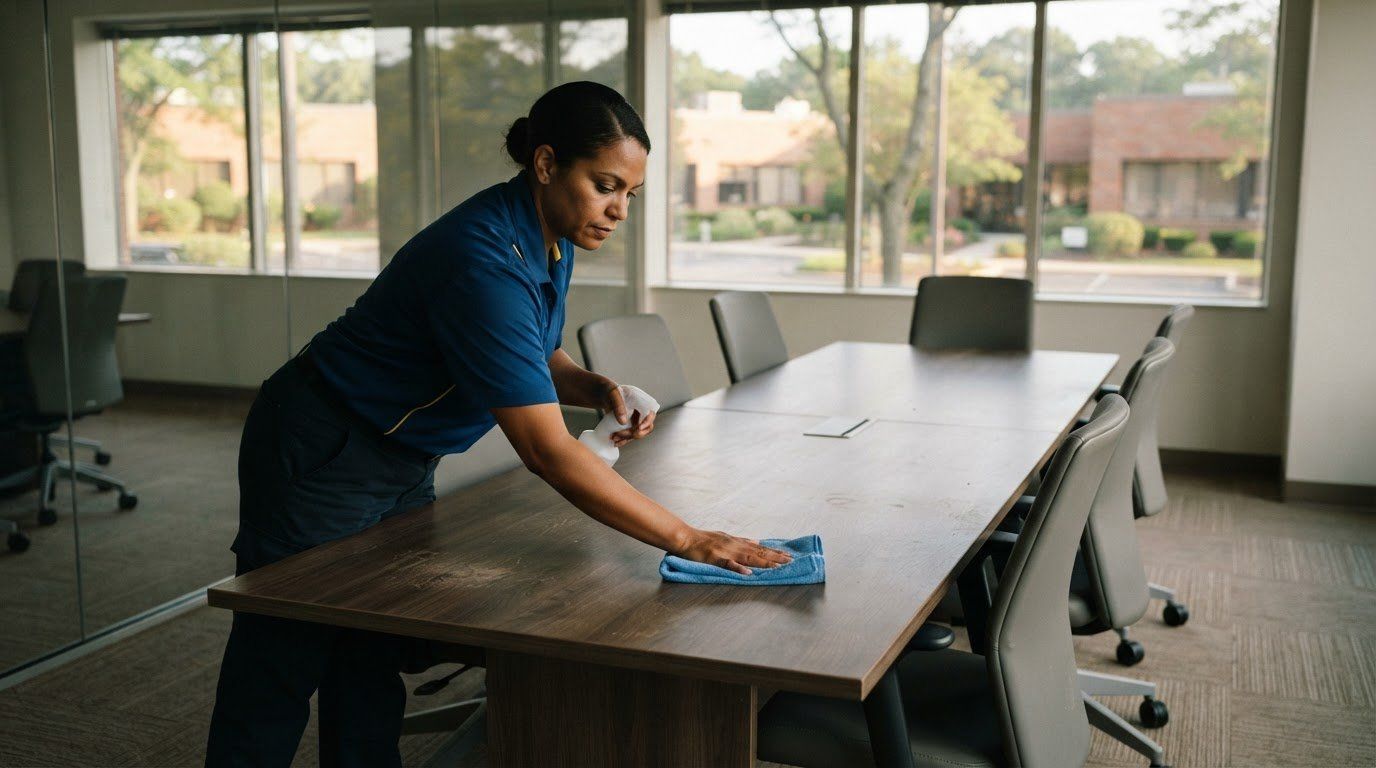
Commercial Cleaning Services Advance Industrial Maintenance provides Office Cleaning for businesses that need care for workplace interiors. Floor Stripping and Waxing addresses separate floor-maintenance needs, while Medical Facility Cleaning and Window Cleaning are available for facilities with those requirements.
Consider these services when office areas, floor finishes or windows need planned attention alongside daily operations. A clearly defined scope aligns cleaning priorities with how each space is used, from shared work areas to finished floors.
Contact Commercial Cleaning Services Advance Industrial Maintenance to discuss your facility’s cleaning needs, or visit advanceindustrial.org.
Set a Practical Cleaning Plan for Your Facility
Use your equipment and surface assessment to set clear priorities: which zones need attention first, what cleaning approach suits each floor and how service can fit around facility traffic. A written plan gives operations and maintenance teams a shared reference for consistent floor care as warehouse conditions change.
For warehouse floor scrubbing on Long Island, align the work scope with your facility’s layout and operating needs. Advance Industrial Maintenance provides warehouse floor scrubbing for commercial facilities. Share the areas that need attention and any access constraints to discuss a practical approach.
Contact Commercial Cleaning Services Advance Industrial Maintenance to discuss your facility’s floor-care needs. A clear starting point can help your team plan its next maintenance decision with confidence.
Frequently Asked Questions
Can a floor scrubber clean oil stains?
A floor scrubber can help remove oil stains when used with a cleaning solution and pad suited to the stain and floor. For a localized spill, first isolate the affected area from routine traffic and remove loose debris according to facility procedures. Scrub the spot, then inspect for remaining residue before reopening the route.
Do warehouses and distribution centers across the United States rely on professional scrubbing services?
Some warehouses and distribution centers use professional scrubbing as part of facility maintenance; others manage floor care with their own staff and equipment. The choice depends on floor area, workload, available labor and equipment responsibilities. Outsourcing can avoid purchasing scrubbers and managing their maintenance, training and staffing, but it isn’t the only workable approach for every operation.
How does warehouse scrubbing help control dust in industrial environments?
Scrubbing collects fine dust from hard floors rather than leaving it available to become airborne during routine activity. Cleaning around storage racks and forklift routes, for example, can remove settled particles that traffic might disturb. Cleaner floors can also reduce dust and dirt that interfere with employees, electronic equipment or mechanical systems. Dry sweeping may still be needed for loose debris.
How does warehouse scrubbing improve workplace safety?
Scrubbing removes contaminants such as dust, oil and residue that can reduce floor traction. A machine’s squeegee and vacuum system can collect dirty solution instead of leaving wash water across the cleaning path. Keep aisles clear of spills, cords and hoses, and restrict access until cleaning is complete and the surface is ready for traffic.
Should a warehouse use a ride-on or walk-behind scrubber?
Choose equipment based on your facility’s layout and operating demands. A walk-behind machine can work well in smaller zones, tight aisles or areas around fixed equipment. A ride-on model may suit broad, open floors where longer passes are possible. Also consider surface type, soil, cleaning frequency and turning space, since obstacles can limit the advantage of a larger machine.