Red Flags When Hiring a Cleaning Company and What to Check

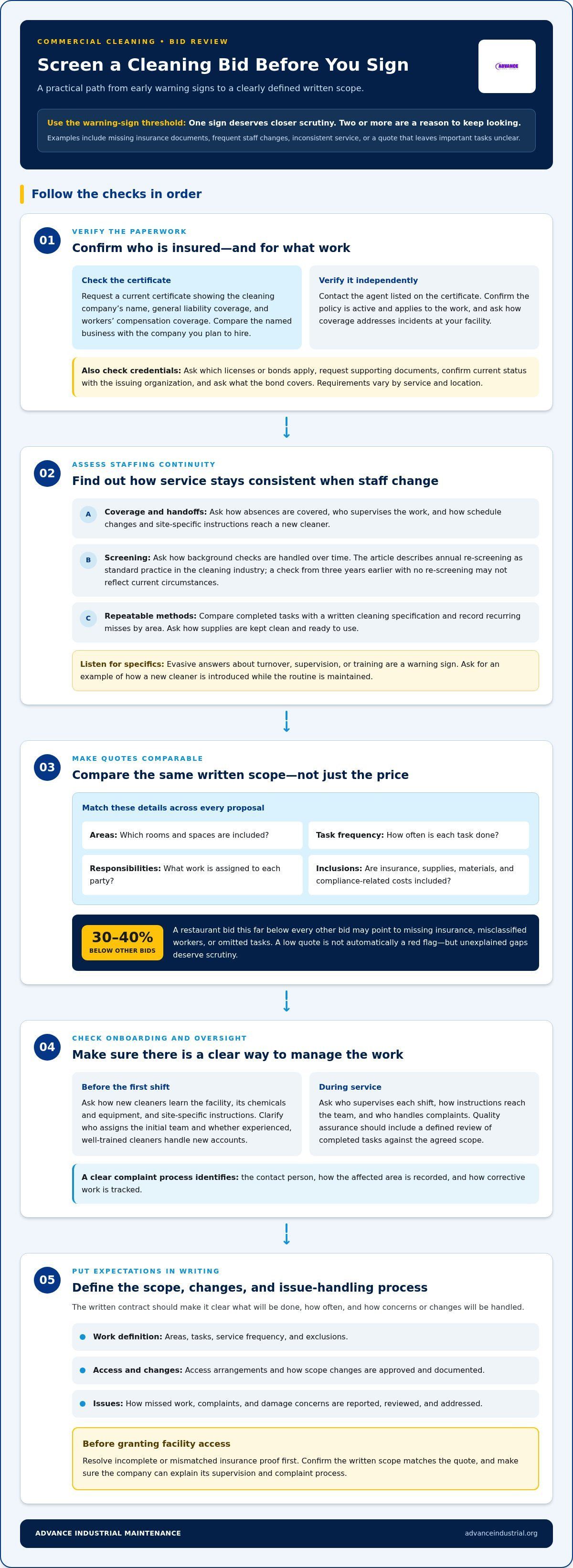
Two or more warning signs are a reason to keep looking, while even one deserves closer scrutiny. Red flags when hiring a cleaning company can include missing insurance documentation, frequent staff changes, inconsistent service, or a quote that leaves important tasks unclear.
A low quote can be appealing, but it tells only part of the story. The real test is whether the company can explain what is covered, deliver reliable service, and define the work clearly. This guide explains what to look for in insurance documents, how staff turnover can affect consistency, and how to compare quotes using the same written scope. You’ll also learn when a low bid deserves closer scrutiny rather than immediate rejection.
Key Takeaways
- Review written proof of general liability and workers’ compensation coverage rather than relying on verbal assurances.
- Ask how staffing changes are managed, since frequent turnover can disrupt attendance, training, and service consistency.
- Compare low quotes against the same written task list, and clarify what supplies, materials, and services are included.
- Pay attention to vague answers about complaints, staff training, or supervision; clear processes help set reliable service expectations.
Table of Contents
1. Proof of general liability and workers' compensation insurance
Ask for a current certificate of insurance, not just verbal assurance. For a commercial cleaning contract, the certificate should identify the cleaning company and show its general liability and workers’ compensation coverage. A restaurant should receive the certificate from the company’s insurance agent. Compare the named business with the company you plan to hire. A mismatch is a red flag.
To verify coverage, contact the agent listed on the certificate and confirm that the policy is active and applies to the work. Ask how liability and workers’ compensation coverage address incidents at your facility. Then call at least two client references and ask about damage handling, attendance, and whether the written scope matched the service delivered.
To assess licensing and bonding, ask which credentials apply to the work and request supporting documents. Confirm the business name and current status with the issuing organization, and ask what the bond covers. Requirements vary by service and location, so check what a document is for before assuming it applies.
A written cleaning contract should define the areas and tasks covered, service frequency, access arrangements, exclusions, and how changes are approved. For example, distinguish routine floor care from a separate deep-cleaning task. Include an agreed process for reporting missed work and documenting scope changes.
Ask what the satisfaction and damage policies cover, including how to report an issue, who reviews it, and what corrective steps may follow. The contract should explain the process without implying an unsupported guarantee. Before signing, ask: “Who is insured, what work is covered, and how are complaints or damage claims handled?”
Hiring an uninsured company can leave questions about responsibility and recovery after property damage or a worker injury. Missing or mismatched paperwork can also make it harder to establish who was responsible for the work. Treat incomplete proof as a reason to pause and resolve the documentation before granting access to your facility.
2. Employee turnover and service consistency
Frequent staff changes can disrupt attendance, training, and familiarity with your facility. If a different cleaner arrives each visit, they may miss details such as a secured storage area or a busy entrance. Ask how the company maintains coverage when a regular team member is unavailable. A clear handoff process helps preserve the agreed cleaning routine.
Ask whether employee background checks are repeated over time. Annual re-screening is described as standard practice in the cleaning industry. A check completed three years earlier, with no re-screening since, may not reflect current circumstances. Ask how screening is handled and how staff access to your facility is managed.
To assess team consistency, ask who supervises the work, how schedule changes are communicated, and how a new cleaner learns site-specific instructions. A handoff, for example, should explain which rooms need attention, which supplies are approved, and which surfaces require careful handling. Reliable attendance matters too, since missed visits can disrupt routine facility maintenance.
Consistent results depend on repeatable work methods, not just familiar faces. Compare completed tasks with a written cleaning specification, then record recurring misses by area. Clean, absorbent microfiber cloths and tools cleaned after each appointment help prevent grime from spreading between surfaces. Ask what steps the team follows to keep supplies clean and ready to use.
Evasive answers about turnover, supervision, or training are a red flag. Ask for a specific example of how the company introduced a new cleaner to a facility while keeping the service routine intact. Clear answers show whether the cleaning service has a process to maintain continuity when staffing changes occur.
3. Is a cheap cleaning quote always a red flag?
A low quote isn’t automatically a red flag, but unexplained gaps deserve scrutiny. A restaurant bid 30 or 40 percent below every other bid may indicate missing insurance, misclassified workers, or omitted tasks. Compare every proposal against the same written scope, then identify differences in areas, task frequency, and responsibilities. Confirm whether insurance, supplies, materials, and compliance-related costs are included.
Ask how new staff learn about your facility before their first shift. A sound onboarding process gives cleaners time to understand the property and trains them to use its chemicals and equipment properly. Ask who assigns the initial team and whether experienced, well-trained cleaners handle new accounts. Look for a clear explanation of the process, not broad assurances about quality.
Subcontracted staff can create communication gaps and uneven training or supervision. Ask who supervises each shift, how instructions reach the cleaning team, and who handles complaints. A clear process, for example, identifies the contact person, records the affected area, and explains how corrective work is tracked. Quality assurance should include a defined review of completed tasks against the agreed scope.
Vague answers about staff changes, training, or complaint resolution make it difficult to assess what the contract will deliver. Before signing, match the written scope to the quote and ask for specific explanations of exclusions and oversight. For a facility cleaning plan with clear expectations, discuss your cleaning requirements with a service team.
Commercial Cleaning Services Advance Industrial Maintenance: Office Cleaning
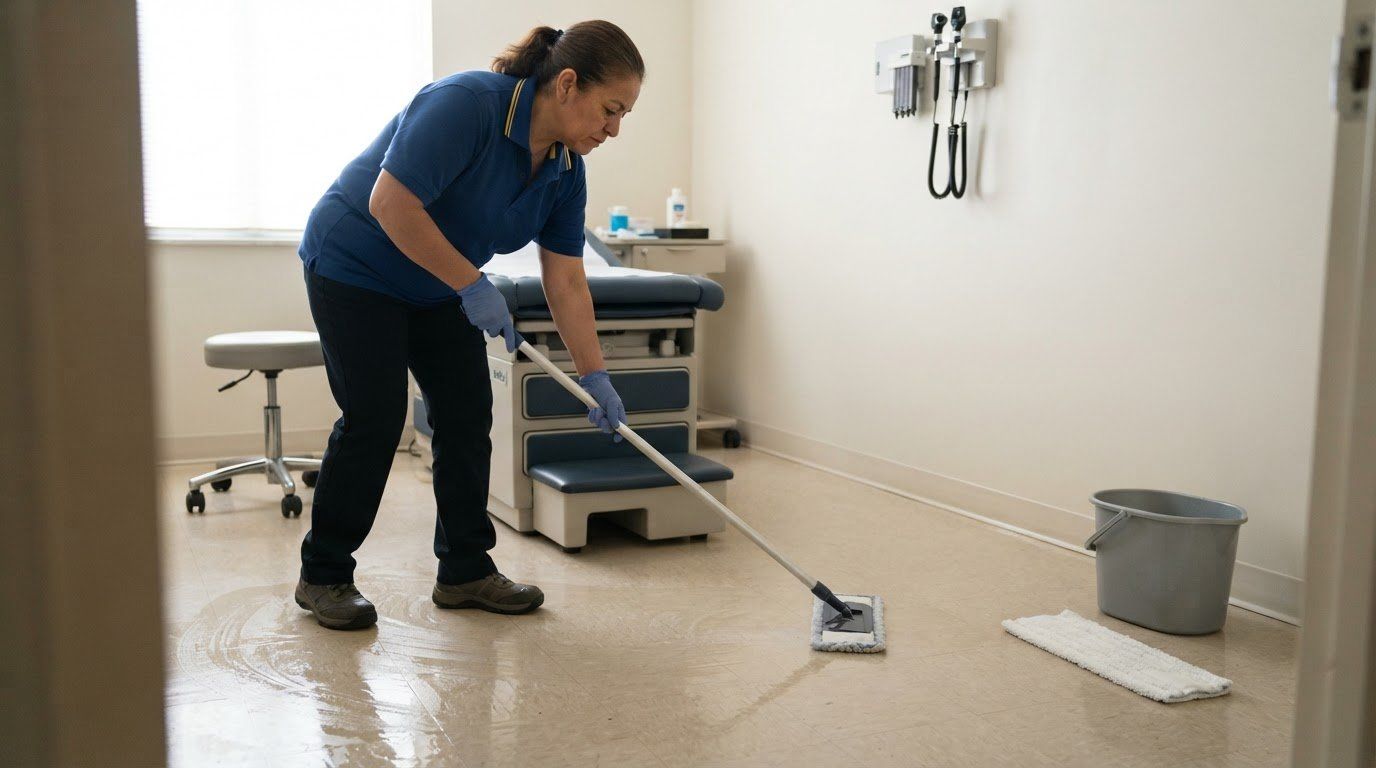
Commercial Cleaning Services Advance Industrial Maintenance is a practical next step when your facility needs commercial cleaning with a clearly defined scope. Its Office Cleaning service supports routine workplace upkeep, while Medical Facility Cleaning serves specialized facility needs. Floor Stripping and Waxing and Window Cleaning address defined floor-care and glass-cleaning requirements.
Use these checks to set expectations before work begins. Outline priority areas, required tasks, access procedures, and how to communicate service concerns. A defined scope aligns cleaning work with your facility’s operating needs and gives both teams a shared basis for reviewing results.
For commercial cleaning aligned with your facility’s needs, contact Commercial Cleaning Services Advance Industrial Maintenance or visit advanceindustrial.org.
Set a Clear Standard for Your Facility
Treat red flags when hiring a cleaning company as prompts to define the service your facility needs. Set priorities around cleanliness, operational continuity, and areas requiring specialized attention. A clear plan connects cleaning expectations to your facility’s day-to-day requirements.
Commercial Cleaning Services Advance Industrial Maintenance provides Office Cleaning, Medical Facility Cleaning, and Floor Stripping and Waxing. These services can support workplace upkeep, medical facilities, and floor-care needs as part of a commercial cleaning plan.
Discuss your facility’s cleaning requirements and identify the service scope that fits your operation. Contact Commercial Cleaning Services Advance Industrial Maintenance to take the next step toward a more consistent cleaning plan.
Frequently Asked Questions
What are the biggest red flags when hiring a cleaning company?
The biggest red flags when hiring a cleaning company include unclear accountability, changing explanations, and reluctance to discuss how problems are handled. For a Long Island facility, ask who receives a complaint and how it is assigned for follow-up. If staff can’t explain the communication path from cleaner to supervisor, resolving service issues may be difficult.
Do good cleaning companies require long-term contracts?
No single contract length defines a good cleaning company. A six-month minimum commitment is one example of a term a contract may contain, so focus on the conditions attached to it. Review renewal language, cancellation steps, and how service changes are documented. A clearly written agreement should make the commitment understandable before work begins.
How do I know if a house cleaning company is legitimate?
Look for consistency across the company’s business name, written agreement, invoices, and insurance documents. Make sure each refers to the same business, then read the scope carefully before granting access to your facility. For a commercial property in Nassau or Suffolk County, match the documents and confirm that the described work meets your facility’s needs.
Is a cheap cleaning quote always a red flag?
No. A low quote can reflect a different service scope, so identify the assumptions behind it before comparing proposals. Determine whether the quoted work covers the same rooms, visit pattern, and additional tasks as another proposal. Also review how extra work or scope changes are approved so you understand how the final bill may differ.
What does it mean if a cleaning company refuses to give references?
Refusing to provide two or three client references is a warning sign because it limits your ability to assess the company’s work history. If references are available, choose businesses with facilities similar to yours. Ask how the cleaning team handled schedule disruptions and site-specific instructions, and how the facility contact communicated with the cleaning supervisor.