Warehouse Floor Scrubbing in Suffolk County with Flexible Scheduling
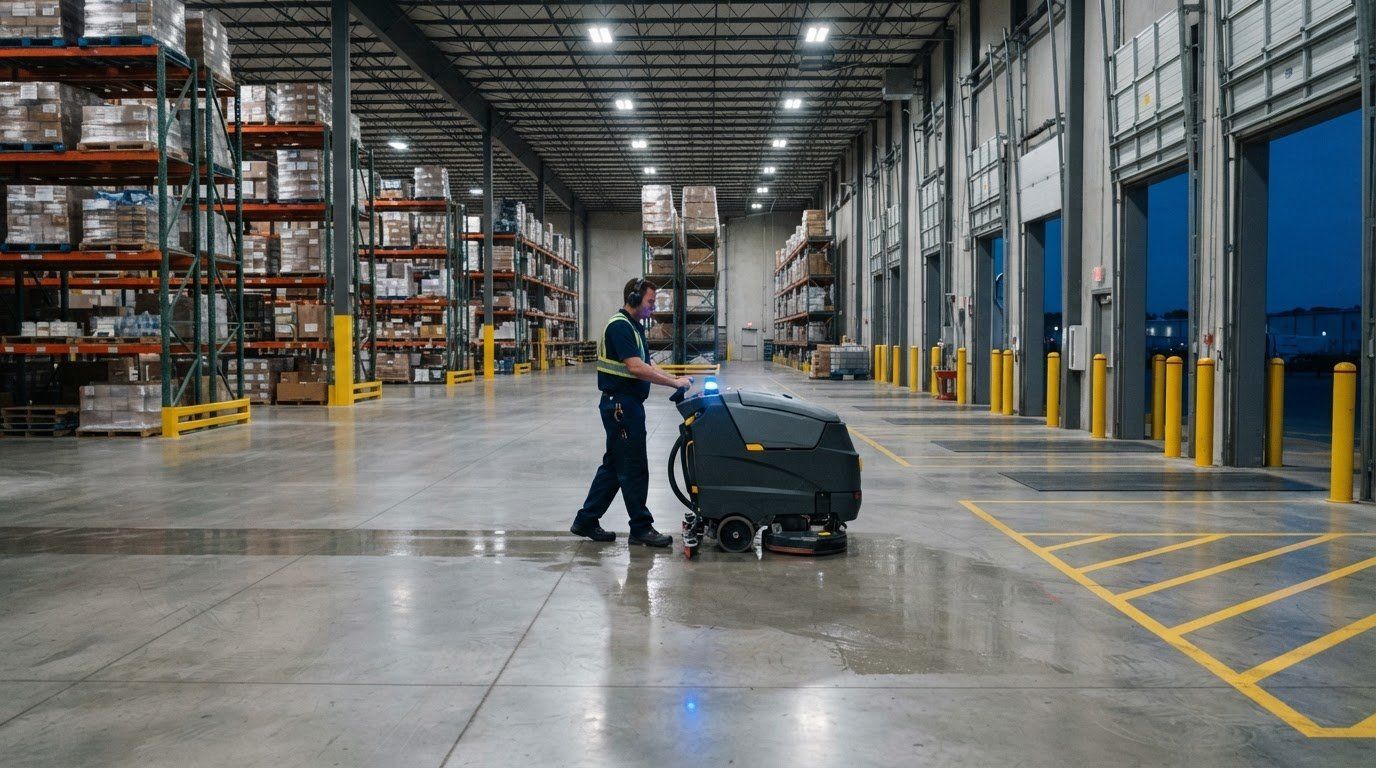
Warehouse floors don’t need the same scrubbing frequency year-round. Warehouse floor scrubbing in Suffolk County can be planned around shipping windows and shifts, then adjusted as traffic, soil buildup, and operating demands change. In high-bay facilities, floor care should also be coordinated with separate attention to elevated dust.
A well-planned schedule supports safe, orderly operations without disrupting the movement of goods. This article explains how traffic and floor conditions shape scrubbing frequency, when to revise a schedule, and what to consider in a high-bay warehouse. It also covers how to coordinate floor care with daily workflows.
Key Takeaways
- Build cleaning windows around shift transitions and shipping activity, then adjust the routine as operating demands change.
- Set scrubbing frequency according to floor traffic and soil buildup rather than relying on a fixed schedule.
- Plan machine-scrubbing coverage for aisles, cross-aisles, and dock plates to keep large industrial floors in the maintenance cycle.
- For high-bay facilities, account for overhead dust and choose scrubbing pads and chemicals that help protect aisle markings.
Table of Contents
Cleaning schedules coordinated with shipping and shift hours
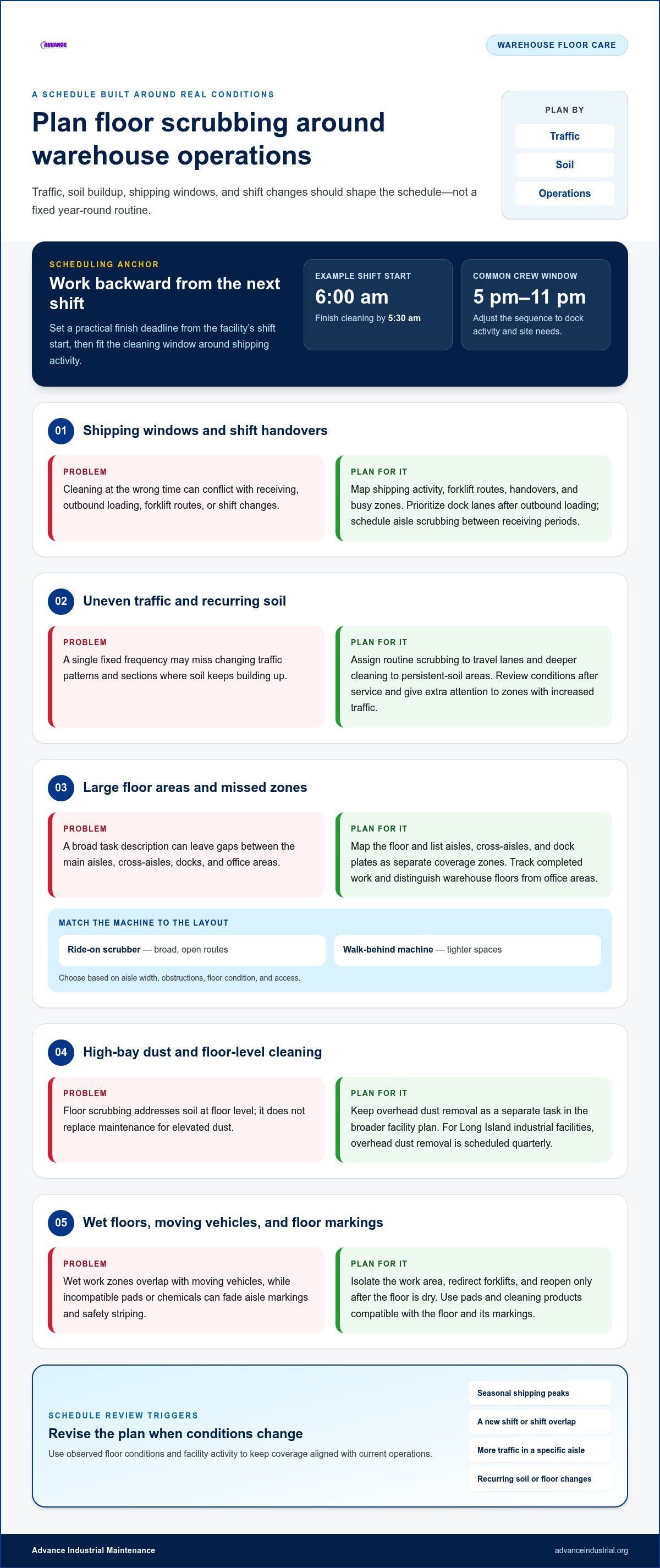
In Suffolk County and Nassau County, plan the cleaning window around the facility’s shipping calendar. A distribution warehouse might prioritize dock lanes after outbound loading and schedule aisle scrubbing between receiving periods. Map forklift routes, shift handovers, and high-traffic zones before setting the service plan. This helps keep cleaning aligned with operations.
Use shift start times to set a practical finish deadline. For a facility with a 6am shift start, crews finish by 5:30; warehouse cleaning crews commonly work between 5pm and 11pm. Those windows can suit some facilities, while others need a different sequence based on dock activity. Break rooms, locker rooms, and each restroom should also appear in the task plan, not just production floors.
Warehouse cleaning coverage should be tailored to each facility’s needs. Build a customized schedule around each site’s floor traffic, delivery pattern, and shift overlap. Assign routine scrubbing to travel lanes, then schedule deep cleaning for areas with persistent soil. For Long Island industrial facilities, overhead dust removal is scheduled quarterly.
Are there environmental or wastewater disposal rules for commercial floor cleaning in Suffolk County? Wastewater handling depends on its contents and discharge route. Set a facility procedure for collecting and disposing of cleaning wastewater, and prevent uncontrolled release into outdoor drains.
Set scrubbing frequency according to traffic, soil buildup, and changes in facility operations. Review the schedule when seasonal shipping peaks or a new shift changes how the floor is used.
Wet floors and moving vehicles are key risks during warehouse floor cleaning. Isolate the work zone, redirect forklifts, and reopen the area only after it is dry. Use pads and cleaning products compatible with the floor, since an unsuitable choice can fade aisle markings and safety striping.
Industrial and warehouse services in Suffolk County?
Industrial floor care typically combines debris removal, machine scrubbing, and planned maintenance. Choose coverage and equipment to suit the facility’s layout and floor condition.
Warehouse and Industrial Service Coverage
Warehouse floor scrubbing in Suffolk County can serve distribution centers, manufacturing sites, and flex-space facilities. A Long Island example is a 40,000-square-foot distribution center. Before setting a program, map the floor area, surface type, dock access, and operating zones. Those details show which sections need routine sweeping, machine scrubbing, or deeper floor care.
Define industrial and janitorial work by zone instead of relying on one general task description. Identify aisles, cross-aisles, and dock plates as separate coverage areas. A documented schedule helps facility managers track completed work and spot missed sections. In flex-space sites, distinguish warehouse floors from office areas because their traffic and cleaning needs differ.
Industrial Floor Sweeping and Scrubbing
Remove loose debris before machine scrubbing to tackle soil on the floor. Machine scrubbing can be practical across the broad open areas common in industrial facilities. Ride-on scrubbers suit open routes, while walk-behind machines can reach tighter spaces. Choose equipment based on aisle width, obstructions, floor condition, and access.
For large sites, set coverage across aisles, cross-aisles, and dock plates. Match pads and cleaning chemicals to the floor and markings; an incompatible choice can fade aisle striping. Include stripping, sealing, waxing, and burnishing in a maintenance cycle where the floor finish requires those treatments.
Ride-on scrubbers suit broad, open routes, while walk-behind units can handle tighter spaces. Choose based on the warehouse layout, obstructions, and floor condition.
When selecting a warehouse floor scrubbing service in Suffolk County, compare the proposed equipment, passes, zone coverage, and maintenance schedule. The scope should reflect the work and facility conditions rather than assume that an office-cleaning rate applies.
Before professional floor scrubbing, clear loose debris, move portable obstructions, and arrange access to each planned zone. Share the floor layout and operating constraints before work begins.
Warehouse floor scrubbing services in Suffolk County, NY
A practical service plan connects floor condition, building height, and work zones. In high-bay facilities, scrubbing addresses soil at floor level, while overhead dust requires separate planning. Keep those tasks distinct so floor care does not replace elevated-surface maintenance.
Start with a site map showing storage lanes, staging areas, loading zones, and equipment paths. Note which sections collect the most soil. A high-bay warehouse with active pallet movement may need a different cleaning sequence from a lower-traffic storage area. A zone-based plan is easier to adapt when operations change.
Set service frequency according to observed conditions. After scheduled work, review soil buildup, forklift traffic, and floor appearance. If production increases traffic in one aisle, adjust attention there without automatically changing every zone. Record completed areas and recurring problem spots to guide future maintenance.
Coordinate access with warehouse operations before work begins. Identify equipment to move, isolate the work area, and agree on how each section will reopen. Include overhead dust in the facility’s broader cleaning schedule instead of treating it as part of floor scrubbing.
For facilities planning warehouse floor scrubbing in Suffolk County, define floor zones, access sequence, and maintenance priorities together. A warehouse floor scrubbing plan in Suffolk County can then reflect the facility’s current operating needs. Warehouse floor scrubbing can be scoped around those priorities as traffic patterns shift.
Commercial Cleaning Services Advance Industrial Maintenance: Office Cleaning
Commercial Cleaning Services Advance Industrial Maintenance supports facility upkeep beyond warehouse floor care. Office Cleaning helps maintain administrative and operations spaces, while Medical Facility Cleaning serves healthcare environments. Floor Stripping and Waxing addresses finishes that need periodic renewal, and Window Cleaning covers another part of building maintenance.
Consider coordinating these services when office areas, floor finishes, or windows need attention alongside warehouse operations. A clear scope aligns each task with the facility’s use and maintenance priorities.
Contact Commercial Cleaning Services Advance Industrial Maintenance to discuss warehouse floor scrubbing and your facility’s other commercial cleaning needs.
Make the Cleaning Plan Part of Daily Operations
Document who is responsible for each floor zone, what conditions trigger a schedule review, and how operations will communicate changes. This gives facility teams a shared reference when inventory patterns, traffic routes, or shift demands change. Keep the plan accessible to supervisors coordinating maintenance and warehouse activity.
For warehouse floor scrubbing in Suffolk County, use a working plan to align service priorities with current facility needs. Review it when floor conditions change, new operating demands emerge, or a zone repeatedly needs attention. Clear priorities help teams adjust the plan without treating every part of the building identically.
Advance Industrial Maintenance can discuss your facility’s cleaning requirements and the next practical step. Contact Advance Industrial Maintenance to start a conversation about your maintenance needs. A well-defined plan gives your team a solid foundation for ongoing floor care.
Frequently Asked Questions
Can service frequency change over time?
Yes. Review the schedule when staffing, inventory flow, or production changes alter floor use. For example, a newly active packing area may need more frequent attention than an unchanged storage zone. Track recurring soil and surface appearance by area, then adjust the schedule to reflect those conditions. This keeps the plan responsive instead of applying one frequency throughout the facility.
What Affects Your Price?
The scope depends on the work required, floor condition, facility access, equipment, and number of passes. A mostly open floor and a tightly occupied warehouse can require different work plans. Soil levels and floor-maintenance needs also shape the scope. Define routine scrubbing separately from additional floor treatments so the requested work is clear.
How is commercial warehouse floor-scrubbing pricing determined locally?
The cost is provided after a quote request and depends on the work involved. Key factors include the areas covered, floor condition, access, equipment, and passes required. Prepare by identifying the relevant zones and describing current operating constraints. This helps define the actual work rather than assuming an office-cleaning rate applies.
Which warehouse floor cleaning companies serve Suffolk County, NY?
Advance Industrial Maintenance serves commercial facilities across Suffolk County, Nassau County, and Long Island, New York. Its warehouse floor scrubbing service can be scoped around a facility’s floor-care needs. For a focused initial discussion, outline operating priorities, access conditions, and the areas requiring attention. This gives the conversation a practical, facility-specific starting point.
What is included in professional warehouse floor scrubbing?
The agreed scope defines the work included. A warehouse floor scrubbing plan in Suffolk County can identify areas for machine cleaning and distinguish them from separate floor treatments. Before scheduling, note concerns such as persistent residue or finish wear, and identify zones needing special attention. Clear scope definitions help align the work with facility needs.