How to Evaluate a Commercial Cleaning Quote for Value

A useful commercial cleaning quote makes the work measurable: it identifies the areas and tasks covered, how often each task is performed, what the price includes, and the expected result. To understand how to evaluate a commercial cleaning quote, compare its scope and schedule with your facility’s actual needs, not just the total.
A low total is difficult to assess if the quote omits task frequency, supplies, or additional services. Check whether the proposal defines its scope and visit schedule, then compare the same representative areas and tasks across quotes. This makes it easier to judge whether the proposed work fits your facility’s operations.
Key Takeaways
- Compare representative areas and service visits to see whether the proposed schedule fits how your facility is used.
- Separate recurring tasks from occasional services so the scope and cost breakdown are easier to assess.
- Look for clear task descriptions, service frequency, expected results, and terms that define the working arrangement.
- Match cleaning needs to the right service, such as office cleaning, medical facility cleaning, floor stripping and waxing, or window cleaning.
Table of Contents
Sampling representative areas and service visits
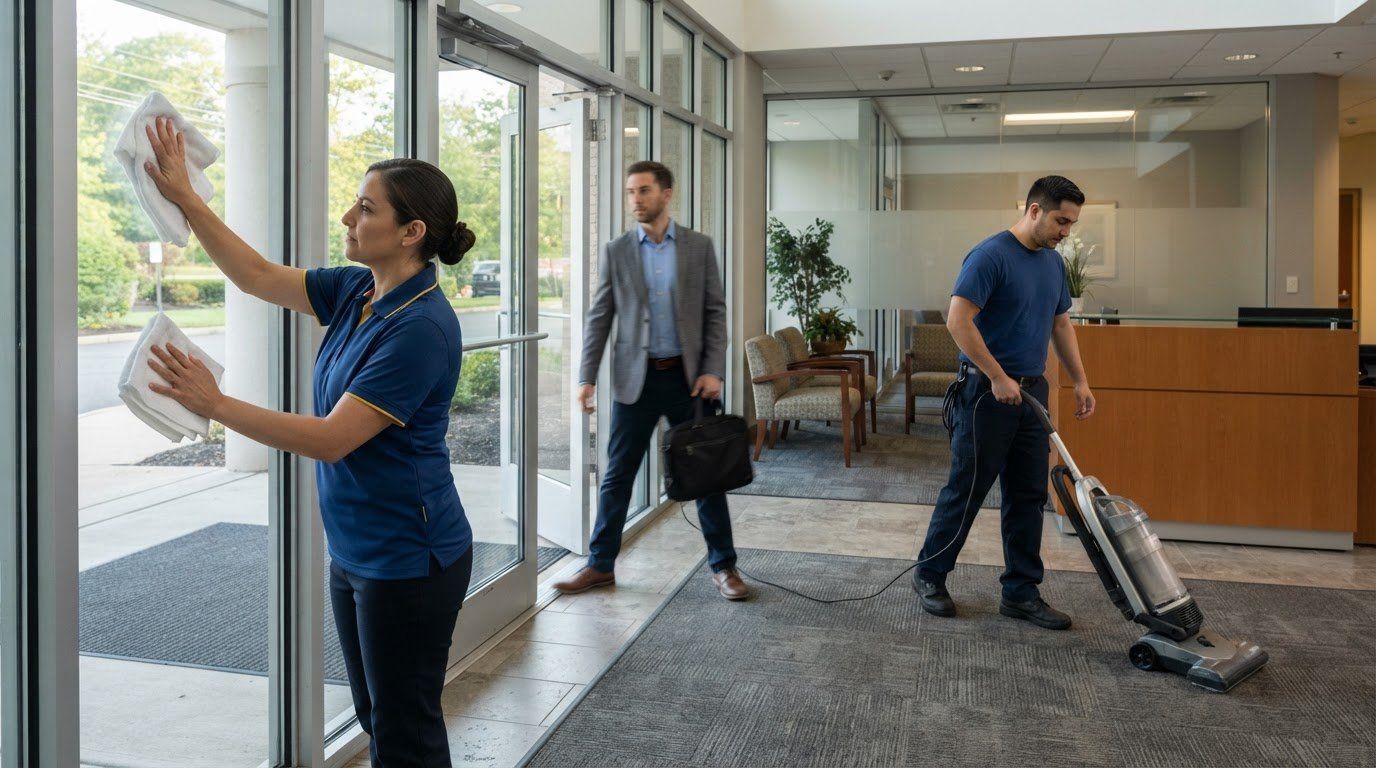
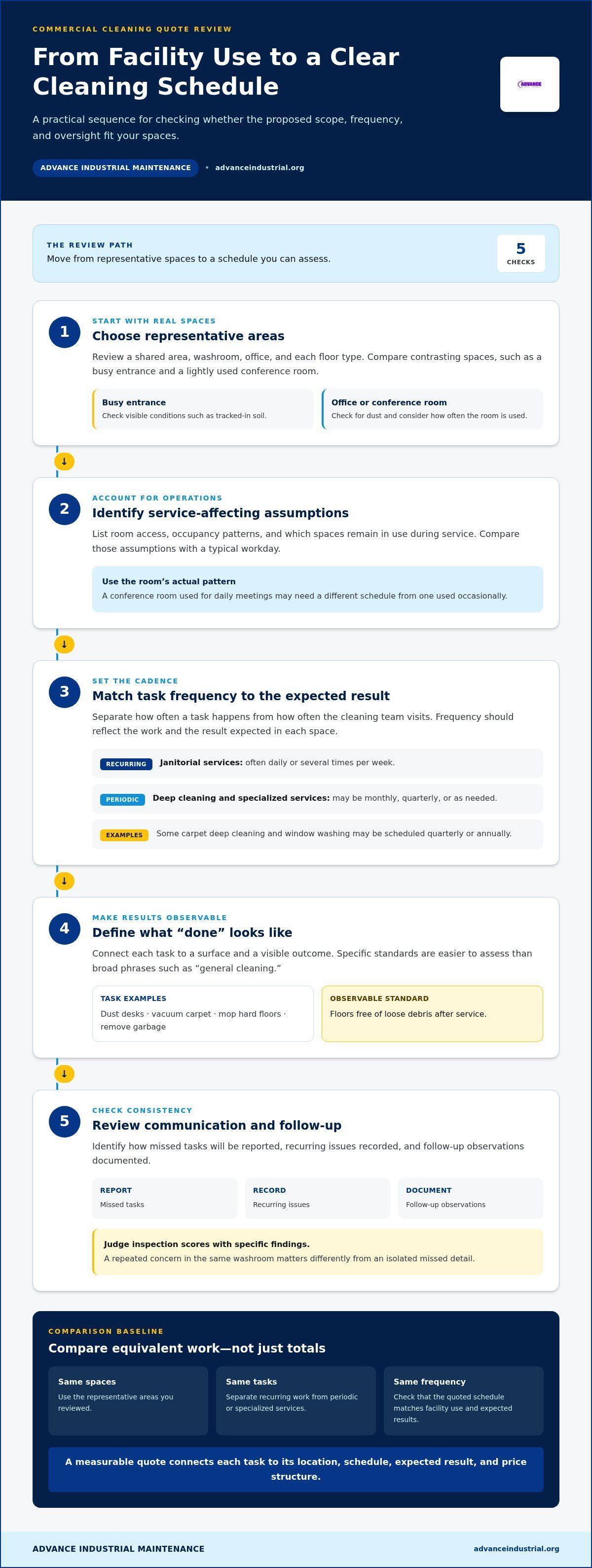
Compare the proposed schedule with how your facility operates. Include contrasting spaces, such as a busy entrance and a lightly used conference room.
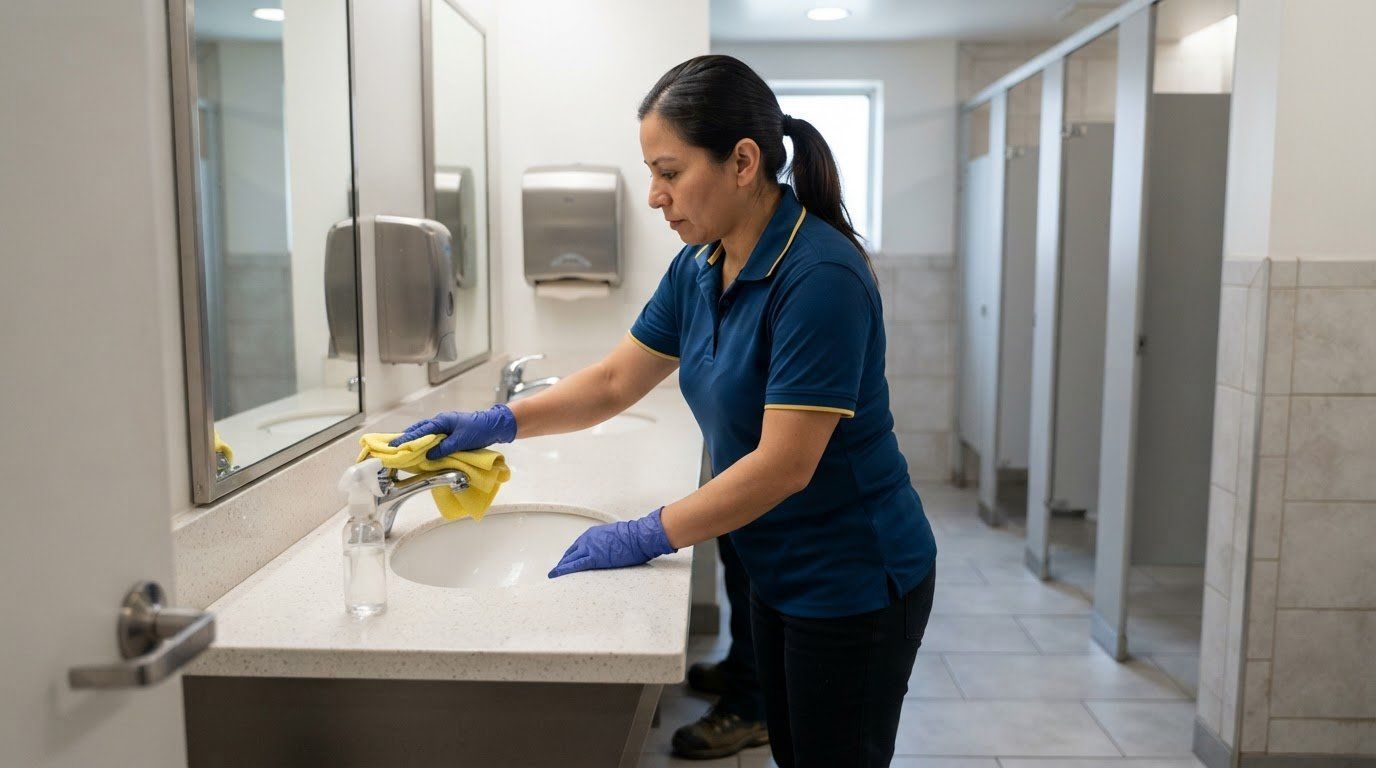
- Choose representative spaces for review, such as a shared area, washroom, office, and each floor type in your facility. Compare the proposed tasks with visible conditions in those locations, such as tracked-in soil near an entrance or dust on office surfaces. This helps reveal whether the scope reflects actual use rather than treating every space alike.
-
Identify Service-Affecting Assumptions
List assumptions that could affect the work, including room access, occupancy patterns, and which areas remain in use during service. Compare these with a typical workday. For example, a conference room used for daily meetings may need a different schedule from one used occasionally. Clear assumptions help prevent gaps between the quoted scope and your operational needs.
-
Compare Cleaning Frequency and Standards
Match each task’s frequency to the expected result. Janitorial services often run daily or several times per week, while deep cleaning and specialized services may occur monthly, quarterly, or as needed. Some carpet deep cleaning and window washing may be scheduled quarterly or annually. Separate task frequency from visit frequency, then define observable standards, such as floors free of loose debris after service.
- Review how communication and oversight will work. Identify how to report missed tasks, record recurring issues, and document follow-up observations. Compare inspection scores with specific findings, not as a standalone measure. A repeated concern in the same washroom matters differently from an isolated missed detail. These records help assess consistency across visits.
What should a commercial cleaning quote make clear?
A clear proposal connects the work, service frequency, and price structure. Compare each quote against the same spaces and expectations before assessing value.
-
Inspect the Proposal Structure and Cost Breakdown
Match each line item to a task, location, and schedule. Separate labor, supplies, equipment, and additional services so you can see what each cost covers. For example, a proposal should distinguish routine cleaning from periodic carpet work. A spreadsheet can help compare scope and pricing basis, not just the total.
-
Check for Extra Charges
Identify services that may be billed separately, such as carpet cleaning, window cleaning, or deep cleaning. Check whether the quote explains when those tasks apply and how they affect the total. Ask how the scope or cost changes if traffic increases, more spaces are used, or the schedule changes. Clear terms make potential additions easier to assess.
-
Compare Providers and Pricing Structures
Compare equivalent scopes before judging different totals. Quotes may be priced by the hour, per square foot, or as a flat fee. Compare them using the same areas, tasks, and frequency. A flat fee can simplify budgeting, while hourly pricing can make labor assumptions more visible. Note the pricing basis and expectations.
-
Verify Insurance, Bonding, and Licenses
Verify these records by requesting an insurance certificate, bonding documentation, and any applicable license details. Match the business name and relevant dates, then validate documents with the issuing insurer, bonding company, or licensing authority. This process answers how to verify a cleaning company's insurance, bonding, and licenses without relying solely on proposal language. Keep records with the quote.
Purpose and contents of commercial cleaning quotes
A commercial cleaning quote should turn facility needs into defined work, observable results, and clear service terms. Use these steps to assess whether the proposal supports routine maintenance and your facility’s specific requirements.
- Match each task to a surface and result. A quote might list dusting desks, vacuuming carpet, mopping hard floors, and removing garbage. Specify what each area should look like after service, such as floors free of loose debris. Observable expectations make performance easier to assess than broad phrases like “general cleaning.”
- Separate routine work from specialized services. Identify recurring tasks, then distinguish periodic carpet cleaning, window cleaning, or floor care. This shows which work supports regular maintenance and which addresses a specific need. For healthcare spaces, use applicable environmental cleaning guidance to inform the task plan.
- Check the resource details. The quote should show whether labor, supplies, and equipment are included or listed separately. For example, a floor-care line item is clearer when it identifies the work and surfaces covered. This makes it easier to understand how the cleaning plan is resourced.
- Review the terms alongside the task list. A commercial cleaning agreement commonly outlines services, frequency, costs, and service terms. Confirm that the proposal connects each task with its schedule and explains how additional services are handled. This reduces ambiguity between the agreed scope and the work performed.
- Use the finished scope as your comparison baseline. If one proposal includes routine floor maintenance and another lists it separately, compare the same work before assessing value. A defined scope also gives facility teams a practical reference for reviewing service consistency.
Build a clear scope for your facility before moving to the next decision: request a commercial cleaning proposal.
Commercial Cleaning Services Advance Industrial Maintenance: Office Cleaning
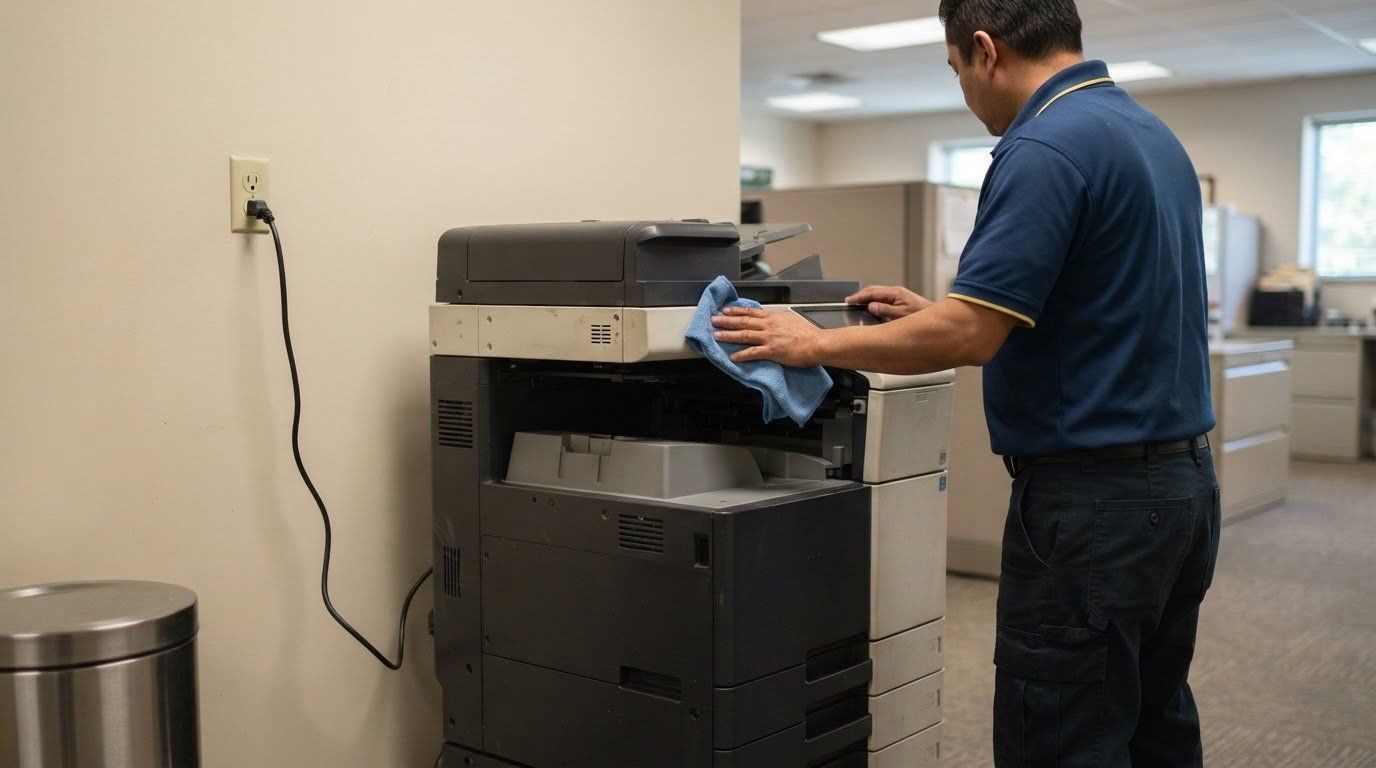
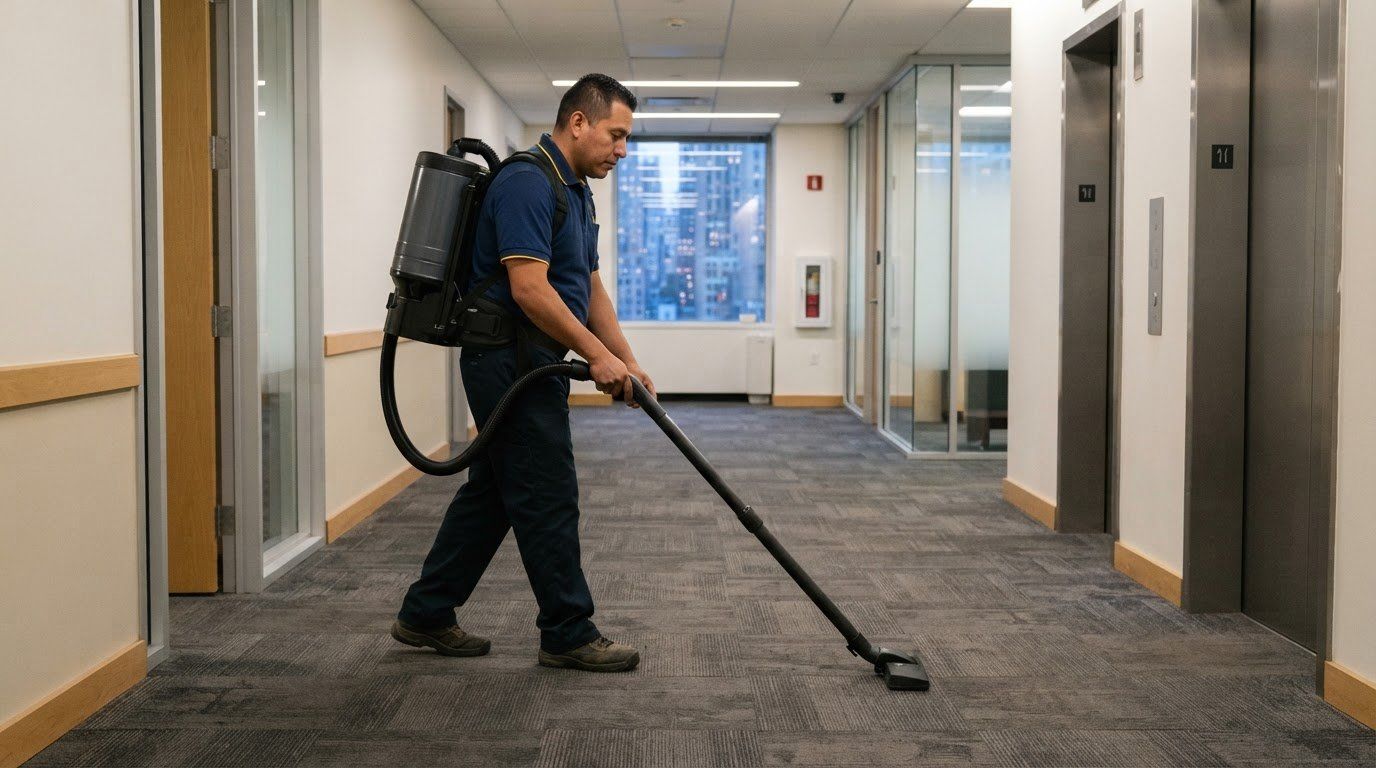
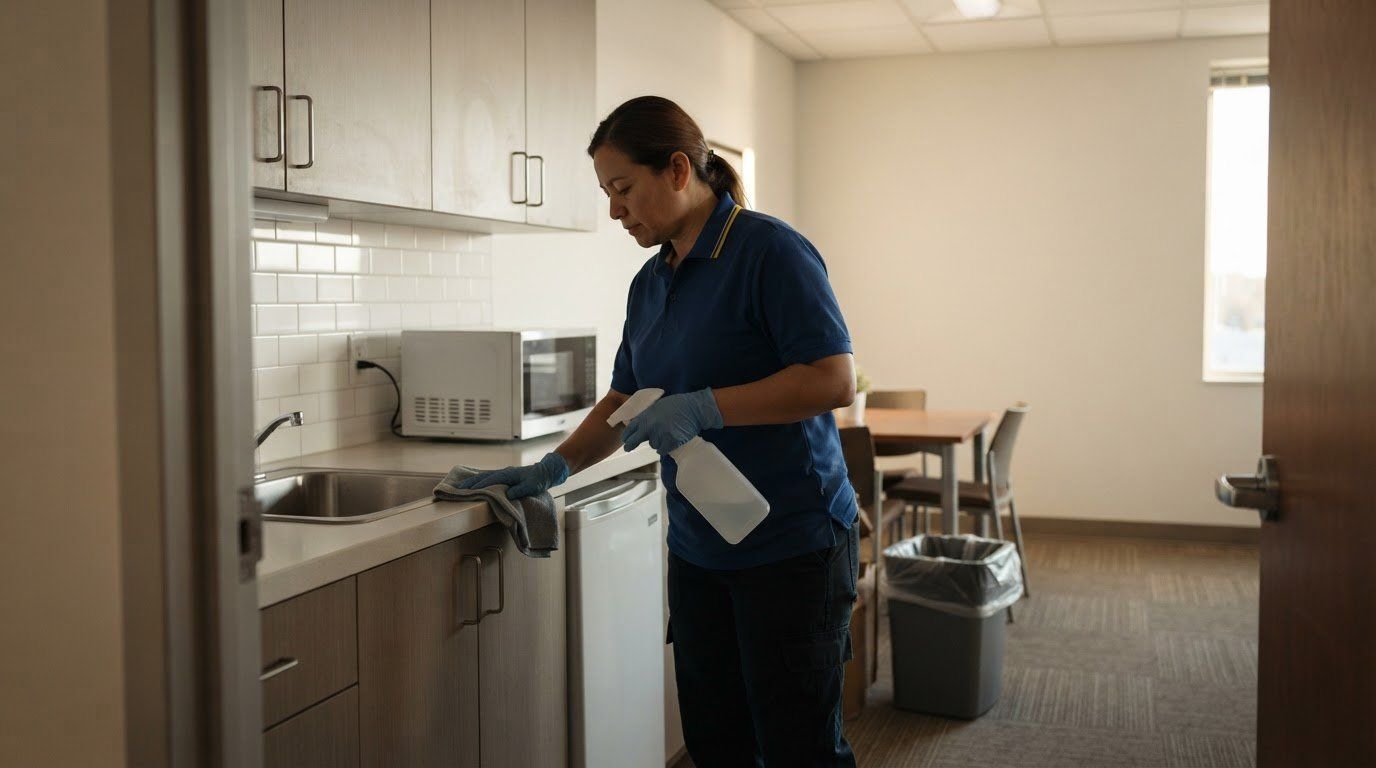
Commercial Cleaning Services Advance Industrial Maintenance provides Office Cleaning for workplaces that need a defined cleaning scope and dependable facility upkeep. Turn to this service when your office quote needs to cover recurring care for work areas and shared spaces.
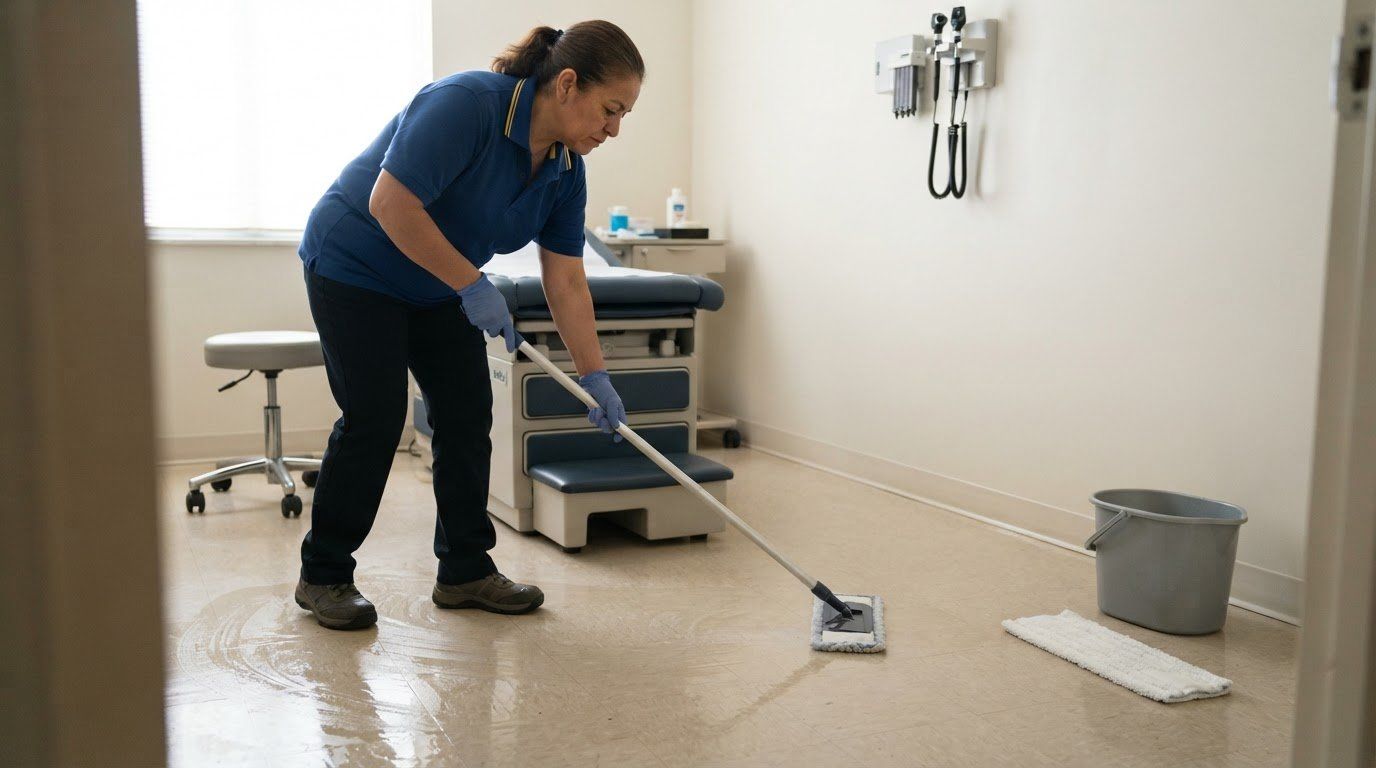
Advance Industrial Maintenance provides Medical Facility Cleaning, Floor Stripping and Waxing, and Window Cleaning. Match the service to the work identified in your evaluation: distinguish routine office upkeep from floor care or window cleaning, for example. A clear scope helps align scheduled tasks with operational needs.
For commercial cleaning in Suffolk County, Nassau County, and Long Island, contact Advance Industrial Maintenance to discuss your facility’s needs and request a quote.
Set a Clear Standard for Your Next Cleaning Decision
Use your evaluation to establish a working scope that supports facility operations, not simply to select a proposal. Align the cleaning plan with the spaces that matter most, then keep a clear reference for service discussions. Knowing how to evaluate a commercial cleaning quote helps you set expectations and carry them into day-to-day operations.
Advance Industrial Maintenance offers Office Cleaning, Medical Facility Cleaning, and Floor Stripping and Waxing. These services address office upkeep, healthcare environments, and floor maintenance needs within commercial facilities.
For a next step, contact Commercial Cleaning Services Advance Industrial Maintenance to discuss your facility’s cleaning needs. A clear scope is a practical foundation for a productive service relationship.
Frequently Asked Questions
How should I evaluate a commercial cleaning provider?
Assess how the provider manages quality, communication, and changing facility needs. Consider how reported issues are recorded and followed up, and whether the process supports consistent service. Advance Industrial Maintenance’s services are guaranteed with quality assurance. For businesses in Suffolk County, Nassau County, and across Long Island, local service can make coordination more practical.
What should a commercial cleaning quote include?
A useful quote identifies the service period, covered locations, task responsibilities, and exclusions. Check whether it explains how changes to occupied areas or building access affect scheduled work. For example, if a suite is added, the document should clarify how the revised scope will be handled. Keep the accepted proposal with the service agreement as a shared reference.
How are commercial cleaning services priced per square foot or hour?
Per-square-foot pricing relates the charge to the area being serviced, while hourly pricing relates it to labor time. To compare the methods, identify which spaces and tasks each calculation covers. For an hourly proposal, consider how the labor time maps to the work. For a square-foot proposal, check whether shared spaces and less frequently used rooms are included.
What factors affect the cost of a commercial cleaning contract?
Facility size, building type, traffic, cleaning frequency, surface types, and specialized requirements can affect contract costs. A busy entrance with hard flooring may need a different maintenance approach from a lightly used carpeted office. Hygiene requirements can also affect the work plan. In healthcare and other specialized environments, define the relevant spaces and tasks before comparing proposals.
How can I compare commercial cleaning quotes with different scopes?
To understand how to evaluate a commercial cleaning quote, create a comparison grid with each area and task as a separate row. Mark each item as included, excluded, or priced separately, then compare the same service period across proposals. This exposes scope differences before you assess totals and helps identify which proposal best matches your facility’s priorities.