Commercial Carpet Stain Removal Guide for Offices

The strongest cleaner isn’t always the safest first move. If a stain appears on office carpet, rubbing it or applying an untested product can spread the mark or damage the fibers. This commercial carpet stain removal guide starts with a more reliable step: assess the stain and the carpet before choosing a treatment.
It’s not always clear what caused a spot, especially in a busy workplace. The wrong response can make cleanup harder, so start by limiting foot traffic and blotting any fresh spill. Then check the carpet-care guidance before deciding whether a product is suitable. This guide explains how to respond carefully, when to stop, and when professional assessment may be appropriate.
It also covers how to prepare for commercial carpet cleaning and fit stain response into a broader maintenance plan. Staff can address a spot methodically without guessing or reaching for a stronger chemical too soon.
Key Takeaways
- Use this commercial carpet stain removal guide to follow a measured response instead of applying a stronger cleaner by default.
- Keep foot traffic away from the affected area, then check carpet-care guidance before testing a suitable product.
- Reassess after a cautious first attempt. The stain’s size and persistence, along with the carpet’s care requirements, can help you decide whether to seek professional cleaning.
- When requesting an assessment, share what caused the stain if known, its approximate size, and any products or methods already used.
Table of Contents
Commercial Carpet Stain Removal Guide: Assess the Stain Before Treating It
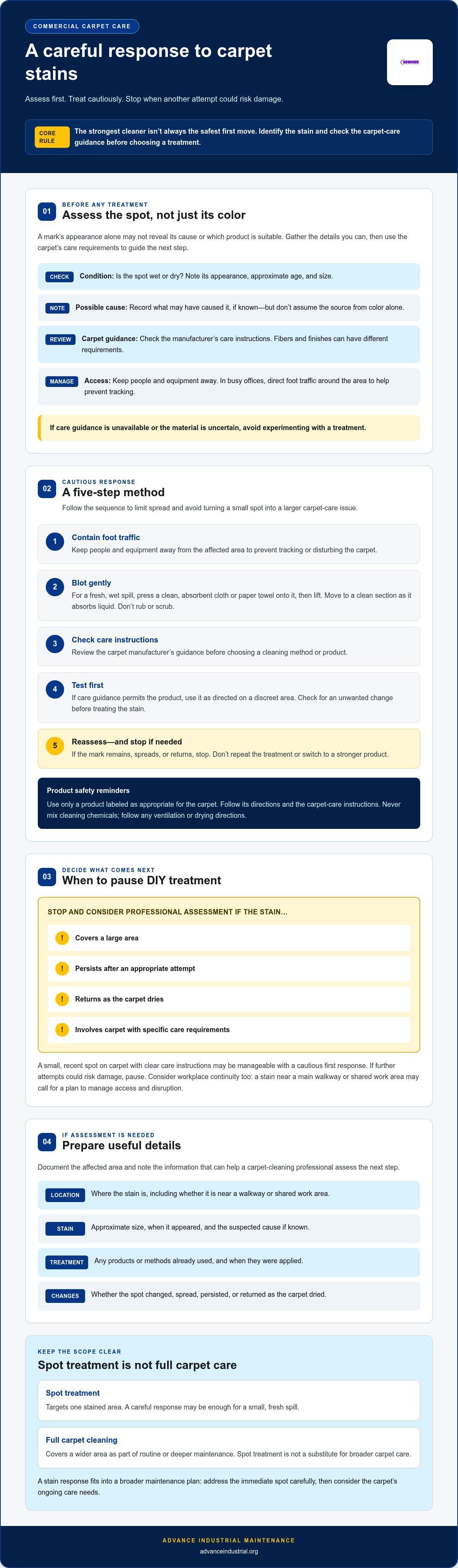
Identify what you can about the stain and check the carpet-care requirements before choosing a treatment. A dark mark can have several causes, and its appearance alone may not tell you which product is suitable. This commercial carpet stain removal guide starts with observation, not stronger chemicals.
If the spill is still wet, use a clean, absorbent cloth or paper towel to blot gently. Press down, lift, and move to a clean section of the material as it absorbs the liquid. Rubbing can push the stain deeper into the pile or spread it across a larger area. General stain removal principles also explain why the right treatment depends on both the substance and the method used.
Spot treatment targets one stained area. Full carpet cleaning covers a wider area as part of routine or deeper maintenance. A careful response may be enough for a small, fresh spill, but it isn’t a substitute for broader carpet care.
What to check before treating a commercial carpet stain
Note the stain’s appearance, approximate age and size, and whether it’s wet or dry. Record what may have caused it, if known, but don’t assume the source from color alone. Next, check the carpet manufacturer’s care guidance. Fibers and finishes can have different requirements, so a product suitable for one carpet may be inappropriate for another.
Manage access while you assess the area. In busy Long Island offices, direct foot traffic around the stain to help prevent tracking and keep staff away from a damp spot. If the carpet-care guidance is unavailable or the material is uncertain, avoid experimenting with a treatment. A cautious assessment can help you decide whether limited spot care is sensible or whether broader professional carpet cleaning is needed.
How to Remove a Commercial Carpet Stain: A Cautious Step-by-Step Method
Follow this sequence to limit the spread and avoid turning a small spot into a larger carpet-care issue. The right treatment depends on both the stain and the carpet material.
- Contain foot traffic. Keep people and equipment away from the affected area to prevent tracking the stain or disturbing the carpet.
- Blot gently. Press a clean, absorbent cloth onto the spot, then lift it. Don’t scrub or use force.
- Check care guidance. Review the carpet manufacturer’s instructions before choosing a cleaning method or product.
- Test first. If the guidance permits a product, apply it as directed to a discreet area. Check for an unwanted change before treating the stain.
- Reassess. If the mark remains, spreads, or returns, stop rather than repeating the treatment or switching to a stronger product.
Use only a product labeled as appropriate for the carpet, and follow its directions along with the carpet-care instructions. Never mix cleaning chemicals. The Carpet and Rug Institute standards can provide additional guidance for carpet maintenance.
When to stop DIY treatment and avoid further damage
A persistent, spreading, or recurring stain is a reason to pause, not increase product strength. Follow the product label and carpet-care instructions, including any ventilation or drying directions. Before seeking professional advice, document the affected area and note what you applied and when. That information gives a carpet-cleaning professional useful context for assessing the next step.
If the stain needs specialized assessment, consider professional commercial carpet cleaning as part of a broader maintenance plan.
When Commercial Carpet Stain Removal Calls for Professional Help
A small, recent spot on carpet with clear care instructions may be manageable with a cautious first response. Consider professional help if the stain covers a large area, persists after an appropriate attempt, returns as the carpet dries, or involves carpet with specific care requirements. Stop DIY treatment if further attempts could risk damage. Consider workplace continuity, too: a stain near a main walkway or shared work area may call for a plan to manage access and disruption.
The Carpet and Rug Institute Spot Solver can help you review stain-specific guidance. If the stain’s cause is uncertain or the recommended treatment isn’t suitable for your carpet, a professional assessment may be a safer next step. This commercial carpet stain removal guide is part of a broader approach: address the immediate spot carefully, then consider how it fits into ongoing commercial carpet maintenance.
How to prepare for a commercial carpet-cleaning assessment
Before requesting an assessment, record the stain’s location, approximate size, suspected cause, and when it appeared. List any products or methods already used, and note whether the spot changed, spread, or returned. These details help the cleaning professional understand the situation and avoid repeating treatments that may not suit the carpet.
Ask what process may be appropriate, what access the work requires, and how it could affect office use. Advance Industrial Maintenance provides commercial carpet cleaning and has more than 40 years of industry experience. Businesses in Nassau or Suffolk County can ask about current service availability for their location through Advance Industrial Maintenance’s commercial carpet cleaning.
Make a Confident Plan for Carpet Care
A reliable commercial carpet stain removal guide starts with assessing the mark and the carpet, then choosing a cautious response. Blot rather than rub, follow the manufacturer’s care guidance, and stop if a stain persists, spreads, or returns. For larger or uncertain stains, professional assessment can help limit the risk of damage and unnecessary disruption to office activity.
Advance Industrial Maintenance offers commercial carpet cleaning and office cleaning, with more than 40 years of industry experience. Connect spot response with a broader carpet-maintenance plan, and confirm current service availability for your location. Discuss commercial carpet cleaning for your facility . With a careful first response and the right support, carpet care can stay practical while helping maintain a professional workplace.
Frequently Asked Questions
How do you remove a fresh stain from commercial carpet?
Blot the spill promptly with a clean, absorbent cloth, pressing and lifting rather than rubbing. Keep foot traffic away, then check the carpet manufacturer’s care instructions before applying anything. If the guidance allows a suitable product, follow its label and test it in an inconspicuous area first. This cautious approach helps limit spreading and reduces the risk of affecting carpet fibers.
Can you use household stain remover on commercial carpet?
Use a household stain remover only if its label says it’s appropriate for your carpet and the carpet-care instructions allow it. Products can affect fibers or finishes differently, so don’t assume a cleaner that works on one carpet is safe for another. Test as directed, and never mix cleaning chemicals. If the carpet type or product suitability is unclear, pause and seek professional guidance.
What should you do if a carpet stain does not come out?
Stop treating the area rather than switching to a stronger product or repeating the same application. Persistent, spreading, or recurring stains may need a different assessment, and additional attempts can increase the risk of damage. Note when the stain appeared and what products you used. Share those details with a carpet-cleaning professional before further treatment.
When should a business call a professional carpet cleaner for a stain?
Contact a professional if the stain is large, persists after a careful attempt, returns, or involves carpet with specific care requirements. Also consider whether repeated DIY work could disrupt office activity. Advance Industrial Maintenance offers commercial carpet cleaning and has more than 40 years of industry experience. Businesses in Nassau County or Suffolk County, Long Island, can confirm current service availability for their location.