Commercial Cleaners: How to Choose the Right Partner for Your Facility
The longest service list doesn’t necessarily make a cleaning partner the right fit. Commercial cleaners should match your facility’s needs, schedule, and operating requirements. If proposals leave out tasks or responsibilities, it becomes difficult to compare providers, and inconsistent service can disrupt staff and customer routines. Start with the work your building needs, then evaluate how each provider will deliver it.
This guide explains how to compare cleaning scope, communication, facility experience, and service consistency. You’ll learn what to confirm before choosing a provider and how to set clear expectations for ongoing service. For Long Island facilities, Advance Industrial Maintenance is based in Bohemia and serves Nassau and Suffolk Counties, with more than 40 years of commercial cleaning experience.
Key Takeaways
- Separate recurring janitorial tasks from specialized services such as floor care, disinfection, and project cleanup to define the right scope.
- Compare commercial cleaners using the same checklist: written scope, visit frequency, communication plan, and service-review process.
- Discuss facility access, business hours, high-traffic areas, and how schedule changes will be handled.
- Build a clear plan step by step: define needs, review the facility, document the scope, confirm the schedule, and verify service availability for your Long Island location.
Table of Contents
What Commercial Cleaners Do for Long Island Businesses
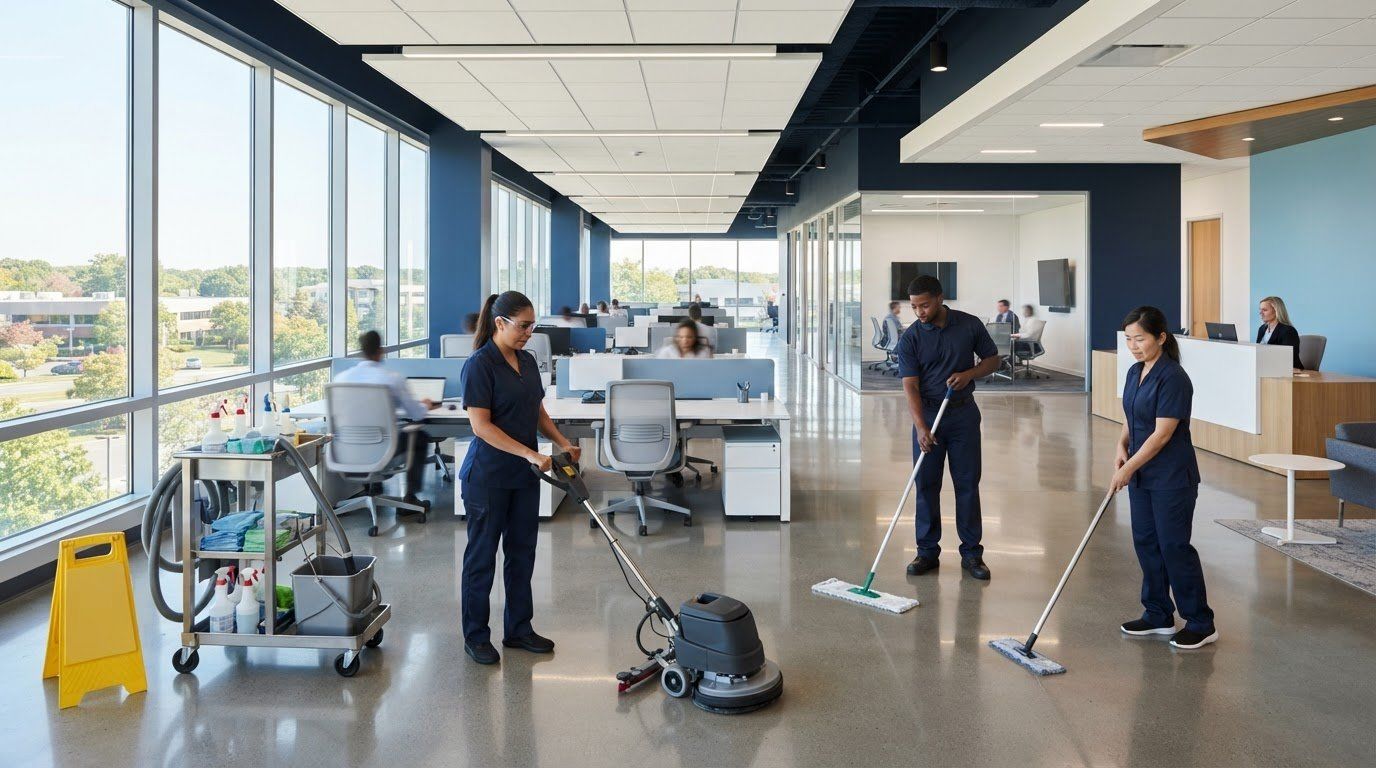
Commercial cleaners maintain business facilities through recurring tasks, specialized cleaning, or project-based work. The right scope depends on how the building is used and what condition it is in, not square footage alone. Routine janitorial service supports day-to-day cleanliness. Floor care, disinfection, and post-construction cleanup address specific needs that may arise periodically or at particular stages of facility use.
Which cleaning services fit your commercial facility?
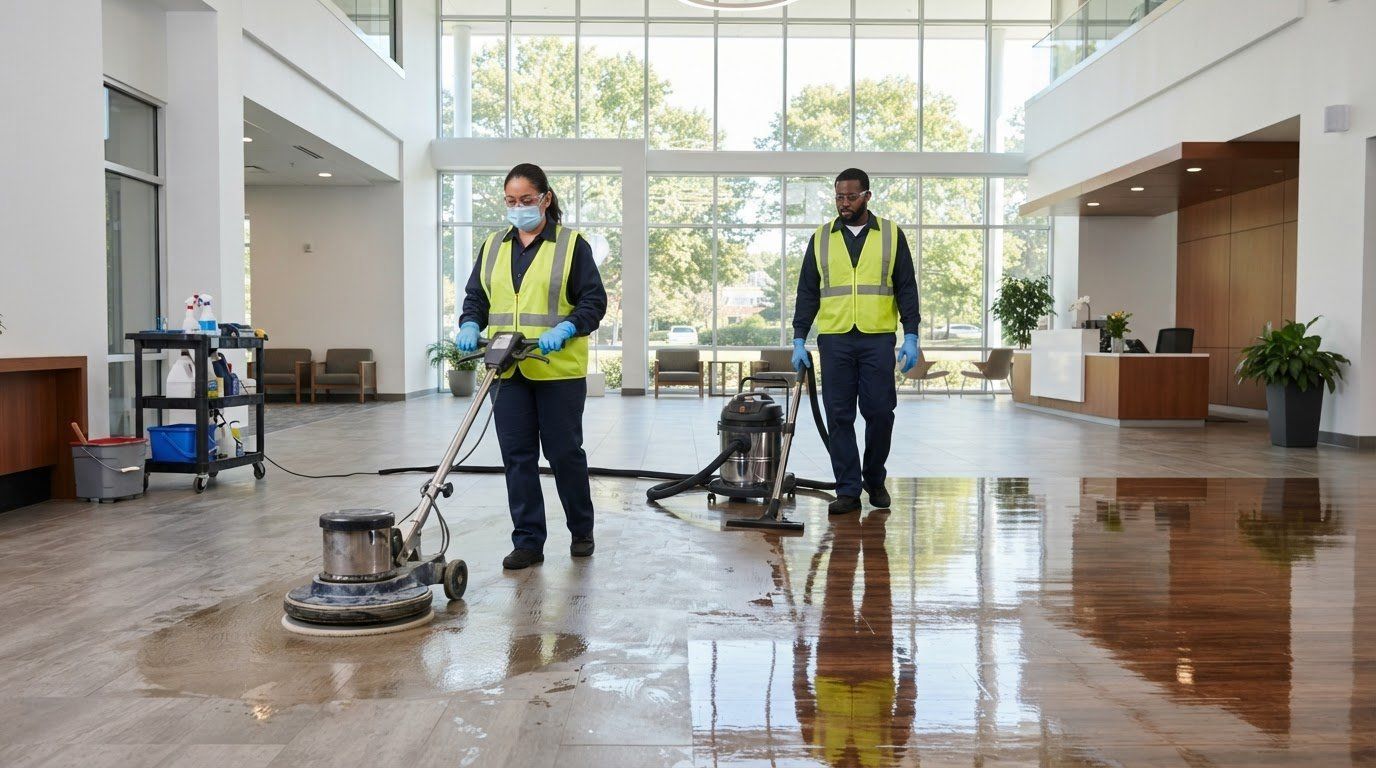
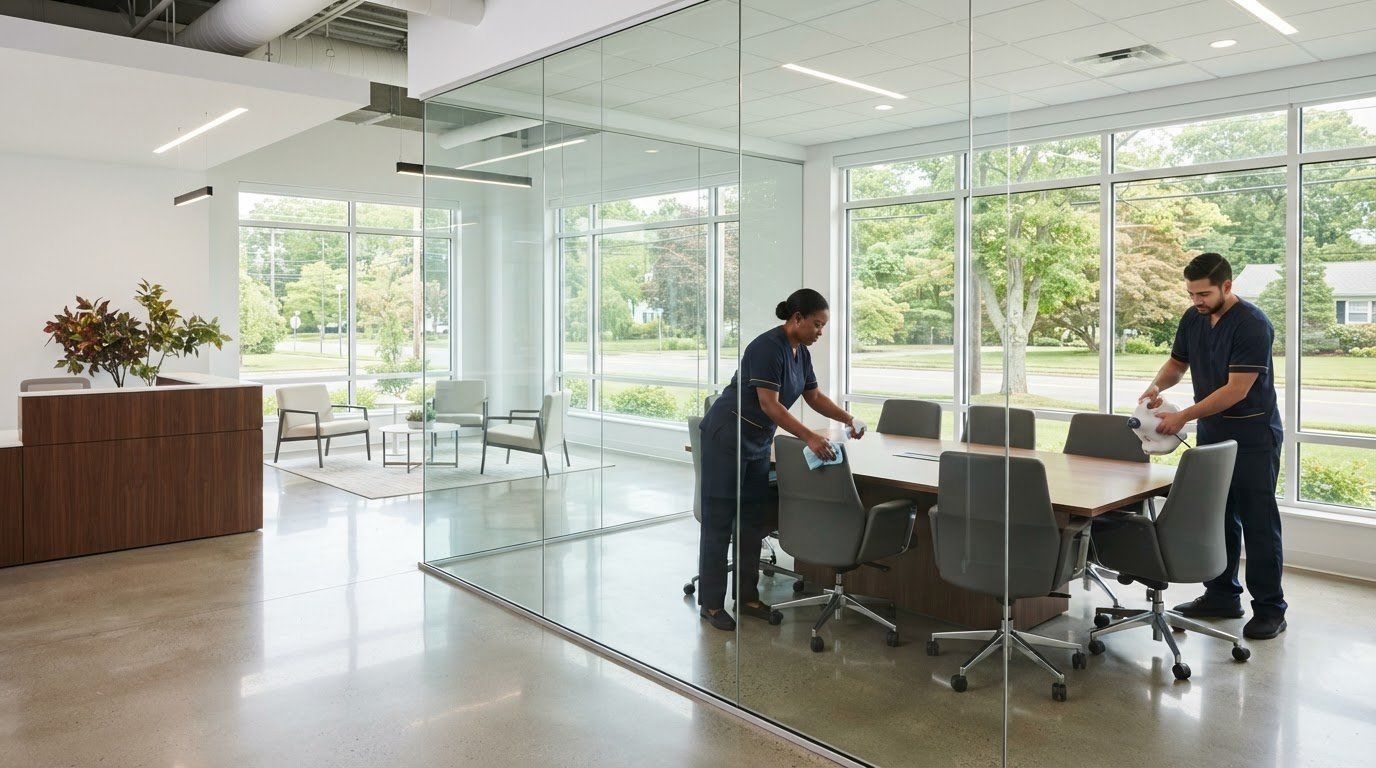
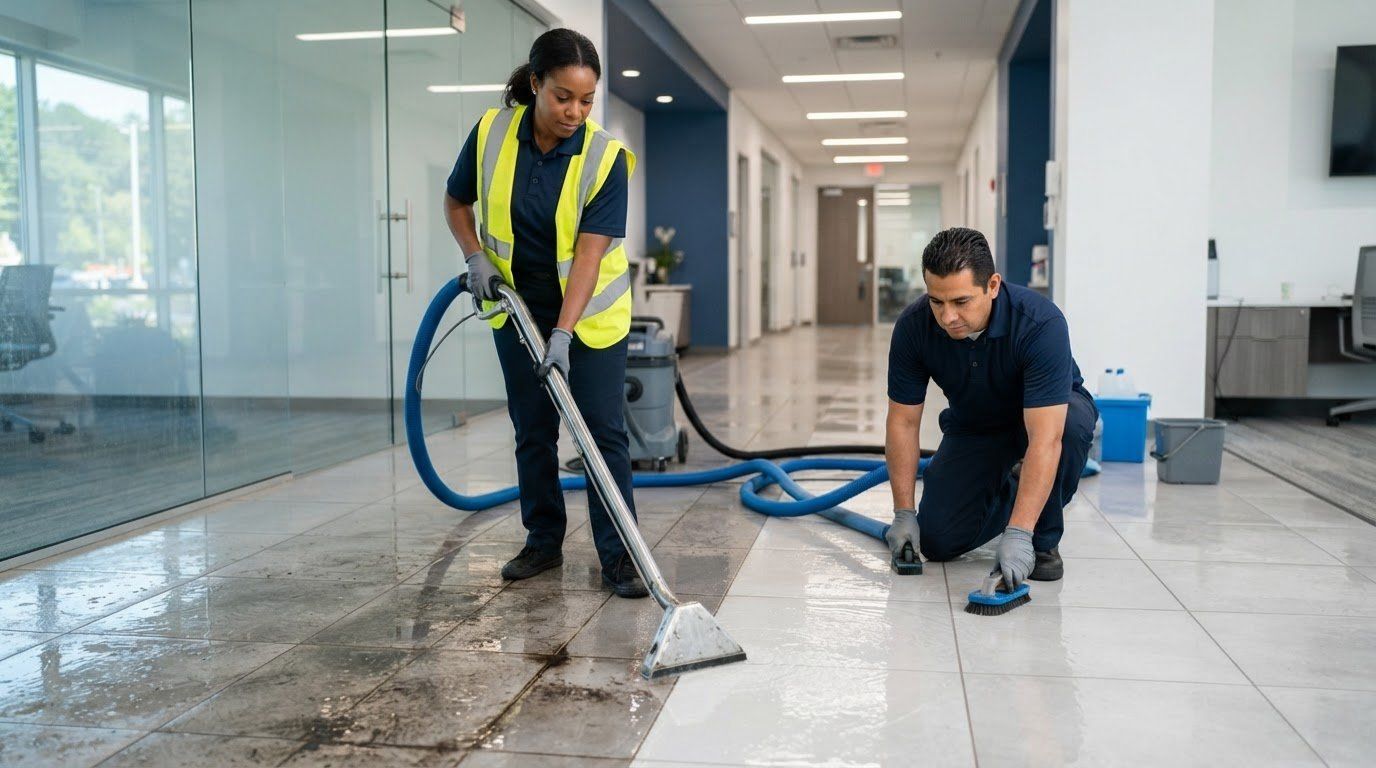
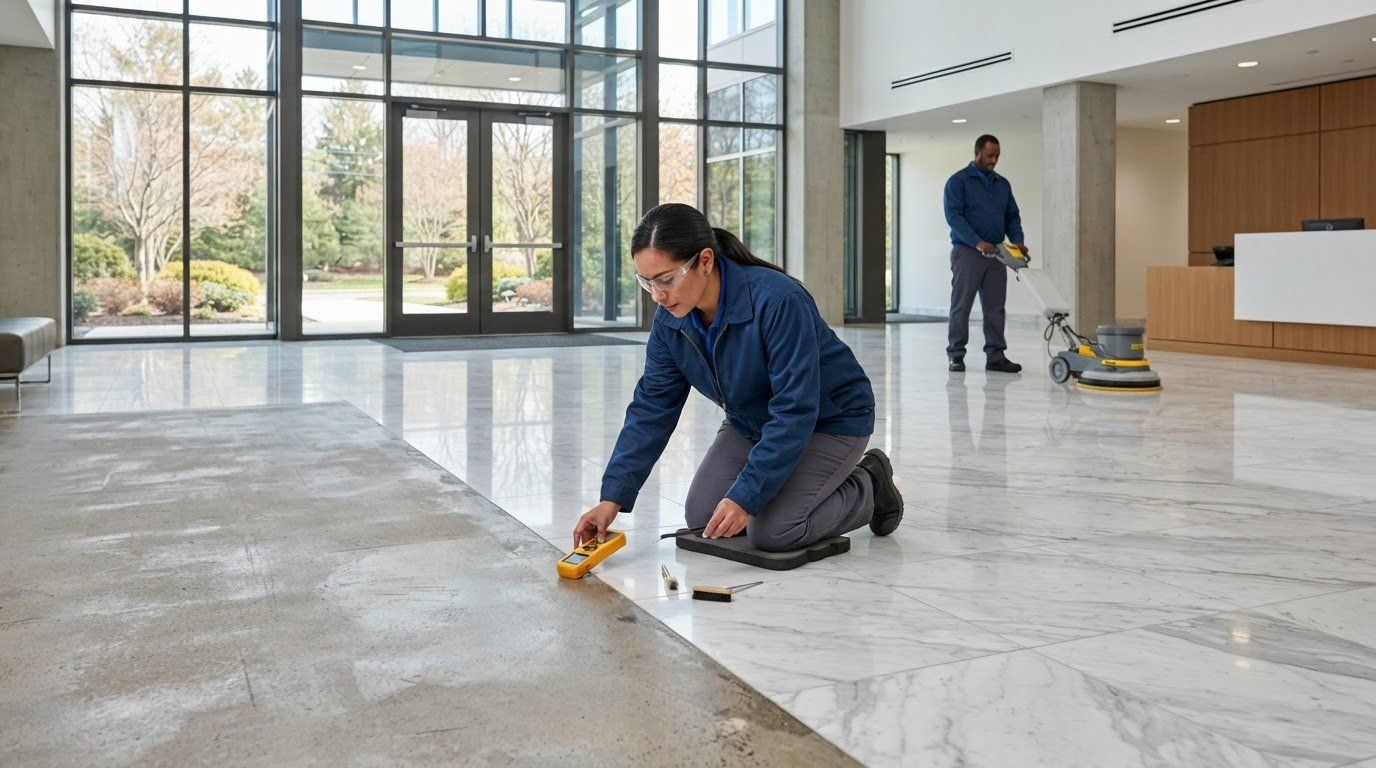
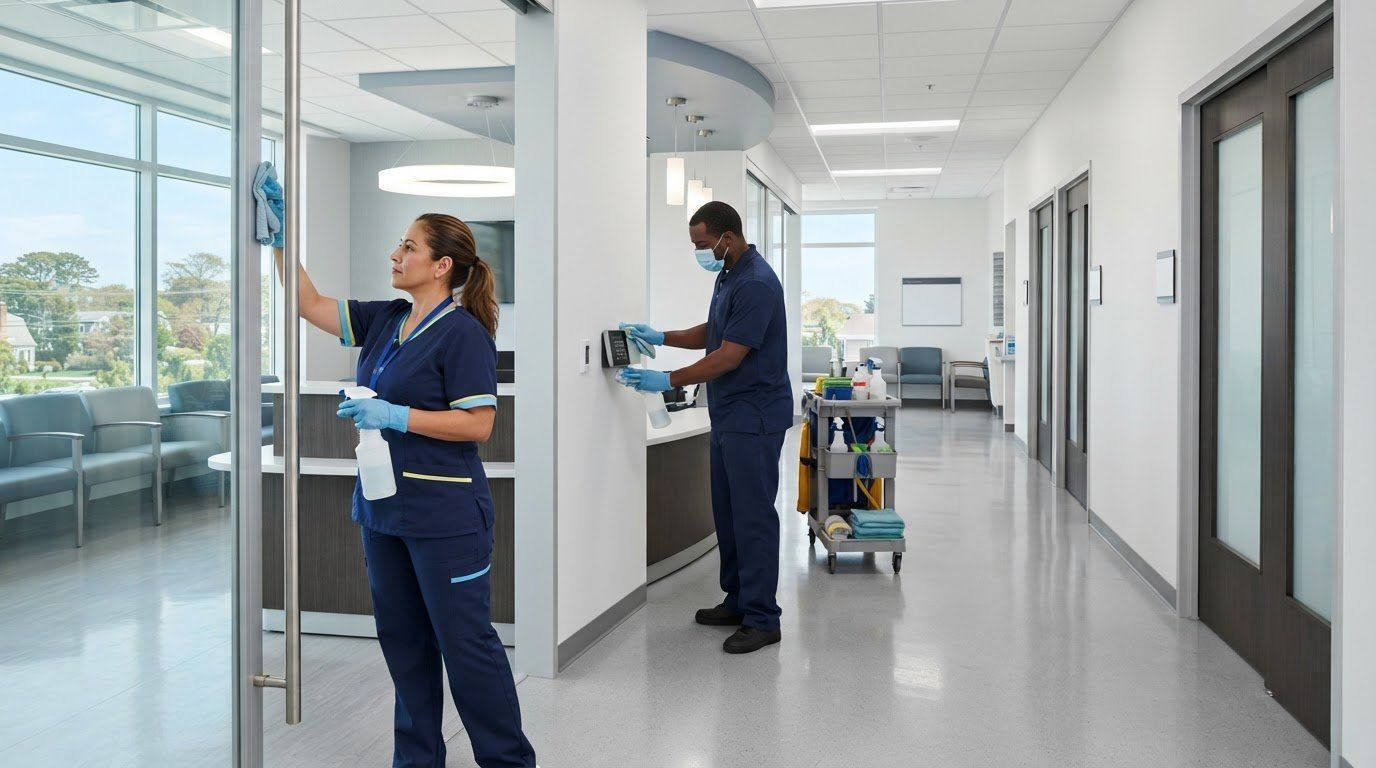
Start by listing the needs of each area. An office may need recurring cleaning, with carpet or window cleaning scheduled separately. A healthcare facility may need healthcare cleaning and targeted disinfection, with the scope based on its spaces and operations. Shared areas in a commercial building may need regular attention, while hard floors may call for floor stripping and waxing. Exterior upkeep such as concrete and facade pressure washing, provided by specialists like Ehrman's Power Wash at jacksonville-pressurewashing.com, is likewise scoped as a dedicated project. These are examples, not a standard package. Don’t assume every facility needs every service.
Cleaning, sanitizing, and disinfecting describe different approaches, so specify the tasks and outcome you expect instead of relying on broad labels. This overview of cleaning methods offers background, but ask the provider to explain exactly which tasks its proposal includes.
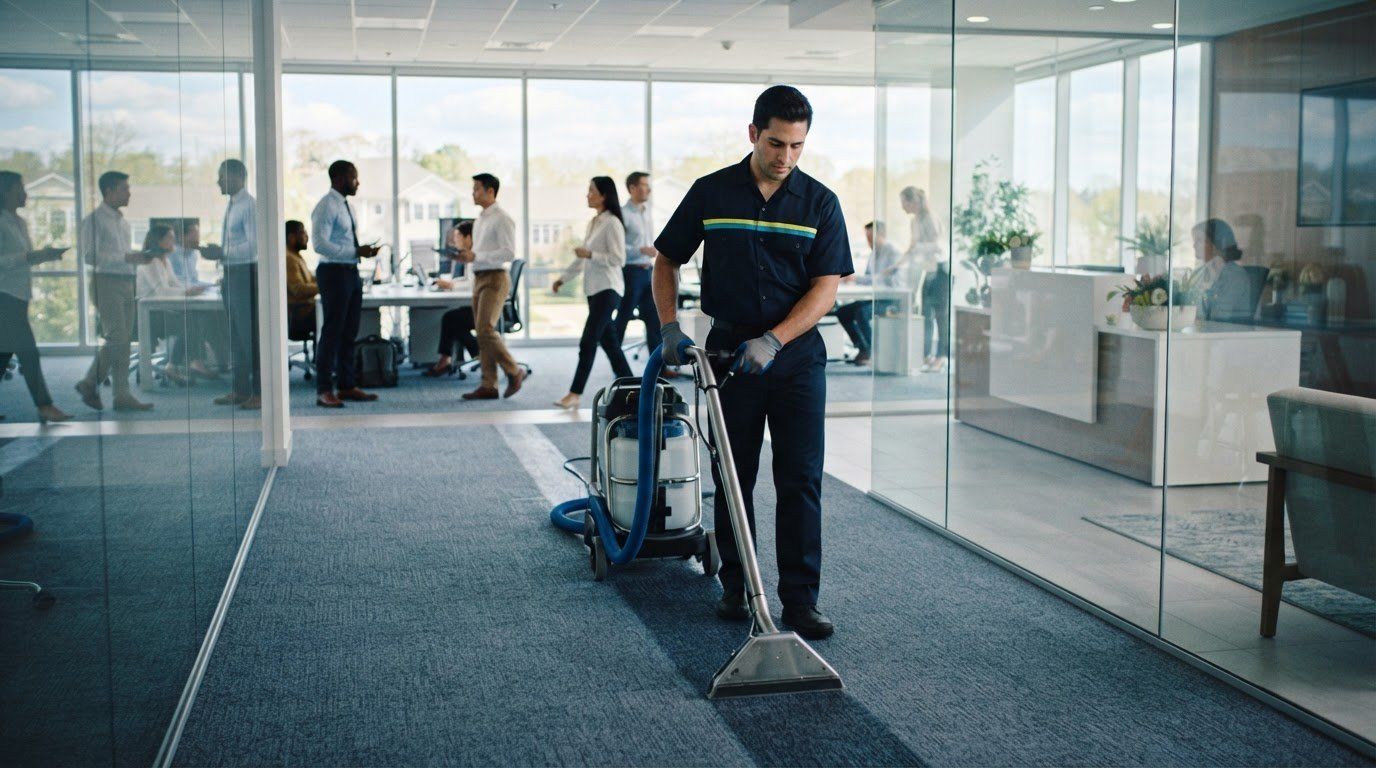
Occupancy, foot traffic, operating hours, and sensitive areas all affect the practical scope and timing. A busy shared entrance may need a different routine from a lightly used office. If the facility has restricted areas, provide clear access instructions. Identify where cleaning is needed, which tasks matter most, and when work can happen without interrupting operations. Then ask the provider to document the tasks and confirm that its service categories fit your facility’s actual needs.
How to Evaluate Commercial Cleaners Before You Hire
A proposal is useful only when it makes expectations clear. Compare commercial cleaners against the same operational checklist, rather than relying on service lists or a general description of the work.
- Written scope: Which tasks are included, excluded, or treated as separate projects?
- Visit frequency: How often will each area be serviced, and how will schedule changes be handled?
- Staffing and access: Who will perform the work, and what access instructions or facility constraints need to be coordinated?
- Communication and review: Who receives concerns, how are they assigned and followed up, and how will service be reviewed?
What should you ask a commercial cleaning company?
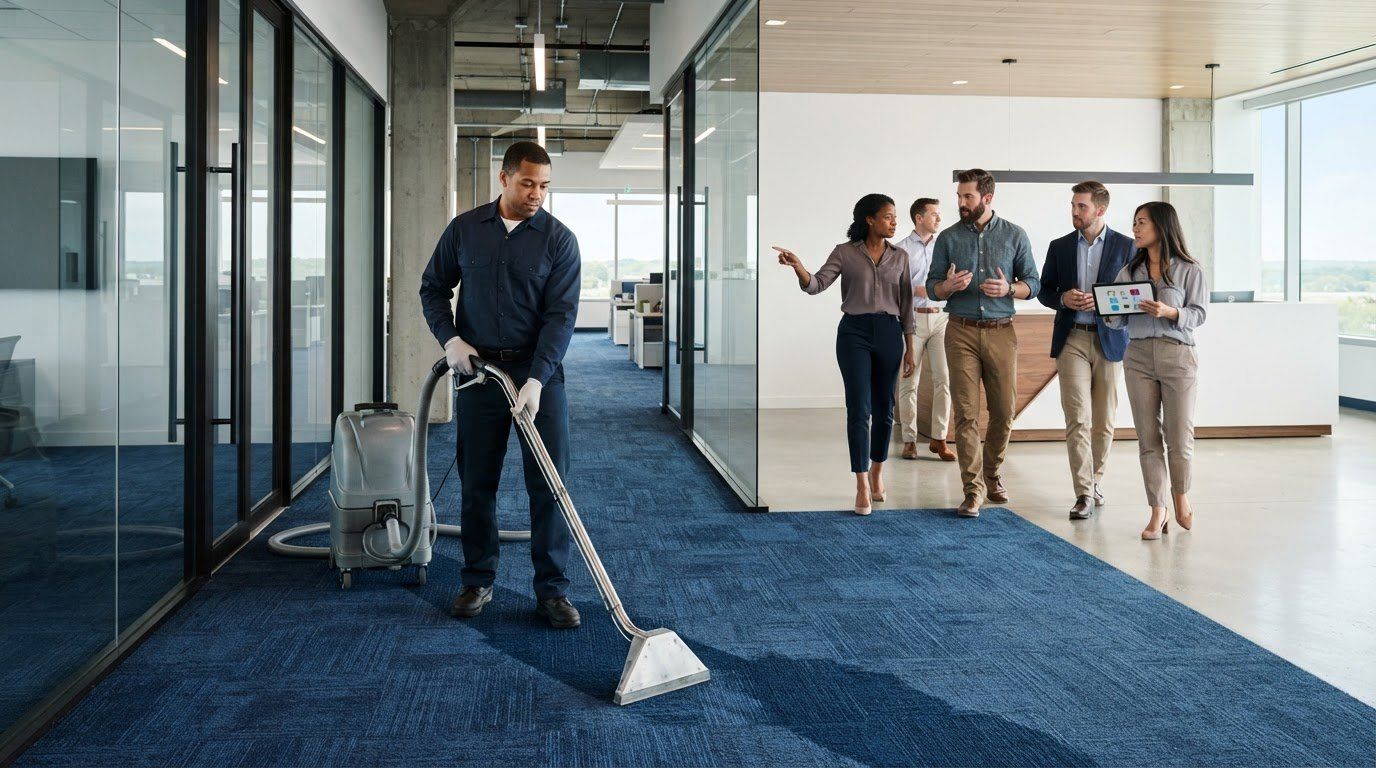
Review the operating details with the provider. Cover business hours, entry procedures, high-traffic areas, and spaces that need special attention. Ask how your team should report a missed task or access change, who is responsible for follow-up, and how unresolved concerns are escalated. Clear responsibilities give your team a practical way to track service without disrupting daily operations.
Ask whether the provider has experience with facilities like yours and whether relevant references are available. If credentials are part of your decision, verify any claims directly. ISSA’s overview of industry standards and certifications can help you identify questions to ask. Don’t assume a credential applies unless the provider confirms it.
Before choosing a partner, document the scope, schedule, communication contacts, and service-review process. Long Island businesses can also compare their requirements with the services offered by Advance Industrial Maintenance, based in Bohemia and serving Nassau and Suffolk Counties. Learn more about its commercial cleaning services.
Starting a Commercial Cleaning Partnership on Long Island
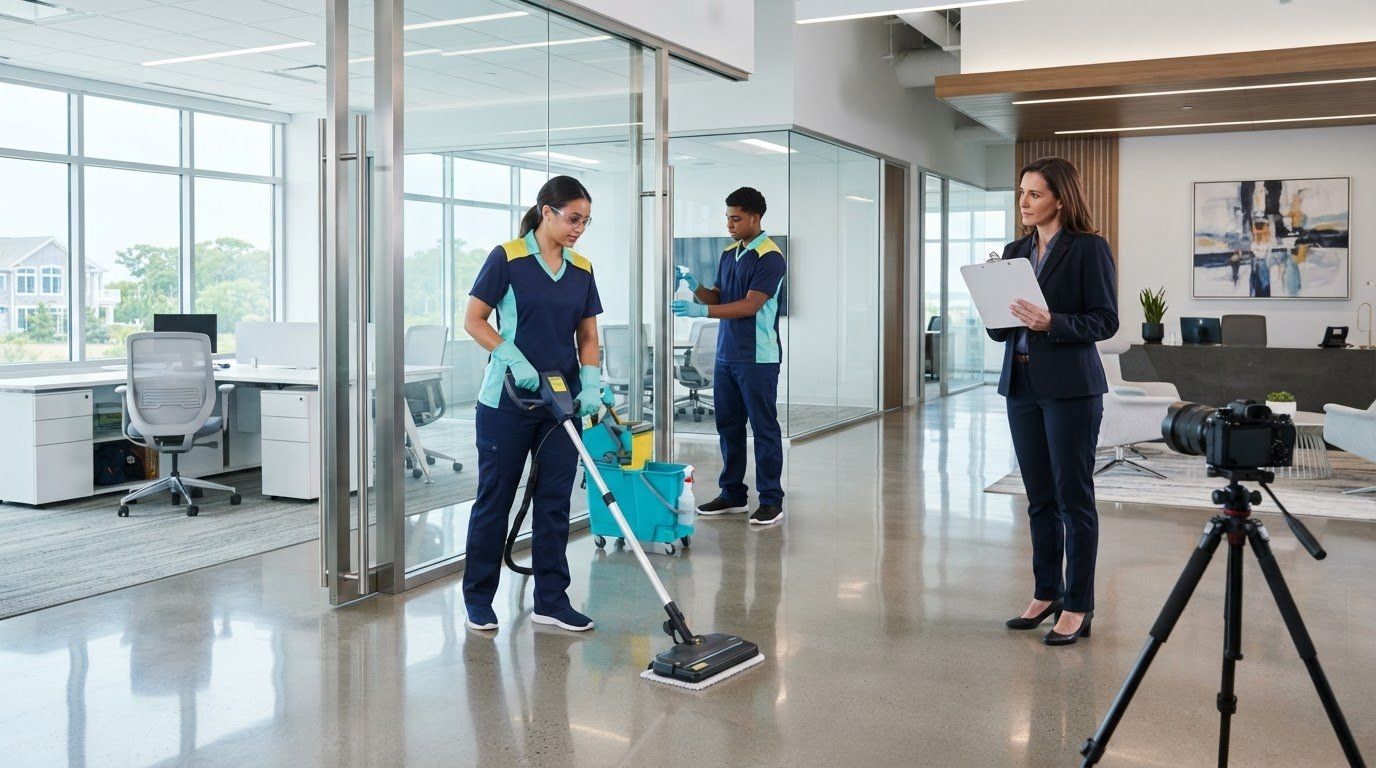
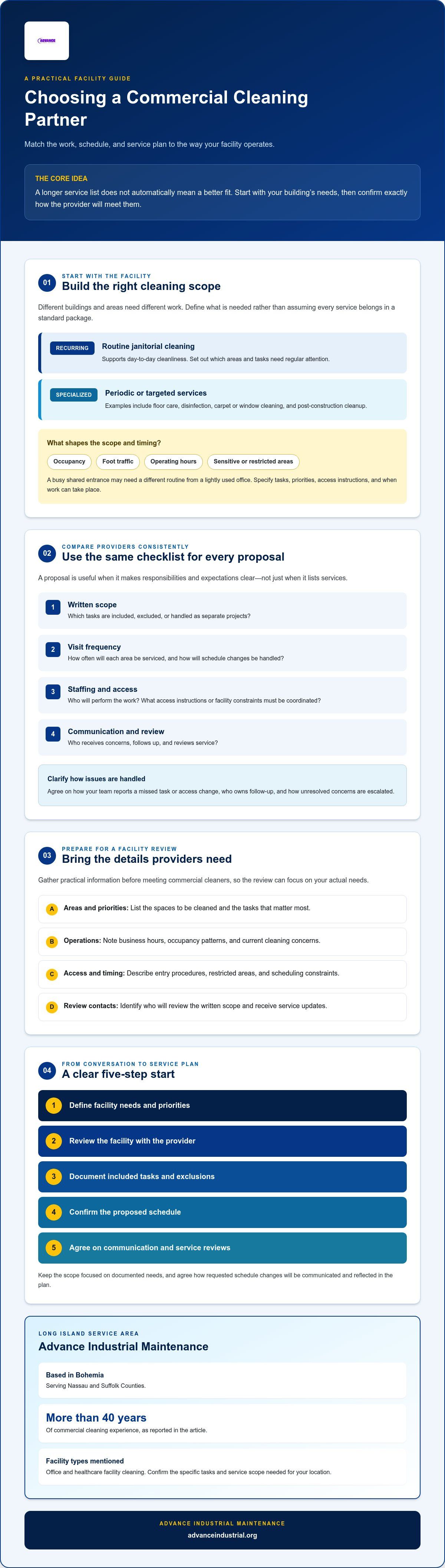
A smooth start depends on a clear handoff. Define the facility’s priorities, review the site with the provider, document included tasks and exclusions, confirm the proposed schedule, and agree on who handles communication and service concerns. This sequence turns an initial conversation into a workable plan and reduces the chance that important details are left to assumption.
How to prepare for a commercial cleaning service review
Before meeting commercial cleaners, gather practical details they can use to assess the facility:
- List the areas to be cleaned and the tasks you consider highest priority.
- Note operating hours, occupancy patterns, and current cleaning concerns.
- Describe access procedures, restricted areas, and scheduling constraints.
- Identify who will review the written scope and receive service updates.
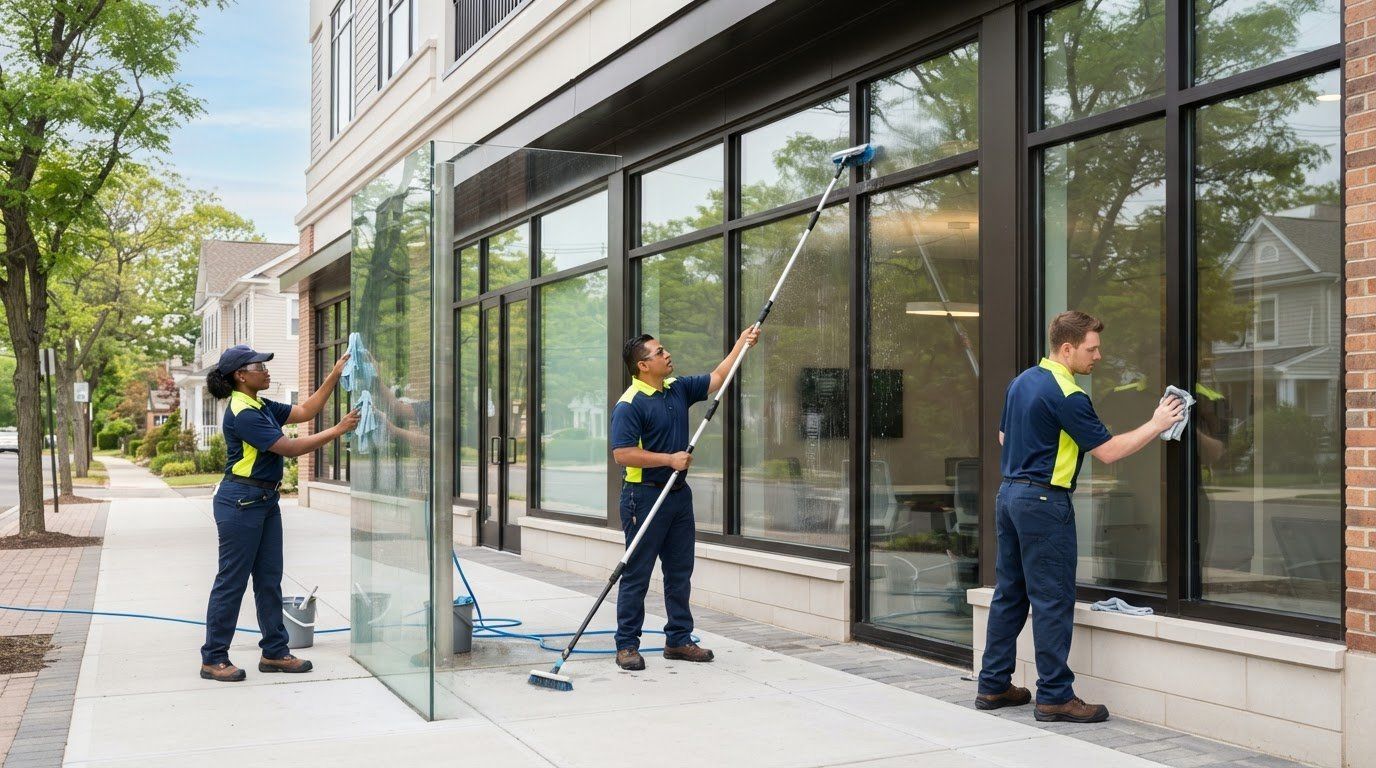
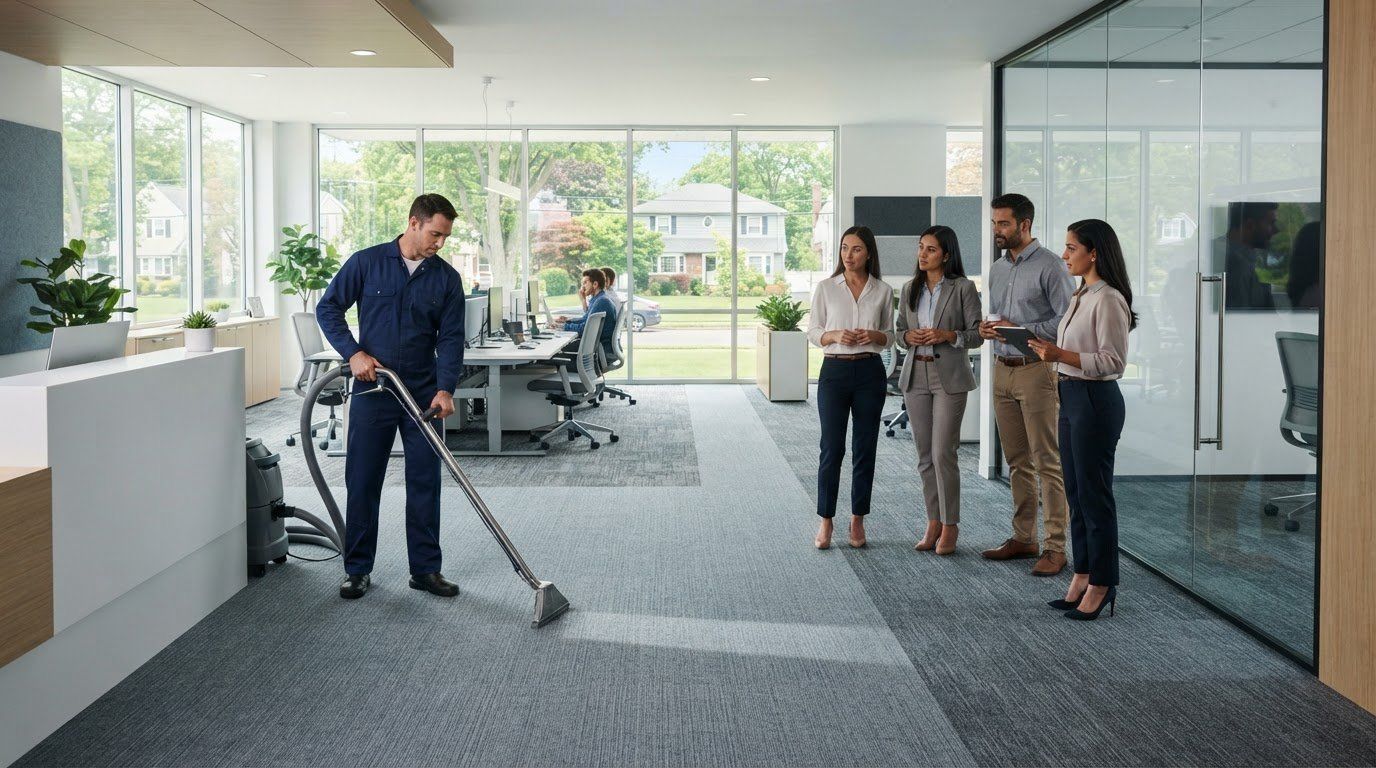
Use the facility review to match services to documented needs. A plan might include office cleaning or janitorial services, with carpet cleaning, window cleaning, disinfection, or floor stripping and waxing added where appropriate. Keep the scope focused on what the facility requires. Confirm how requested schedule changes will be communicated and reflected in the plan.
Advance Industrial Maintenance is based in Bohemia and serves Nassau and Suffolk Counties. The company reports more than 40 years of experience and offers office and healthcare facility cleaning, floor maintenance, window and carpet cleaning, disinfection, and post-construction cleanup. Confirm availability for your specific Long Island location. If the service range fits your needs, use a facility review to clarify the scope, schedule, and communication process before making a decision.
Build a Cleaning Partnership Around Your Facility
A sound cleaning plan begins with a defined scope, a workable schedule, and clear communication for reviewing service and resolving concerns. Compare commercial cleaners by how well they fit your facility’s operations, not by the length of their service list. Confirm which tasks are included and how access or schedule changes will be handled.
Advance Industrial Maintenance is based in Bohemia and serves Nassau and Suffolk Counties. The company reports more than 40 years of industry experience and provides commercial cleaning and maintenance services for diverse facility types. Confirm location-specific availability and discuss which services match your requirements. Discuss your commercial cleaning needs with Advance Industrial Maintenance to clarify the scope and schedule for your facility.
Frequently Asked Questions
What do commercial cleaners typically include in their services?
Commercial cleaners provide services based on the facility’s needs and the written scope. Recurring janitorial or office cleaning may be paired with specialized work such as floor stripping and waxing, carpet or window cleaning, tile and grout cleaning, disinfection, or post-construction cleanup. Not every facility needs every service. Long Island businesses should confirm which tasks are included, how often they occur, and which are handled as separate projects.
How do I choose a commercial cleaning company for my business?
Choose a provider whose written scope, schedule, communication process, and relevant facility experience fit your operating needs. Ask which tasks are included or excluded, how concerns are assigned and resolved, and whether references are available. Confirm that the company serves your specific location in Nassau or Suffolk County. A clear proposal makes providers easier to compare and helps set expectations before service begins.
How often should a commercial facility be professionally cleaned?
Set cleaning frequency according to facility use, occupancy, traffic, and the areas that need attention. A busy shared entrance may require a different schedule from a lightly used office. Specialized work, such as carpet cleaning or floor stripping and waxing, may be planned separately from recurring janitorial service. Agree on visit frequency in writing, then review whether it continues to meet the facility’s needs.
Can commercial cleaners work around business hours?
Scheduling depends on the provider’s availability and your facility’s operating requirements, so confirm options before selecting a service plan. Share business hours, access procedures, restricted areas, and times when cleaning could interrupt staff or customers. Ask the provider to document the agreed schedule and explain how changes will be handled. Don’t assume evening, weekend, or other specific availability without direct confirmation.