Large Office Cleaning Schedule: Step-by-Step Guide
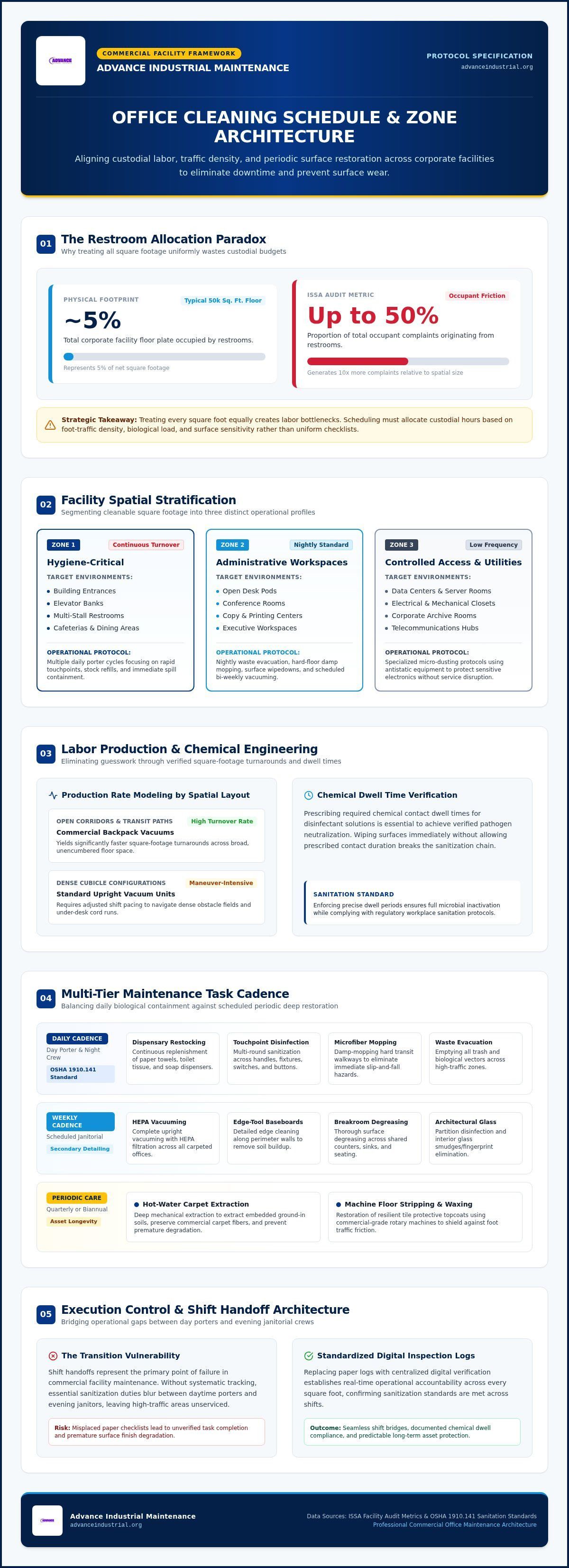
Treating every square foot of a facility equally is the fastest way to drive up operational costs while letting critical areas slip. Restrooms represent roughly 5% of a building's footprint, yet ISSA audit data reveals they generate up to 50% of occupant complaints. When creating a cleaning schedule for a large office, relying on arbitrary checklists fails to align labor resources with actual foot traffic and hygiene priorities.
Most facility managers recognize how easily the boundary blurs between day porter maintenance and evening janitorial duties, leaving high-traffic conference rooms neglected and commercial flooring vulnerable to premature wear. This guide shows you how to build a scalable, zone-based cleaning cadence that eliminates operational downtime and enforces consistent facility standards. We examine how to audit high-traffic zones, structure daily versus periodic task cadences, and implement reliable inspection metrics across your entire square footage.
Key Takeaways
- Stratify your floor plan into hygiene-critical, moderate-traffic, and utility zones to direct custodial labor where foot traffic is heaviest.
- Master the technical process of creating a cleaning schedule for a large office by balancing daily porter touchpoints with scheduled periodic maintenance.
- Protect expensive commercial flooring and reduce premature surface degradation through planned carpet extraction and hard-floor refinishing cycles.
- Enforce facility hygiene standards using standardized digital inspection logs that bridge operational gaps between day and night shifts.
Table of Contents
Auditing Facility Zones to Determine Commercial Cleaning Frequencies
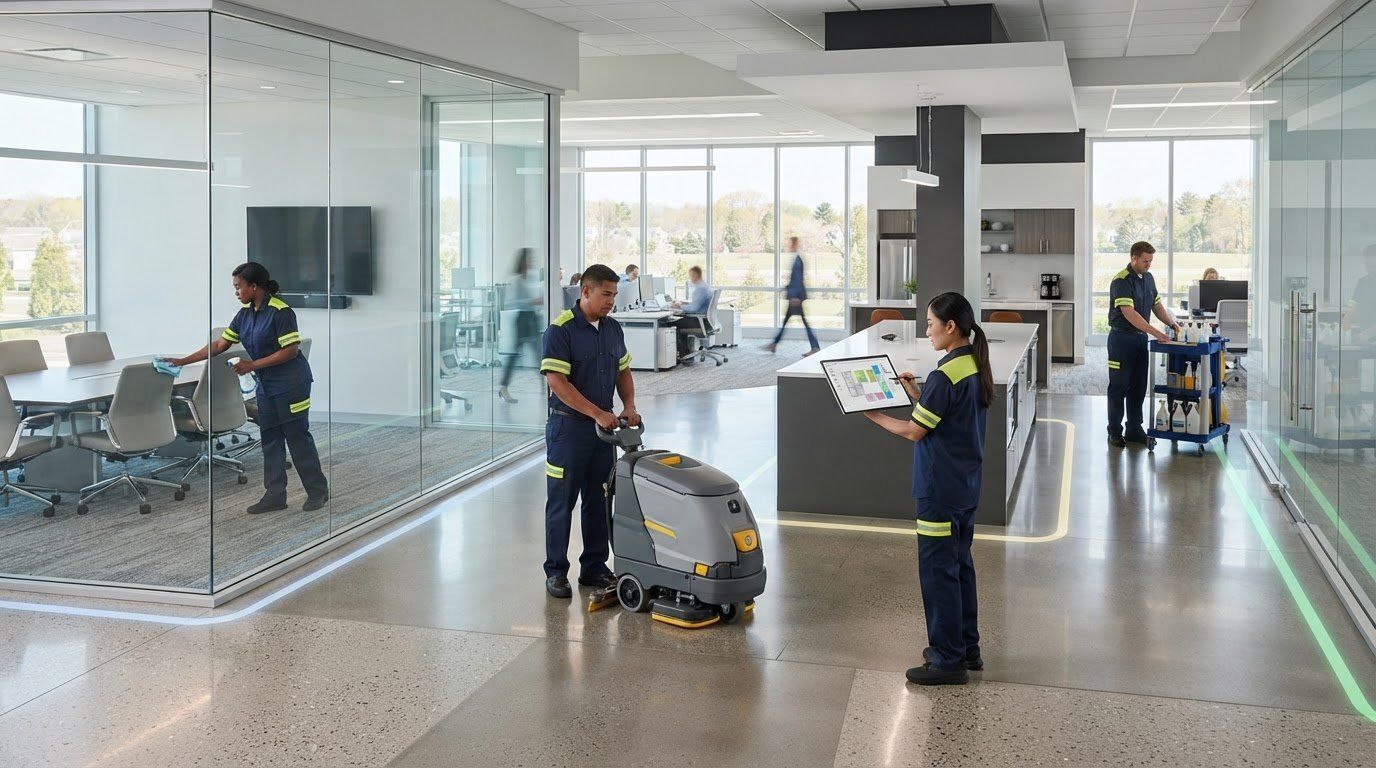
Engineering a dependable facility maintenance program begins with spatial segmentation. Treating an entire 50,000-square-foot corporate floor plate as a uniform environment creates labor bottlenecks and wastes operating budgets. In professional commercial cleaning operations, facility auditing categorizes square footage by foot-traffic density, biological load, and surface sensitivity. Establishing these baseline parameters is essential when creating a cleaning schedule for a large office, ensuring custodial hours directly match physical contamination rates.
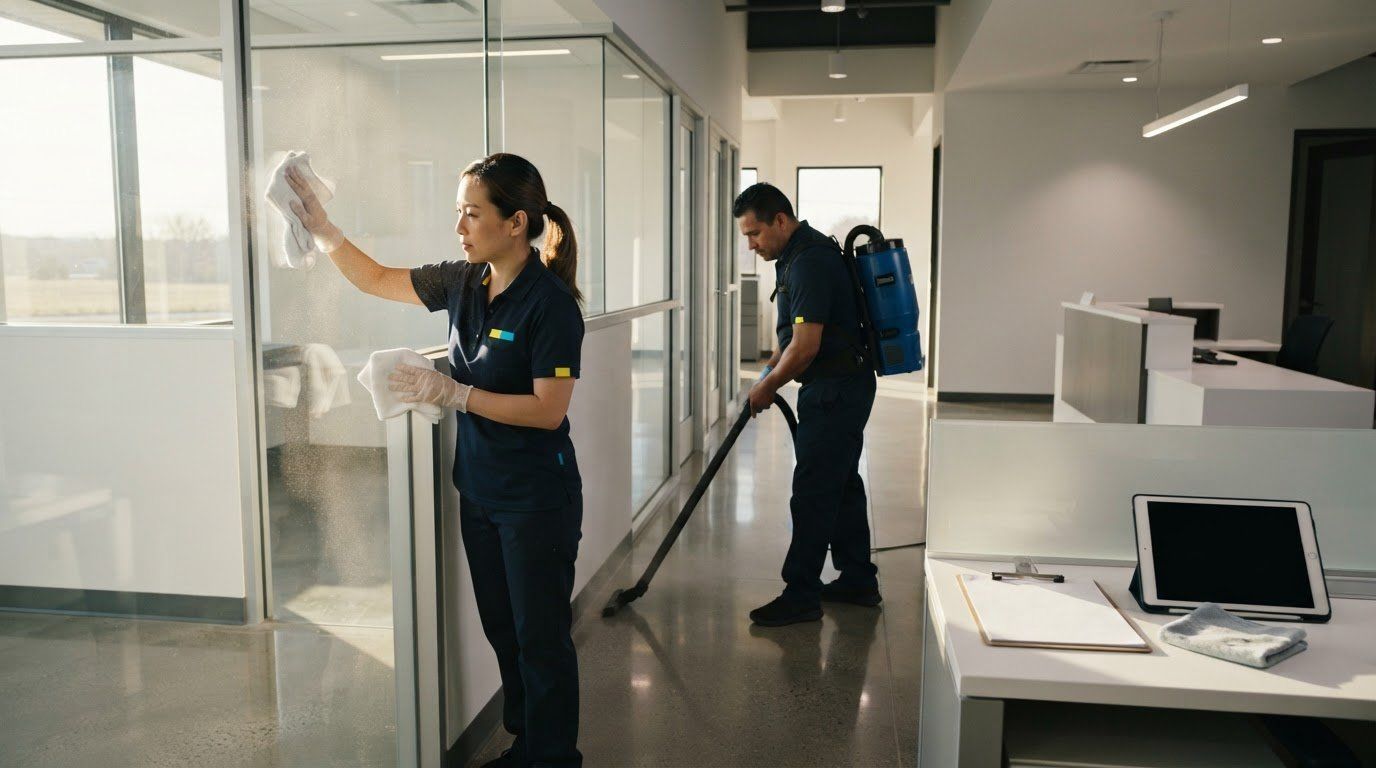
Labor allocation relies on calculating cleanable square footage against validated production rates. For example, open corridors serviced with commercial backpack vacuums yield significantly faster square-footage turnarounds than dense cubicle layouts using standard upright units. By measuring net cleanable space per department, operations managers eliminate guesswork. You can establish exact shift durations while prescribing required chemical dwell times for disinfectant solutions to achieve verified pathogen neutralization.
Classifying High-Touch Common Areas Versus Low-Density Workspaces
Effective zone stratification divides an office into three distinct operational profiles:
- Zone 1 (Hygiene-Critical): Entrances, elevator banks, multi-stall restrooms, and cafeterias experience continuous turnover. These require multiple daily porter cycles focused on touchpoints, restocking, and spill containment.
- Zone 2 (Administrative Workspaces): Desk pods, conference rooms, and copy centers demand standard nightly cleaning. Operations focus on waste evacuation, hard-floor damp mopping, and scheduled bi-weekly vacuuming.
- Zone 3 (Controlled Access & Utilities): Data centers, electrical closets, and archive rooms require low-frequency maintenance. Cleaning teams follow specialized micro-dusting protocols using antistatic equipment to prevent equipment disruption.
Mapping these boundaries is the first operational milestone in creating a cleaning schedule for a large office that protects assets and sustains high hygiene standards.
Structuring Daily, Weekly, and Periodic Cleaning Tasks for Large Facilities
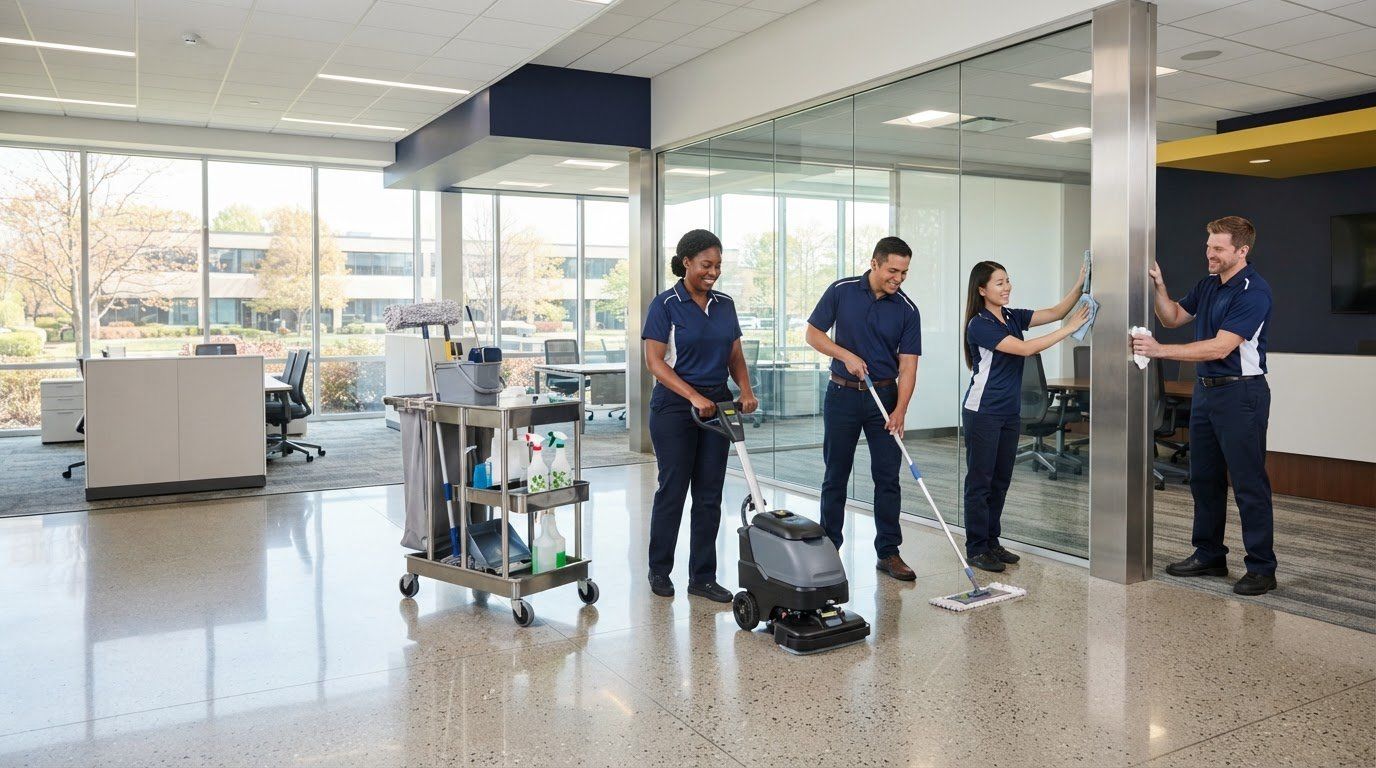
Operational success hinges on separating daily hygiene containment from planned surface restoration. Without distinct cadences, crews default to superficial surface wiping while flooring finishes degrade beneath active foot traffic. Daily routines must satisfy OSHA workplace sanitation standards by managing immediate biological vectors, evacuating waste bins, and damp-mopping hard walkways to prevent slip hazards. Weekly schedules then target secondary contact zones, detailed partition disinfection, and interior architectural glass.
Long-term asset preservation requires a defined timetable. When creating a cleaning schedule for a large office, balancing daily sanitation against periodic mechanical extraction ensures high-traffic investments don't wear out prematurely.
Aligning Restroom Sanitization, Floor Care, and Deep Maintenance Intervals
Executing a multi-tiered maintenance structure keeps large facilities operating without disruption:
- Daily Cadence: Continuous restocking of paper and soap dispensers, multi-round touchpoint sanitization across fixtures, and micro-fiber mopping across high-traffic transit corridors.
- Weekly Cadence: Complete HEPA-filter upright vacuuming across all carpeted offices, edge-tool detailing along baseboards, and thorough surface degreasing in shared breakrooms.
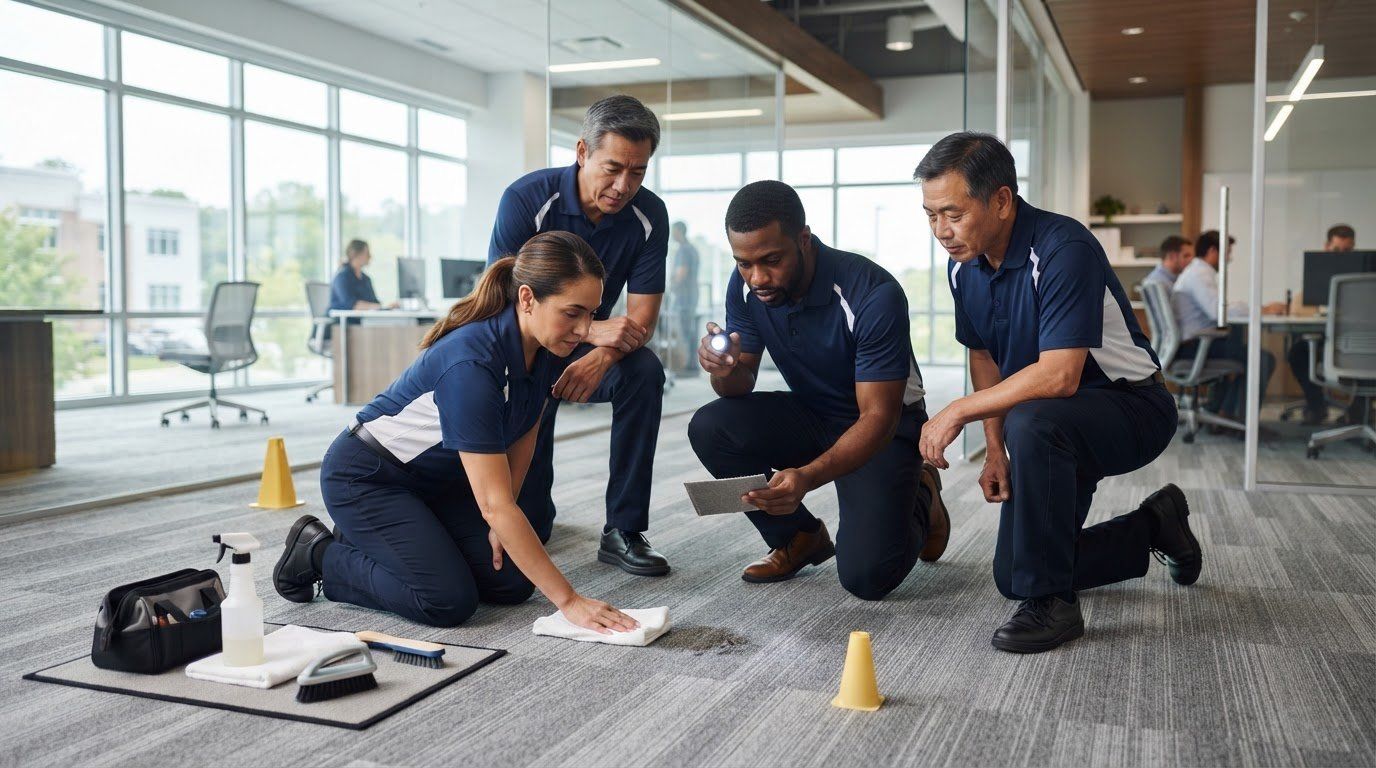
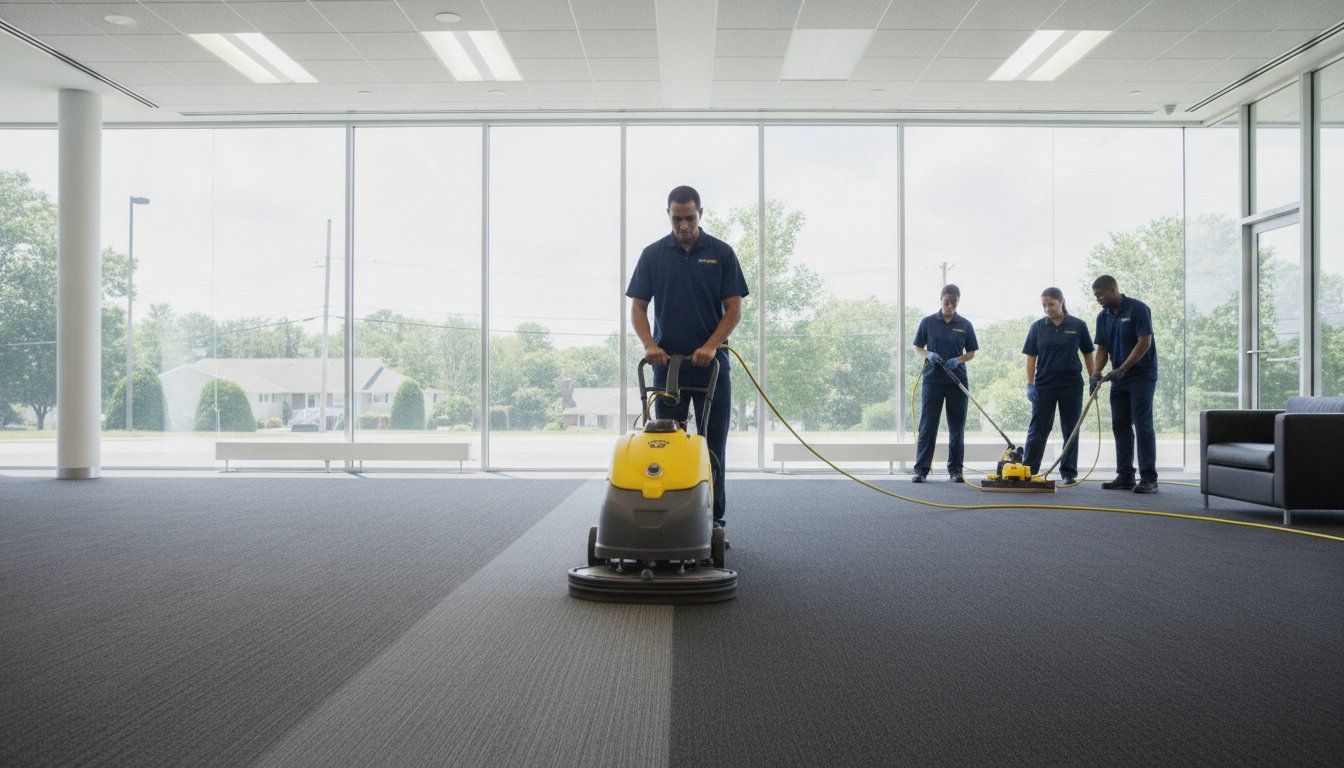
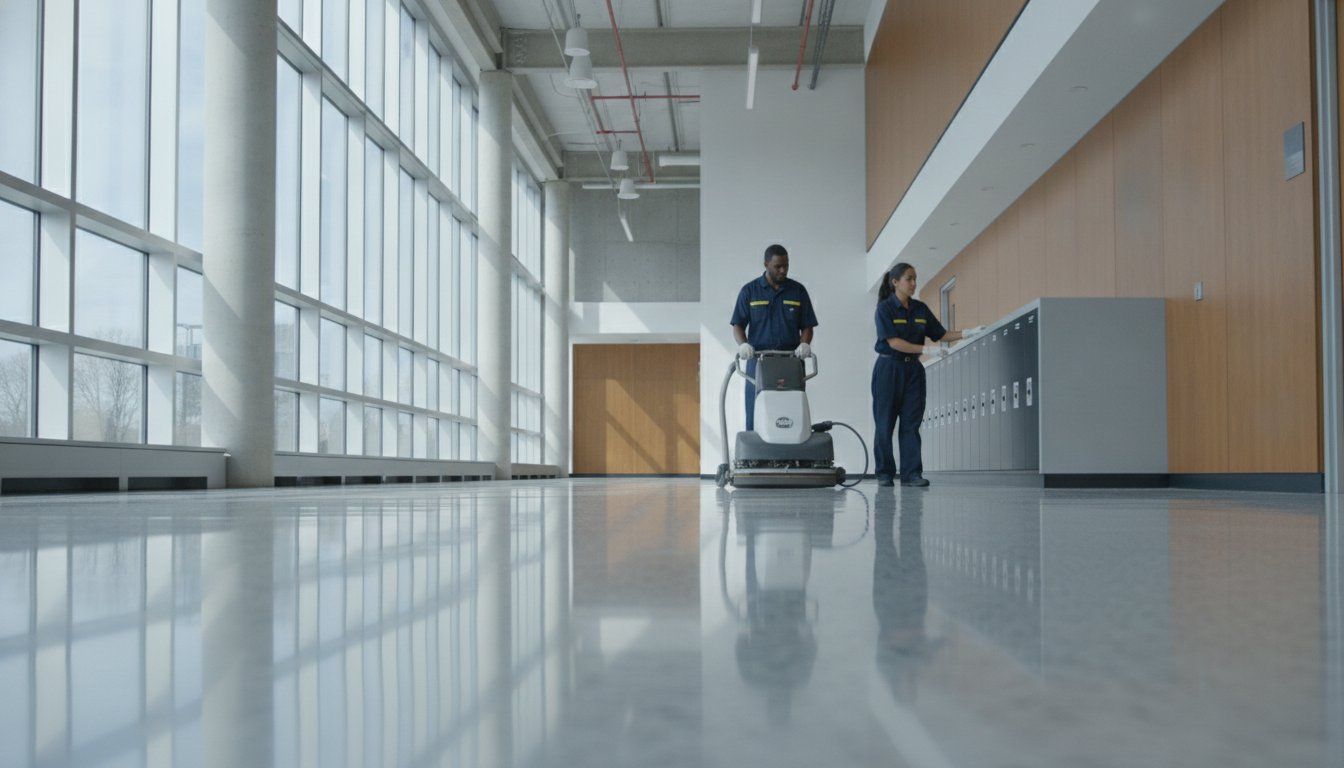
- Periodic Intervals: Deep asset care scheduled quarterly or biannually. This includes hot-water carpet extraction to remove ground-in soils alongside machine floor stripping and waxing for resilient tile.
Executing high-level floor stripping, carpet extraction, and comprehensive facility care often requires partnering with established commercial office cleaning professionals who maintain specialized mechanical equipment. Structuring these intervals prevents costly emergency repairs and upholds continuous facility standards year-round.
Executing the Cleaning Plan: Quality Control, Logging, and Vendor Support
Shift transitions represent a primary point of failure in facility sanitation. Without centralized reporting, essential sanitization duties easily slip through the cracks between daytime porters and evening janitorial staff. Standardizing digital inspection logs establishes operational accountability across every square foot, replacing easily misplaced paper checklists with real-time verification. These logs confirm that custodial teams deploy EPA-registered disinfectants in strict accordance with required dwell times, satisfying chemical safety protocols and ensuring thorough microbial control.
Establishing Transparent Quality Audits and Scheduled Commercial Services
Sustained quality control demands structured, objective oversight. Operations managers should institute weekly supervisor walkthroughs utilizing formal grading rubrics to benchmark high-touch cleanliness, restroom sanitation levels, and overall floor finish durability. When creating a cleaning schedule for a large office, establishing clear escalation pathways for immediate spill containment, supply replenishment, and physical repairs ensures minor oversights don't disrupt workplace productivity.
Even the most rigorous schedule fails without reliable field execution. Sprawling corporate complexes often exceed the bandwidth of internal custodial crews, particularly when handling equipment-intensive tasks like periodic machine scrubbing or seasonal floor refinishing. Corporate facilities across Nassau and Suffolk County eliminate these operational bottlenecks by partnering with Advance Industrial Maintenance. Backed by over 40 years of commercial cleaning expertise, their technical crews execute recurring janitorial contracts, carpet extraction, and specialized floor stripping and waxing to keep corporate infrastructure operating at peak standards.
Streamline Your Facility Maintenance Operations
Achieving operational continuity across corporate real estate requires precision, not guesswork. When creating a cleaning schedule for a large office, success relies on segmenting square footage into functional zones, enforcing disciplined daily and periodic task cadences, and tracking execution through objective inspection logs. Protecting capital flooring investments and sustaining strict workplace hygiene becomes straightforward once structured protocols are in place.
Executing this level of facility management demands dependable technical partners. Serving facilities across Nassau and Suffolk Counties on Long Island, Advance Industrial Maintenance brings over 40 years of commercial cleaning expertise and specialized industrial equipment to handle recurring janitorial contracts, deep sanitization, and restorative floor care. Request a facility maintenance assessment with Advance Industrial Maintenance to engineer a dependable cleaning schedule built for your facility's operational scale.
Frequently Asked Questions
How often should commercial carpets be professionally cleaned in a large office?
Commercial carpets in high-traffic corporate corridors require deep hot-water extraction every three to six months. Perimeter executive offices and low-density boardrooms typically require annual restorative extraction. For Long Island commercial facilities, scheduled periodic carpet cleaning extracts embedded grit that cuts carpet fibers, protecting asset warranties and preventing premature replacement.
What is the difference between day porters and evening commercial cleaning crews?
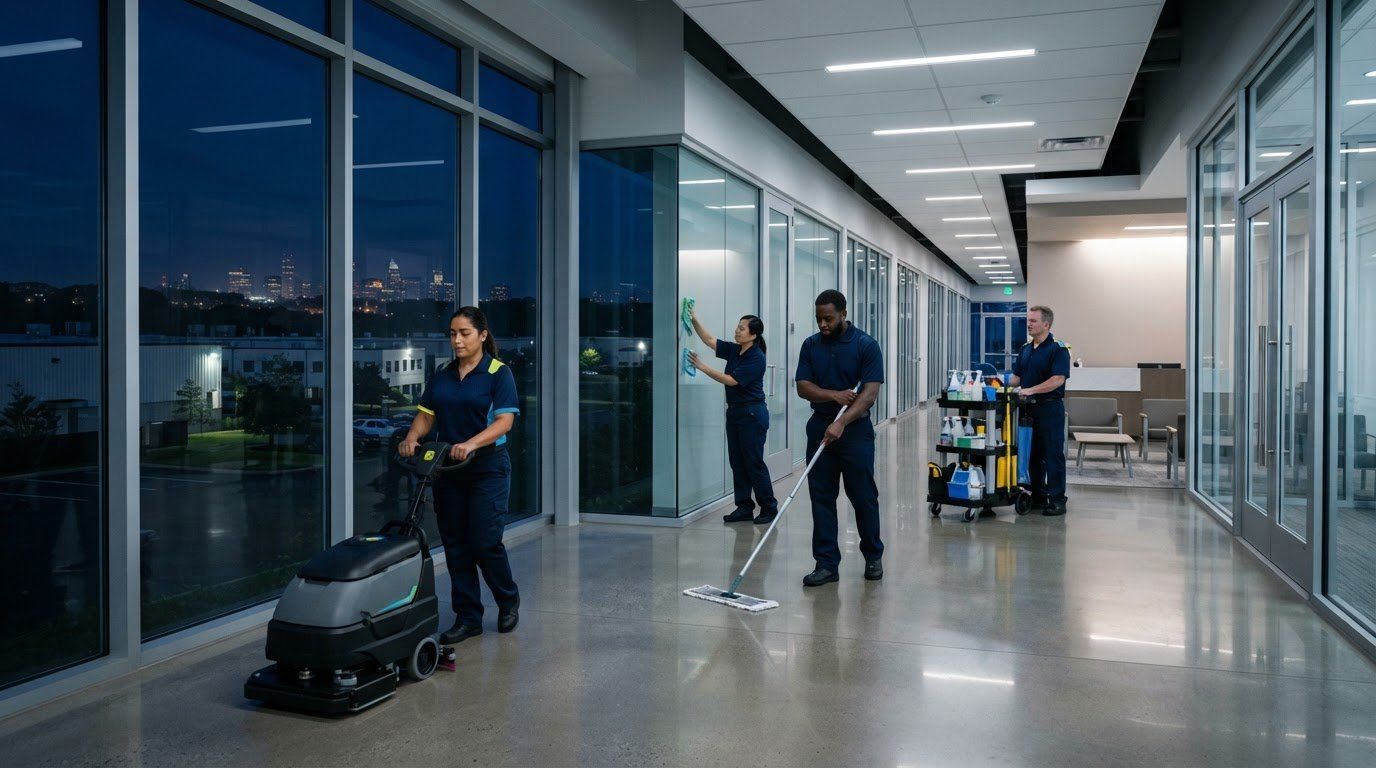
Day porters manage continuous occupancy challenges during operating hours, focusing on restocking supplies, clearing sudden cafeteria spills, and wiping high-touch entrance fixtures. Evening janitorial crews execute heavy, disruptive operations when building traffic ceases. These night teams complete thorough carpet vacuuming, chemical floor damp-mopping, detailed trash removal, and machine surface scrubbing.
How do facility managers calculate the labor hours needed for office cleaning?
Calculating labor hours involves dividing each zone's cleanable square footage by certified industry production rates for specific equipment. When creating a cleaning schedule for a large office, managers account for layout density, fixture counts, and flooring composition. This calculation yields the exact custodial headcount and shift lengths needed to maintain hygiene without operational delays.
Which areas in a commercial office require daily chemical disinfection?
Multi-stall restrooms, kitchen prep surfaces, elevator buttons, and conference room table perimeters require daily chemical disinfection. In creating a cleaning schedule for a large office, staff must apply approved broad-spectrum disinfectants to these high-contact shared surfaces. Applying solutions with adequate wet dwell times ensures effective microbial elimination across common contagion transfer points.