Commercial Cleaning Company Liability for Damages: A Facility Manager’s Guide
A single chemical spill on specialized flooring or a damaged piece of medical equipment can compromise your facility's operational continuity in seconds. You prioritize precision in every aspect of procurement, yet the complexities of cleaning company liability for damages often remain a source of unnecessary financial risk. It's understandable to feel concerned about hidden costs or the technical differences between being insured and bonded when high-traffic safety and asset protection are on the line.
This guide delivers a pragmatic framework to help you evaluate contractor liability, verify insurance coverage, and protect your commercial assets from property damage. We provide a clear checklist for verifying a partner's industrial-grade coverage and examine the rigorous protocols necessary to avoid costly legal disputes. You will gain the technical insight required to ensure your facility maintenance partner functions as a stable, dependable extension of your own operational team. This approach provides the peace of mind that your facility assets are protected by a partner who understands the high stakes of industrial stability and long-term asset management.
Key Takeaways
- Understand the technical distinction between accidental property damage and professional negligence to accurately assess cleaning company liability for damages.
- Identify the critical differences between general liability insurance and janitorial bonding to ensure your facility's bottom line is protected against theft and operational errors.
- Establish a baseline threshold for verifying contractor coverage, ensuring your partner meets the rigorous insurance requirements necessary for high-traffic commercial environments.
- Learn how systematic floor care protocols and decades of industrial experience mitigate risks associated with chemical handling and technical maintenance errors.
Table of Contents
Defining Cleaning Company Liability for Damages: What is at Stake?
Liability in the commercial sector represents a professional framework of accountability for property damage and personal injury. It establishes the financial and legal responsibility a contractor assumes while operating within your facility. This concept is grounded in vicarious liability, where the service provider is held responsible for the actions or omissions of its staff during their shifts. When you hire a partner, you aren't just buying a service; you're entering a high-level collaborative alliance where risk management is as vital as the cleaning itself.
You must distinguish between accidental damage and professional negligence. An accident might involve a dropped tool, while negligence occurs when a crew fails to follow established chemical dilution ratios or safety protocols. Commercial-grade cleaning company liability for damages is significantly more robust than residential coverage. While a maid service might carry minimal limits for household items, a commercial partner requires coverage that accounts for industrial machinery and high-traffic risk profiles. This protects the essential infrastructure required for your ongoing industrial stability.
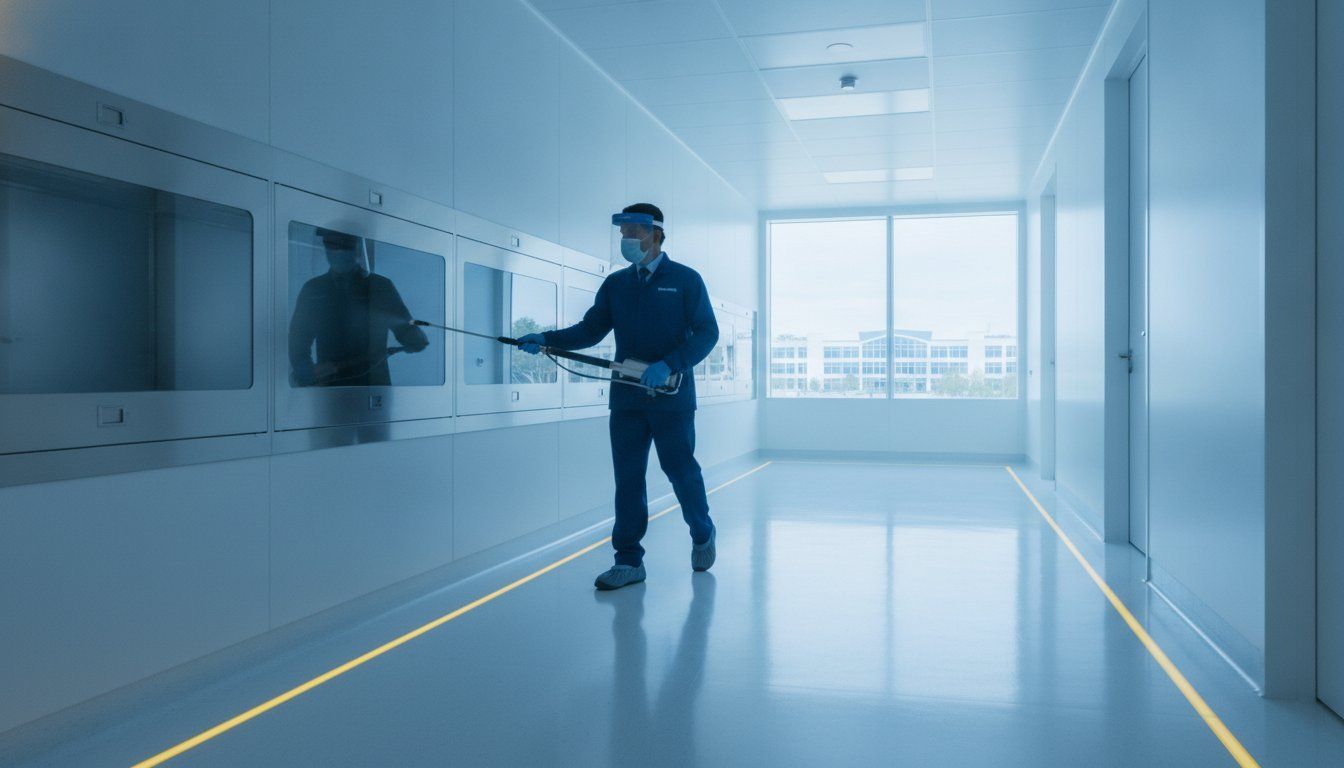
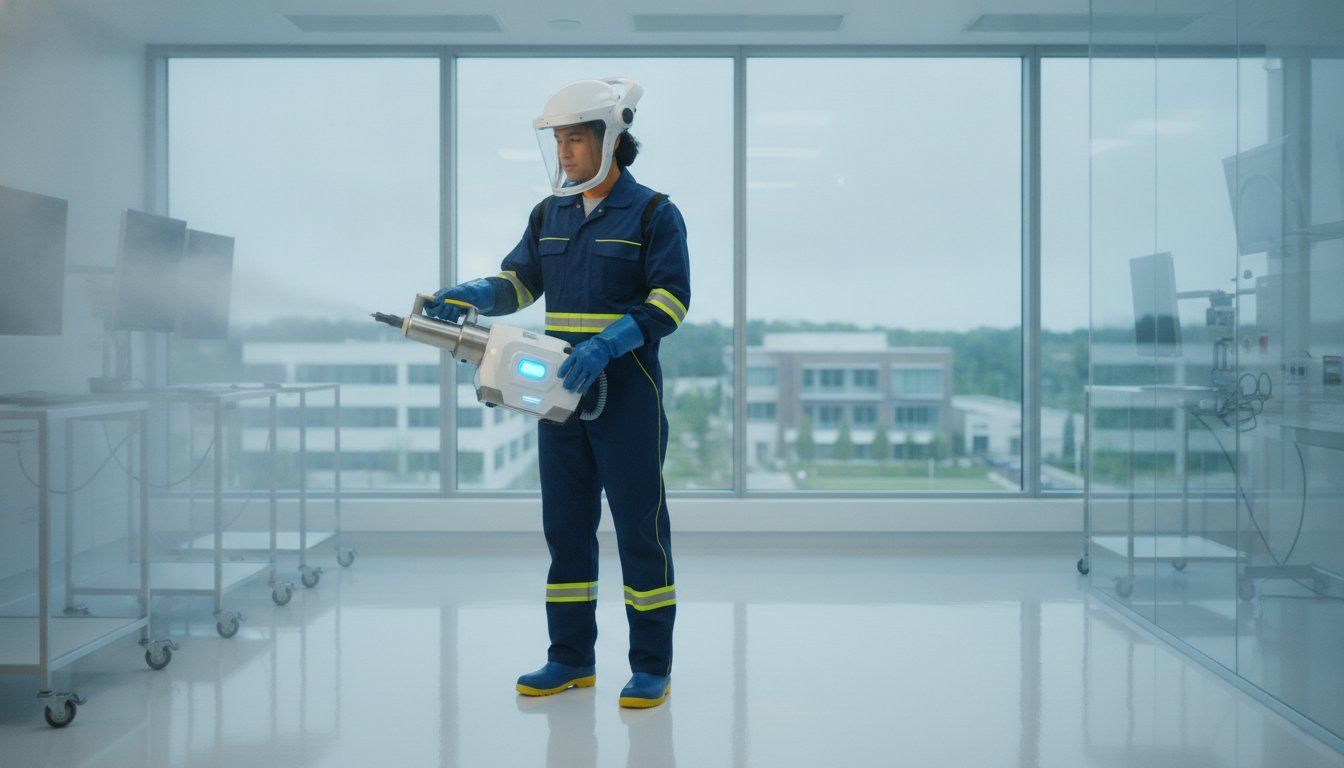
The stakes are exceptionally high in specialized environments like Nassau County medical offices. In these settings, cleaning company liability for damages extends beyond physical surfaces to include the integrity of diagnostic equipment and compliance with sterilization standards. A failure in protocol here doesn't just cause damage; it threatens patient safety and operational certification. Precision is mandatory to avoid downtime in these high-stakes environments.
Common Types of Property Damage in Commercial Settings
Property damage in industrial environments often stems from technical errors rather than simple carelessness. These incidents can lead to significant hidden costs if the contractor lacks adequate coverage.
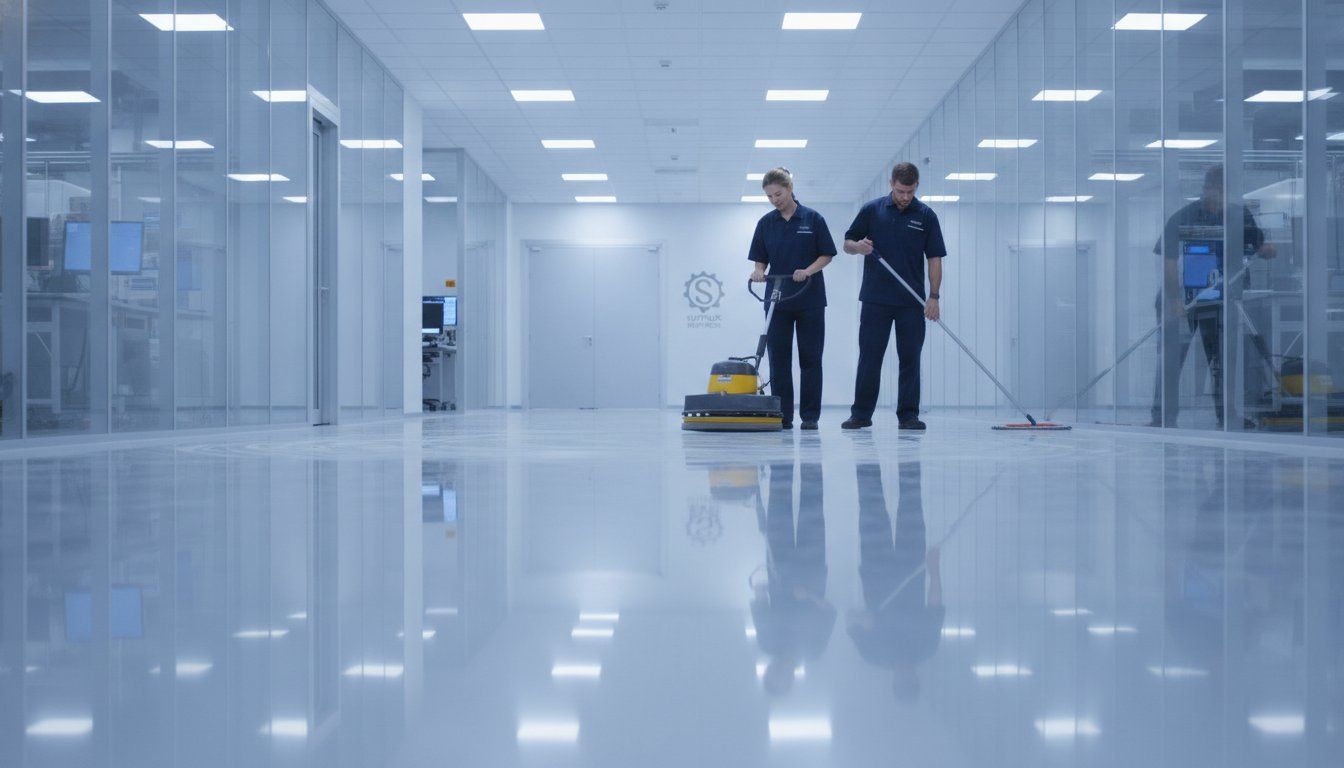
- Chemical damage: Incorrect application of stripping agents can permanently etch tile or degrade grout integrity during floor stripping and waxing.
- Electronic mishaps: Improper dusting techniques or moisture infiltration can compromise IT hardware and server stability in modern office environments.
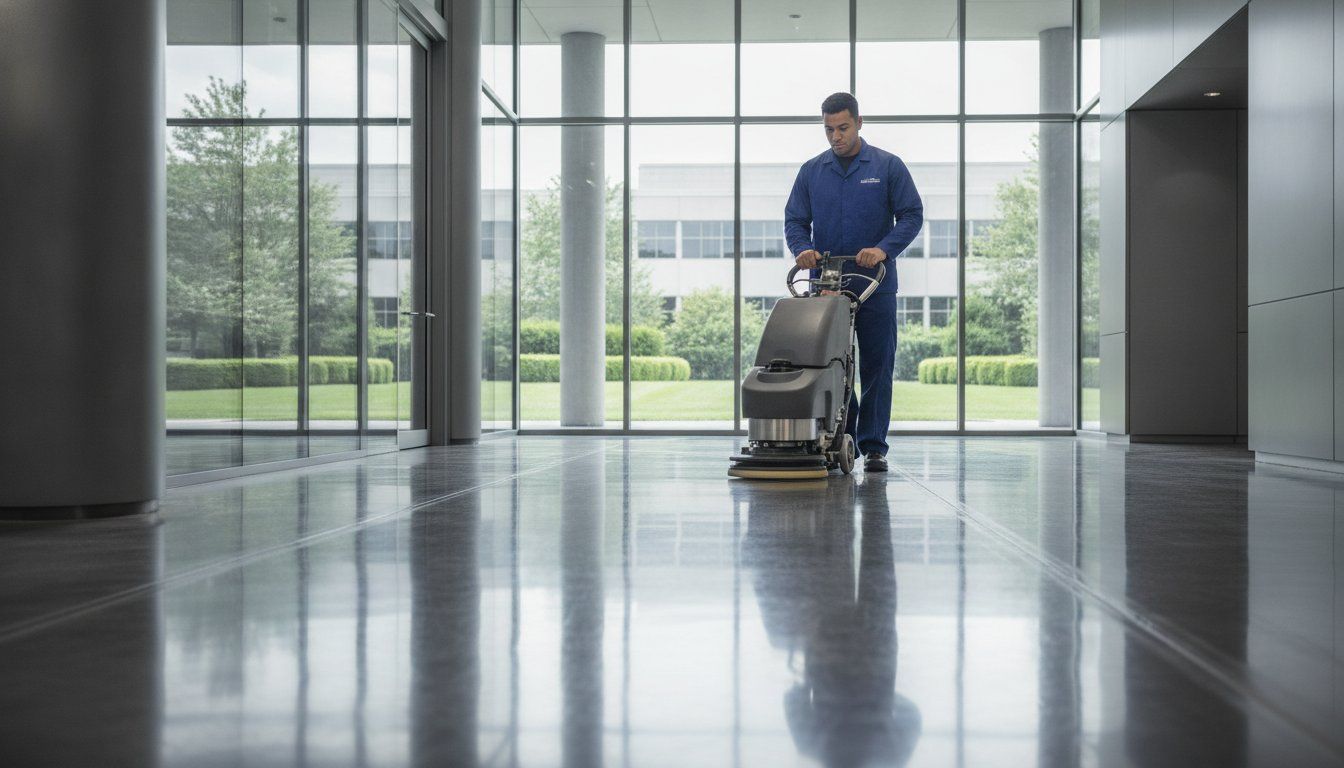
- Structural impact: Heavy equipment like high-speed buffers can cause significant damage to door frames, baseboards, and glass partitions if handled without expert skill.
Third-Party Liability: Slip-and-Fall Risks
Slip-and-fall incidents represent the most frequent source of legal exposure for facility managers. When floor maintenance or routine mopping occurs, the contractor must deploy standardized safety markers and document the exact timing of the service. These records serve as a primary defense during a claim. Third-party liability functions as a shared legal obligation where both the facility owner and the cleaning contractor may be held accountable for injuries sustained by visitors or employees due to hazardous floor conditions.
Verifying a Contractor’s Protection: Insurance vs. Bonding
The phrase "insured and bonded" is often used as a marketing tagline, but for a facility manager, it represents the primary shield against operational downtime. Understanding the technical components of these protections is essential for your bottom line. General liability insurance serves as the minimum threshold for any Long Island commercial contractor. It addresses cleaning company liability for damages to your physical assets, such as specialized flooring or HVAC systems. Without this, your organization remains vulnerable to the full cost of repairs and legal defense.
Workers' compensation insurance is equally critical. It ensures your cleaning partner remains responsible for their own staff's medical expenses and lost wages following an on-site injury. If a contractor lacks this coverage, the legal liability often shifts to the facility owner. Additionally, you should verify that your partner carries an "Inland Marine" policy. This specific coverage protects the contractor's specialized equipment and supplies while they are on your property, ensuring that an equipment failure or loss doesn't disrupt your service schedule.
The Role of Surety Bonds in Commercial Cleaning
Surety bonds, specifically fidelity bonds, provide protection against employee dishonesty or theft. This is an indispensable layer of security for high-security environments like financial institutions or pharmaceutical labs. These bonds offer financial recourse if assets are misappropriated by a contractor's personnel. Advance Industrial maintains rigorous bonding standards for all Suffolk County staff, treating security as a core component of our industrial-grade service. You can review our operational updates to see how we prioritize these high-level collaborative alliances.
How to Properly Audit a Cleaning Company’s Insurance Certificate
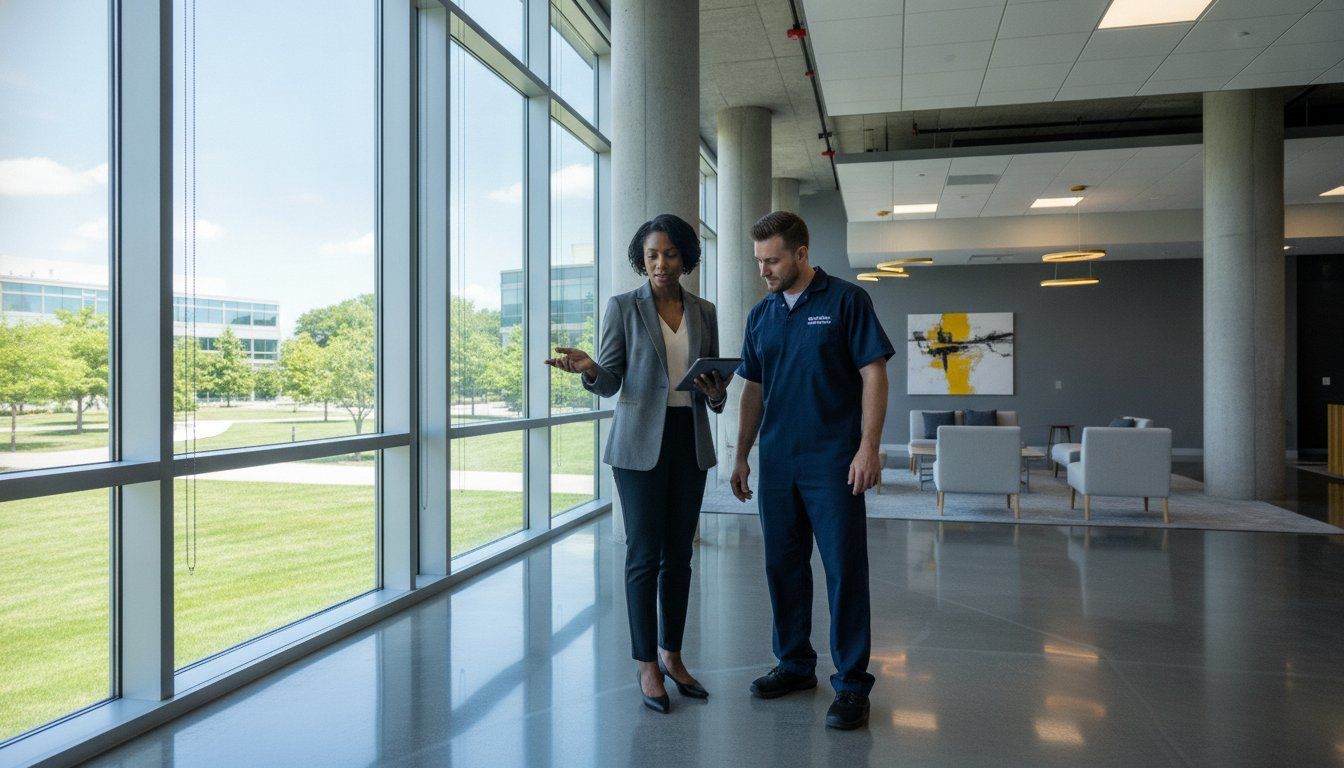
Procurement professionals must go beyond accepting a verbal confirmation of coverage. Request a formal Certificate of Insurance (COI) and verify the expiration dates immediately. Ensure the policy limits are commensurate with the total value of your facility’s assets. Your organization should also be named as an "additional insured" on the contractor’s policy. This status grants you direct protection under their insurance, providing a streamlined path for resolving cleaning company liability for damages without exhausting your own corporate resources.

Advance Industrial’s Approach to Risk Mitigation and Accountability
Commercial Cleaning Services Advance Industrial Maintenance leverages 40 years of operational experience in Bohemia and across Long Island to define a higher standard of accountability. We don't view cleaning company liability for damages as a mere contractual obligation; it's a fundamental component of our commitment to industrial stability. Our technical authority is built on decades of solving complex maintenance challenges where precision is the only acceptable outcome. This seasoned perspective allows us to function as a stabilizing force in your supply chain.
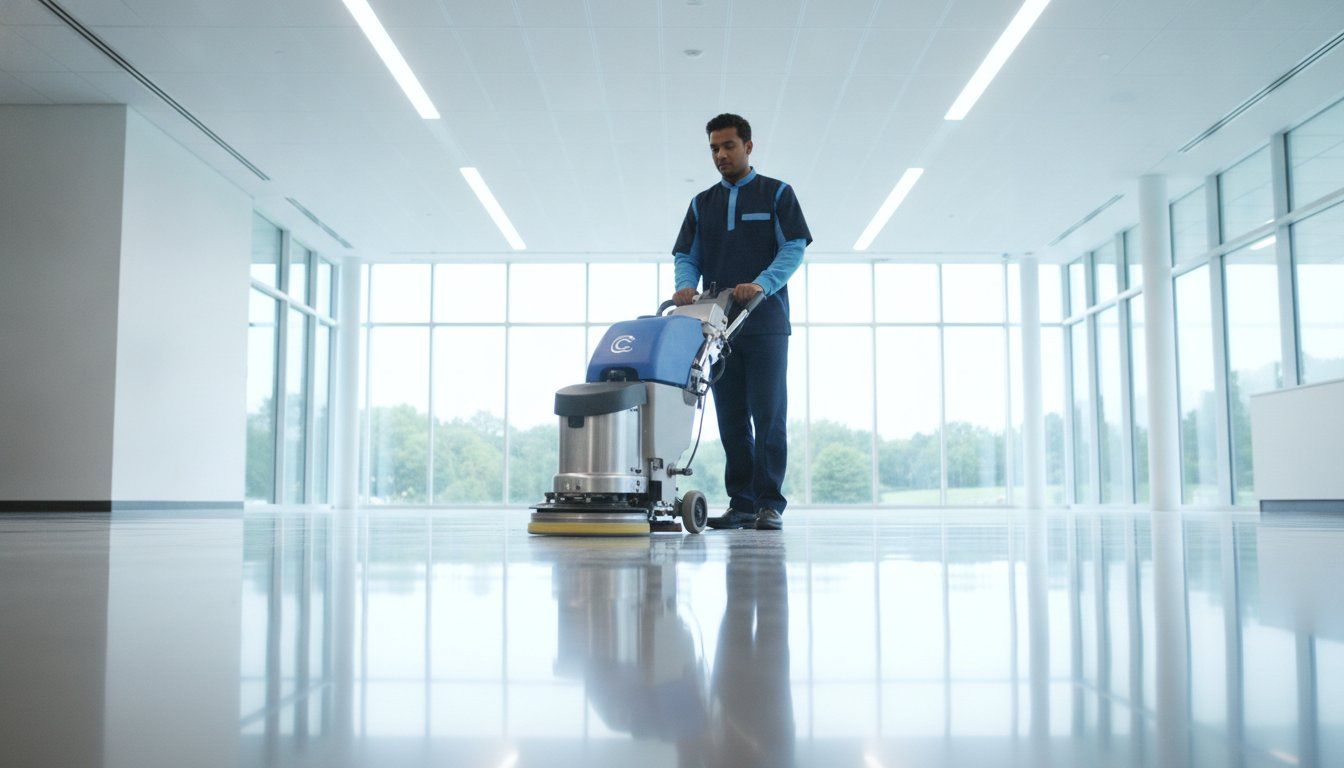
Our systematic approach to floor stripping and waxing utilizes calibrated chemical ratios and high-performance equipment to eliminate the risk of surface etching or permanent substrate damage. In healthcare environments, Commercial Cleaning Services Advance Industrial Maintenance follows rigorous standard operating procedures that align with specific sanitation requirements. This level of consistency ensures your facility assets are protected through expert skill rather than just an insurance policy. We treat every contract as a high-level collaborative alliance focused on your long-term success.
Proactive Prevention: Beyond the Insurance Policy
Technical training serves as the primary barrier against property damage. Every team member undergoes specific instruction on mechanical systems and supply logistics before entering a client site. We conduct regular site inspections to identify latent hazards, such as compromised flooring or improper chemical storage, before they escalate into liabilities. You can stay updated on industrial maintenance standards to enhance your own facility oversight protocols and maintain continuous operational success.
Emergency Response and Incident Resolution
Reliability is tested during unexpected events. If an incident occurs, our protocol requires immediate reporting and an onsite technical assessment to address the situation. This rapid response minimizes downtime and ensures a transparent resolution process. Our project-based specialty cleaning services, including post-construction cleanup and carpet cleaning, include integrated risk assessments to address site-specific challenges. Contact Commercial Cleaning Services Advance Industrial Maintenance for a comprehensive facility maintenance evaluation in Nassau or Suffolk County to secure a partner focused on precision engineering and dependable results.
Securing Your Facility’s Operational Stability
Managing a commercial site requires a partner who understands that every maintenance task carries a technical risk profile. You've learned that cleaning company liability for damages isn't just a legal formality but a professional framework designed to protect your physical assets and operational continuity. By auditing insurance certificates and verifying bonding standards, you ensure that your facility remains shielded from the financial impact of professional negligence or accidental mishaps. A proactive approach to risk mitigation transforms a standard vendor relationship into a high-level collaborative alliance.
Advance Industrial brings over 40 years of commercial cleaning experience to the Long Island market. We are fully insured and bonded for the most demanding healthcare and industrial environments across Nassau and Suffolk County. Our commitment to precision engineering and documented safety protocols provides the essential infrastructure required for your ongoing success. You can Request a Professional Facility Evaluation and Quote to see how our expertise supports your long-term maintenance strategy. We look forward to establishing a dependable partnership that prioritizes the safety and integrity of your facility.
Frequently Asked Questions
Is a cleaning company liable for damages if I don't have a written contract?
A cleaning company remains legally responsible for damages even without a written contract under the principles of negligence and tort law. However, the absence of a formal agreement significantly complicates the recovery process because there's no documented scope of work or defined liability limit. You'll need to provide clear evidence that the cleaning company liability for damages resulted directly from their staff's actions to secure a successful claim without contractual backing.
What should I do immediately after discovering property damage caused by a cleaning crew?
You should immediately document the damage with high-resolution photographs and restrict access to the affected area to preserve physical evidence. Notify the cleaning contractor's management in writing within 24 hours to establish a formal record of the incident. This prompt communication is essential for triggering the contractor's insurance claim process and ensuring that repairs or replacements don't disrupt your facility's operational continuity.
Does general liability insurance cover the theft of office equipment by cleaning staff?
General liability insurance does not cover the theft of office equipment; this risk is specifically addressed by a janitorial or fidelity bond. While insurance covers accidental property damage or bodily injury, a bond provides financial recourse if an employee commits a dishonest act. Verifying that your partner is both insured and bonded ensures comprehensive protection against the diverse range of risks associated with third-party facility access.
How much liability coverage should a commercial cleaning company have for a medical office?
Most commercial facility managers require a minimum of $1 million per occurrence and $2 million aggregate for general liability coverage in medical environments. This threshold accounts for the high replacement cost of specialized diagnostic equipment and the potential for significant third-party liability claims in high-traffic healthcare settings. You should verify these limits on the Certificate of Insurance to ensure the cleaning company liability for damages is sufficient for your asset value.