Commercial Cleaning for LEED Certified Buildings: Sustaining High-Performance Environments
Maintaining a LEED certification isn't a one-time achievement; it's a daily operational challenge where a single non-compliant chemical can jeopardize your entire rating. Facility managers understand that the pressure of a USGBC audit is constant. You've invested in high-performance systems, yet the wrong janitorial protocol can quickly undermine those efforts and degrade indoor air quality. Specialized commercial cleaning for LEED certified buildings acts as the essential infrastructure that bridges the gap between design intent and long-term compliance.
This article explains how technical cleaning protocols protect your LEED-EBOM status, reduce VOC levels, and secure the documentation necessary for audit success. We'll examine the specific Green Seal and EPA Safer Choice standards required to keep your Long Island facility performing at its peak. You'll learn how to align your maintenance schedule with the rigorous demands of high-performance standards while ensuring a healthy environment for every tenant.
Key Takeaways
- Learn how specialized janitorial protocols contribute directly to Indoor Environmental Quality (IEQ) credits and the long-term health of your building’s occupants.
- Identify the precise Green Seal and EPA Safer Choice certifications required for commercial cleaning for LEED certified buildings to maintain strict chemical compliance.
- Understand the technical specifications for high-performance equipment, such as HEPA-filter vacuums, that are essential for meeting LEED operational standards.
- Discover how rigorous documentation and record-keeping protocols ensure your facility remains prepared for successful USGBC audits and recertification cycles.
Table of Contents
The Strategic Role of Commercial Maintenance in LEED Certification
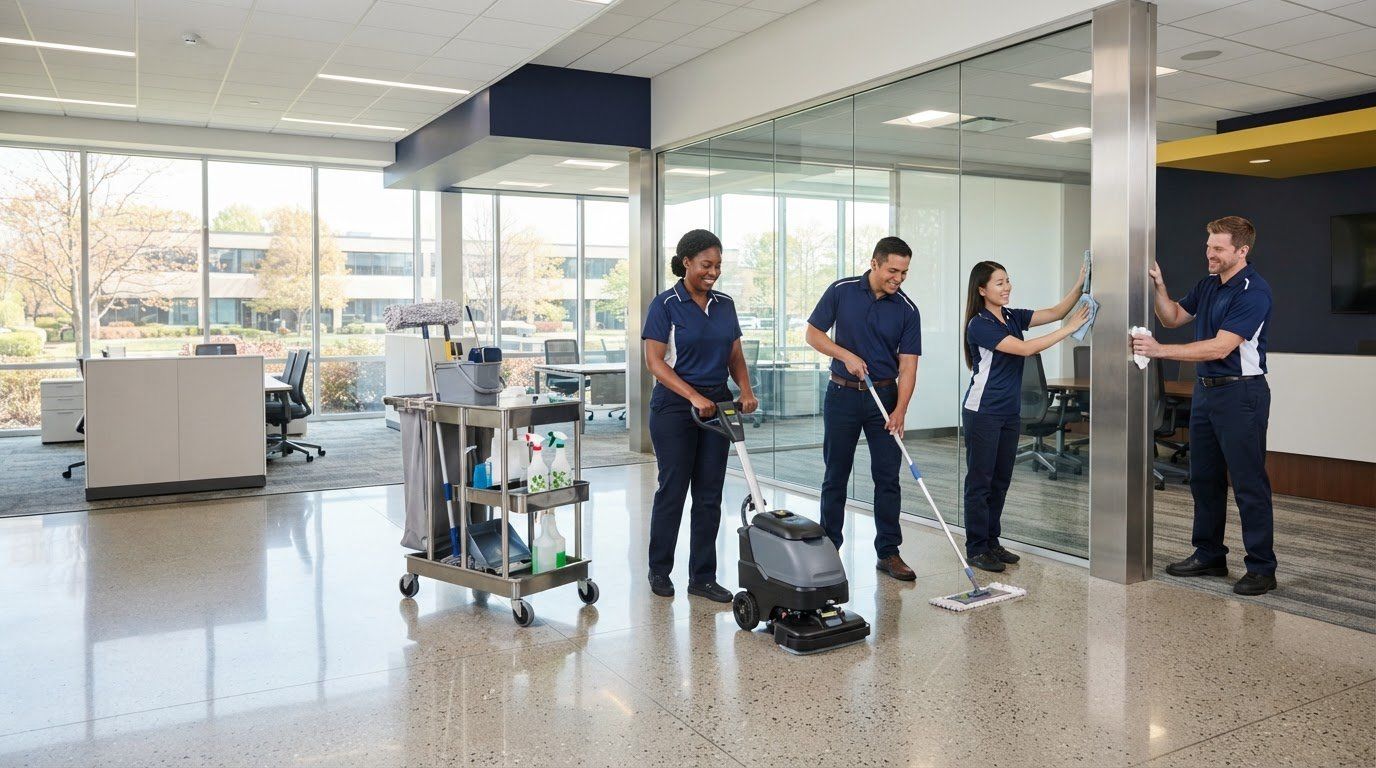
LEED certification represents a rigorous standard for sustainability, but its long-term validity doesn't just happen; it depends on operational precision. Within the Leadership in Energy and Environmental Design (LEED) framework, the Operations and Maintenance (O+M) rating system places heavy emphasis on janitorial protocols. Effective commercial cleaning for LEED certified buildings transitions maintenance from a purely aesthetic task to a performance-based strategy. This approach ensures that technical systems remain efficient while maintaining the building's environmental integrity and asset longevity.
Maximizing LEED Points Through Indoor Environmental Quality
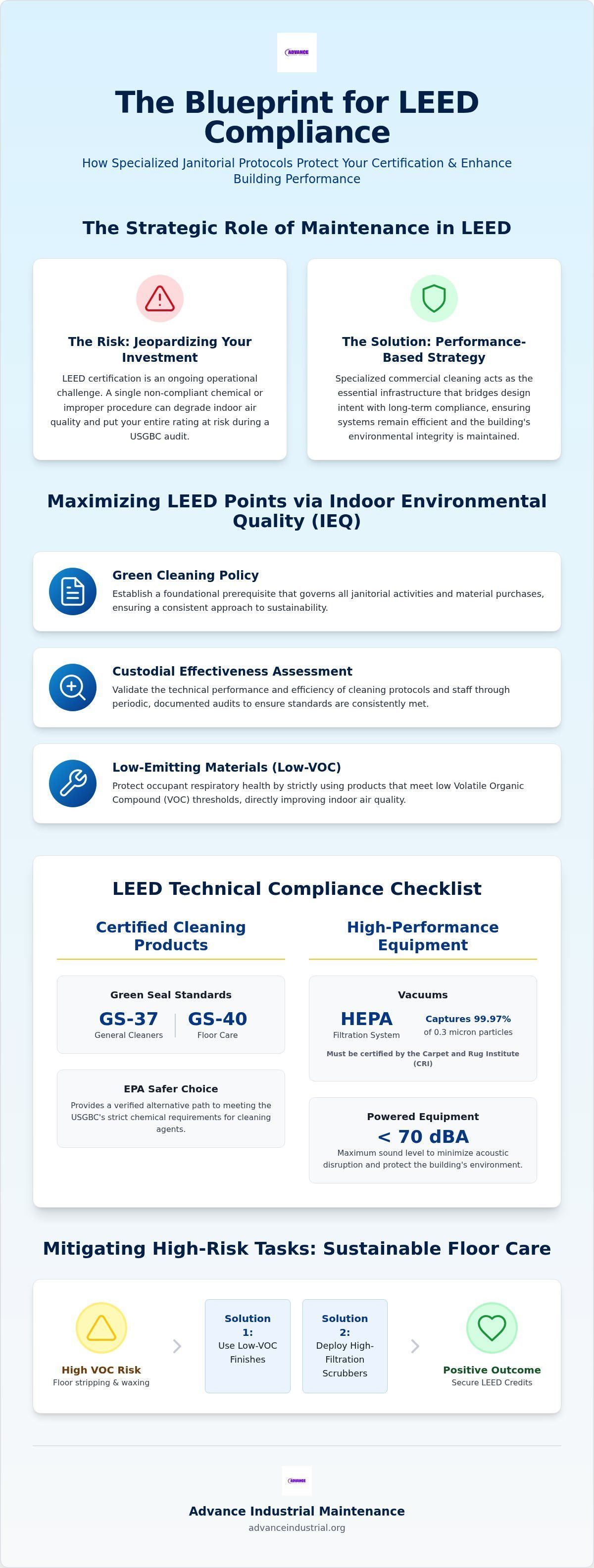
Indoor Environmental Quality (IEQ) credits are central to achieving and sustaining certification. Under LEED v4.1 standards, IEQ is defined as the conditions within a building, including air quality, lighting, and thermal comfort, that impact the health and productivity of occupants. High-performance cleaning directly influences these credits by utilizing low-emitting materials and specialized equipment that prevents the re-entry of contaminants into the breathing zone.
Reducing volatile organic compounds (VOCs) is a critical objective for any facility manager. Conventional cleaning agents often release airborne irritants that degrade air quality and impact tenant retention. By adhering to a strict green cleaning policy, facilities can secure points in several categories:
- Green Cleaning Policy: Establishing a prerequisite framework that governs all janitorial activities and material purchases.
- Custodial Effectiveness Assessment: Validating the technical performance of cleaning staff through periodic audits.
- Low-Emitting Materials: Ensuring all floor care and surface products meet strict chemical thresholds to protect respiratory health.
This technical alignment protects the building's infrastructure and ensures a stable, high-performance environment for all users. Partnering with an experienced firm ensures these standards are met without compromising operational continuity.
Technical Standards for LEED-Compliant Cleaning: Products and Equipment
Compliance in commercial cleaning for LEED certified buildings starts with the procurement of certified chemical agents. The USGBC requires that cleaning products meet specific third-party environmental standards to protect indoor air quality. General cleaners must adhere to Green Seal GS-37, while floor care products should align with GS-40 standards. Alternatively, products recognized by the EPA Safer Choice program provide a verified path to meeting chemical requirements. These certifications ensure that the surfactants and solvents used don't introduce hazardous toxins into the workspace.
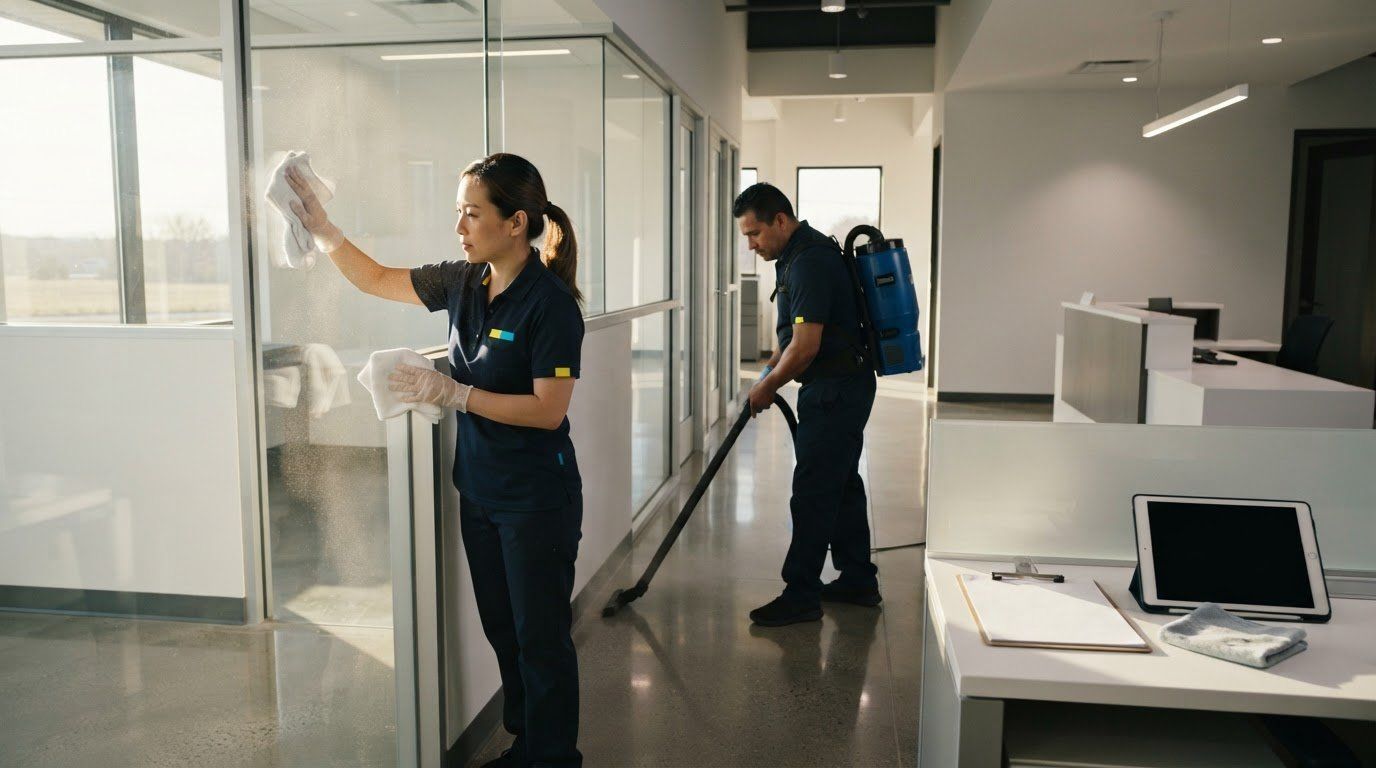
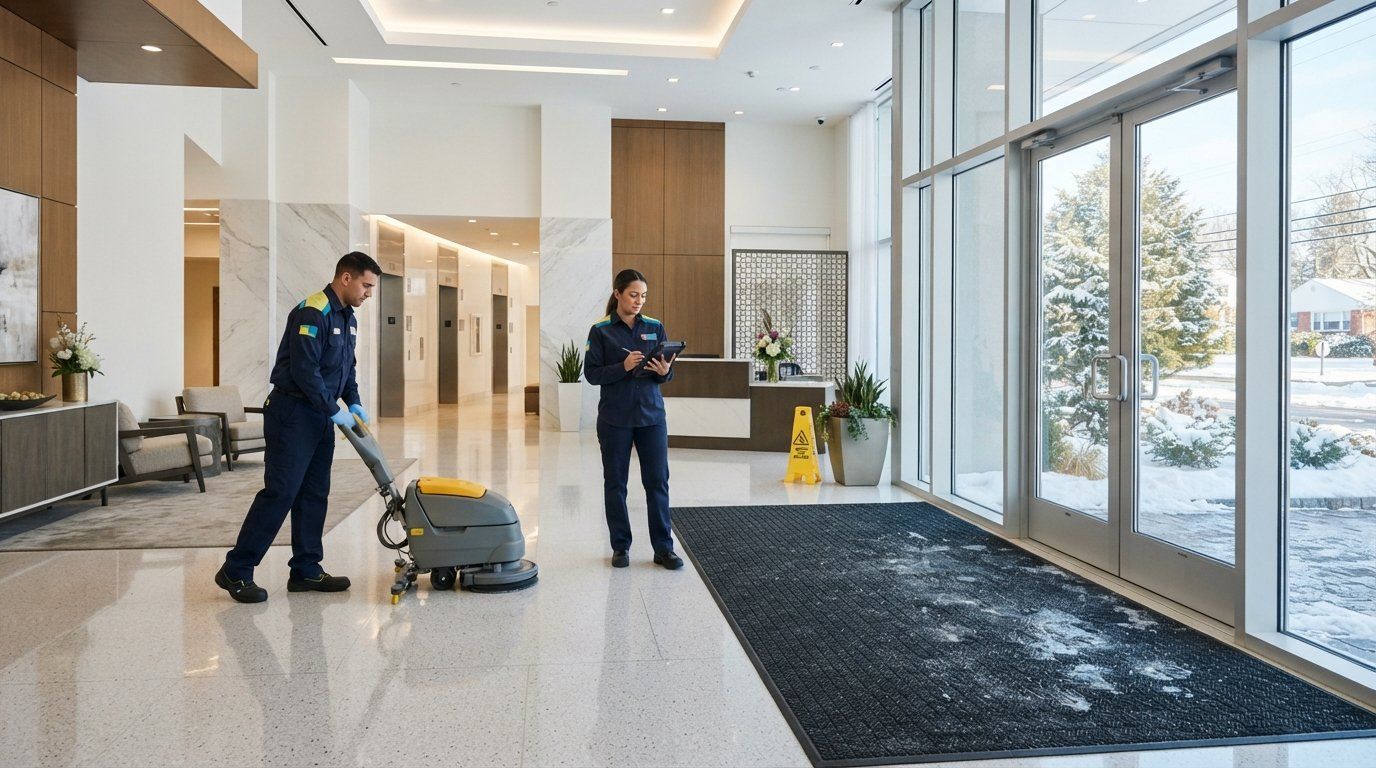
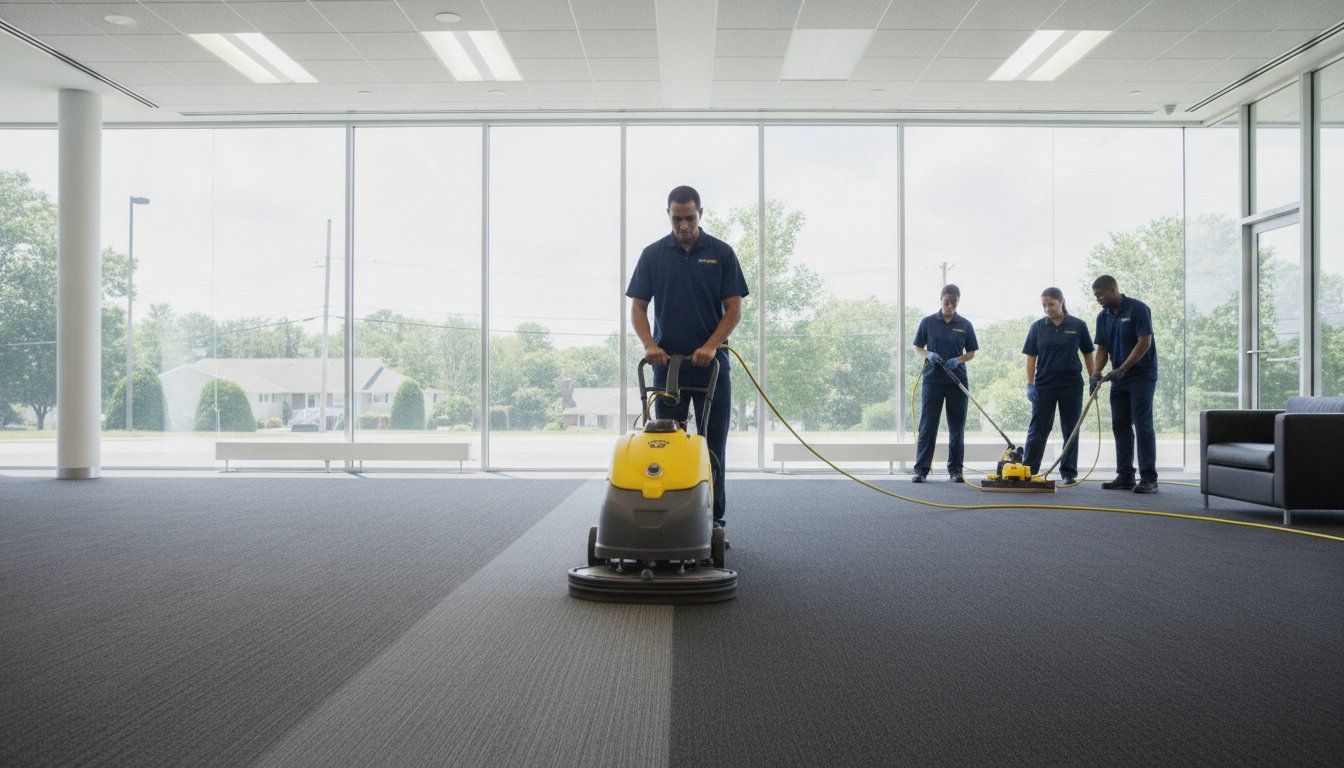
Equipment selection is equally technical. To earn credit for high-performance cleaning, vacuums must be certified by the Carpet and Rug Institute (CRI) and equipped with HEPA filtration to capture 99.97% of particles down to 0.3 microns. Additionally, powered equipment must operate at sound levels below 70 dBA to minimize acoustic disruption. These specifications prevent the redistribution of fine particulates and protect the building's acoustic environment.
Sustainable Floor Care and Specialized Maintenance
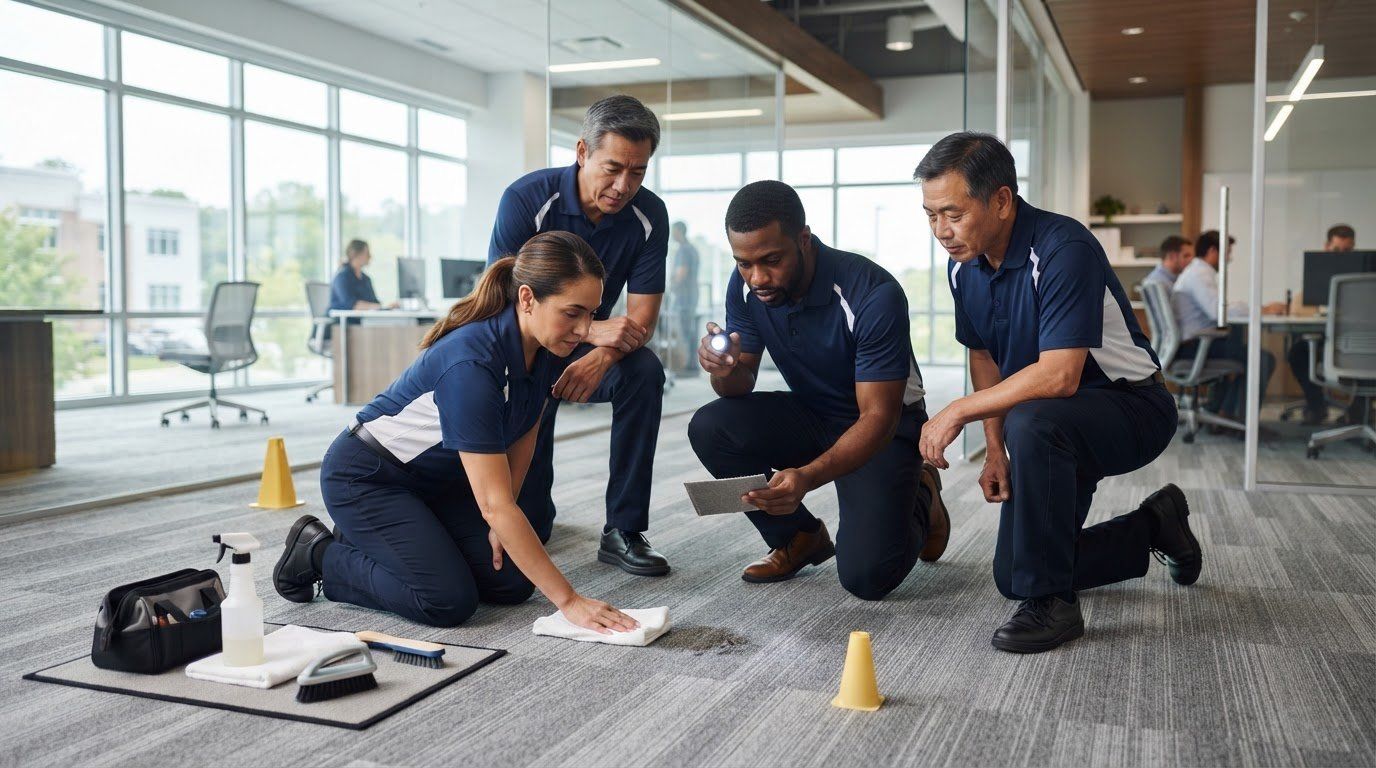
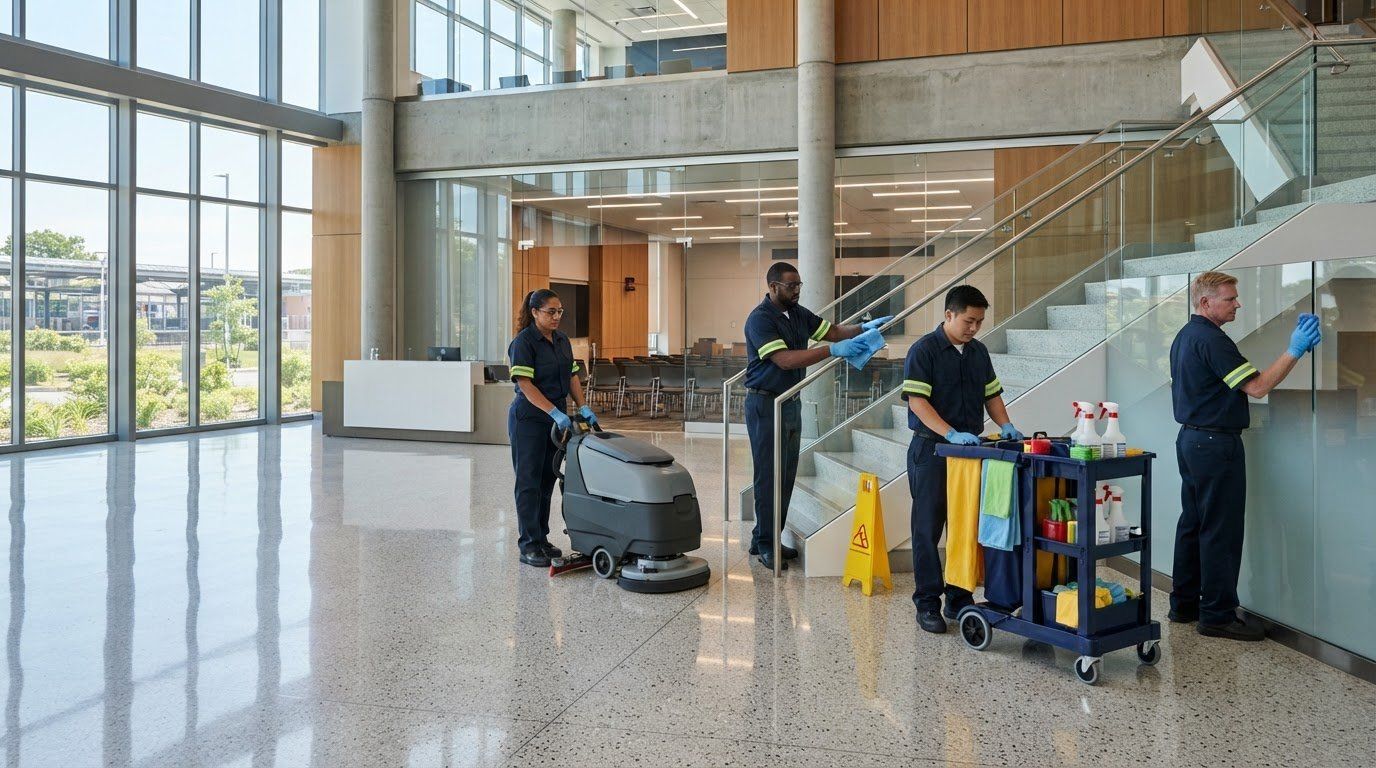
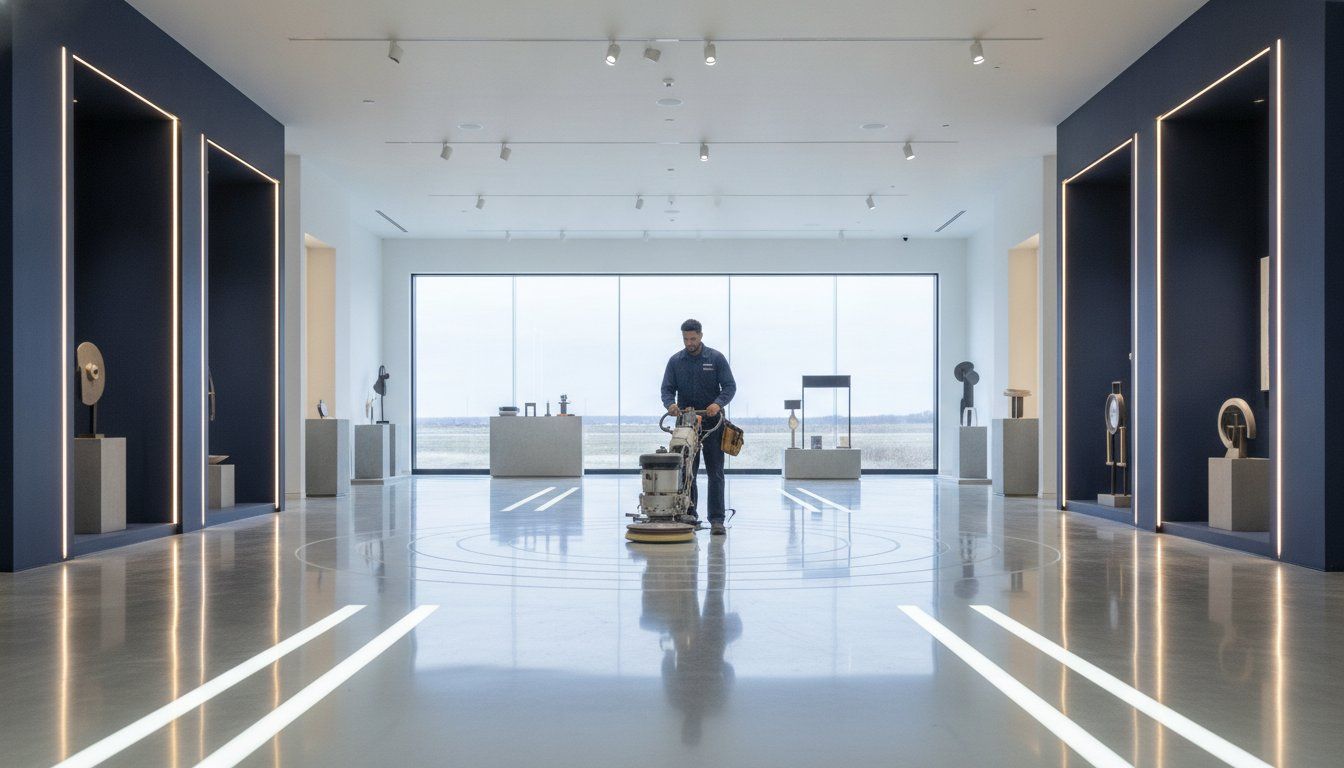
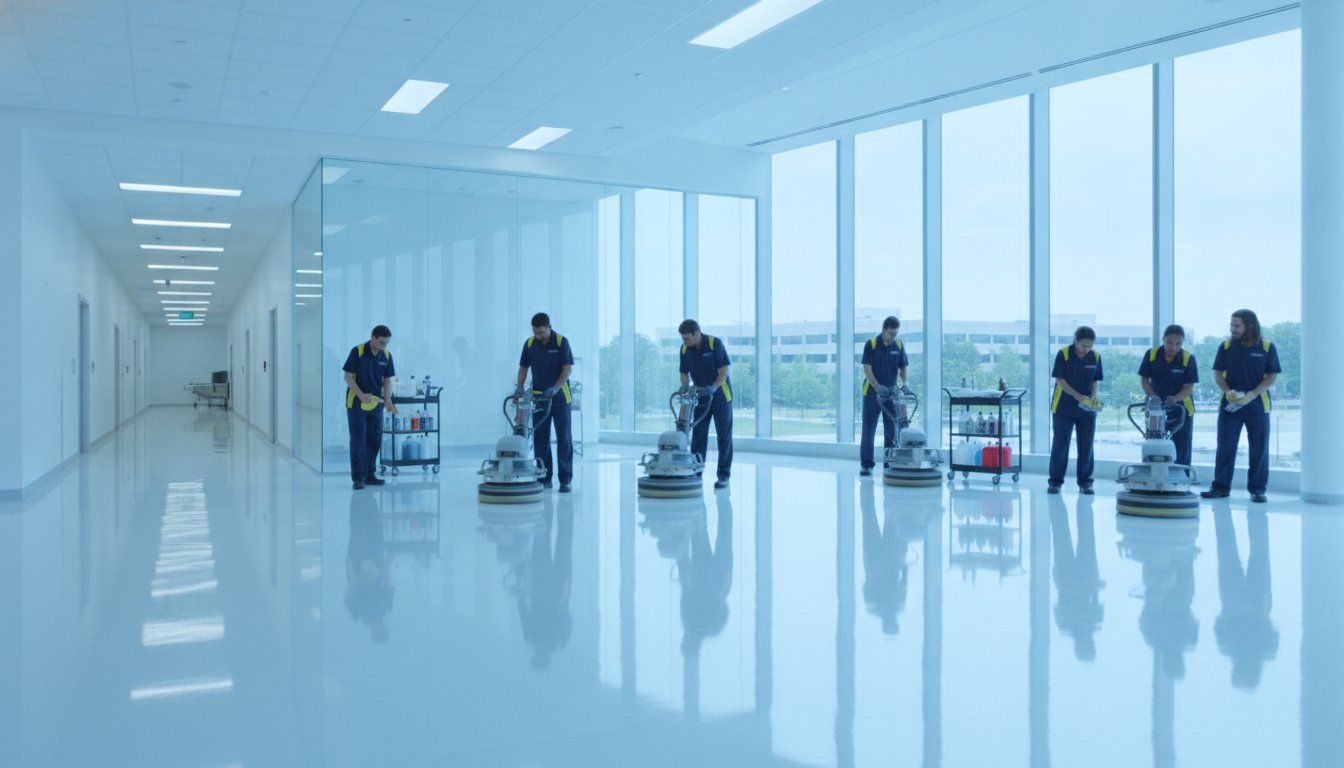
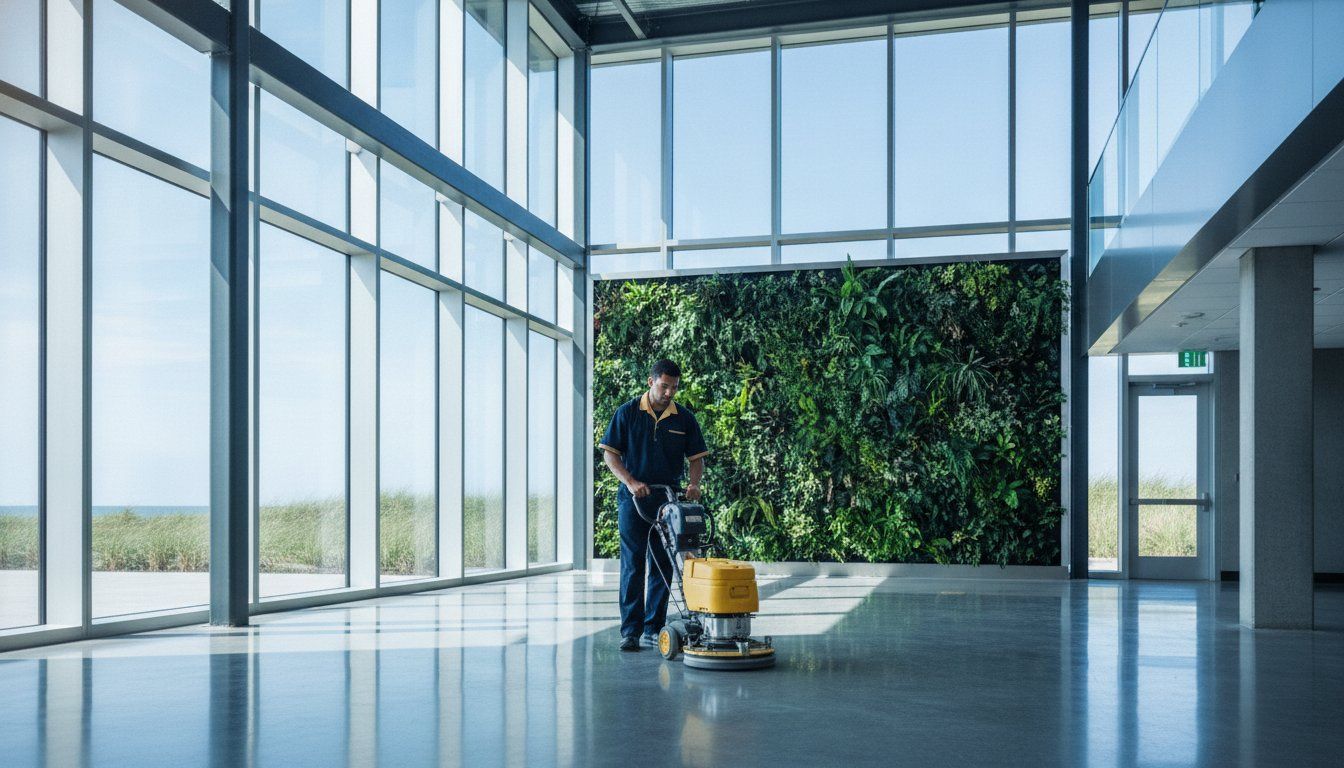
Project-based work like floor stripping and waxing often presents the highest risk for VOC spikes. Executing these tasks within a LEED framework requires low-VOC finishes and high-filtration scrubbers that contain dust at the source. Using specialized professional cleaning services for floors ensures that even intensive restoration projects support your certification goals. These protocols allow facilities to secure "Green Cleaning — Products and Materials" points while maintaining the durability of high-traffic surfaces. For managers overseeing complex facilities, partnering with a firm that understands these technical specifications is essential for long-term stability. You can rely on Commercial Cleaning Services Advance Industrial Maintenance to implement these precise standards across your entire Long Island portfolio.
Implementing Sustainable Maintenance in Long Island Facilities
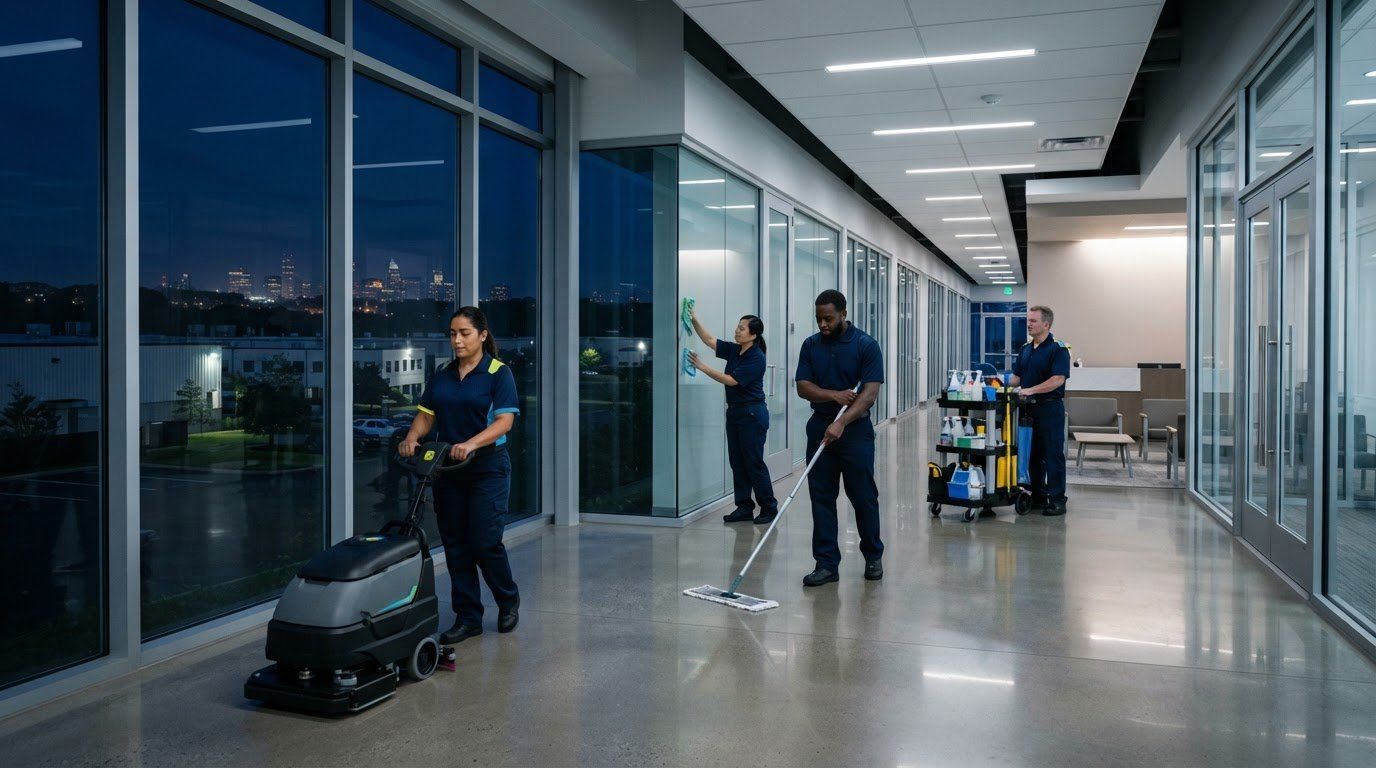
Long Island’s diverse facility landscape, ranging from Melville’s corporate centers to healthcare hubs in Stony Brook, demands a localized approach to compliance. Developing a customized cleaning schedule for Nassau and Suffolk County buildings requires an understanding of specific occupancy patterns and regional environmental factors. For commercial cleaning for LEED certified buildings to succeed, the maintenance plan must be as dynamic as the facility itself. This ensures that high-traffic areas receive the necessary attention without over-consuming resources or violating chemical thresholds.
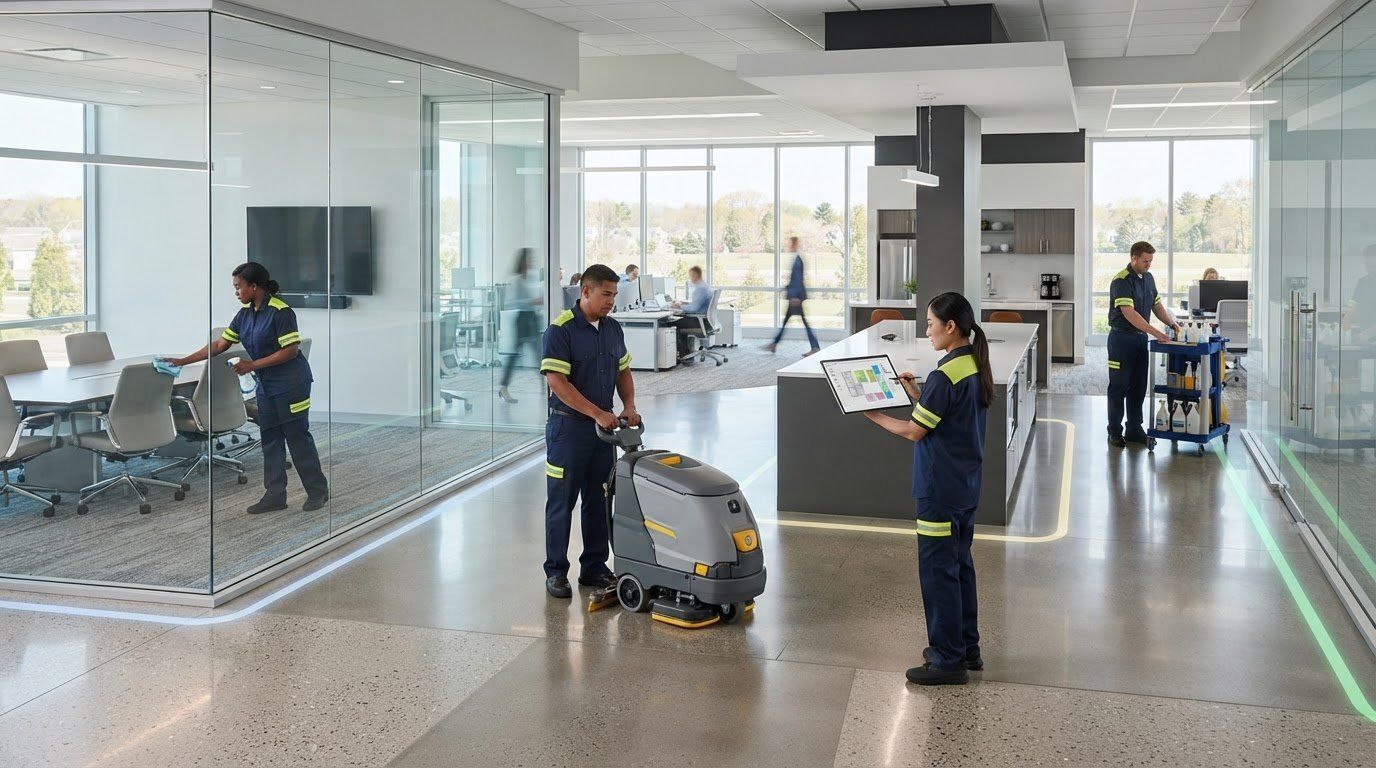
Rigorous record-keeping remains the backbone of any successful USGBC audit. Facility managers must maintain comprehensive logs that detail product inventories, equipment filtration checks, and staff training sessions. Aligning these internal processes with ISSA Green Building (GB) criteria provides a standardized framework that simplifies the recertification cycle. Precise documentation proves that your facility continues to meet the performance standards established during initial certification. Without these technical records, even the most sustainable practices may fail to secure the necessary points during a formal review.
Choosing a Reliable Maintenance Partner in Nassau and Suffolk
Selecting a janitorial partner requires evaluating technical authority and long-term reliability. A firm with 40 years of experience in the Long Island market provides the stability needed to manage complex certification requirements. Commercial Cleaning Services Advance Industrial Maintenance operates as a direct extension of your facility management team, offering the precision required for high-stakes environments. If you're searching for office cleaning near me that understands the nuances of LEED-EBOM, local expertise is non-negotiable. Our presence in Bohemia ensures that we provide rapid response times for emergency needs while maintaining the steadfast consistency your operations demand. This proximity allows for immediate on-site support, ensuring that technical compliance in commercial cleaning for LEED certified buildings is never sacrificed for speed during urgent maintenance cycles.
Securing Your Building’s Operational Future
Sustaining a high-performance environment requires a transition from general janitorial services to technical maintenance. Specific product certifications and HEPA-filtered equipment protect your Indoor Environmental Quality credits while ensuring tenant health. Rigorous documentation keeps your facility audit-ready for every recertification cycle. Commercial Cleaning Services Advance Industrial Maintenance provides the technical authority needed to manage these complex requirements. With over 40 years of commercial cleaning experience, we've served Nassau and Suffolk Counties since 1984. Our team brings specialized expertise in medical and industrial facility maintenance to every project. We understand the high stakes of operational efficiency and the precision required for commercial cleaning for LEED certified buildings . Partner with a firm that acts as a stabilizing force for your facility's long-term success.
Frequently Asked Questions
How many LEED points can green cleaning contribute to a commercial building?
Green cleaning protocols can contribute up to five points toward LEED for Existing Buildings: Operations and Maintenance (EBOM) certification. These points fall under the Indoor Environmental Quality category. Prerequisites include a comprehensive green cleaning policy. Additional credits are earned through sustainable product procurement, high-performance equipment usage, and regular custodial effectiveness audits to verify that performance standards are consistently maintained.
What are the specific chemical standards for LEED-compliant cleaning products?
LEED-compliant cleaning products must adhere to rigorous third-party environmental standards. General cleaners should meet Green Seal GS-37 requirements. Floor care products must align with Green Seal GS-40 specifications. Products recognized by the EPA Safer Choice program or UL ECOLOGO are also valid alternatives. These standards verify that chemicals have low toxicity levels and produce minimal volatile organic compound emissions during application.
Does LEED require specific types of vacuum cleaners or floor buffers?
LEED requires janitorial equipment to meet specific performance and acoustic thresholds. Vacuums must carry the Carpet and Rug Institute (CRI) Seal of Approval and be equipped with HEPA filtration systems to capture fine particulates. Powered equipment, such as floor scrubbers and buffers, must operate at noise levels below 70 dBA to prevent acoustic disruption while utilizing guards to protect the building’s infrastructure.
How do specialized services like floor waxing fit into a LEED maintenance plan?
Specialized maintenance like floor stripping and waxing fits into a LEED plan by utilizing low-VOC finishes and documented green protocols. When executing commercial cleaning for LEED certified buildings, all floor finishes must meet Green Seal GS-40 standards. Maintaining precise records of these products is vital for USGBC audits. This technical approach ensures that high-traffic surfaces remain resilient while supporting the facility's broader sustainability goals.