Commercial Cleaning Proposal Template for Management: A Professional 2026 Guide

Did you know that an oversight in your vendor's safety protocol could result in an OSHA penalty of up to $16,550 per violation? Many procurement professionals view a cleaning contract as a simple line item, but in 2026, it's actually a critical technical service level agreement that protects your facility from operational downtime and legal exposure. Utilizing a robust commercial cleaning proposal template for management allows you to move beyond surface-level aesthetics and focus on long-term industrial stability.
We understand that inconsistent cleaning quality and a lack of pricing transparency create unnecessary friction in your operations. You need a partner that acts as an extension of your own team, providing the technical authority required to manage complex environments like medical facilities or high-traffic offices. This guide promises to help you master the essential components of a professional proposal to ensure technical compliance and operational success.
We'll outline how to verify vendor credentials, incorporate the latest 2026 HazCom training requirements, and establish a clear roadmap for your facility maintenance without the risk of hidden fees or liability gaps.
Key Takeaways
- Define a precise Scope of Work (SOW) that categorizes tasks by daily, weekly, and monthly frequencies to eliminate service gaps and ensure facility consistency.
- Utilize a comprehensive commercial cleaning proposal template for management to standardize technical requirements and verify compliance with 2026 safety standards.
- Verify critical liability insurance and workers’ compensation specific to New York state requirements to mitigate risk and protect your organization from legal exposure.
- Establish rigorous Quality Control protocols and supervisor inspection schedules to maintain high-density service standards across all janitorial categories.
- Implement a strategic 30-day transition plan to achieve a seamless shift between vendors without disrupting your facility’s operational rhythm or productivity.
Table of Contents
Essential Components of a Professional Commercial Cleaning Proposal
A professional commercial cleaning proposal template for management begins with a clear executive summary. This section shouldn't focus on aesthetics. Instead, it must align facility maintenance with specific business outcomes like operational continuity and risk mitigation. By establishing these goals early, you position the cleaning vendor as a strategic partner rather than a simple contractor. This alignment ensures that every dollar spent on janitorial services contributes to the long-term stability of the building's infrastructure.
Defining the Scope of Work and Task Schedules
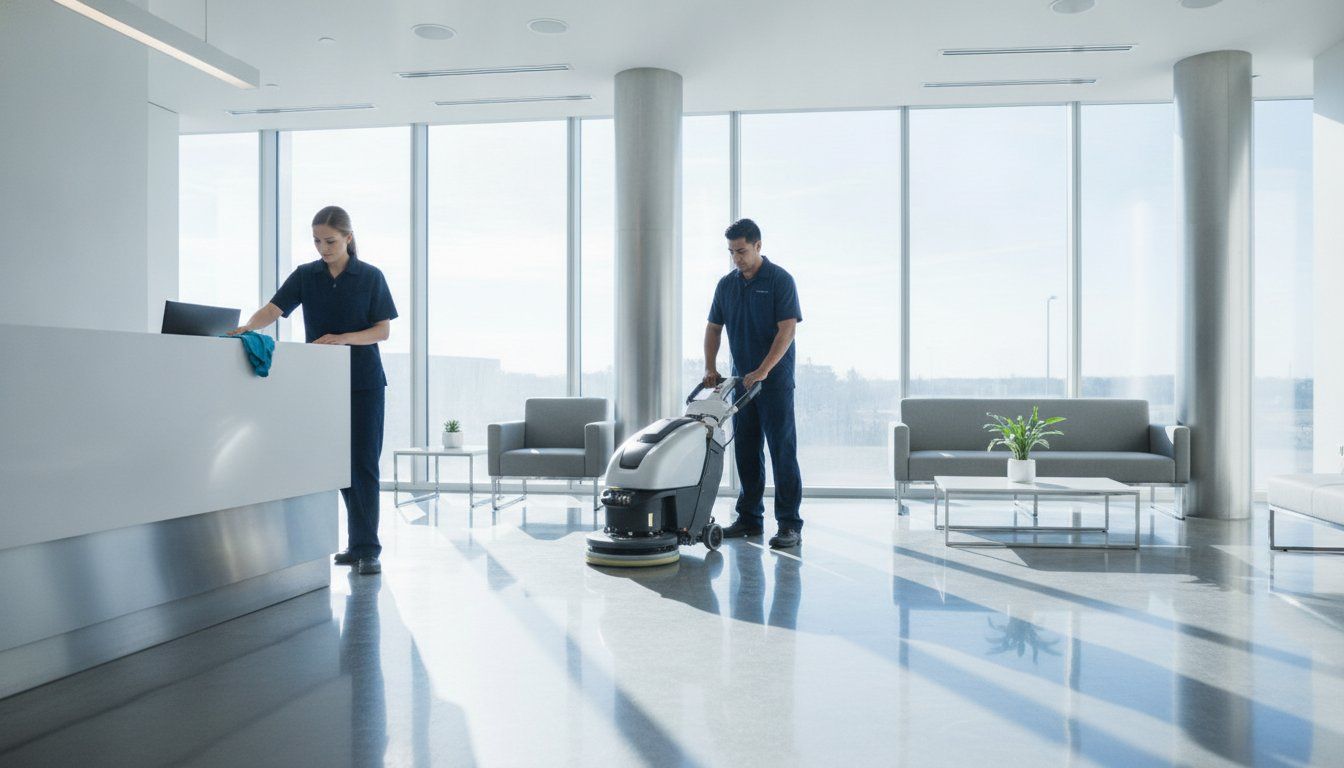
A precise Scope of Work (SOW) prevents service gaps that lead to facility degradation. Unlike generic "all-inclusive" descriptions, a technical line-item task list provides full transparency. For high-traffic Long Island offices, schedules must distinguish between general office cleaning and high-intensity disinfection. This overview of commercial cleaning standards emphasizes that frequency is key. A reliable proposal breaks down recurring janitorial tasks into logical intervals:
- Daily: High-touch surface disinfection, trash removal, and restroom sanitation.
- Weekly: Detailed dusting, interior glass cleaning, and vacuuming of low-traffic areas.
- Monthly: Deep cleaning of upholstery and meticulous baseboard detailing.
Specialized Requirements for Medical and Industrial Facilities
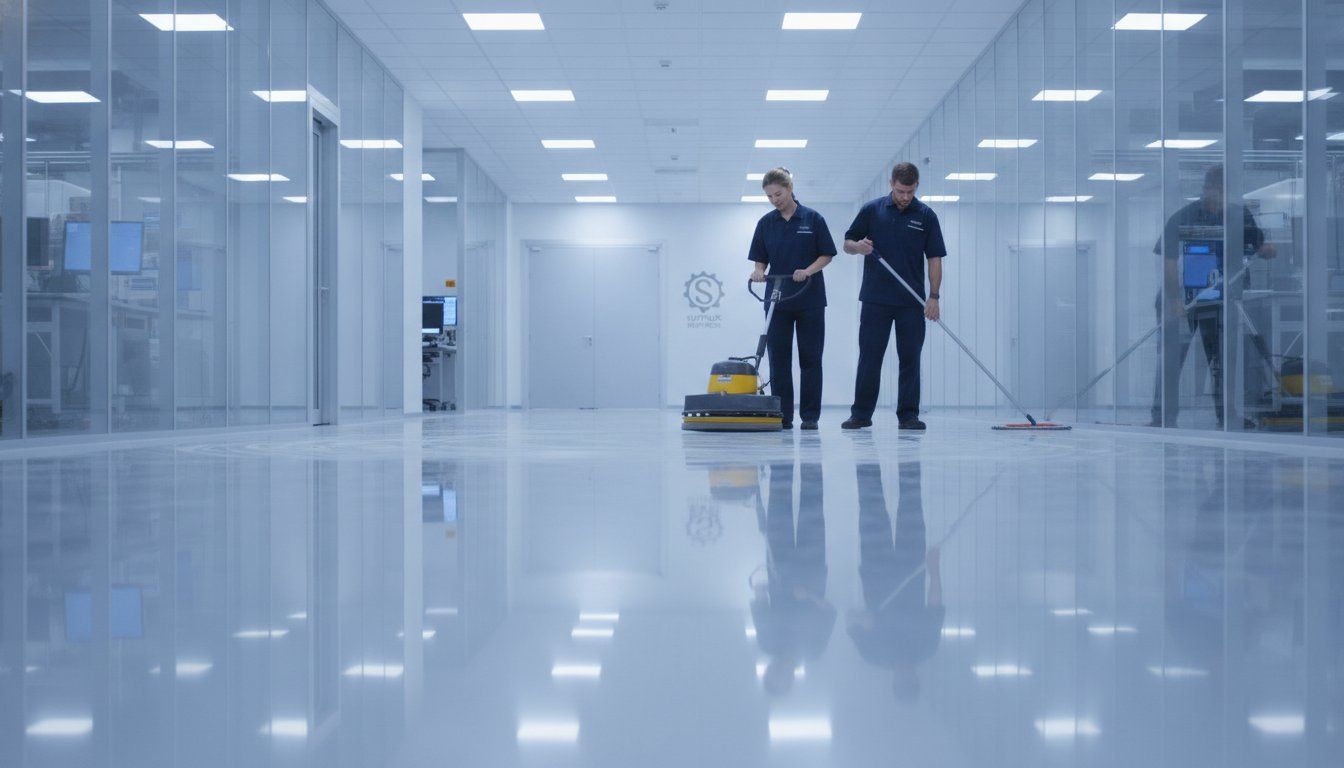
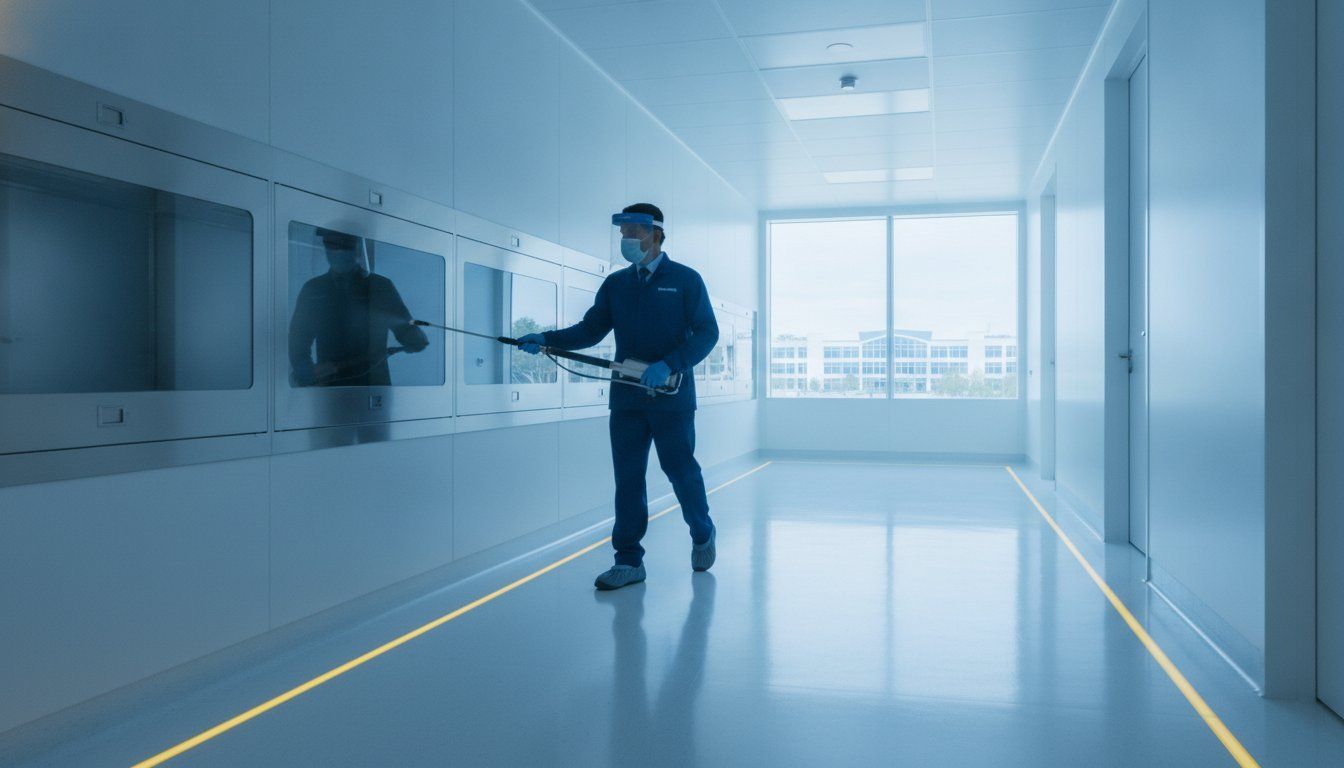
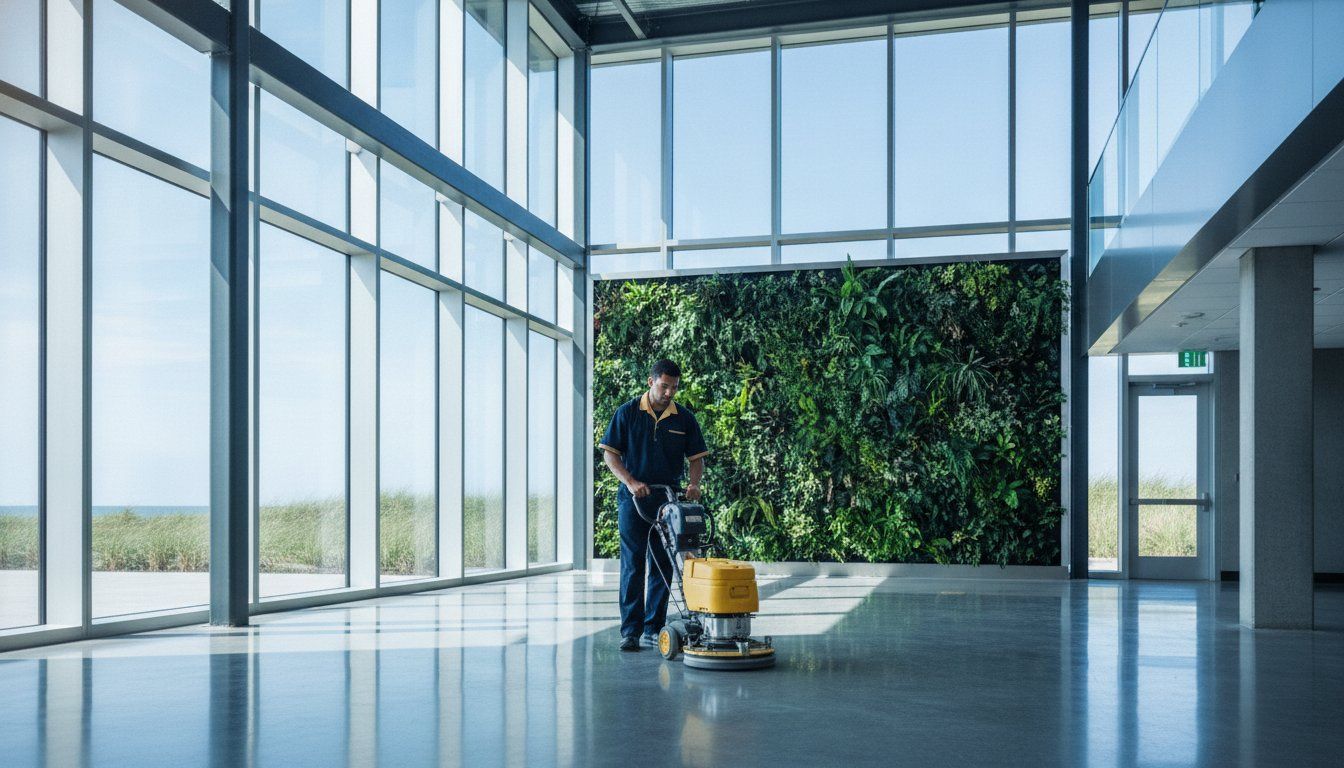
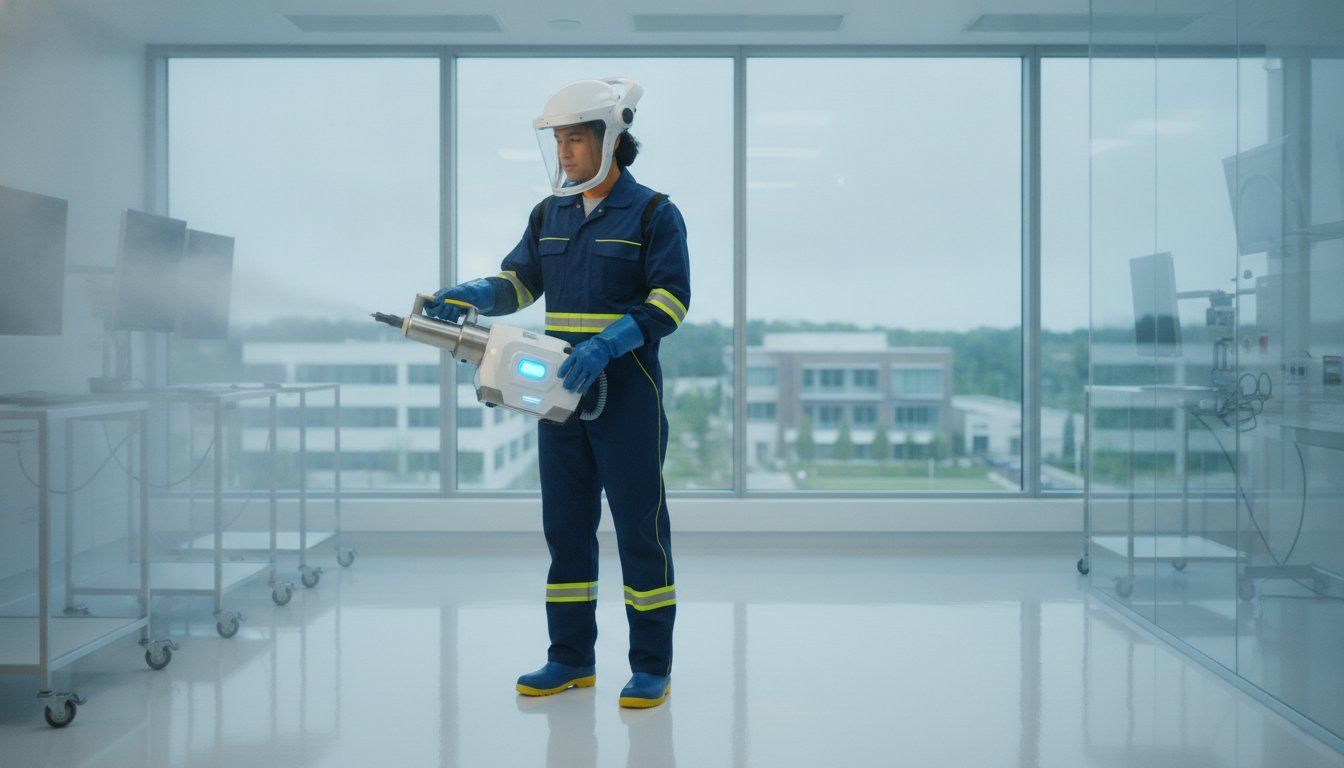
Facilities with high technical demands require specialized sanitation protocols. In a medical environment, the proposal must integrate rigorous healthcare facility sanitation standards to ensure patient safety and regulatory compliance. Industrial settings often require project-based specialty services. Your commercial cleaning proposal template for management should include dedicated sections for floor stripping and waxing or carpet deep-cleaning. These periodic tasks maintain the structural integrity of your flooring systems and prevent long-term wear in high-load environments. Providing this level of detail ensures that your procurement team can verify technical authority before any work begins.
Management KPIs: Evaluating Compliance and Technical Authority
Evaluating a commercial cleaning proposal template for management requires a shift in focus toward risk mitigation and technical accountability. A low-cost bid often masks a lack of proper insurance or inadequate quality control. To ensure facility stability, management must audit the vendor's ability to maintain high standards under pressure. This involves looking for specific Key Performance Indicators (KPIs) that prove the vendor can act as a dependable partner rather than a mere service provider.
Insurance and Liability Safeguards for Property Managers
Property managers in New York face unique legal challenges. Your vendor must provide proof of comprehensive liability insurance and workers’ compensation that meets state-specific mandates. Commercial General Liability is a standard insurance policy that protects the business against claims involving bodily injury or property damage arising from its operations or services. Choosing a partner with 40+ years of industry experience significantly reduces operational risk. They possess the established infrastructure to handle complex claims and maintain continuous coverage. If you're looking for a partner with this level of stability, learn more about our professional maintenance approach.
Quality Assurance and Performance Metrics
Visual appearance is a baseline, but true success criteria involve technical benchmarks. A professional proposal should outline specific Quality Control (QC) protocols, including the frequency of supervisor inspections and the use of digital reporting systems. These standards mirror federal cleaning contract standards, which prioritize measurable results over effort. High-performance results depend on several critical factors:
- Advanced Equipment: Use of HEPA-filtration vacuums and lithium-powered scrubbers for efficiency.
- Staff Vetting: Rigorous background checks and training in 2026 OSHA HazCom updates.
- Communication: A documented plan for emergency response and 24-hour on-call availability.
A professional commercial cleaning proposal template for management should also identify the training standards for all janitorial staff. Managers shouldn't settle for vague promises. Demand a proposal that details how the vendor monitors performance and addresses service deviations before they impact your facility's operations.

Transitioning from Proposal to Operational Partnership
Transitioning from a signed document to a functional partnership requires a structured implementation phase. A professional commercial cleaning proposal template for management isn't just a sales tool; it's the foundation for your operational continuity. To ensure zero downtime, we recommend a 30-day transition plan. This period allows for the procurement of specialized equipment and the onboarding of site-specific personnel without disrupting your daily workflows. Establishing a reporting and feedback loop during this phase ensures that service standards are met from day one.
Finalizing the Service Level Agreement (SLA) with transparent, fixed monthly fees is the next critical step. This eliminates the uncertainty of variable billing and ensures your maintenance budget remains predictable. A pre-service walk-through is essential to align on-site staff with the nuances of your floor plan and security protocols. This collaborative approach adheres to the ISSA Cleaning Industry Management Standard (CIMS), which emphasizes quality management and technical service delivery.
Customizing the Service Agreement for Long Island Businesses
Long Island facilities face specific environmental challenges that a generic template might overlook. Your agreement should address regional factors like seasonal salt remediation for floors and high-frequency window cleaning in coastal areas. Partnering with a Bohemia-based provider ensures a rapid response across Nassau and Suffolk Counties when emergencies arise. To finalize your requirements, consider a consultation for customized janitorial services to tailor the proposal to your specific industrial or office square footage.
The Final Review: Red Flags to Avoid in a Cleaning Bid
Before signing, scrutinize the proposal for hidden costs. These often appear as separate supply surcharges, equipment rental fees, or unexpected fuel adjustments. A reliable partner includes these in the fixed fee to maintain transparency. Don't accept proposals that lack specific task frequencies or detailed staffing levels. If the bid doesn't explicitly state the labor hours allocated to your facility, you risk inconsistent results and service gaps. Professionalism is defined by precision; your proposal should reflect that standard to ensure long-term stability.
Securing Long-Term Facility Stability
Commercial Cleaning Services Advance Industrial Maintenance provides the technical authority required to execute these high-density standards. With over 40 years of local experience across Nassau and Suffolk Counties, we bring specialized insight to medical and industrial facility care. Every contract benefits from direct supervisor oversight to maintain the precision your operation demands. To establish a more reliable infrastructure for your building, Request a Professional Cleaning Proposal from Commercial Cleaning Services Advance Industrial Maintenance today. We're ready to serve as the stabilizing partner your facility needs for continuous success.
Frequently Asked Questions
What should be included in a commercial cleaning proposal for a medical office?
A commercial cleaning proposal for a medical office must prioritize high-level disinfection protocols and technical regulatory compliance. It should explicitly detail the use of EPA-registered disinfectants and specify the frequency of sanitation for exam rooms, waiting areas, and laboratories. Management should verify that the vendor understands bloodborne pathogen standards and maintains documentation for OSHA audits. This technical focus ensures patient safety and protects the facility from liability.
How do I calculate the fair price for commercial janitorial services in New York?
Fair pricing for janitorial services in New York is determined by a combination of facility square footage, labor hours, and the specific density of the task list. Managers should evaluate bids based on the complexity of the environment; medical facilities require more intensive labor than standard office spaces. A transparent commercial cleaning proposal template for management will break down these costs into a fixed monthly fee, preventing the risk of hidden surcharges or equipment rental fees.
What insurance should a commercial cleaning company carry in Suffolk County?
Vendors operating in Suffolk County should carry Commercial General Liability, Workers' Compensation, and an Umbrella policy to provide comprehensive protection. These policies shield property managers from claims related to on-site accidents or property damage during maintenance operations. It's essential to confirm that the coverage limits align with the specific risk profile of your facility. Reliable partners will provide a Certificate of Insurance (COI) that names your organization as an additional insured party.
Can a cleaning proposal include one-time project fees like floor waxing?
Yes, a professional proposal should include a dedicated section for project-based specialty services like floor stripping and waxing. These tasks are typically performed on a quarterly or semi-annual basis and are billed as separate line items to maintain budget clarity. Including these services in the initial agreement allows management to plan for long-term floor care. This approach prevents the need for separate procurement processes later in the year.
How often should a commercial cleaning contract be reviewed by management?
Management should review commercial cleaning contracts at least once per year to ensure the service level continues to meet operational requirements. A formal review allows you to adjust task frequencies based on changes in facility traffic or updated safety regulations. It's also an opportunity to audit the vendor's quality control reports and verify that all insurance certifications remain current. Regular assessments foster a high-level collaborative alliance and prevent service stagnation.