Green Cleaning for Medical Facilities on Long Island: The Technical Guide
Can a sanitation protocol be rigorous enough to eliminate healthcare-associated pathogens while remaining gentle enough to protect Long Island’s sole-source aquifer? Many facility managers believe they must choose between high-level disinfection and environmental responsibility. However, the technical evolution of green cleaning for medical facilities Long Island healthcare providers now utilize proves that safety and sustainability are no longer mutually exclusive. You understand that maintaining a sterile, compliant environment is the baseline for patient care, yet the persistent odor of harsh chemicals often compromises indoor air quality and triggers patient sensitivities.
This technical guide outlines how industrial-grade green protocols meet stringent CDC and OSHA standards while safeguarding our local ecosystem. You'll learn how specialized botanical disinfectants and advanced HEPA-filtration systems provide the precision required for medical-grade results. We will also examine the impact of 2026 Green Seal updates and the critical Suffolk County Medication Disposal Plan mandate. By the end of this article, you'll see how a seasoned partner integrates these sustainable practices into a robust operational framework that ensures both regulatory compliance and long-term facility stability.
Key Takeaways
- Understand the technical requirements for balancing CDC-compliant disinfection with the environmental mandate to protect Long Island’s sole-source aquifer from chemical runoff.
- Identify how EPA Safer Choice and Green Seal certifications validate the efficacy of medical-grade disinfectants used in high-stakes healthcare environments.
- Learn the mechanical advantages of HEPA filtration systems in capturing 99.97% of microscopic pathogens to maintain superior indoor air quality.
- Discover how a customized protocol for green cleaning for medical facilities Long Island providers trust can optimize operational continuity and ensure long-term regulatory compliance.
Table of Contents
The Intersection of Medical Sanitation and Long Island Environmental Standards
Effective sanitation in a clinical environment requires more than just meeting surface-level cleanliness. Industrial-grade green cleaning for medical facilities Long Island operators implement is a technical framework. It utilizes low-VOC, biodegradable agents that strictly adhere to CDC disinfection standards for pathogen eradication. This protocol ensures that high-touch surfaces remain sterile without introducing volatile organic compounds that compromise the facility's air quality. It's a pragmatic solution for managers who need to balance rigorous hygiene with operational safety.
Long Island’s geography creates a unique regulatory and environmental challenge. Our region relies on a sole-source aquifer for all potable water. Every gallon of chemical effluent that enters the drainage system eventually impacts this sensitive resource. By transitioning to sustainable maintenance, healthcare providers mitigate the risk of groundwater contamination and fulfill their role as local environmental stewards. This isn't just a trend; it's a necessary measure to protect the long-term viability of our local water supply.
Shifting to these protocols also represents a strategic reduction in liability. Traditional harsh chemicals increase the risk of accidental exposure for both patients and staff. A systematic green cleaning for medical facilities Long Island strategy minimizes these hazards, creating a more stable and predictable operational environment across Nassau and Suffolk Counties. When you reduce chemical exposure, you reduce the potential for workplace safety incidents and long-term health complications.
Protecting Long Island's Natural Resources
The link between commercial cleaning effluents and the health of our coastal ecosystems is direct and documented. Traditional solvent-based cleaners can persist in the environment, disrupting local marine life and water quality. Biodegradable surfactants prevent long-term soil and water contamination in Bohemia and surrounding areas by breaking down into harmless components shortly after use. This technical choice ensures that facility maintenance doesn't come at the cost of our natural surroundings.
Patient Health and VOC Reduction

Technical Protocols for Medical-Grade Sustainable Maintenance
Transitioning from general sanitation to clinical disinfection requires a focus on certified chemistry. Facility managers rely on EPA Safer Choice and Green Seal certifications to identify agents that provide hospital-grade efficacy without hazardous residues. Following the technical standards of NYU Langone's sustainability program, local clinics are adopting these rigorous standards to ensure patient safety. Green cleaning for medical facilities Long Island providers implement isn't about using weaker products; it's about using smarter, technically advanced formulations.
Cross-contamination represents a significant operational risk in healthcare settings. Implementing a color-coded cleaning system ensures that tools used in high-risk areas like labs or patient rooms never enter communal spaces like waiting areas. This visual management protocol provides an essential layer of safety that simplifies training and ensures consistency. For facilities seeking to upgrade their sanitation standards, evaluating specialized medical facility cleaning protocols is the first step toward long-term operational success.
Infection Control Meets Green Chemistry
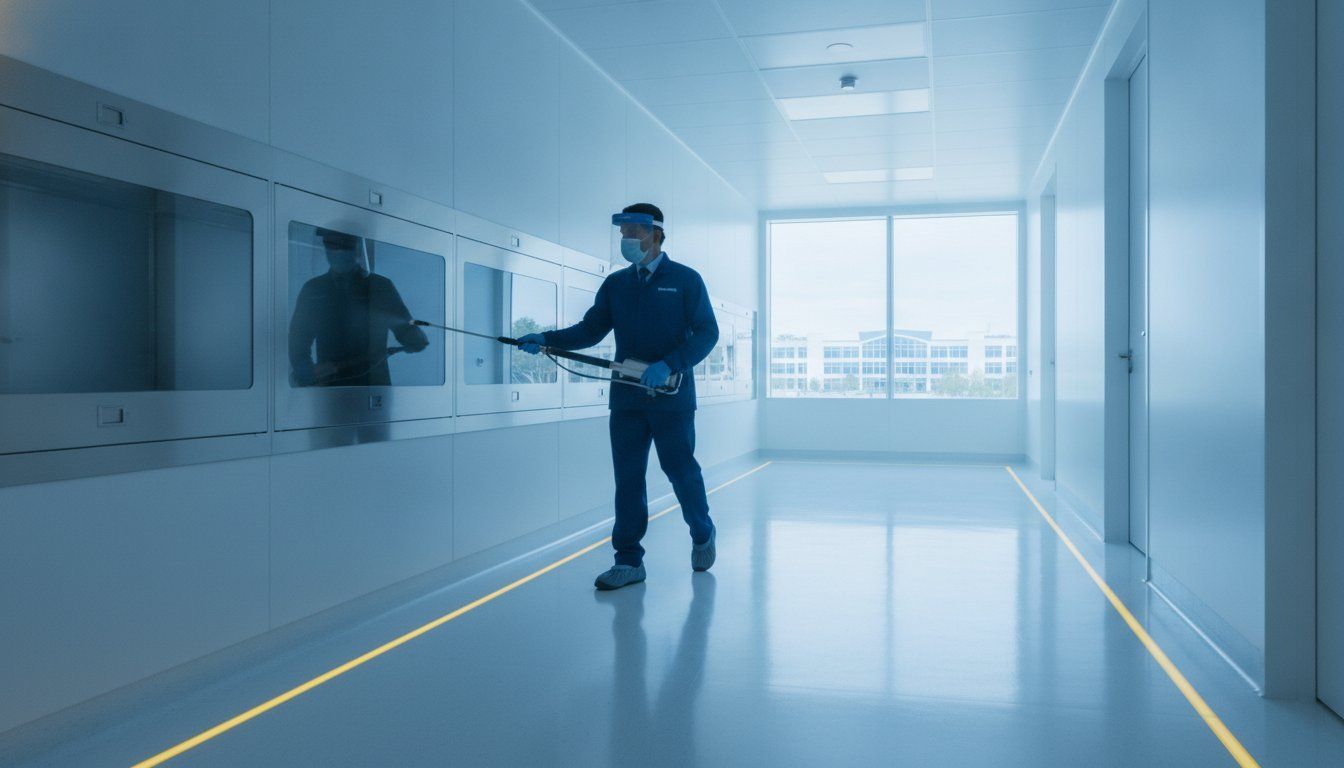
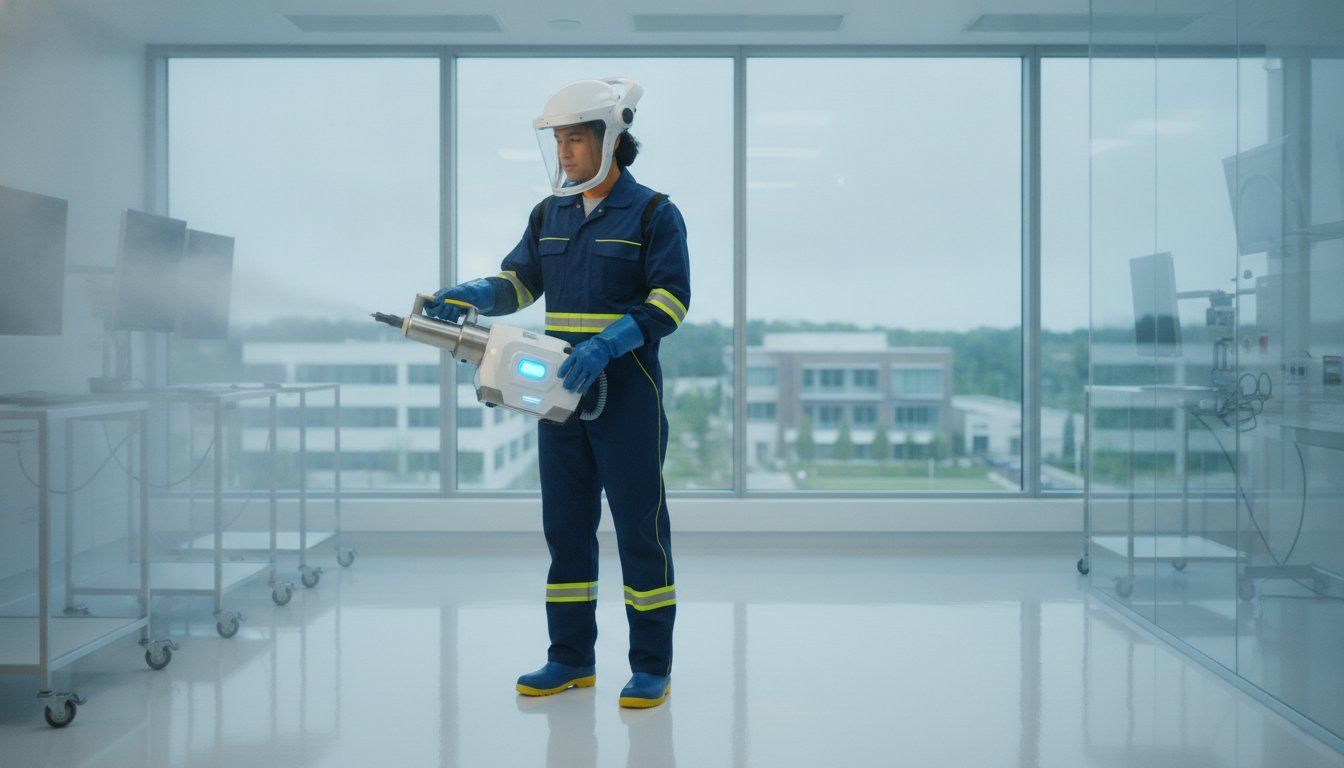
Hydrogen peroxide-based disinfectants are the preferred choice for sustainable infection control. They offer high-kill rates for common healthcare pathogens but break down into water and oxygen, leaving no toxic residue behind. Efficacy is maintained through strict adherence to 'dwell time', which is the specific duration a surface must remain wet with the disinfectant to neutralize target microorganisms. This process ensures a sterile environment without the corrosive effects of traditional bleach.
Sustainable Floor Care in High-Traffic Clinics
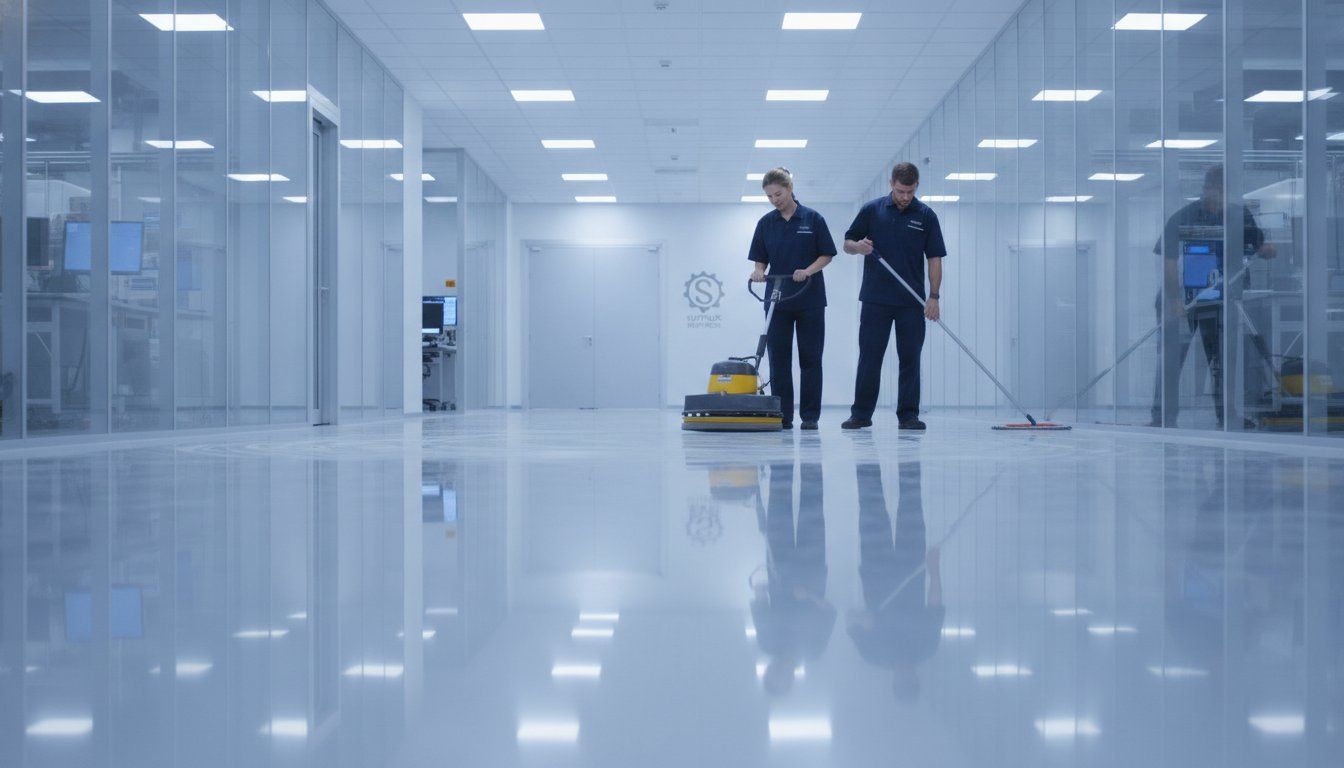
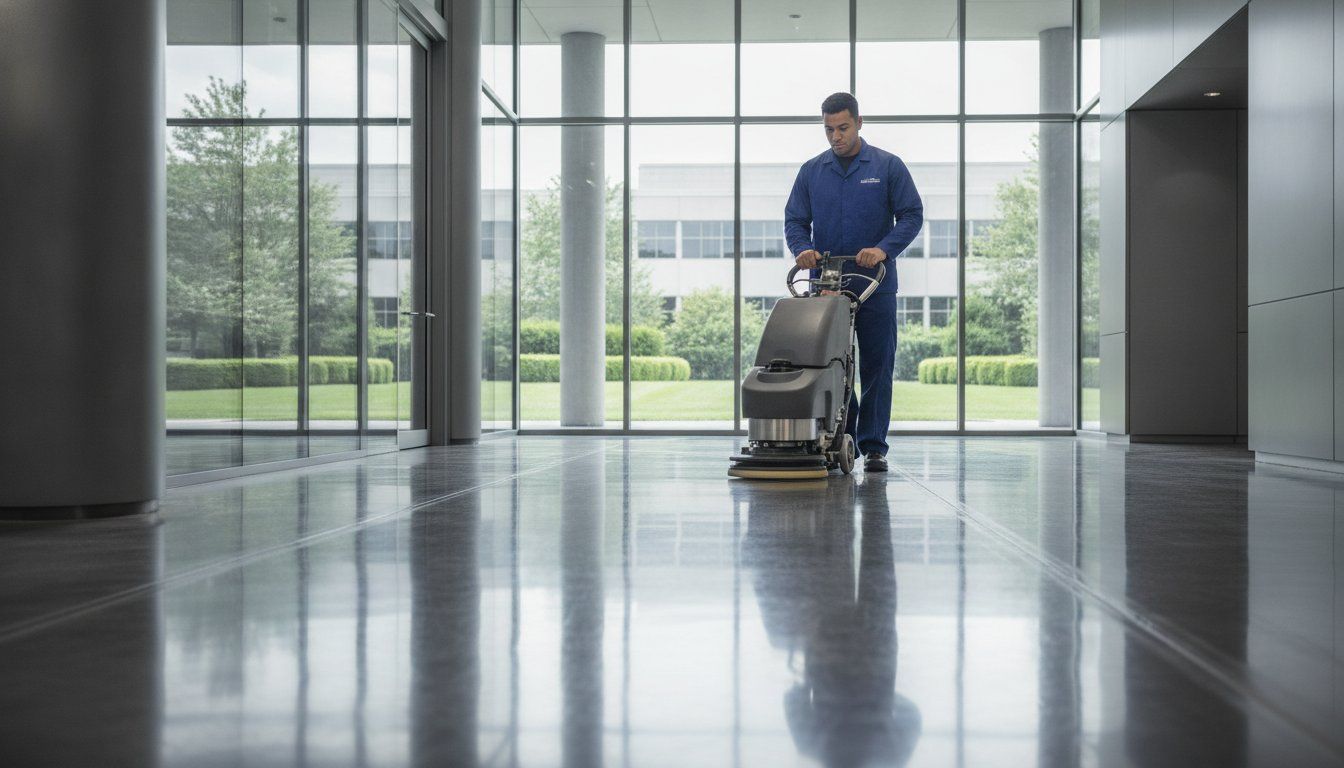
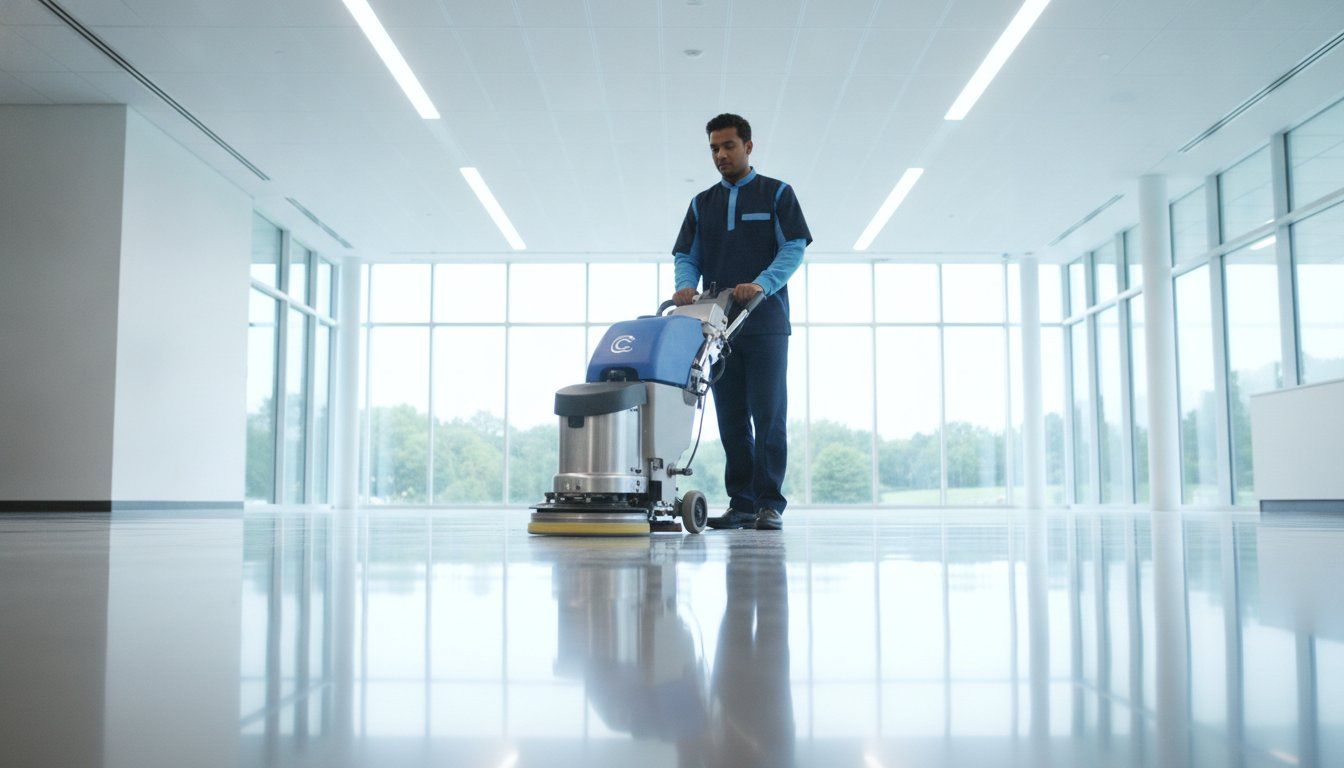
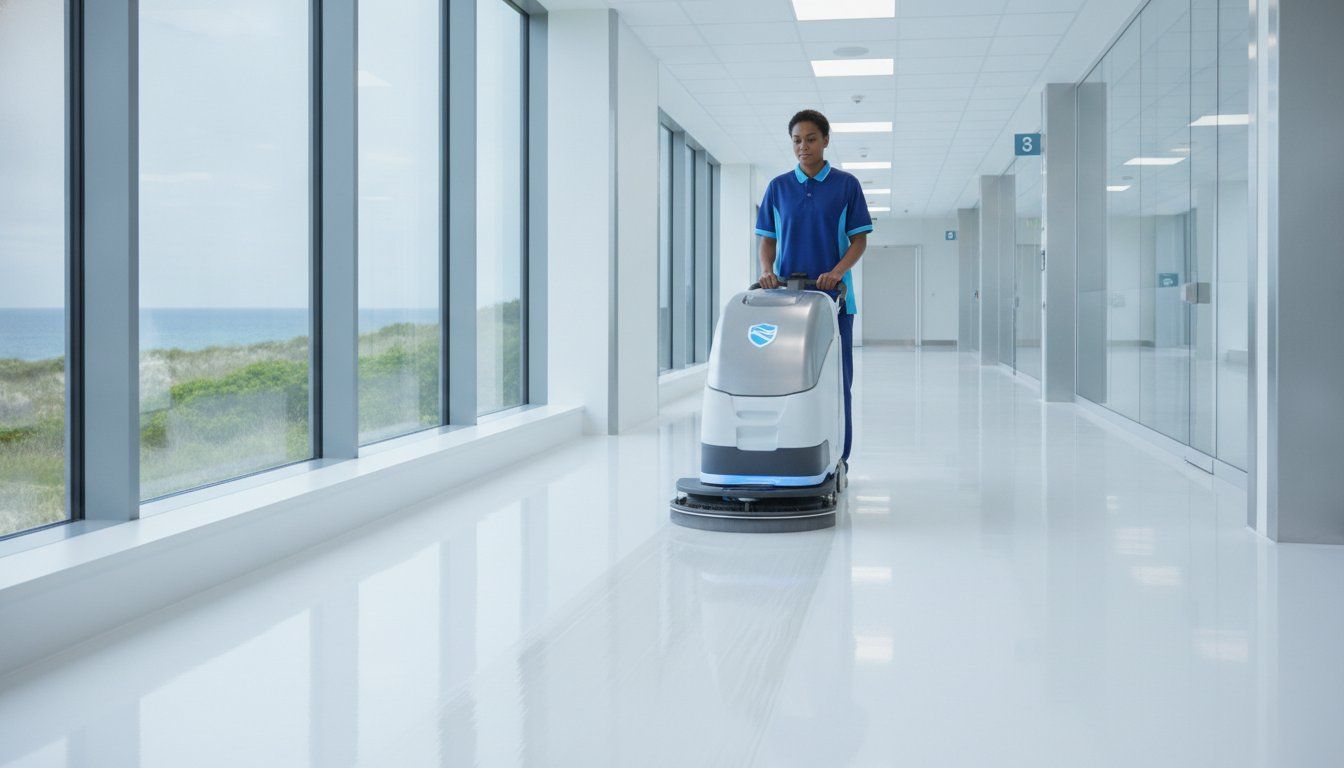
Floor maintenance in high-traffic clinics requires durable yet compliant solutions. Zinc-free floor finishes are now the standard for medical offices in Nassau County to prevent heavy metal runoff while maintaining surface integrity and slip resistance. High-speed burnishing is a mechanical method to maintain shine while reducing chemical re-application. This approach prioritizes long-term floor stability and reduces the frequency of intensive stripping and waxing cycles.
Implementing an Industrial-Strength Green Program in Your Facility
Reliability in a medical setting is built on experience and local insight. Since 1984, Commercial Cleaning Services Advance Industrial Maintenance has supported the specific operational requirements of Nassau and Suffolk healthcare providers. Our 40 years of local experience ensures a deep understanding of Long Island's commercial infrastructure, from aging clinical wings to modern outpatient centers. This isn't a generic service model; it's a technical partnership designed for precision. Implementing green cleaning for medical facilities Long Island administrators can rely on requires more than just product swaps. It demands a customized cleaning schedule that balances high-traffic medical needs with sustainable resource management.
From Bohemia to Melville: Comprehensive Local Coverage
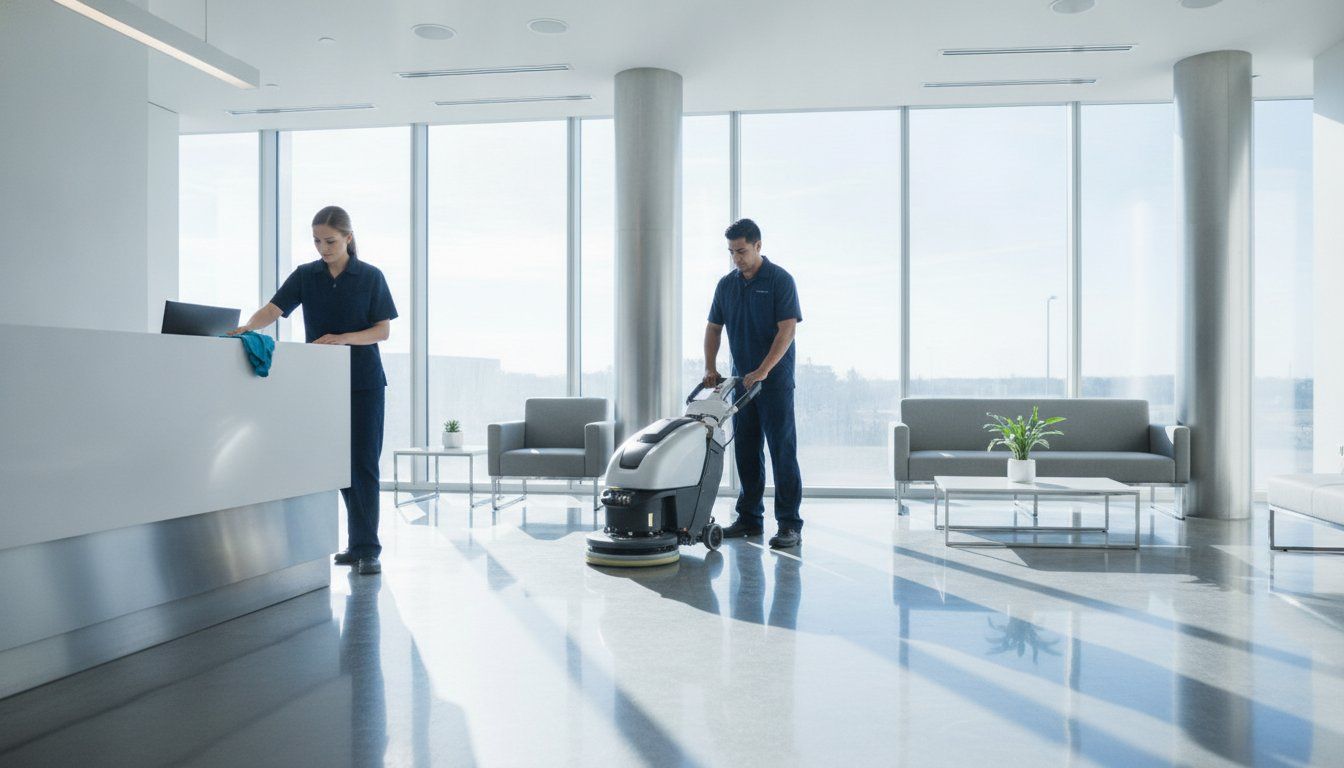
Based in Bohemia, our reach extends across the island to support diverse facility types. We provide a full spectrum of services, including daily medical office janitorial tasks and specialized floor stripping and waxing. Maintaining these high standards requires continuous education. We recommend staying updated on industry standards through technical resources to ensure your facility remains at the forefront of healthcare sanitation. This proactive approach minimizes operational friction and ensures consistent results.
The ROI of Professional Sustainability
Securing Operational Stability Through Sustainable Sanitation
Transitioning to a high-performance maintenance model ensures your facility meets the dual requirements of clinical sterilization and regional environmental compliance. By integrating certified chemistry with mechanical filtration, you protect both patient health and Long Island’s critical groundwater resources. This technical approach moves beyond surface-level aesthetics to establish a comprehensive framework for operational success. Implementing green cleaning for medical facilities Long Island administrators trust reduces chemical exposure while maintaining the rigorous hygiene standards required for ongoing regulatory compliance.
Operational consistency in high-stakes healthcare environments requires a partner with deep local roots and technical proficiency. Commercial Cleaning Services Advance Industrial Maintenance provides over 40 years of industrial maintenance experience across Nassau and Suffolk Counties. Based in Bohemia, NY, our team utilizes specialized healthcare sanitation and floor care protocols designed to support the unique infrastructure of our region. We operate as a seasoned extension of your team to ensure your facility remains sterile, stable, and efficient. Request a Professional Medical Facility Assessment from Commercial Cleaning Services Advance Industrial Maintenance to refine your sanitation strategy. We look forward to supporting your facility's long-term success.
Frequently Asked Questions
Are eco-friendly cleaning products effective enough for surgical or high-risk medical environments?
Will switching to a green cleaning protocol increase my monthly medical facility maintenance budget?
What specific certifications should I look for when hiring a green cleaning company on Long Island?
Procurement professionals should prioritize partners who utilize products with Green Seal or EPA Safer Choice certifications. These labels verify that the cleaning chemistry meets strict environmental and performance standards. It's also critical to verify that the partner has experience with healthcare-specific protocols, such as OSHA bloodborne pathogen compliance. A local provider with industrial experience in Nassau and Suffolk Counties ensures that the team understands regional environmental mandates like the sole-source aquifer protections.
How does green cleaning improve the patient experience in Nassau and Suffolk County clinics?
Green cleaning significantly improves the patient experience by enhancing indoor air quality and eliminating the pungent odors associated with traditional bleach or ammonia. This reduction in volatile organic compounds (VOCs) creates a safer environment for patients with respiratory conditions or chemical sensitivities. In clinics across Nassau and Suffolk Counties, a fragrance-free environment suggests a higher standard of care. It provides a neutral, sterile atmosphere that supports patient comfort and recovery while demonstrating a commitment to local environmental health.