How Often Should an Office Be Deep Cleaned? A Strategic Maintenance Guide
Illness-related productivity loss costs U.S. employers an estimated $530 billion annually, a figure that accounts for both absenteeism and the reduced efficiency of employees working while unwell. This significant financial impact often forces facility managers to ask a critical question: how often should an office be deep cleaned to maintain operational stability? You likely recognize the constant pressure to maintain rigorous health standards and prevent the degradation of high-value assets like carpets and flooring without overspending on unnecessary services. It's a complex balance between ensuring a safe workspace and managing budget precision.
This guide establishes a professional maintenance schedule based on facility type and traffic patterns. We will provide a clear, actionable framework for deep cleaning that ensures your workspace meets high-standard hygiene requirements while extending the lifespan of your physical assets. You'll gain a technical understanding of why professional-grade maintenance is a stabilizing force for your business operations and how to implement these services with the precision your facility demands.
Key Takeaways
- Distinguish between daily janitorial maintenance and restorative deep cleaning protocols to preserve high-value facility assets.
- Identify how often should an office be deep cleaned by evaluating foot traffic, facility type, and specific health compliance requirements.
- Implement a six-month deep cleaning benchmark for standard corporate environments to ensure consistent workspace standards.
- Align project-based services with operational schedules to minimize downtime while maintaining long-term infrastructure stability.
Table of Contents
Deep Cleaning vs. Regular Janitorial Services: Understanding the Technical Difference
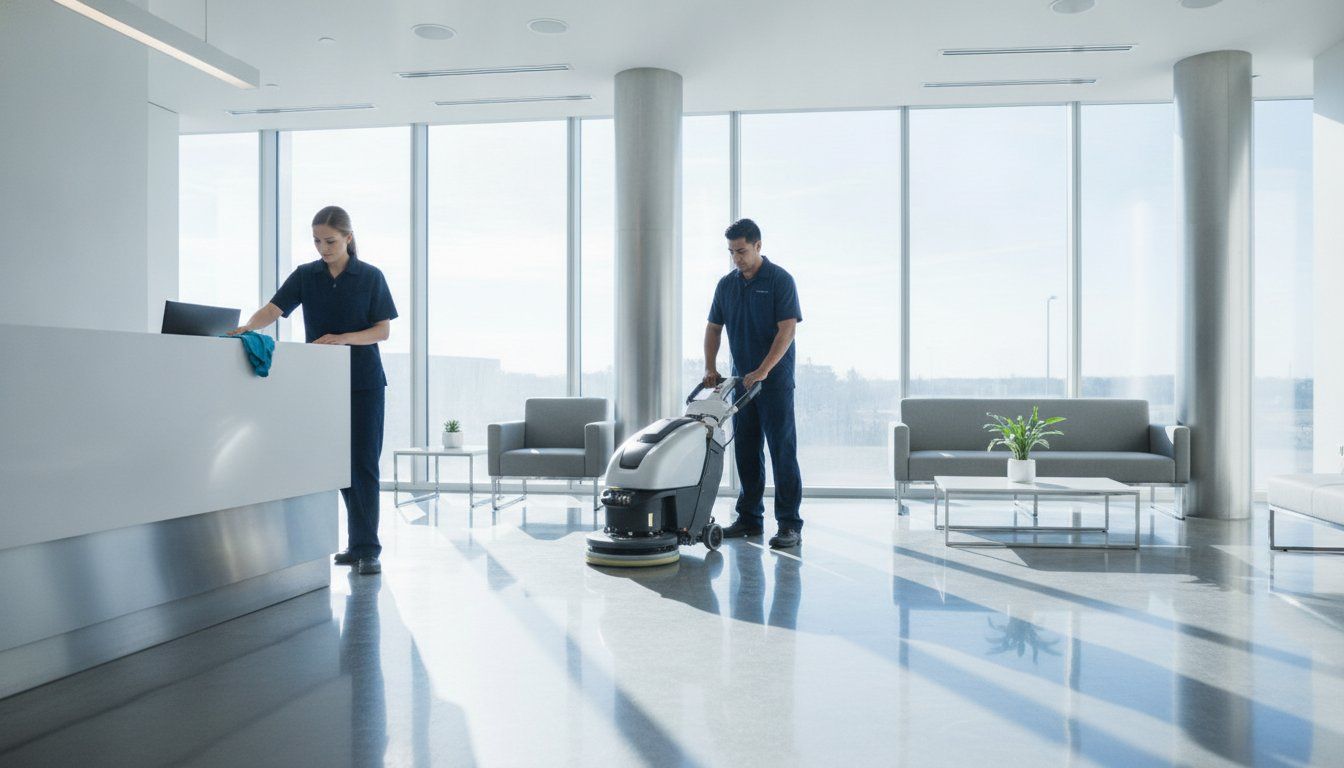
Procurement professionals and facility managers often conflate daily maintenance with strategic restoration. Standard janitorial services manage high-visibility areas through daily trash removal, surface wiping, and basic vacuuming. While these tasks are essential for maintaining a baseline of order, they don't address the underlying bio-load that accumulates in high-traffic commercial environments. Understanding the distinction is the first step in deciding how often should an office be deep cleaned to maintain operational stability.
Professional deep cleaning is a technical intervention that utilizes industrial-grade HEPA vacuums and specialized disinfectants to penetrate sub-surface grime. The scope of commercial cleaning at this level extends far beyond the reach of a standard mop. It involves a rigorous approach to eliminating allergens and pathogens that embed themselves in porous surfaces and mechanical systems over time. This process is designed for facility preservation, ensuring that your workspace remains a high-standard environment for both staff and visitors.
The Anatomy of a Professional Deep Clean
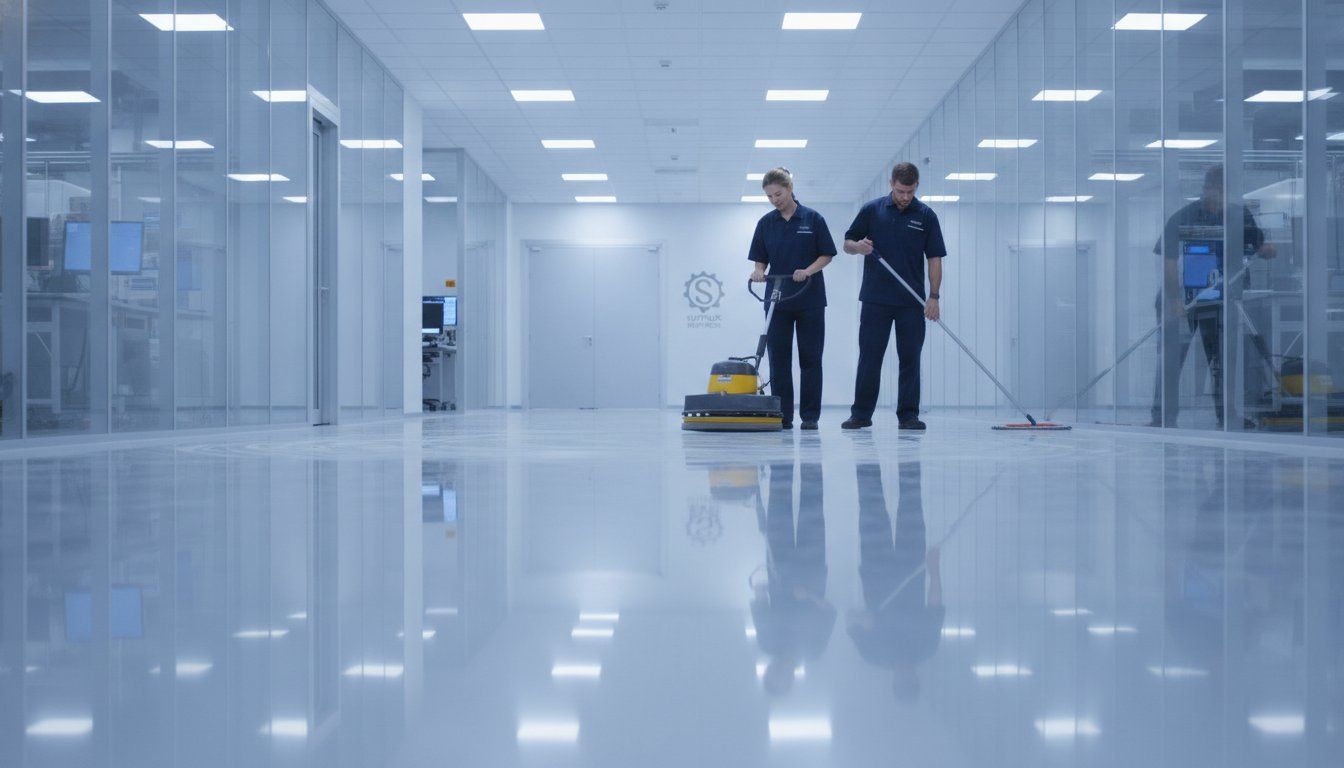
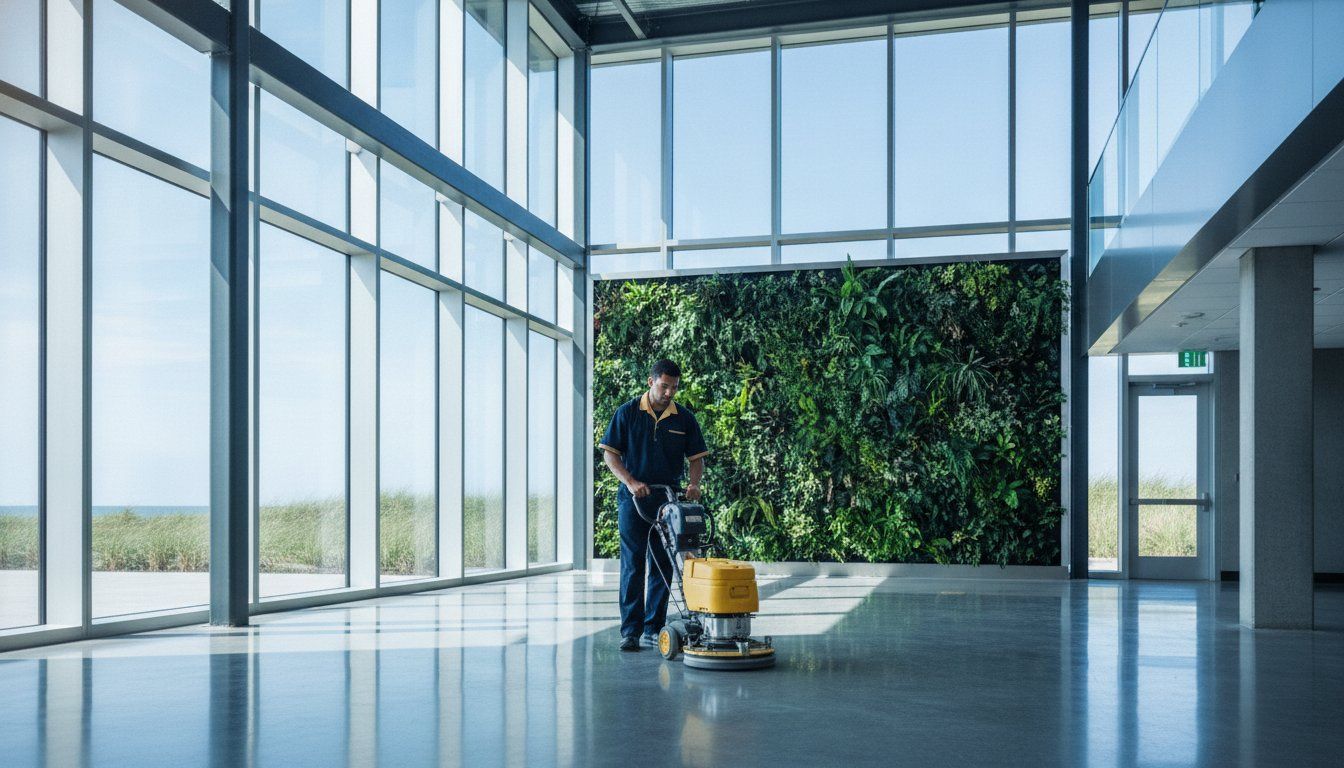
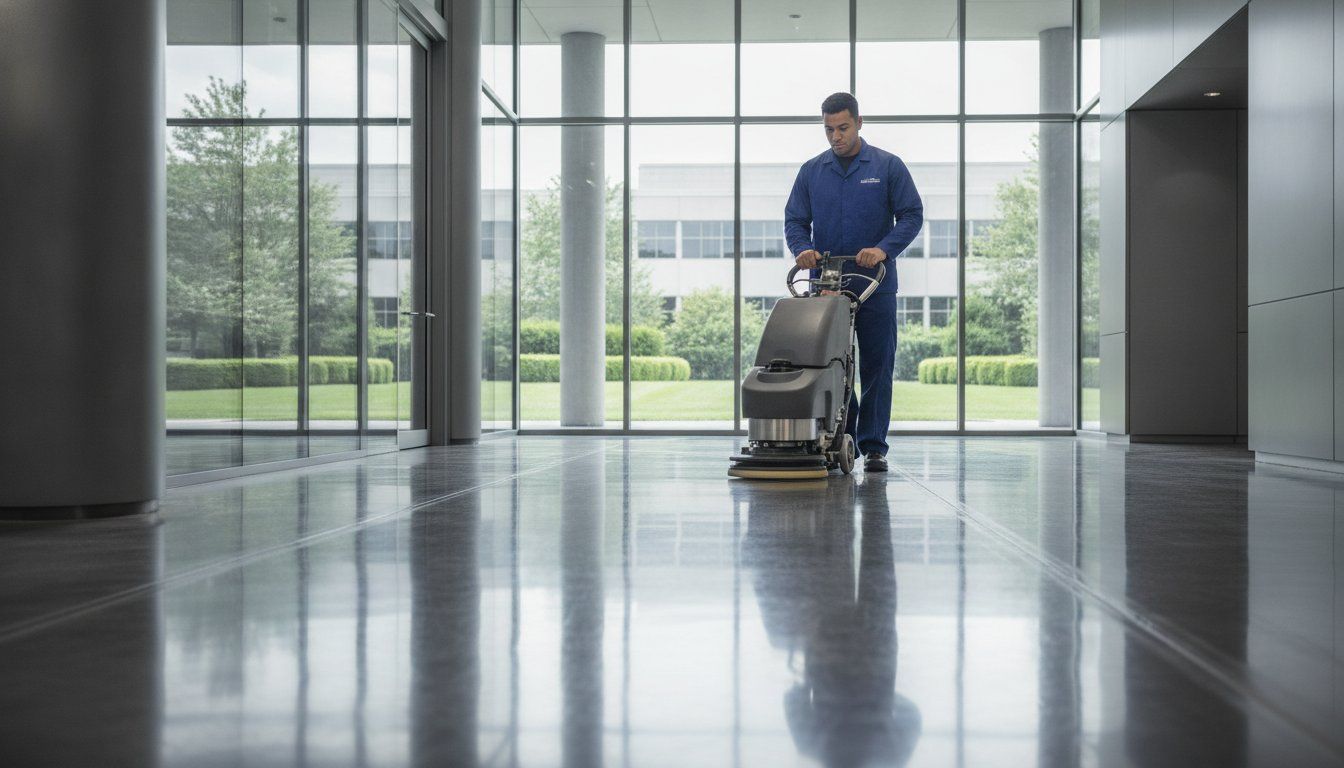
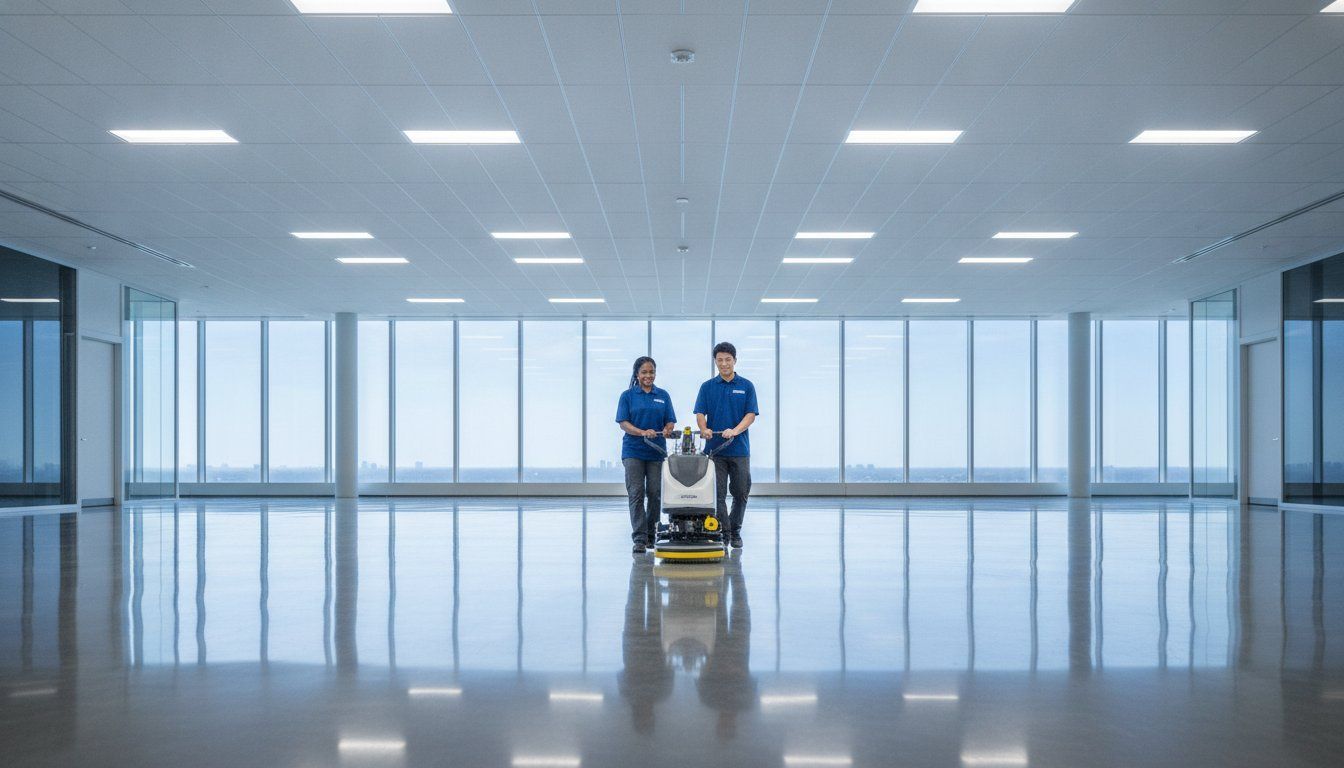
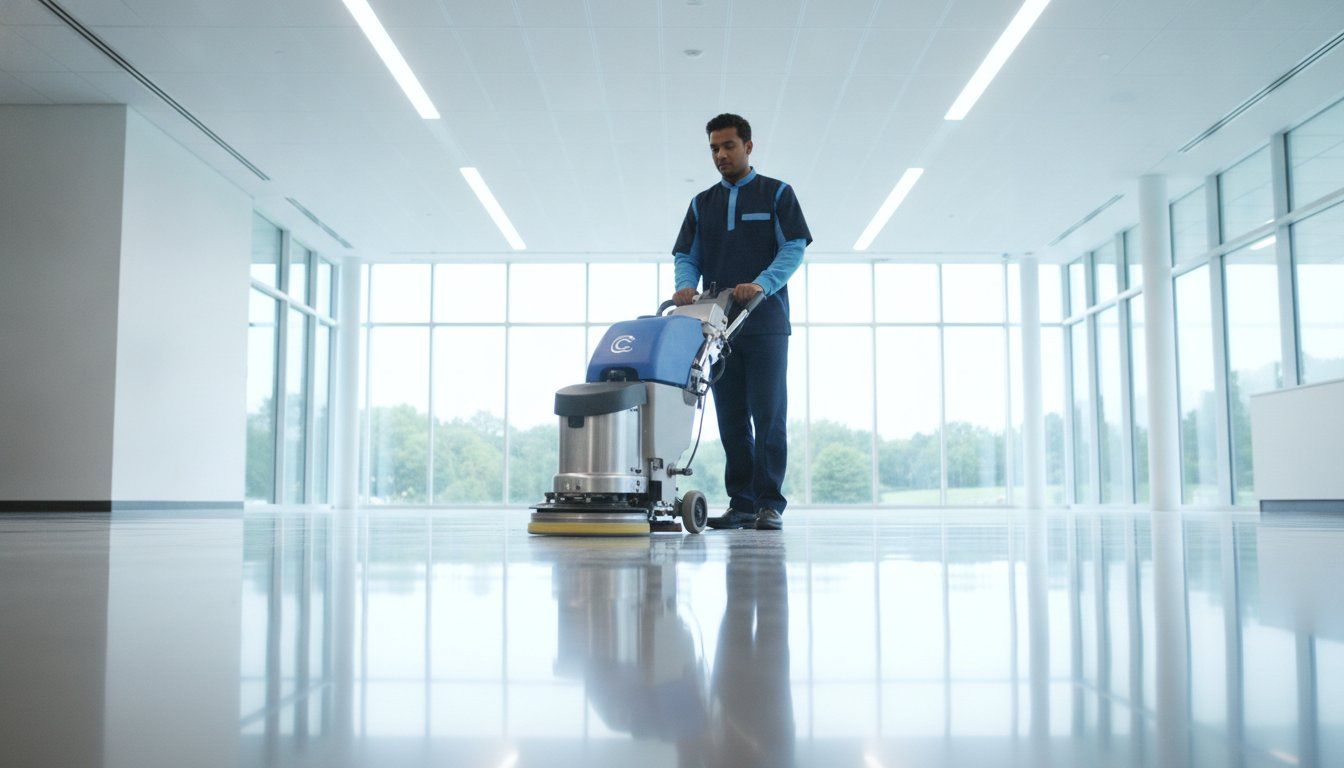
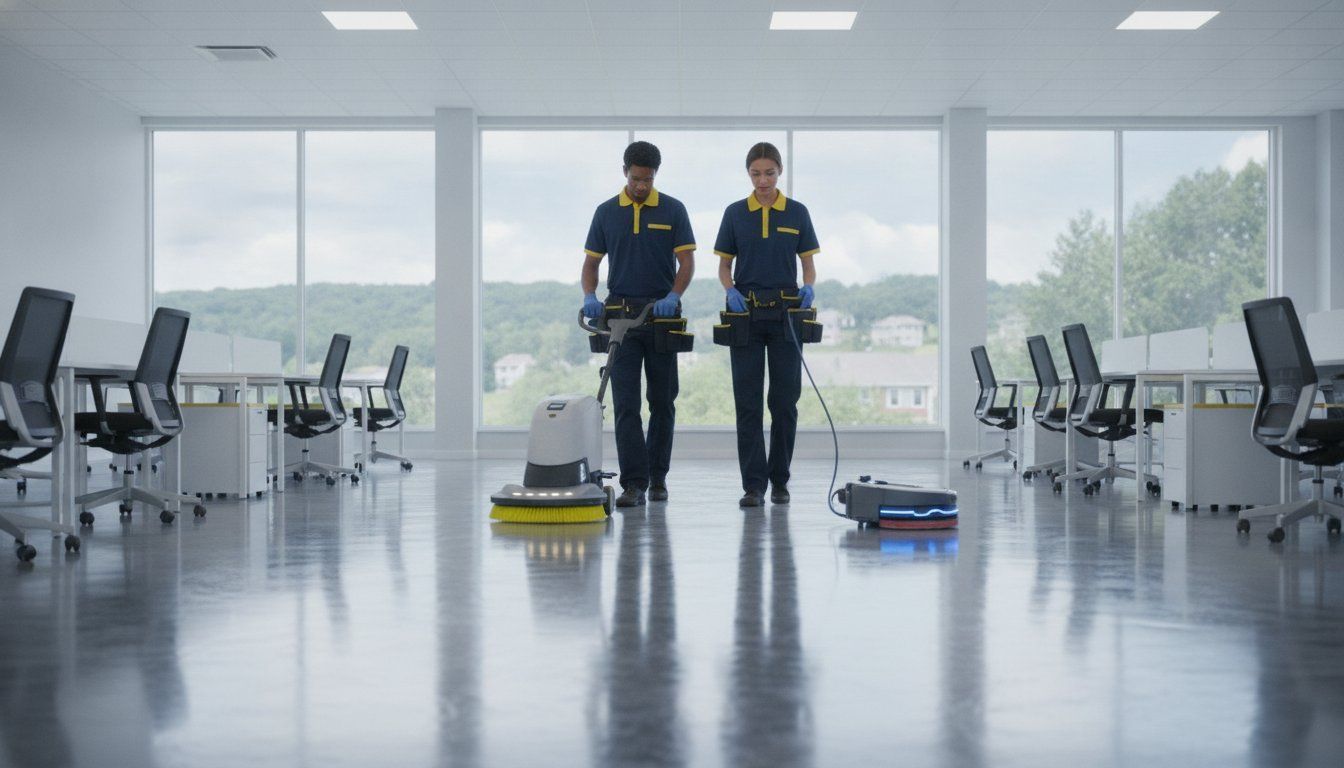
A comprehensive deep clean targets overlooked zones such as air vents, light fixtures, and the recessed areas behind heavy equipment. A critical component of this process is restorative floor care. Unlike daily mopping, this includes specialized tile and grout scrubbing or professional floor stripping and waxing. These procedures remove the layers of embedded soil and degraded finish that standard cleaning cannot touch. Sanitizing high-touch points in shared spaces further ensures that long-term pathogens are neutralized before they impact employee health.
Why Surface Cleaning Isn’t Enough for Facility Longevity
Surface-level cleaning fails to address the abrasive nature of microscopic grit. When dirt isn't removed through periodic deep extraction, it acts as an abrasive on commercial flooring, leading to premature degradation and the need for costly replacements. Additionally, deep cleaning air vents reduces mechanical strain on HVAC systems. By removing accumulated dust at the source, you improve indoor air quality and protect the long-term efficiency of your building’s mechanical infrastructure. It's a pragmatic investment in the stability of your physical assets.
Determining the Frequency: How Often Should Your Facility Be Deep Cleaned?
Determining the frequency of professional maintenance requires a technical assessment of your facility's operational load. Managers must evaluate foot traffic, facility type, and health compliance requirements to protect their infrastructure. When deciding how often should an office be deep cleaned, the industry benchmark for standard corporate environments is every six months. This semi-annual schedule prevents the accumulation of deep-seated particulates that daily janitorial tasks cannot address. Establishing a data-driven answer to how often should an office be deep cleaned ensures budget precision and facility longevity.
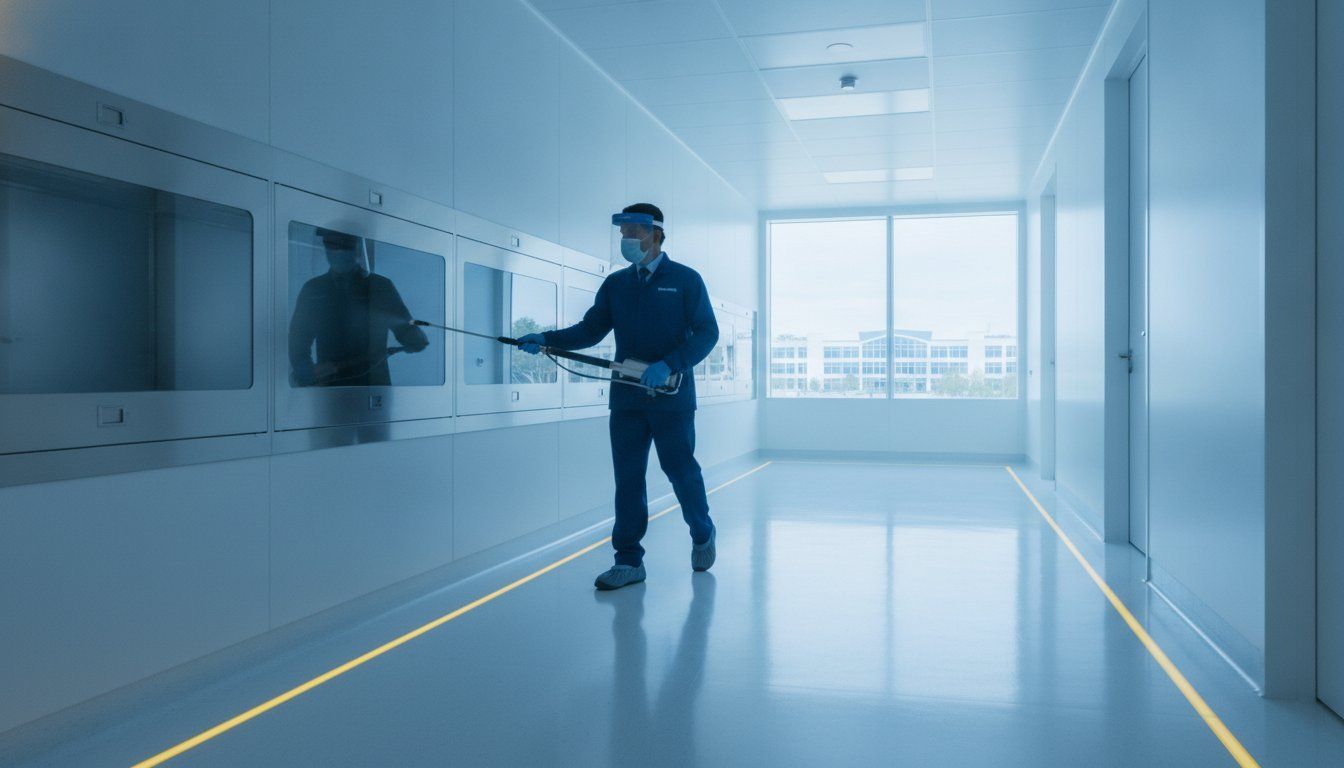
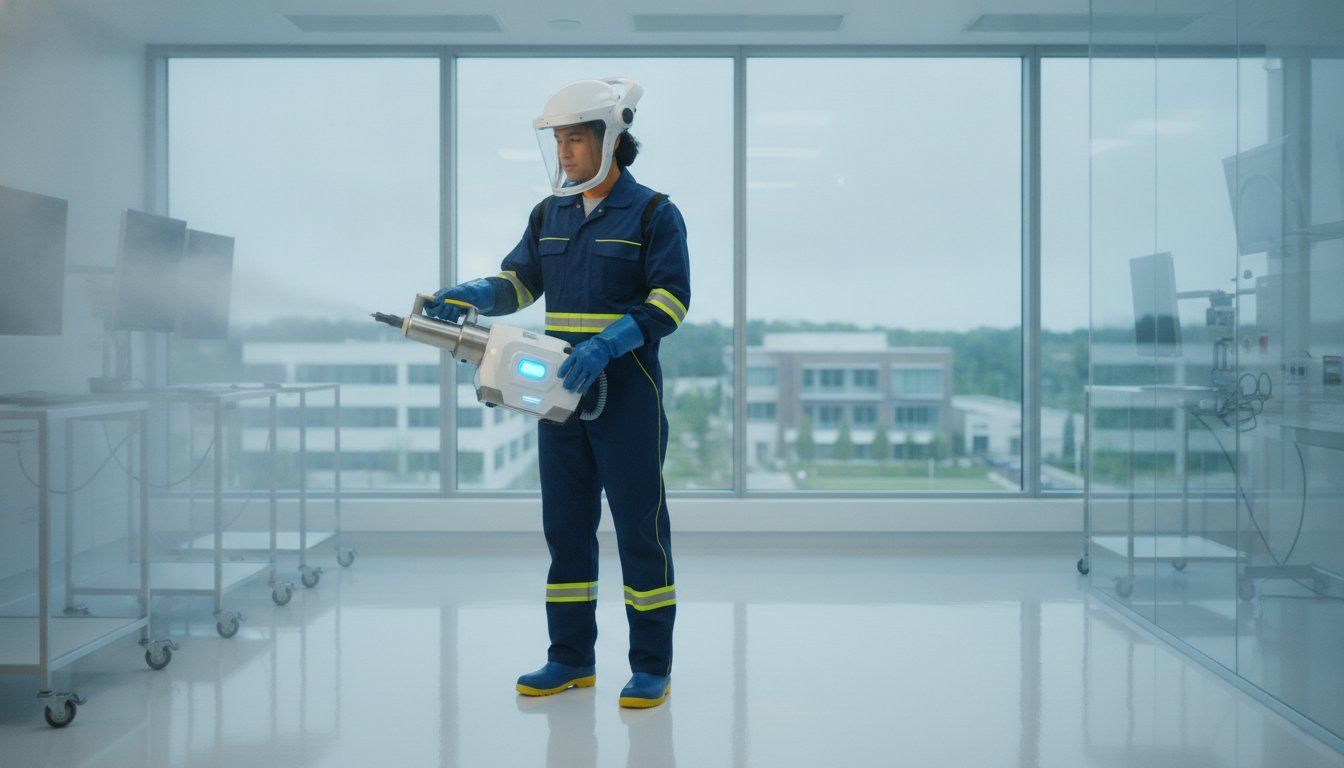
High-traffic environments, such as retail centers or educational facilities, require more aggressive intervention. These spaces often necessitate quarterly deep cleaning to manage rapid dirt accumulation and maintain a professional appearance. For medical and healthcare facilities, the stakes are higher. Specialized CDC cleaning and disinfecting guidelines inform the need for monthly or bi-monthly deep cleaning to ensure sanitary compliance and patient safety.
Deep Cleaning Frequency by Industry Type
- Corporate and Professional Services: Semi-annual (2x per year) cycles focusing on carpet extraction and common area sanitation.
- Medical and Healthcare: Monthly or quarterly specialized disinfection to maintain sterile environments.
- Industrial and Post-Construction: Project-based or quarterly schedules to manage heavy industrial dust and debris.
Seasonal Factors for Long Island Businesses
Regional environmental factors in Suffolk and Nassau County dictate specific maintenance timing. During the winter and spring, offices face an influx of salt, slush, and sand tracked into the building. This requires immediate deep cleaning to prevent permanent damage to floor finishes. In the summer, the focus shifts to humidity management. High moisture levels require frequent HVAC vent cleaning and carpet moisture control to prevent microbial growth. Establishing a dependable janitorial services schedule ensures these seasonal challenges don't compromise your facility's standards.

The Advance Industrial Maintenance Approach: Strategic Facility Preservation
Commercial Cleaning Services Advance Industrial Maintenance leverages 40 years of technical experience in Bohemia and throughout Long Island to deliver precise facility solutions. We operate as a dependable partner rather than a mere vendor, functioning as an extension of your internal team. Our primary objective is to monitor facility conditions and provide data-driven recommendations on how often should an office be deep cleaned to prevent asset degradation. This collaborative relationship ensures your infrastructure remains stable and professional without unnecessary operational friction.
Minimizing downtime is a core priority for our project management team. We schedule intensive restorative tasks, such as floor stripping and waxing or deep carpet cleaning, during after-hours or weekend windows. This pragmatic approach ensures that your facility’s high standards are maintained without interrupting essential business workflows. By integrating specialized floor care into a broader strategy, we effectively extend the service life of your commercial flooring and reduce long-term capital expenditure.
Customized Deep Cleaning Plans for Suffolk and Nassau Counties
Our process begins with site-specific assessments to identify high-wear zones that require more frequent intervention. We coordinate recurring janitorial services with targeted specialty projects to create a seamless maintenance cycle that preserves your facility’s integrity. Determining how often should an office be deep cleaned is a collaborative process between our technical staff and your operations team. Commercial Cleaning Services Advance Industrial Maintenance maintains a steadfast commitment to reliability through the deployment of professional staff and the application of advanced industrial equipment.
The Value of Technical Authority in Commercial Cleaning
We utilize industry-leading equipment to ensure the deep extraction of contaminants from carpets and tile grout. This technical authority allows us to deliver consistent, high-standard results across diverse environments, including medical offices, corporate headquarters, and industrial hubs. Whether managing post-construction cleanup or routine healthcare disinfection, our focus remains on operational continuity and the long-term success of your facility.
Optimizing Your Facility Maintenance Lifecycle
A strategic maintenance lifecycle ensures your facility remains a high-standard environment while protecting your capital investments. By implementing the industry benchmarks discussed, you transition from a reactive cleaning posture to a structured preservation model. Professional intervention resolves the accumulation of sub-surface contaminants that standard janitorial tasks miss. Ultimately, determining how often should an office be deep cleaned is a technical decision that balances operational load with the need for long-term infrastructure stability.
Commercial Cleaning Services Advance Industrial Maintenance provides the technical authority required to execute these complex maintenance cycles. With over 40 years of commercial cleaning experience on Long Island, our team possesses specialized expertise in healthcare facility sanitation and advanced floor maintenance. We serve the professional communities of Suffolk and Nassau Counties with a focus on precision and reliability. We don't just act as a vendor; we function as a dedicated extension of your facility management team.
Request a Professional Facility Assessment from Commercial Cleaning Services Advance Industrial Maintenance to establish a schedule that aligns with your specific operational requirements. We're committed to the long-term success and stability of your workspace.
Frequently Asked Questions
Is deep cleaning different from professional disinfection services?
Yes, deep cleaning and professional disinfection services are distinct but complementary technical processes. Deep cleaning involves the physical removal of soil and bio-load from surfaces, which is a necessary prerequisite for chemical treatments to be effective. Disinfection services focus specifically on neutralizing pathogens. Performing a deep clean first ensures that disinfectants can directly contact the surface without being obstructed by accumulated grime or organic matter.
How long does a professional office deep clean usually take?
The duration of a professional deep clean depends on the square footage and the specific technical services requested. A standard 5,000 square foot facility typically requires between 8 and 12 hours for a comprehensive restorative session. Specialized tasks such as floor stripping and waxing or deep carpet extraction will extend this timeline. We provide precise time estimates during the initial assessment to help you plan how often should an office be deep cleaned without impacting your operational efficiency.
Can deep cleaning be done during normal business hours?
While possible, we recommend scheduling deep cleaning after hours or during weekends to ensure maximum safety and efficiency. Processes like tile and grout cleaning or floor stripping and waxing require significant drying times and involve heavy equipment that can create logistical bottlenecks. Scheduling these projects when the office is vacant prevents downtime and allows our technicians to maintain a high-standard workspace without interrupting your staff's professional focus.
Will deep cleaning my office carpets improve indoor air quality?
Professional carpet cleaning significantly improves indoor air quality by removing embedded particulates that standard vacuuming cannot reach. High-temperature extraction pulls allergens and fine grit from deep within the carpet fibers, preventing them from becoming airborne. When determining how often should an office be deep cleaned, consider that this restorative process also reduces mechanical strain on your HVAC systems by lowering the overall dust load within the facility.