Justifying the Cost of Professional Cleaning to Management

What if the strongest case for a cleaning budget is not a broad promise of a better-looking workplace, but a clear comparison of costs and operational needs? If you’re justifying the cost of professional cleaning to management, start by documenting the work your facility requires and the resources your current approach uses.
It’s reasonable for decision-makers to question a service that can appear discretionary. Internal labor, supplies, equipment, and employee time spent on cleaning can be difficult to track in one place. Without that comparison, budget discussions may rely on assumptions rather than the facility’s actual priorities.
Build a transparent business case by comparing total costs, connecting the cleaning scope and frequency to operational needs, and accounting for staff time. Document current requirements and expenses so management can evaluate a defined plan against the status quo.
Key Takeaways
- Build a complete baseline by recording internal labor, supplies, equipment, administration, and interruptions alongside direct cleaning expenses.
- For justifying the cost of professional cleaning to management, compare clearly defined service scopes using facility records and stated assumptions.
- Assess each option against the facility’s priorities without promising unverified gains in productivity, health, or savings.
- Make a concise recommendation that fits the budget cycle. Advance Industrial Maintenance can tailor office cleaning scope and frequency for Long Island facilities.
Table of Contents
Why Justifying the Cost of Professional Cleaning Starts With Total Cost
A cleaning line item shows only part of the facility’s upkeep burden. For justifying the cost of professional cleaning to management , compare the full resources required to maintain the building, whether work is handled internally, externally, or through a combination of both. As a general overview, cleaning involves different tasks and methods, so a useful budget comparison must define exactly what work is included.
Total cleaning cost is the combined internal and external resources used to maintain a facility, including labor, supervision, supplies, equipment, administration, and recurring maintenance. This gives managers a consistent basis for reviewing expenses without assuming that one approach will automatically produce savings.
Which cleaning costs belong in the comparison?
Start with verifiable records, and separate estimates from documented expenses. Include staff hours assigned to cleaning, supervisory time, supply purchasing and storage, equipment use, training, and recurring tasks such as floor or carpet maintenance. For periodic building upkeep, decision-makers can explore Project-based exterior cleaning fees to benchmark commercial rates accurately. Record administrative time spent scheduling work, tracking completion, or addressing missed tasks. Check that each cost belongs to the period and building areas being compared.
- Documented expenses: payroll allocation, supply purchases, equipment costs, and scheduled maintenance records.
- Estimated opportunity costs: employee time redirected from primary duties or interruptions associated with cleaning. State the method and assumptions used to estimate these items.
For facilities in Nassau and Suffolk Counties, compare equivalent scopes, schedules, and building requirements. A plan covering routine office cleaning is not directly comparable with one that also includes periodic floor stripping and waxing, or with an internal approach covering fewer tasks. Record the areas served, traffic patterns, task frequency, and specialty requirements—for instance, if property upgrades generate renovation debris requiring dedicated bin hire and collection, visit Greenline Environmental to explore how specialized site clearance is structured. This lets management assess comparable operating plans rather than unlike line items.
How to Build a Management-Ready Case for Professional Cleaning
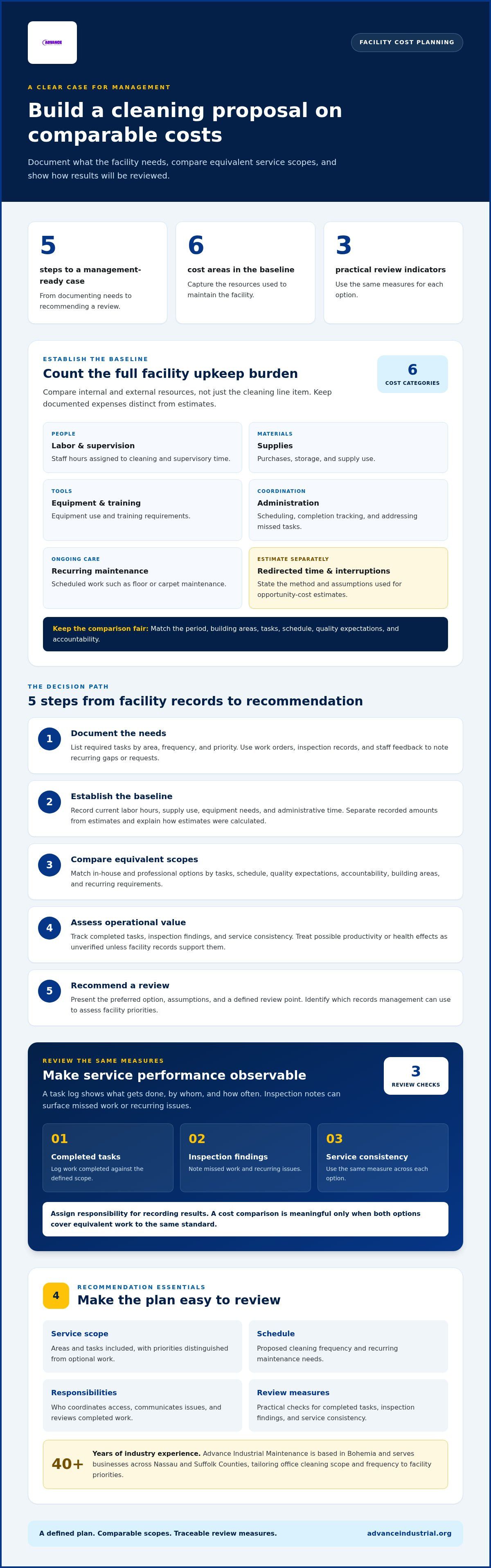
A credible proposal gives management a clear decision to make, not a general claim that professional service is better. For justifying the cost of professional cleaning to management , build the case from facility records, comparable scopes, and measures decision-makers can review.
- Document needs. List required tasks by area, frequency, and priority. Use work orders, inspection records, and staff feedback to note recurring service gaps or requests.
- Establish the baseline. Record current labor hours, supply use, equipment needs, and administrative time. Separate recorded amounts from estimates, and explain how each estimate was calculated.
- Compare equivalent scopes. Match the in-house and professional options by tasks, schedule, quality expectations, and accountability. Include the same building areas and recurring requirements in each comparison.
- Assess operational value. Track practical indicators such as completed tasks, inspection findings, and service consistency. Treat possible productivity or health effects as unverified unless your own records support them.
- Recommend a review. Present the preferred option, assumptions, and a defined review point. Explain which records management can use to assess whether the plan is meeting facility priorities.
How can you make the comparison credible?
Keep the evidence concise and traceable. A task log should show what gets done, by whom, and how often. Inspection notes can identify missed work or recurring issues. Assign responsibility for recording results, and use the same measures for each option. Equivalent scope matters because a cost comparison is meaningful only when both options cover the same work to the same standard.
For Long Island offices, a defined scope and frequency connect the proposal to the building’s actual needs. Advance Industrial Maintenance tailors office cleaning plans to facility priorities, giving management a focused proposal rather than a one-size-fits-all request.
Present a Practical Long Island Cleaning Plan and Next Steps
Turn the comparison into a concise recommendation that connects facility needs to an operational plan and the budget cycle. For justifying the cost of professional cleaning to management , make the decision easy to review: identify what needs attention, define the proposed service, and explain how its delivery will be assessed. State whether approval is needed in the current cycle or should be included in the next planning round.
What should a cleaning recommendation include?
Make the recommendation specific enough for managers to approve, assign, and review. Summarize the documented need and proposed scope, then outline:
- Service scope: Areas and tasks included, with priorities distinguished from optional work.
- Schedule: Proposed cleaning frequency and any recurring maintenance needs.
- Responsibilities: Who coordinates access, communicates issues, and reviews completed work.
- Review measures: Practical checks such as completed tasks, inspection findings, and consistency of service.
Advance Industrial Maintenance is based in Bohemia and serves businesses across Nassau and Suffolk Counties. The company tailors office cleaning scope and frequency to facility priorities, giving Long Island managers a plan grounded in their building’s requirements. With more than 40 years of industry experience, Advance Industrial Maintenance works with businesses to support a clearly defined cleaning plan.
Once management has reviewed the need, scope, and measures, a focused discussion can clarify the facility’s requirements. Read more about Advance Industrial Maintenance.
Make Your Next Cleaning Budget Decision More Precise
A management discussion can also establish a useful baseline for future planning. Keep the approved scope, review measures, and facility feedback together so the next budget cycle can build on documented experience rather than assumptions. This makes justifying the cost of professional cleaning to management an ongoing operational process, not a one-time request.
From its Bohemia base, Advance Industrial Maintenance brings more than 40 years of commercial maintenance experience to businesses across Nassau and Suffolk Counties. A focused conversation can connect your facility’s priorities with a practical office cleaning plan.
Discuss a professional office cleaning plan for your facility with Advance Industrial Maintenance.
Frequently Asked Questions
How do you justify professional cleaning costs to management?
Build the case from a documented baseline, then compare options that cover equivalent tasks and schedules. Connect the proposed service to operational priorities, such as maintaining customer-facing areas or keeping shared spaces on a defined schedule. When justifying the cost of professional cleaning to management, label estimates clearly and support them with records where possible. This helps decision-makers distinguish verified expenses from assumptions.
What costs should be included when comparing in-house and professional office cleaning?
Include labor and supervision, cleaning supplies, equipment use and maintenance, staff training, and management time spent scheduling or overseeing work. Track how staff hours are divided between cleaning and primary duties, and note who handles supply orders and equipment upkeep. Use internal records where available, and avoid generic price estimates that may not match your facility.
How can a business measure the value of professional cleaning?
Agree on practical measures before service begins, then review them consistently. A facility manager might log whether scheduled tasks were completed, record inspection findings by area, and track recurring service issues or missed work. Compare results over the same review periods. These records show service delivery, but do not attribute changes in attendance, productivity, or health to cleaning without evidence supporting that connection.
Can professional cleaning be tailored to a facility’s budget?
Yes. A practical plan can align cleaning scope and frequency with the facility’s highest priorities and available budget. For an office in Nassau or Suffolk County, that could mean defining which areas need routine attention and which tasks can follow a separate schedule. Advance Industrial Maintenance tailors office cleaning plans to facility requirements, with the scope defined around the building’s needs.