Professional Floor Stripping and Waxing in Long Island: The 2026 Facility Manager’s Guide
According to the National Floor Safety Institute, slips and falls account for over 8 million emergency room visits annually, representing 21.3 percent of all such visits. For Long Island facility managers, these statistics underscore the high stakes of neglected surfaces. When finish layers begin to peel or delaminate, professional floor stripping and waxing becomes a mandatory intervention to restore traction and protect your capital assets. Maintaining these surfaces isn't just about appearance; it's a technical requirement for ensuring your facility meets 2026 safety and performance standards.
You recognize that a degraded floor compromises your operational continuity and projects an unprofessional image to stakeholders. This guide outlines how a structured maintenance program extends the service life of VCT and tile flooring by up to 15 years, significantly reducing your long-term MRO expenditures. We will detail the industrial-grade processes and high-solids finishes required to achieve a scuff-resistant, high-gloss result. You'll gain the technical insight needed to secure a reliable maintenance partnership that prioritizes your facility's uptime and industrial excellence.
Key Takeaways
- Understand how a multi-stage chemical and mechanical restoration process extends the lifecycle of your facility's physical assets and protects your capital investment.
- Learn how professional floor stripping and waxing mitigates liability by improving safety standards and reinforcing client confidence in your facility's operational excellence.
- Discover the technical importance of precision stripping and pH neutralization to ensure long-term finish adhesion and industrial-grade durability.
- Identify strategic maintenance protocols for Long Island facilities to combat the corrosive effects of winter salt and sand in high-frequency traffic zones.
- Implement an engineered approach to floor maintenance that supports uninterrupted productivity and protects your bottom line against premature floor replacement.
The Industrial Case for Professional Floor Stripping and Waxing in Long Island
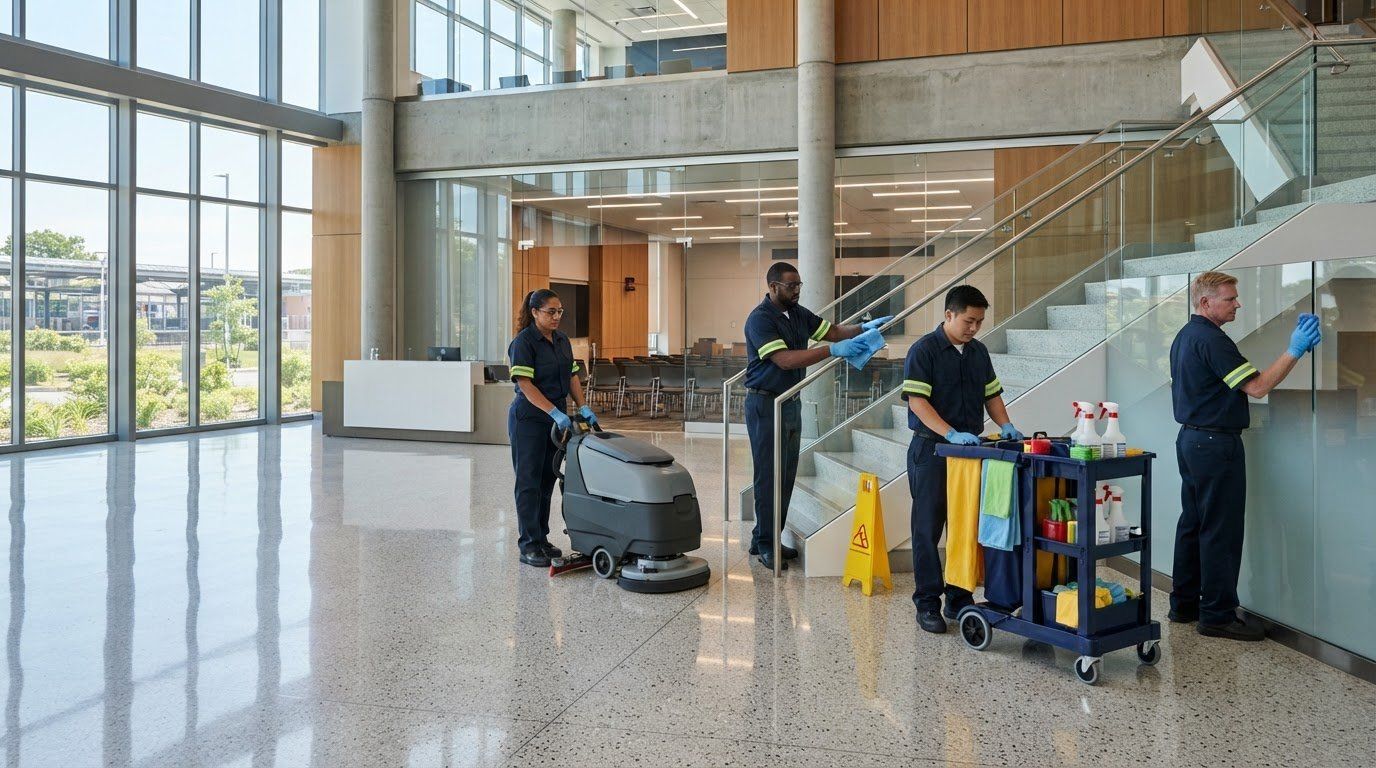
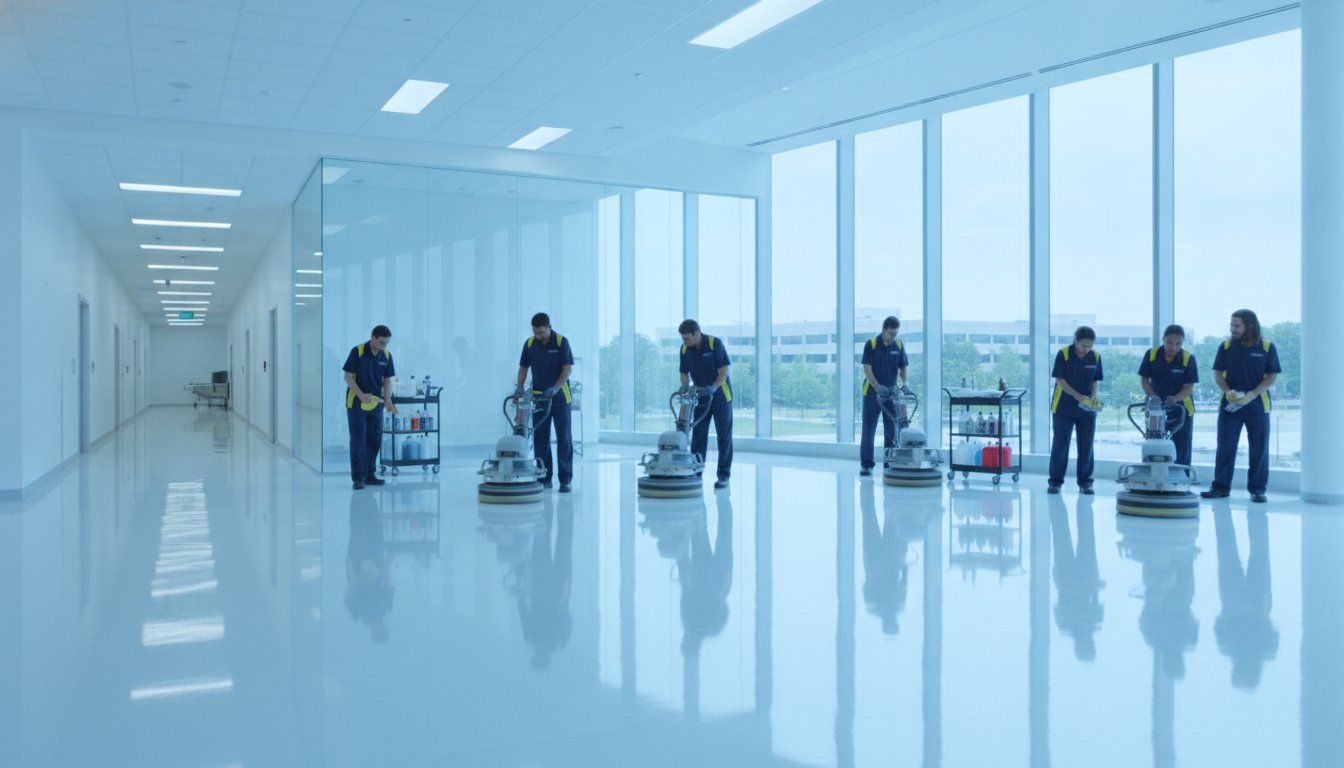
Professional floor stripping and waxing is a multi-stage chemical and mechanical restoration process designed to restore the structural integrity of commercial surfaces. It isn't a simple cleaning task; it involves the precision removal of degraded finishes and the application of high-solids polymer barriers. In the Melville and Hauppauge business corridors, where daily foot traffic often exceeds 2,500 personnel per shift, floors face constant abrasion from grit and heavy equipment. Without a technical maintenance schedule, VCT and stone substrates suffer permanent scarring within 24 months of installation.
The "Perception-Safety Link" plays a critical role in facility management. When a state inspector or a high-value client enters a Suffolk County plant, the floor's condition serves as a proxy for operational discipline. A dull, yellowed floor suggests a lack of attention to detail, while a high-gloss, clear finish builds immediate trust. Industrial-grade equipment, such as automatic floor scrubbers, ensures that the stripping phase removes 100% of old wax and embedded soils, providing a clean slate for new protective layers.
Mitigating Slip-and-Fall Liability in NY Facilities
Professional-grade wax improves the coefficient of friction on commercial surfaces, which is essential for maintaining compliance with OSHA floor safety guidelines. In Suffolk County industrial sites, moisture and dust can create hazardous conditions if the floor isn't properly treated. Floor finish durability acts as the primary defense against substrate damage. By maintaining a consistent, slip-resistant finish, managers reduce the risk of workplace injuries and the associated legal costs that often arise in the New York court system.
Protecting the Bottom Line: Asset Longevity
The cost of annual maintenance is significantly lower than the capital expenditure required for new flooring. Replacing VCT can cost five times more than a scheduled stripping and waxing program. Advance Industrial acts as a strategic partner in facility lifecycle management by extending the life of existing assets. This pragmatic approach prevents the 30% premature floor failure rate commonly seen in neglected industrial environments, ensuring uninterrupted productivity for the long term.
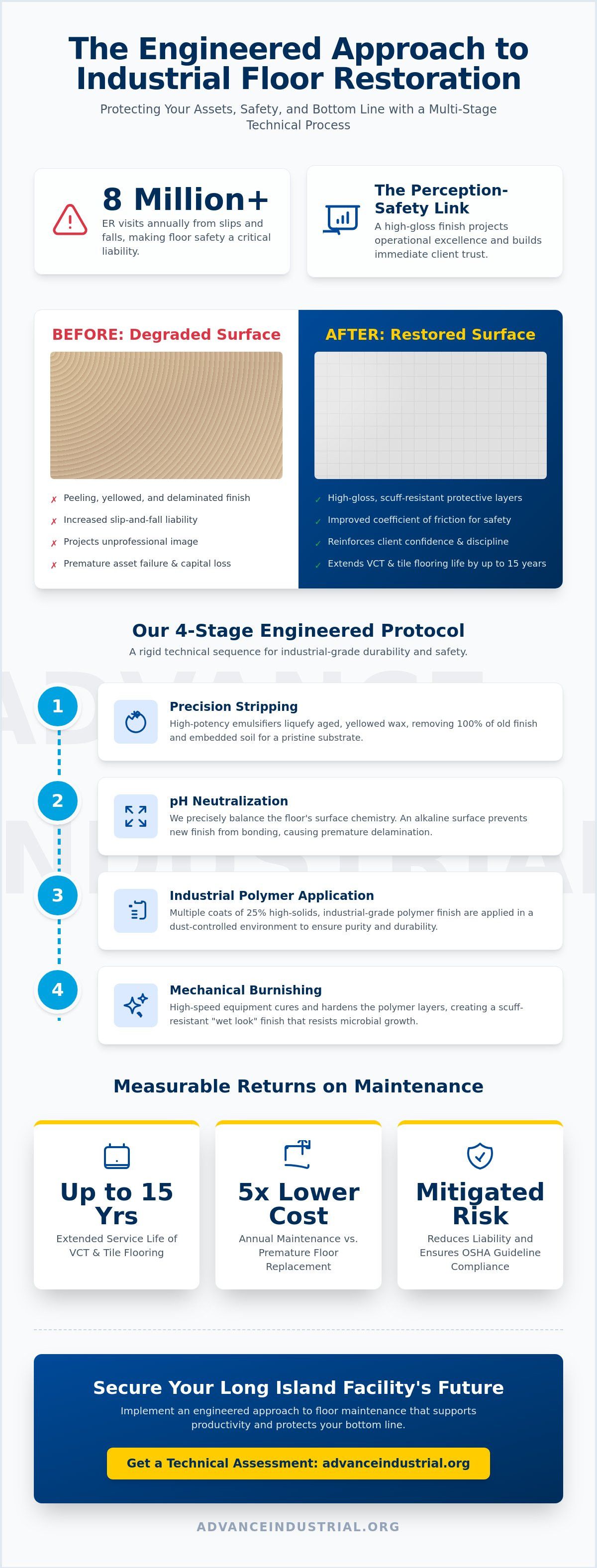
Technical Standards: An Engineered Approach to Floor Restoration
Precision matters in 2026 facility management. Effective floor stripping and waxing requires a four-stage engineered protocol to ensure long-term durability and safety. Advance Industrial follows a rigid technical sequence to restore floor integrity:
- Precision stripping: Technicians use high-potency emulsifiers to liquefy aged, yellowed wax layers. This step removes 100 percent of old finish and embedded soil.
- pH Neutralization: We balance the floor's surface chemistry. If the floor remains alkaline, the new finish won't bond, leading to premature delamination.
- Polymer Application: We apply 25 percent high-solids, industrial-grade polymer finish in a dust-controlled environment to prevent contamination.
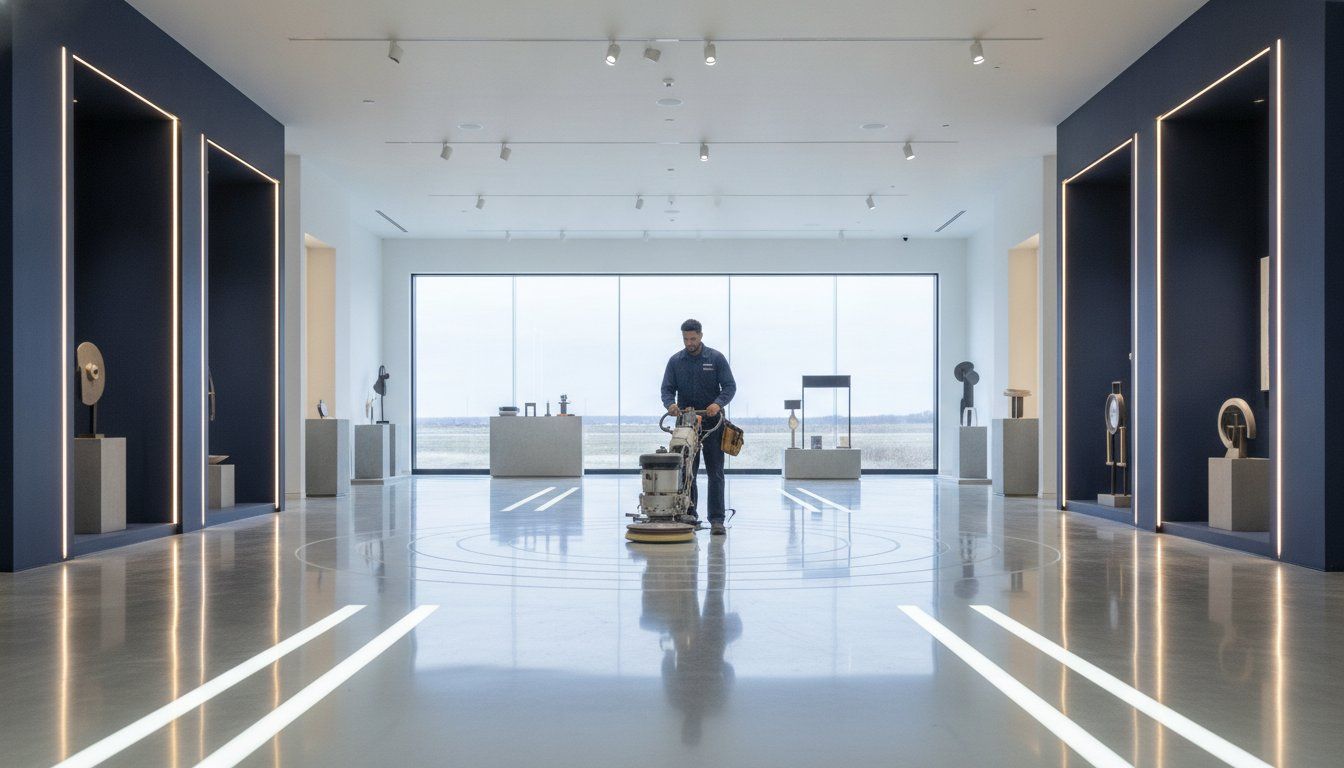
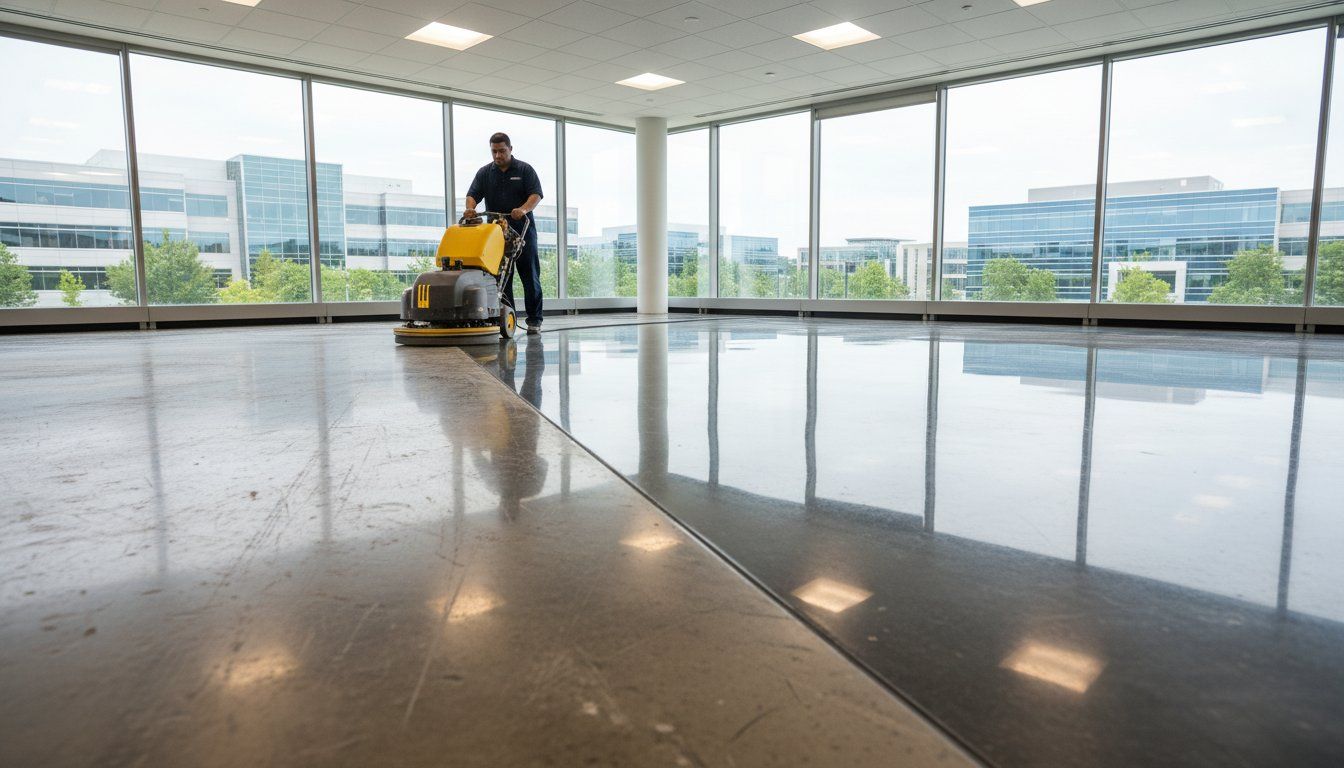
- Mechanical Burnishing: High-speed equipment creates a "wet look" finish that hardens the surface, making it more resistant to microbial growth and scuffing.
Chemical selection is a primary driver of technical success. Research into the Ecological Impact of Floor Strippers highlights why we prioritize low-VOC, biodegradable agents that protect indoor air quality while maintaining high solvency. This technical precision ensures the facility remains compliant with modern safety standards.
Equipment and Chemistry for Superior Results
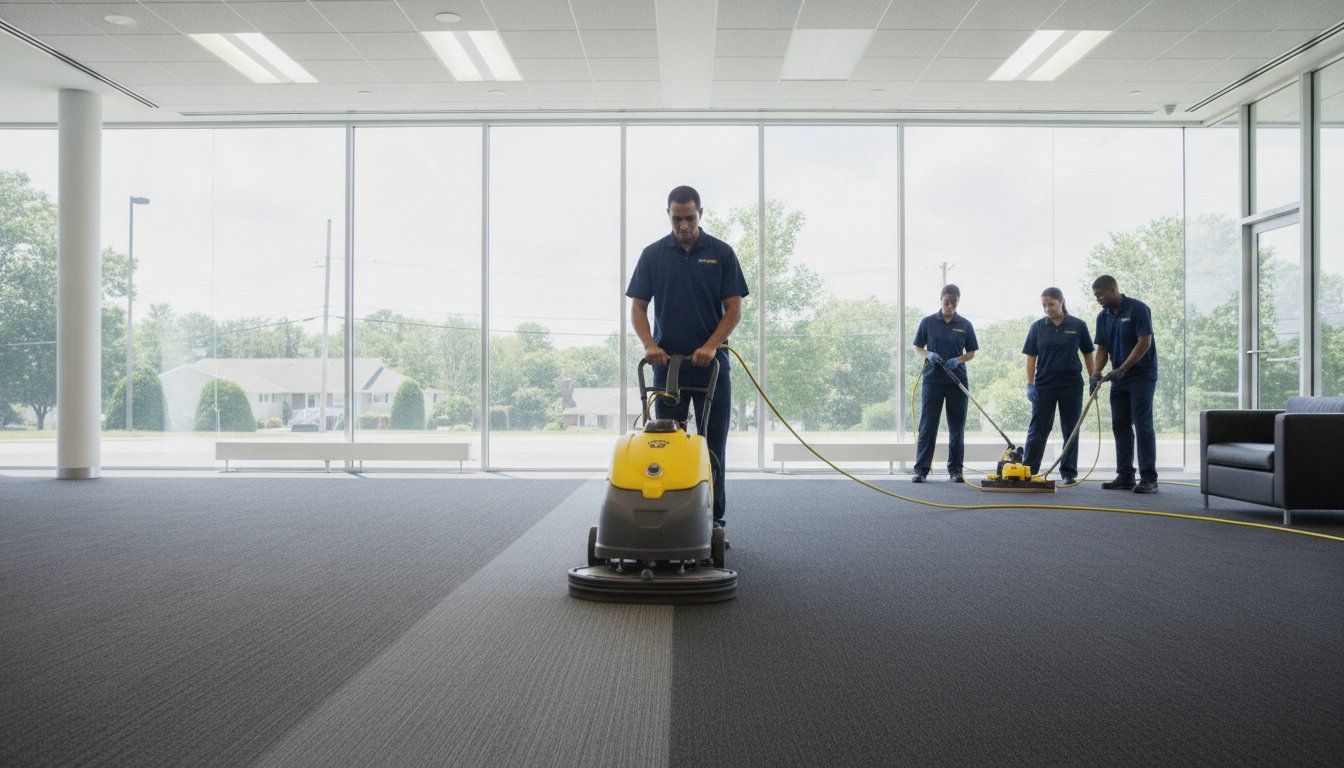
Professional results depend on industrial-grade hardware. We utilize 175 RPM low-speed scrubbers for agitation and high-lift wet-vacuums for immediate slurry containment. This prevents moisture from seeping into subfloors or baseboards. As a single-source provider, we use professional-grade chemicals that outperform off-the-shelf retail solutions in both durability and slip resistance. Our team focuses on hand-detailing edges and corners to eliminate the "picture frame" effect common in amateur applications.
Operational Uptime: Scheduling for Zero Disruption
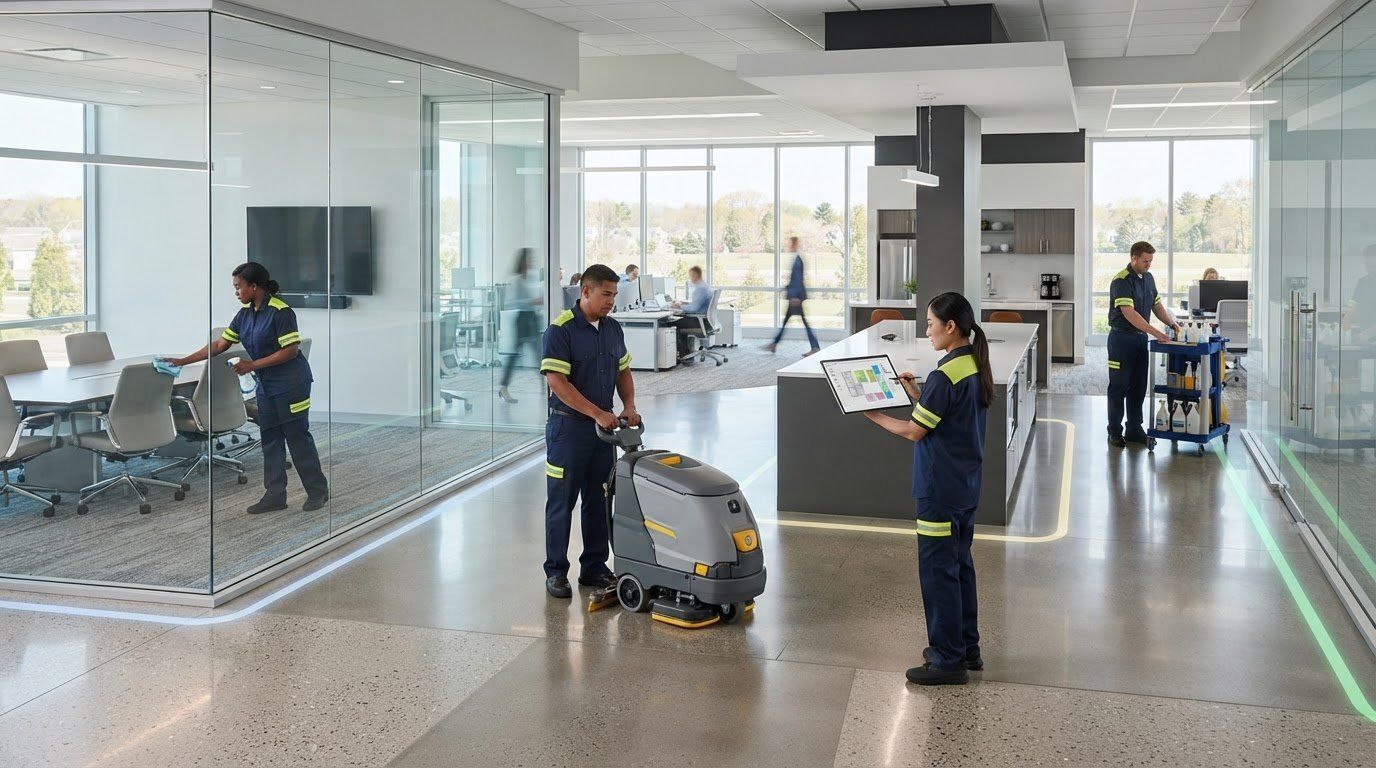
We minimize impact on your productivity through strategic execution. For commercial hubs in Bohemia and Ronkonkoma, we schedule work during the 6:00 PM to 6:00 AM window or over 48-hour weekend blocks. Modern fast-cure formulations allow for a "dry-to-traffic" window of just 60 minutes between coats. This means a 10,000 square foot warehouse floor can be fully restored and ready for heavy machinery by the next shift. You can track our latest maintenance protocols and industry updates via our RSS feed. Facility managers can achieve uninterrupted productivity by integrating these technical standards into their 2026 maintenance budget.
Strategic Planning for Nassau and Suffolk County Facilities
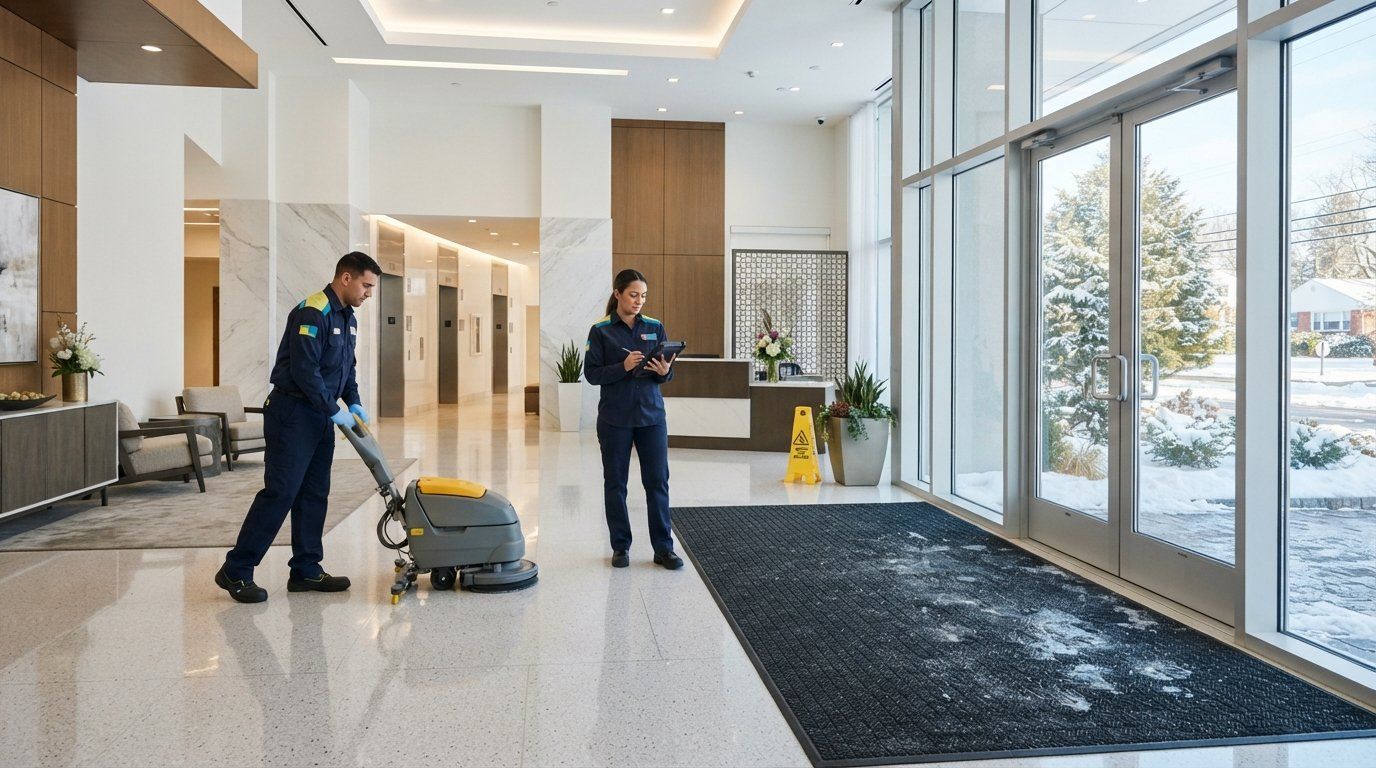
Long Island facilities face unique environmental stressors that demand a calculated maintenance schedule. During the winter months, Nassau and Suffolk County properties endure heavy tracking of calcium chloride and abrasive sand. These elements penetrate the top layers of finish, causing micro-abrasions that dull the surface and compromise the protective barrier. To maintain structural integrity, managers should implement a tiered approach. We recommend a full floor stripping and waxing protocol annually, supplemented by quarterly scrub and recoat procedures in high-traffic zones. This strategy prevents the underlying substrate from sustaining permanent damage.
Specific zones requiring high-frequency maintenance include:
- Entryways and lobbies: These are primary points for salt and moisture ingress.
- Cafeterias: These areas are susceptible to organic acids and frequent spills.
- Medical exam rooms: These spaces require high-level disinfection that can degrade standard finishes.
Seasonal Maintenance Cycles in New York
March and April represent the critical window for post-winter recovery. A deep strip is necessary to extract embedded salt deposits that regular mopping can't reach. If these deposits remain, they'll chemically bond with the floor finish. During the summer, humidity levels in New York often exceed 70%. This moisture can lead to "blushing," where trapped water vapor creates a cloudy appearance in the wax. Professional climate monitoring ensures proper curing during these peak humidity months to maintain a clear, high-gloss profile.
Industry-Specific Floor Standards
Medical facilities in Long Island must adhere to strict HIPAA and infection control protocols. This requires non-porous surfaces that resist bacterial growth and stand up to medical-grade cleaners. In contrast, Nassau County warehouse and distribution centers prioritize impact resistance and load-bearing capacity for heavy machinery. Advance Industrial provides engineered floor solutions tailored to NY industrial codes. Selecting a partner with 40+ years of local experience ensures your floor stripping and waxing schedule aligns with regional 2026 safety standards and operational demands.
Optimize Your Long Island Facility Operations
Maintaining operational uptime in Nassau and Suffolk County facilities requires more than routine maintenance; it demands an engineered approach to floor restoration. Advance Industrial brings over 40 years of commercial cleaning experience to every project, ensuring your facility meets the rigorous technical standards expected in 2026 medical and industrial environments. Our team utilizes specialized equipment designed for precision, protecting your high-traffic surfaces against the friction and chemical exposure common in modern industrial workflows. We understand that consistent floor quality is a baseline requirement for safety and productivity.
Beyond flooring, comprehensive facility management involves keeping all critical infrastructure up to code. For facility managers overseeing multi-story buildings, it is essential to learn more about NOVALIFT and their specialized maintenance and renovation services for elevators and freight lifts.
Strategic floor stripping and waxing serves as a critical component of your facility's long-term asset management plan. By prioritizing these technical standards today, you prevent unnecessary surface degradation and maintain a professional environment for your staff and stakeholders. We operate as a single-source provider for all Nassau and Suffolk County locations, delivering the reliability and technical authority your operation deserves. Our commitment to industrial excellence ensures your floors remain a durable asset rather than a liability.
We're ready to strengthen your facility's infrastructure today.
Frequently Asked Questions
How long does the floor stripping and waxing process take for a 5,000 sq. ft. facility?
A 5,000 square foot facility typically requires 8 to 12 hours for a complete cycle. Our technical teams utilize a three person crew to manage the 60 minute dwell times and the mandatory 40 minute drying intervals between each of the five finish coats. This structured approach ensures the project concludes within a single 12 hour shift, allowing the facility to reopen by 8:00 AM without compromising operational efficiency.
Will the chemicals used in floor stripping affect the air quality in my medical office?
Modern floor stripping and waxing protocols utilize Low-VOC formulas that meet Green Seal GS-40 standards to protect indoor air quality. Advance Industrial employs high-performance strippers with a pH level between 10.5 and 11.5 to minimize caustic fumes. We use HEPA-filtered vacuums and high-velocity air movers to achieve 6 air exchanges per hour. These technical safeguards ensure that medical environments remain compliant with OSHA air quality guidelines.
How often should a commercial facility in Long Island schedule professional floor waxing?
Most high-traffic commercial facilities in Long Island require a full floor stripping and waxing service every 12 to 18 months to maintain structural integrity. Local weather conditions, specifically the 30 pounds of salt and brine tracked into buildings during a typical New York winter, accelerate finish degradation. Facilities that implement a 90 day professional burnishing cycle extend the life of their base coats by 25 percent. This maintenance protects your industrial assets.
Can you strip and wax floors during regular business hours without closing the office?
We don't recommend performing a full strip and wax during active business hours because the process creates significant slip hazards and requires restricted access for 8 hours. Liquid stripping agents reduce the coefficient of friction to below 0.3, which creates an unsafe environment for staff and visitors. To maintain operational uptime, we execute 95 percent of our Long Island projects during weekend or evening windows. This ensures uninterrupted productivity for your team.