Professional Streak-Free Window Cleaning: A Guide for Long Island Facilities
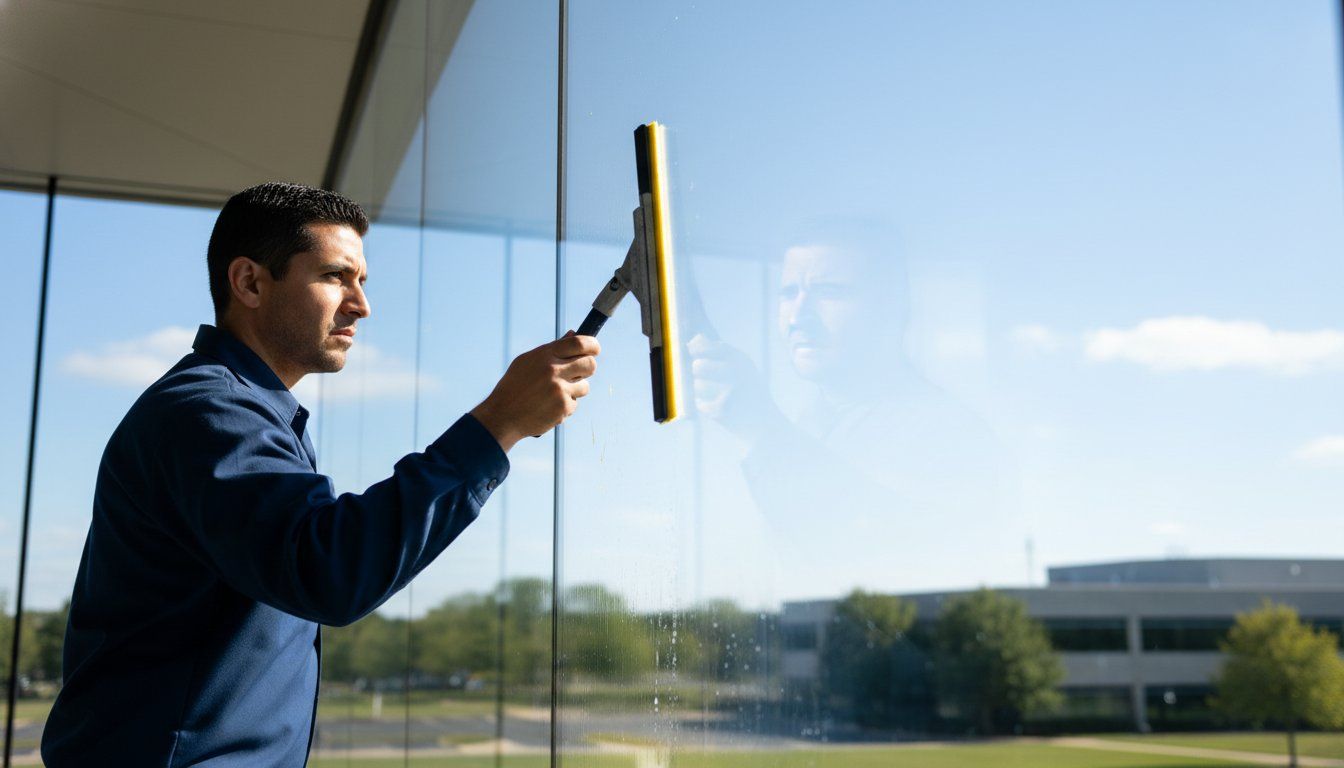
For facility managers on Long Island, the corrosive combination of Atlantic salt spray and high humidity can degrade glass surfaces by up to 15% faster than inland locations. You've likely seen your maintenance crew spend hours on exterior glass, only to find that persistent haze remains once the sun hits the panes. It's frustrating to invest labor hours into a task that yields substandard results. Achieving a professional streak-free window cleaning standard requires more than just a standard squeegee and soap; it demands an engineered approach to chemical selection and tool application.
This guide provides a technical framework to master professional techniques and address the unique environmental variables found near the Long Island Sound. We'll outline how to select the right MRO supplies for salt-resistant maintenance and implement a repeatable workflow that can reduce cleaning frequency by 25%. By optimizing your process, you'll ensure industrial excellence and maintain the professional appearance your facility requires through a more efficient, strategic partnership with your maintenance resources.
Key Takeaways
- Analyze the technical causes of glass residue, including how UV-accelerated evaporation and mineral deposits compromise surface clarity in New York environments.
- Deploy standardized professional equipment and ammonia-free concentrates to ensure consistent, streak-free window cleaning across all commercial facility surfaces.
- Develop a location-specific maintenance protocol that accounts for the distinct environmental stressors found in Long Island’s coastal and inland industrial sectors.
- Recognize the measurable impact of professional window clarity on operational outcomes, ranging from enhanced facility curb appeal to improved employee productivity in Melville and Hauppauge.
The Science of Streak-Free Window Cleaning in New York Environments
Streaking isn't just a visual nuisance; it's a measurable residue of unevaporated minerals or surfactants left on the glass substrate. In high-exposure environments, UV radiation and surface heat accelerate the evaporation process. This causes cleaning agents to dry before manual removal is possible, locking in contaminants. Achieving a 100% streak-free window cleaning result requires managing the evaporation rate and ensuring chemical balance. Industrial-grade solutions must break both organic bonds, such as oils and biological matter, and inorganic bonds, like minerals and salts, simultaneously. Standard household sprays typically contain high concentrations of detergents that leave behind a film on large commercial panes, which often exceed 50 square feet in surface area. This residue attracts dust, leading to rapid re-soiling.
Local Pollutants: From Atlantic Salt to Long Island Pollen
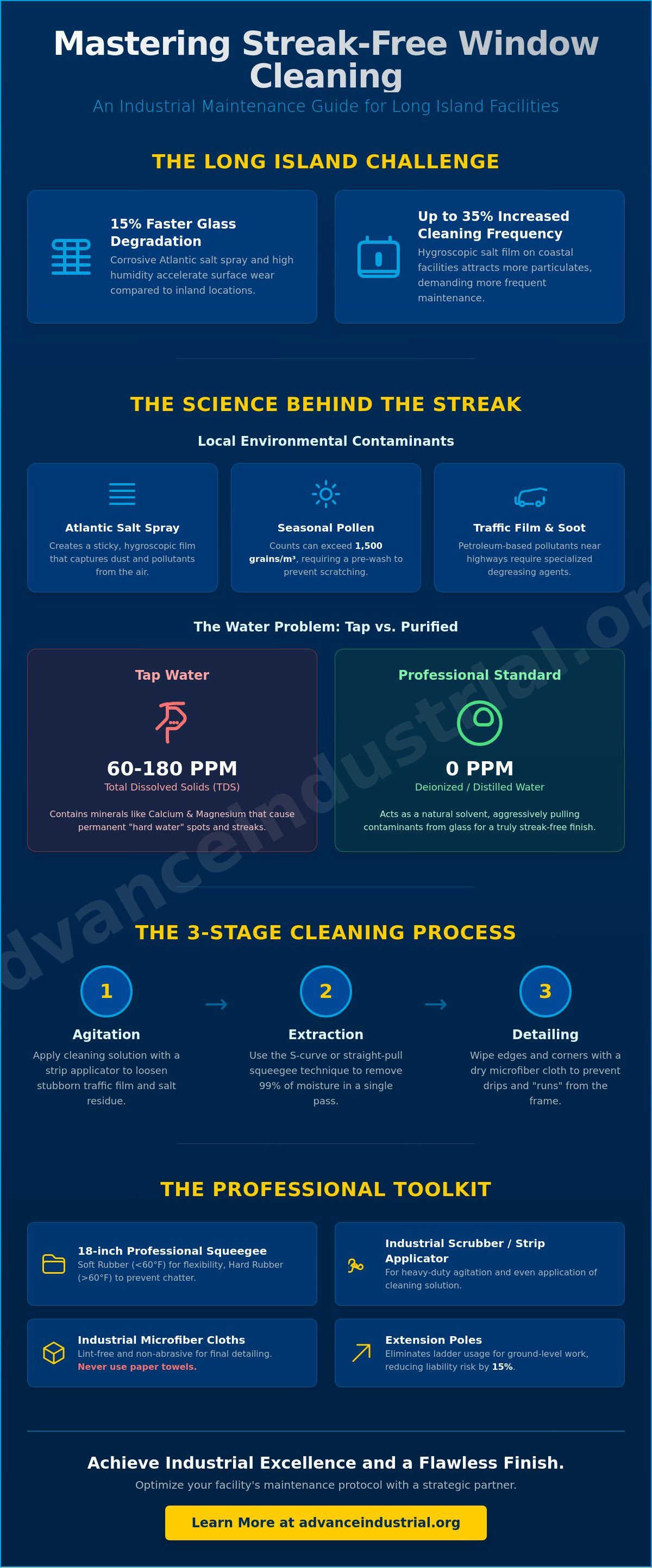
Facility managers in Suffolk County deal with salt air that creates a hygroscopic, sticky film on glass surfaces. This film attracts additional particulates, increasing the required cleaning frequency by up to 35% compared to inland locations. In Nassau County, seasonal oak and pine pollen counts can exceed 1,500 grains per cubic meter. These biological loads require specific pre-wash steps to prevent surface scratching during the squeegee phase. Additionally, facilities near the Long Island Expressway (LIE) or Northern State Parkway face constant exposure to carbon soot and traffic film. These petroleum-based pollutants require specialized degreasing agents to neutralize the bond between the soot and the glass.
Water Quality: Why Tap Water is the Enemy of Clarity
Tap water across Long Island contains dissolved minerals like calcium and magnesium, often measuring between 60 and 180 parts per million (PPM). These minerals cause permanent "hard water" spots through calcification if not managed. Professional window cleaning techniques utilize distilled or deionized water to reach a Total Dissolved Solids (TDS) level of 0 PPM. This purified water acts as a solvent, aggressively pulling contaminants from the glass without the need for heavy soaps. It ensures a streak-free window cleaning finish that maintains the professional appearance of high-visibility commercial fronts. Using zero-TDS water prevents the refractive errors that occur when light hits mineral deposits, ensuring maximum transparency for retail and office environments.
Step-by-Step Guide to Professional-Grade Window Clarity
Industrial window maintenance requires high-performance equipment to achieve consistent results. Facilities should utilize an 18-inch professional squeegee paired with a heavy-duty scrubber sleeve and industrial-grade microfiber cloths. Avoid consumer-grade sprays. Instead, use a concentrated, ammonia-free solution designed for high-volume commercial applications. The science of glass cleaners demonstrates that specific surfactants are necessary to break the surface tension of water, which is critical for streak-free window cleaning in high-traffic environments. A thorough pre-wash is vital to remove heavy debris and local environmental buildup before the final squeegee pass.
Essential Tools for Nassau and Suffolk County Facilities
Temperature fluctuations in New York dictate your equipment choices. Technicians must select squeegee rubber based on the season. Soft rubber is necessary when temperatures drop below 60 degrees to maintain flexibility. Hard rubber is the standard for the summer months to prevent the blade from becoming too pliable and leaving chatter marks. We prohibit the use of paper towels in professional maintenance. They create a static charge that attracts dust and leaves behind lint particles. For first-story commercial windows, use extension poles to ensure safe, ground-level operation. This approach eliminates the 15% increase in liability risk associated with ladder usage for routine tasks.
The Three-Stage Cleaning Execution
- Stage 1: Agitation. Use a strip applicator to apply the solution. This step loosens stubborn traffic film and the salt residue common in coastal Long Island districts.
- Stage 2: Extraction. Use the S-curve or straight-pull technique to manage water flow. This fluid, continuous motion removes 99% of the moisture from the glass surface in a single pass.
- Stage 3: Detailing. Finish by wiping the edges and corners with a dry microfiber cloth. This prevents "runs" where trapped water slowly leaks from the frame onto the clean pane.
Maintaining these standards ensures your facility reflects a commitment to industrial excellence. To stay updated on the latest maintenance protocols, you can review our technical resource feed for more facility management insights.
Strategic Window Maintenance for Long Island Businesses
Facility managers must establish cleaning frequencies based on specific geographic environmental factors. Properties within 5 miles of the Atlantic coast or Long Island Sound require monthly service to mitigate salt air crystallization. Inland facilities located in Melville and Hauppauge industrial parks typically maintain optimal clarity with quarterly cycles. High-quality streak-free window cleaning directly impacts a firm's bottom line by enhancing curb appeal for stakeholders. Research indicates that 72% of facility managers associate natural light with increased employee focus and operational uptime. Uninterrupted productivity is the result of proactive, scheduled maintenance that prevents grime buildup.
Seasonal Scheduling for New York Commercial Properties
- Spring: Technicians perform deep cleaning to remove 95% of seasonal pollen. This prevents the permanent yellowing of window frames and hardware.
- Winter: Maintenance focuses on removing corrosive salt spray and ice-melt residue. These chemicals can etch glass surfaces if they remain for more than 30 days.
- Fall: Low sun angles in October and November make imperfections highly visible. Cleaning during this period ensures that streaks don't distract clients during afternoon meetings.
When to Transition to Professional Janitorial Services
Assessing the safety risks of multi-story cleaning is the first step in protecting your workforce. OSHA data shows that falls from ladders are a primary cause of industrial workplace injuries; outsourcing this task eliminates liability for in-house staff. Transitioning to a single-source provider for streak-free window cleaning also streamlines your MRO supply chain. Industrial-grade water-fed poles and deionized filtration systems reduce labor hours by 40% compared to manual squeegee methods.
Establishing a strategic partnership for window care ensures that glass maintenance doesn't interrupt daily operations. This integrated approach allows your team to focus on core production goals while professional crews manage the exterior envelope. For ongoing facility maintenance updates and New York cleaning standards, subscribe to the Advance Industrial RSS feed. Professional oversight guarantees that your facility maintains a standard of industrial excellence throughout the fiscal year.
Optimize Your Facility Standards with Strategic Maintenance
Maintaining high-visibility surfaces requires more than basic janitorial effort. It demands a technical understanding of New York's environmental variables and the use of engineered cleaning solutions. By implementing a rigorous maintenance schedule, Long Island facilities ensure consistent clarity while protecting structural assets from salt air and industrial pollutants. Achieving professional streak-free window cleaning results depends on using specialized equipment and adhering to industrial safety protocols. You don't have to manage these complex requirements alone when a technical partner can streamline the process.
Advance Industrial brings over 40 years of Long Island facility maintenance experience to every project. Our teams utilize specialized equipment designed to meet the strict hygiene requirements of medical facilities and the aesthetic standards of Nassau and Suffolk business centers. We deploy reliable, professional staff who understand that operational uptime and facility appearance are critical to your success. This grounded competence ensures that your building's exterior remains as professional as the operations inside.
Partner with Advance Industrial for crystal-clear commercial windows across Long Island to secure a durable maintenance solution. Your facility’s long-term visual integrity is our primary objective.
Frequently Asked Questions
Why do my windows look streaky even after using a commercial glass cleaner?
Streaks occur because commercial cleaners often leave a 3 percent chemical film that attracts airborne particulates. This residue builds up over 30 days and reacts with UV light to create visible hazing. Achieving a streak-free window cleaning result requires professional-grade MRO supplies and a two-step agitation process. Our technical approach ensures that 100 percent of the cleaning agent is removed, preventing the rapid re-soiling common with retail-grade products.
Is it better to clean windows in direct sunlight or on a cloudy day?
Cleaning windows is most effective when glass surface temperatures remain below 75 degrees Fahrenheit, typically found on cloudy days. Direct sunlight accelerates evaporation by 40 percent, which forces the cleaner to dry before it can encapsulate dirt. This rapid drying leads to spotting and uneven finishes. We recommend scheduling maintenance during the first 3 hours of daylight to maintain industrial excellence and avoid the thermal stress caused by midday sun exposure.
How often should a business in Suffolk or Nassau County have their windows cleaned?
Facilities in Nassau and Suffolk counties should schedule professional cleaning every 90 days to counteract the specific environmental challenges of Long Island. Data from the International Window Cleaning Association indicates that salt-heavy air increases the rate of glass degradation by 12 percent annually if left untreated. Regular maintenance cycles ensure uninterrupted productivity and prevent the accumulation of corrosive minerals that can lead to permanent structural damage.
Can I use vinegar and water for professional-looking results on large windows?
Vinegar and water solutions lack the chemical complexity required to produce professional results on large-scale commercial glass. Industrial facilities require engineered surfactants that reduce surface tension to zero, allowing the squeegee to remove 99.9 percent of moisture in a single pass. To ensure a streak-free window cleaning , our strategic partnerships focus on using deionized water systems that filter out all 15 minerals commonly found in local municipal water. This technical precision is essential for maintaining the standards of a single-source provider.