Professional Construction Cleanup in Long Island: A Guide for Suffolk and Nassau County Projects
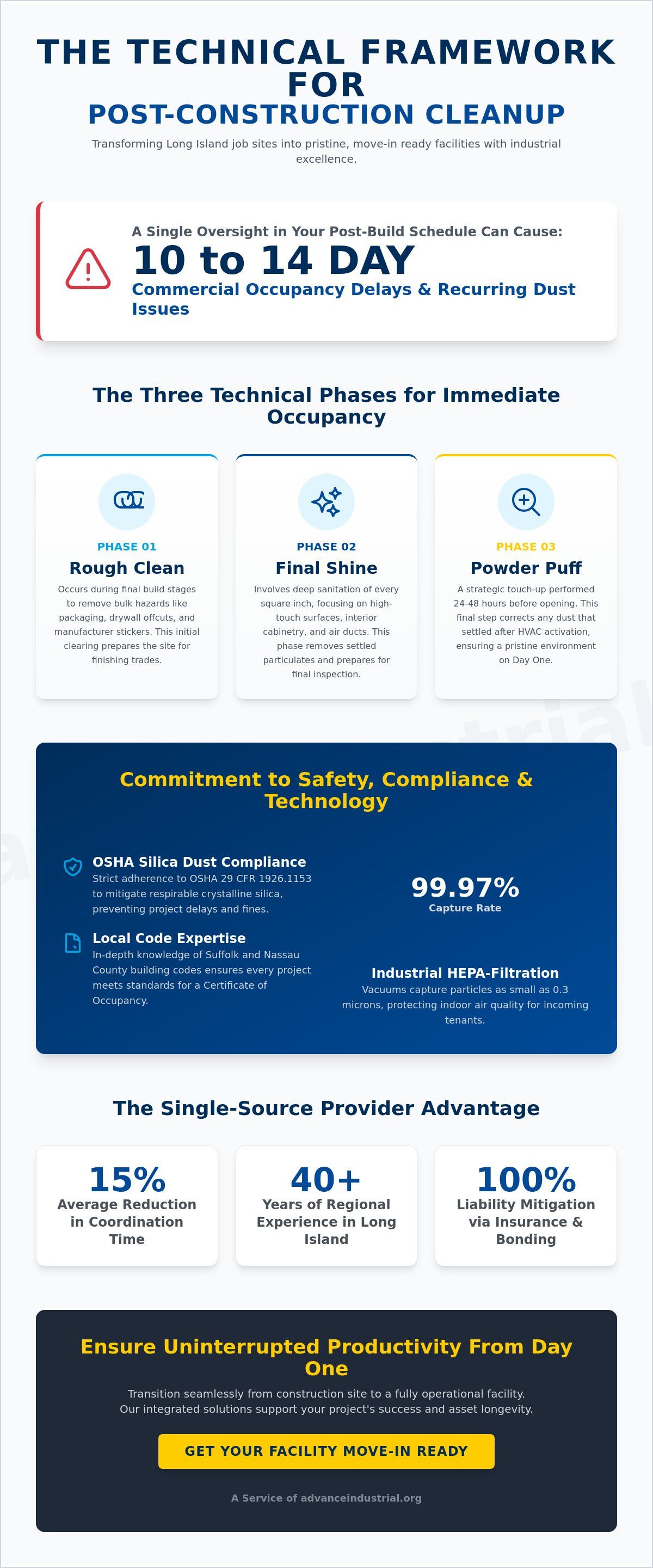
A single oversight in your post-build schedule can delay commercial occupancy by 10 to 14 days and trigger recurring dust issues that compromise indoor air quality for months. You recognize that the transition from an active job site to a functional facility is a critical operational milestone where safety and aesthetics must align perfectly. Poorly executed finishing phases don't just look unprofessional; they create liability risks from hidden debris and non-compliance with OSHA safety standards. This guide provides the technical framework for professional construction cleanup on Long Island.
We detail the multi-phase protocols required to secure a successful final inspection and ensure immediate move-in readiness for Suffolk and Nassau County projects. You'll learn about the rigorous technical requirements for industrial floor protection, the systematic elimination of particulate matter, and the engineered processes that transform a chaotic site into a pristine commercial space. Our focus remains on delivering the industrial excellence needed for uninterrupted productivity from the moment you receive your certificate of occupancy.
Key Takeaways
- Define the technical distinction between basic site clearing and professional readiness to ensure your Long Island project meets rigorous commercial standards.
- Discover how a multi-phase construction cleanup strategy eliminates deep-layer dust and debris to prepare facilities for immediate occupancy.
- Evaluate the "single-source provider" advantage and how consolidating maintenance services reduces downtime and simplifies procurement for plant managers.
- Apply proven methodologies from over 40 years of industrial experience to maintain project momentum across the Suffolk and Nassau County corridors.
- Examine a Nassau County case study to see how specialized technical cleaning restores operational uptime in complex, multi-floor environments.
The Three Technical Phases of Commercial Construction Cleanup in Long Island
Successful commercial projects in Suffolk County require more than a simple "broom clean" standard. While a basic sweep meets many lease requirements, professional construction cleanup transforms a hazardous job site into a facility ready for immediate occupancy. This process follows three distinct technical stages designed to maintain industrial excellence and ensure operational uptime.
Phase 1, the Rough Clean, occurs during the final build stages. Crews remove various types of construction debris, including packaging materials, drywall offcuts, and manufacturer stickers from windows and fixtures. This stage eliminates bulk hazards before flooring and finish work begin. It's a critical step for maintaining a safe workspace for finishing trades.
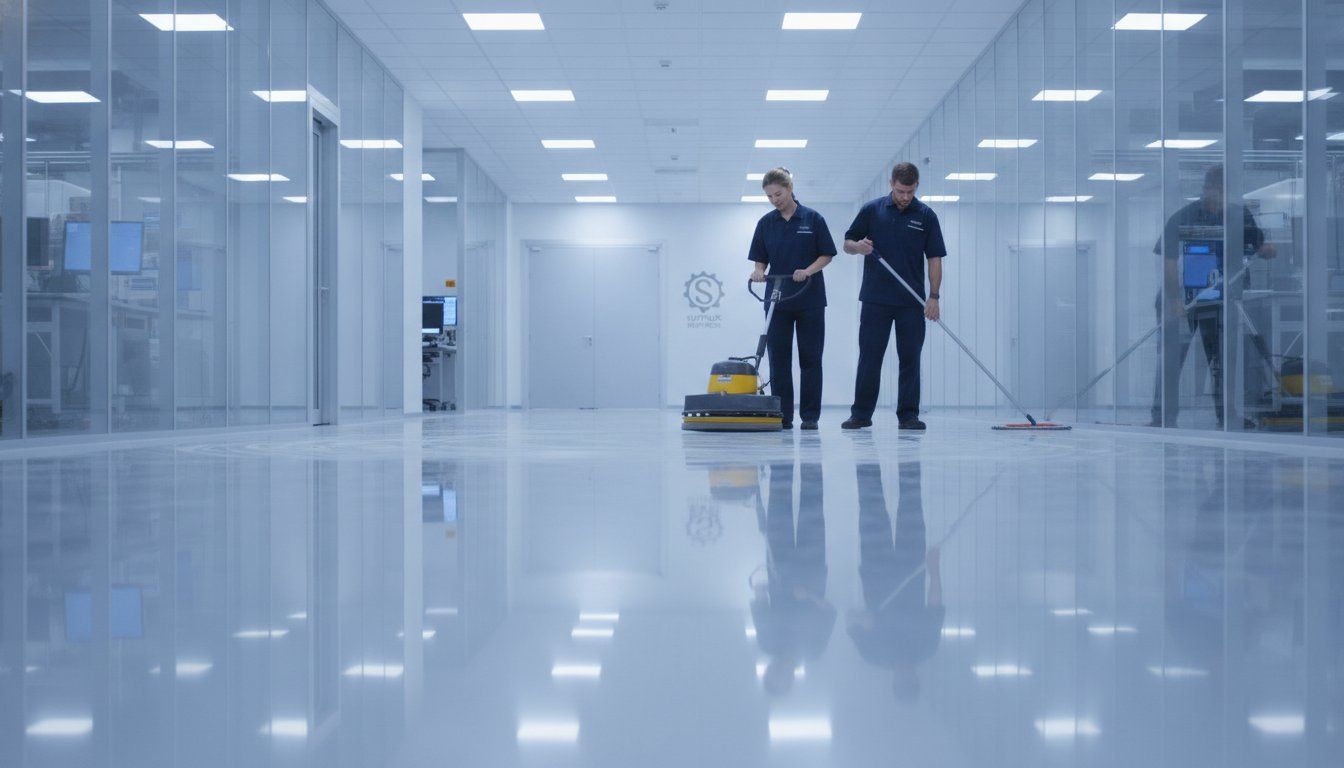
Phase 2, the Final Shine, involves deep sanitation. Technicians focus on high-touch surfaces, interior cabinetry, and air duct registers. Every square inch of the building is scrubbed to remove settled particulates. This phase represents the bulk of the construction cleanup labor, preparing the site for final inspections.
Phase 3, known as the Powder Puff, is a strategic touch-up performed 24 to 48 hours before the grand opening. This phase corrects any dust that settled after the HVAC system was initially activated. It ensures the environment is pristine for the first day of operations.
Meeting Safety and Compliance Standards in New York
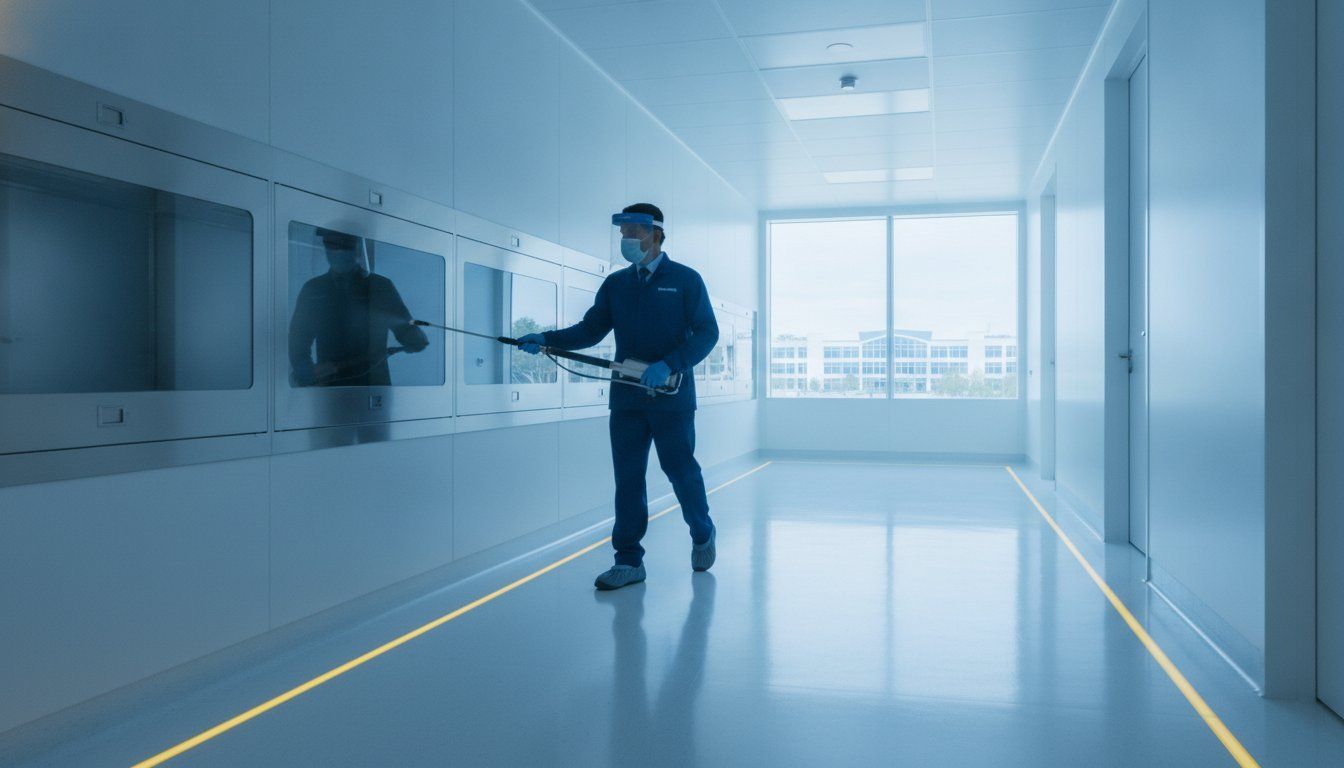
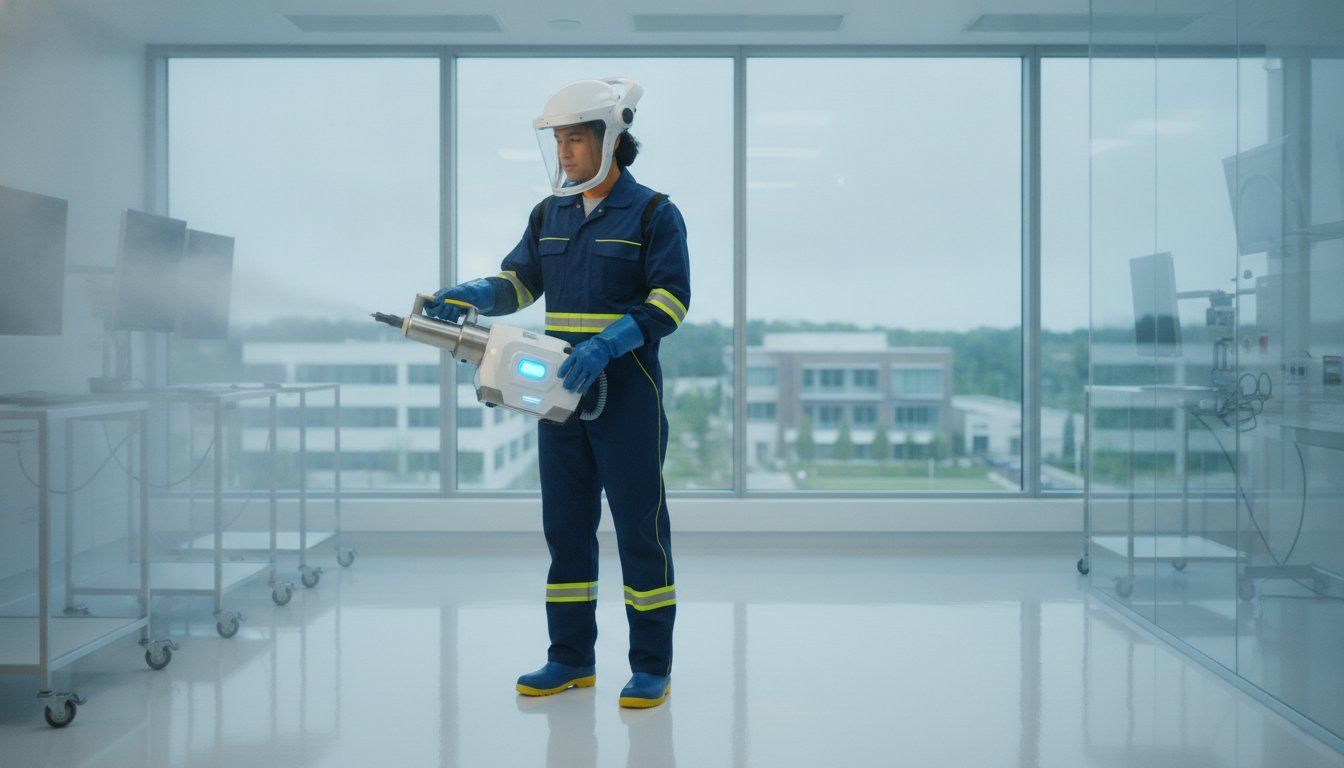
Compliance with New York safety regulations is mandatory for final inspections. Specifically, crews must adhere to OSHA 29 CFR 1926.1153 regarding respirable crystalline silica dust. Failure to mitigate these fine particulates can result in project delays and heavy fines in Nassau County. Our teams utilize industrial HEPA-filtration vacuums that capture 99.97% of particles as small as 0.3 microns. This technical approach protects indoor air quality and ensures the health of incoming tenants. Localized expertise in Nassau County building codes ensures every project meets the rigorous standards required for a Certificate of Occupancy. We view these protocols as a strategic partnership in your project's success.
Selecting a Strategic Partner for Post-Construction Maintenance
Choosing a partner for construction cleanup requires more than a simple bid comparison. It demands an assessment of technical capability and regional reliability. With over 40 years of operational history across the Long Island corridor, from the industrial hubs of Melville to the project sites in Bohemia, Advance Industrial understands the regional regulatory environment. A single-source provider streamlines the transition from a messy job site to a client-ready facility. Managing separate vendors for floor waxing and window cleaning creates logistical friction; centralizing these tasks under one technical authority saves an average of 15% in coordination time.
The same logic of efficiency applies to your building's mechanical systems; for those looking for reliable contractors in the tri-state area, check out Anton Plumbing Heating & Cooling to ensure your plumbing and HVAC infrastructure is ready for occupancy.
Liability mitigation is non-negotiable. We maintain comprehensive insurance, bonding, and technical certifications to protect project stakeholders from risks inherent in post-construction environments. Our teams align workflows with contractor timelines to ensure uninterrupted productivity. This flexibility prevents project delays during the final phase of delivery, allowing for a seamless handover to the property owner.
Technical Equipment and Expertise Requirements
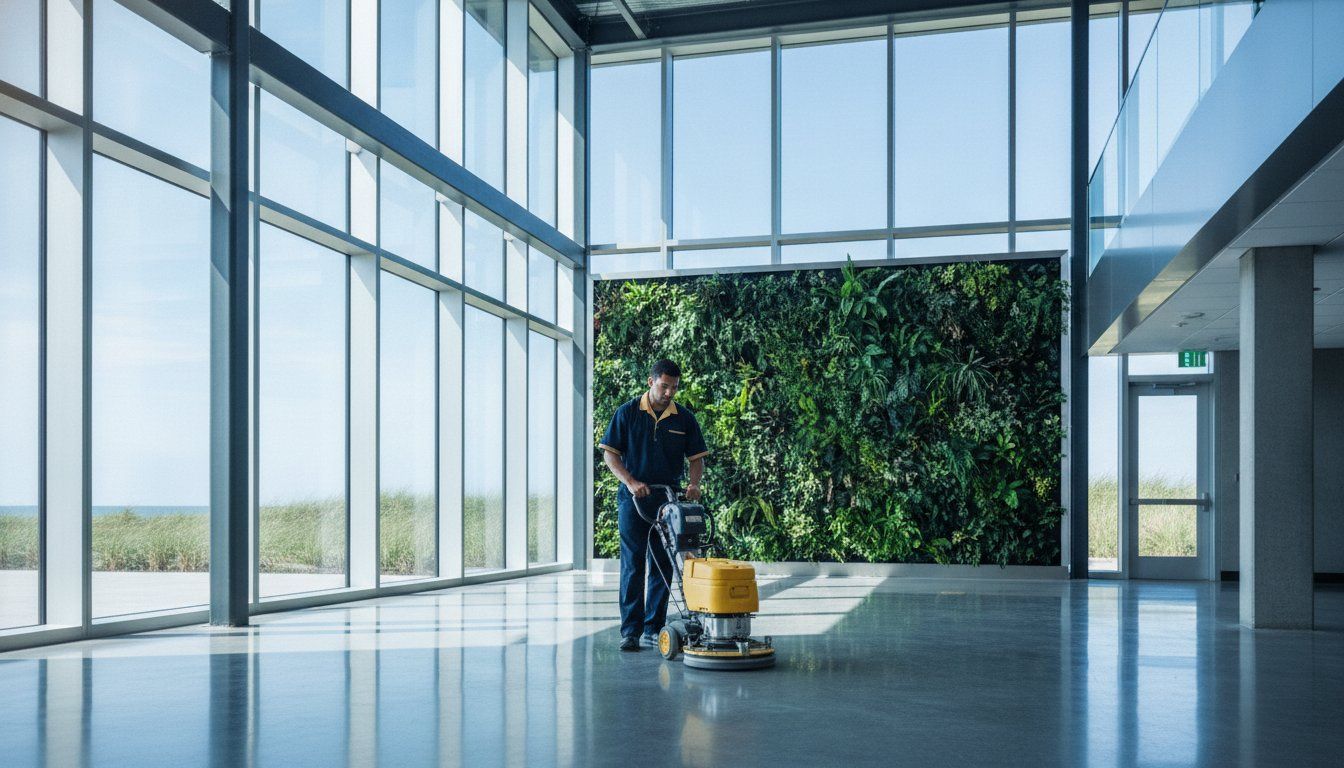
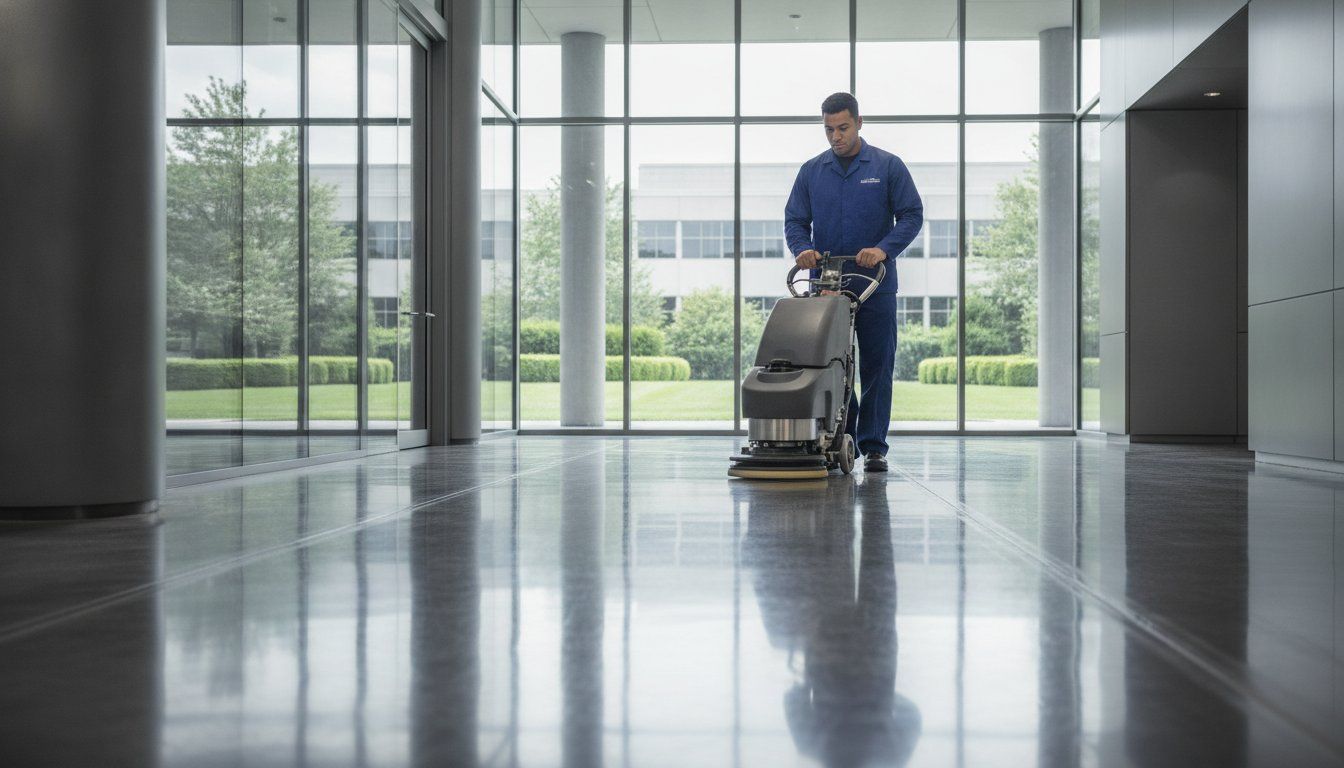
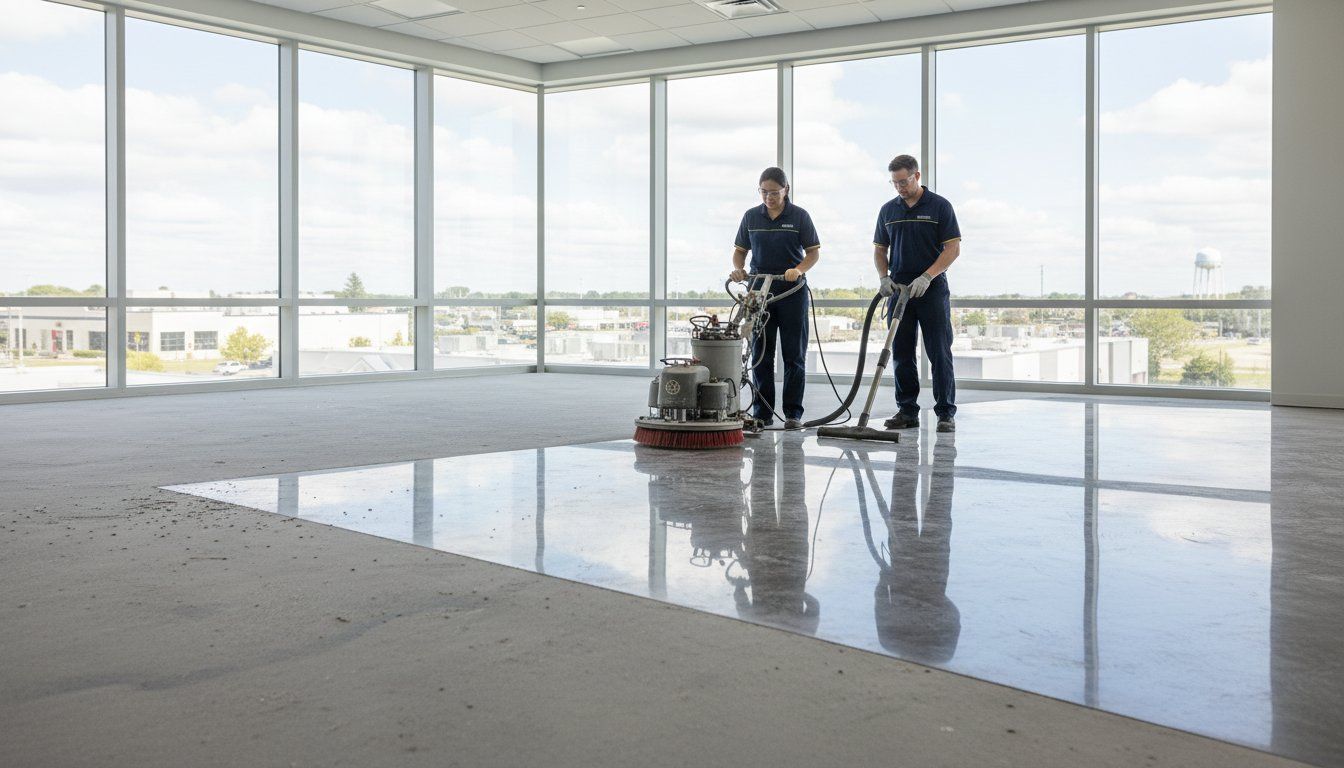
Standard janitorial tools fail in industrial settings. Effective construction cleanup requires HEPA-filtered vacuums and high-capacity scrubbers to capture fine particulates that settle in HVAC systems and floor pores. Removing masonry dust requires specialized chemical solutions that won't degrade new finishes or compromise indoor air quality. Professional teams implement sustainable debris management practices to ensure that site waste is handled according to federal standards.
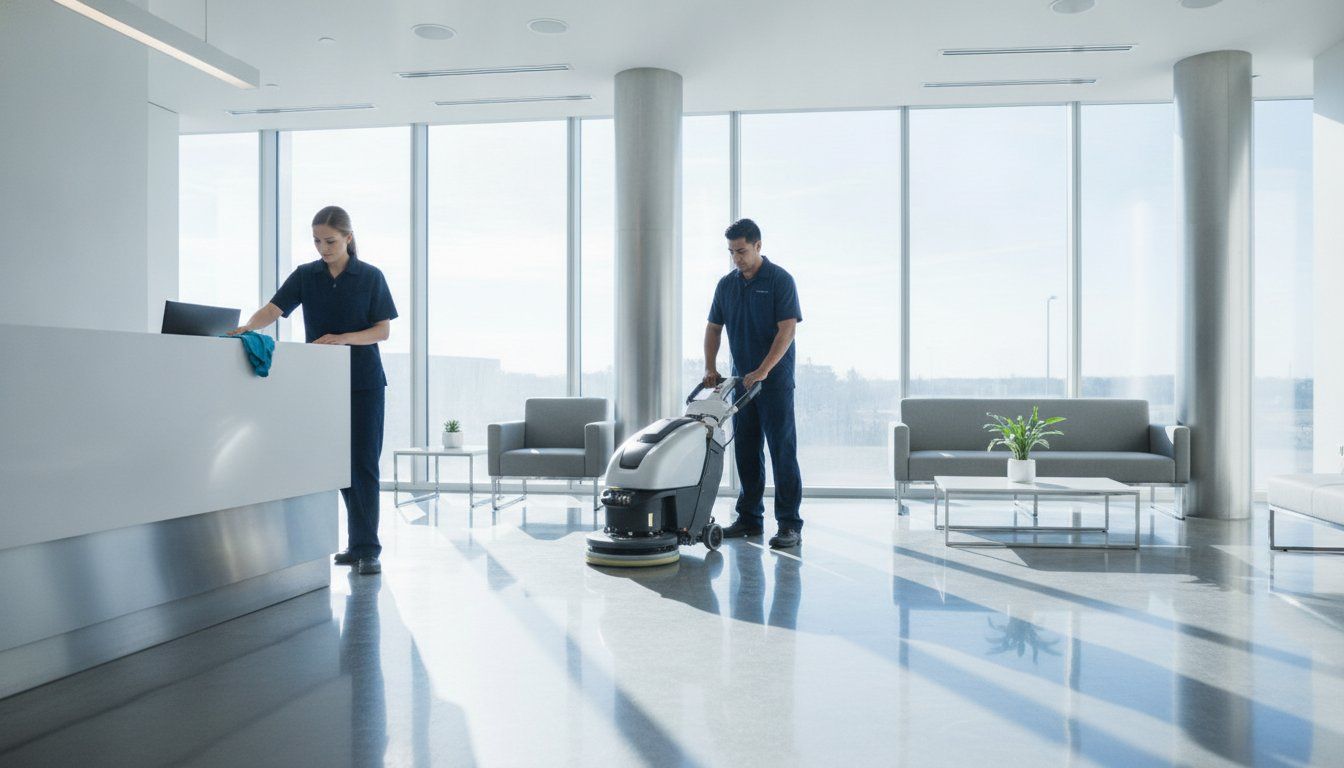
The cleanup process shouldn't end when the contractor leaves. Transitioning from the final sweep to recurring janitorial services preserves the lifespan of your new assets and keeps the facility in peak condition. Learn how our integrated maintenance solutions support facility longevity and operational uptime from day one.
Case Study: Restoring Operational Uptime for a Nassau County Facility
In October 2023, Advance Industrial executed a complex post-construction recovery for a 45,000-square-foot medical facility in Garden City. This project involved a multi-floor build-out located within a high-traffic Nassau County corridor. Operational continuity was the primary metric for success, as the facility had patient appointments scheduled immediately following the projected handover date.
The technical challenge centered on extreme particulate accumulation. Fine drywall dust covered 100% of the interior surfaces, posing a direct threat to sensitive diagnostic imaging equipment and the building's HVAC filtration system. Standard janitorial methods were insufficient for this level of construction cleanup . Our team implemented a multi-phase execution strategy. We deployed industrial HEPA-filtration vacuums to capture 99.97% of airborne particles before they could settle into the ventilation ductwork. This was followed by high-performance floor care, including deep scrubbing and the application of industrial-grade sealants to high-traffic zones.
The result was a zero-day delay in move-in operations. The facility stakeholders achieved full occupancy on their target date of October 27, 2023. By mitigating the dust risk early, we ensured the environment met medical-grade sanitation standards immediately upon handover, protecting the client's investment in high-end medical technology.
Lessons for Long Island Project Managers
Early scheduling of construction cleanup prevents the common last-minute bottleneck that stalls commercial handovers. We recommend finalizing cleanup contracts at least 30 days before the projected completion date. This lead time allows for the procurement of specialized HEPA equipment and specific floor treatments required for industrial durability. It's a proactive step that protects the project timeline from unforeseen environmental delays.
Investing in professional floor stripping and waxing immediately following construction provides a measurable ROI. It seals porous surfaces against future staining and reduces long-term MRO costs by approximately 15% in the first year of operation. For facility managers seeking consistent results across multiple sites, you can request a strategic partnership proposal to secure dedicated resources and technical expertise for your next Nassau or Suffolk County project.
Optimizing Operational Readiness for Long Island Infrastructure
Transitioning a project from an active job site to a functional facility requires technical precision and a systematic approach to site remediation. Successful projects in Suffolk and Nassau County rely on a three phase process that prioritizes air quality and surface integrity. By utilizing specialized HEPA-filtration equipment , facility managers can eliminate sub-micron particulate matter that standard systems often miss. This level of detail is essential for maintaining operational uptime and protecting long term infrastructure investments.
Advance Industrial serves as a single-source provider for these critical requirements, drawing on over 40 years of Long Island experience to deliver results. Choosing a strategic partner ensures that every phase of your construction cleanup meets rigorous safety and cleanliness standards. Our team manages the entire scope of project-based specialty cleaning, allowing your staff to focus on core operations without delay. We've refined our processes to support the industrial continuity of the region's most demanding facilities.
Secure your construction cleanup partner for your next Long Island project today. Your facility's readiness is our priority.
Frequently Asked Questions
What is the difference between rough cleaning and final cleaning?
Rough cleaning focuses on the removal of large scale debris, leftover materials, and initial dust layers once the framing phase concludes. This stage ensures the site is safe for the installation of flooring and cabinetry. Final construction cleanup is a meticulous process that includes window detailing and deep cleaning of all fixtures. It prepares the facility for immediate occupancy and maintains the high standards of industrial excellence.
How long does a professional construction cleanup take for a Long Island office?
A professional construction cleanup for a 5,000 square foot Long Island office typically requires 16 to 24 labor hours to complete. This timeline assumes a crew of 4 technicians working over a 2 day period. Larger industrial complexes in Nassau County often require 5 or more days to satisfy specialized sanitization protocols. We prioritize efficient scheduling to ensure uninterrupted productivity for your incoming staff.
Is the general contractor responsible for the final post-construction cleaning?
Contractual obligations determine responsibility, but 85% of commercial projects treat final cleaning as a separate line item. While a general contractor maintains site safety, they often don't have the specialized HEPA filtration equipment needed for technical dust extraction. Establishing a strategic partnership with a single-source provider ensures the facility meets the specific hygiene requirements of the end user before the final walkthrough occurs.
What specialized equipment is needed for silica dust removal?
Silica dust removal requires industrial grade HEPA vacuums rated to capture 99.97% of particles at 0.3 microns. Standard shop vacuums are insufficient because they exhaust fine crystalline silica back into the atmosphere. Technicians also utilize negative air machines to maintain 4 to 6 air changes per hour. These engineered solutions ensure the project aligns with the 2017 OSHA Respirable Crystalline Silica Standard.