Commercial Floor Maintenance: A Professional Guide for Long Island Facilities
According to the National Floor Safety Institute, slip and fall accidents account for over 1 million emergency room visits annually, making floor safety a critical operational priority for Long Island facility managers. You understand that a neglected surface is more than an eyesore; it's a significant liability risk and a drain on your capital budget. Effective floor maintenance requires a technical approach that prioritizes long-term durability over temporary shine. When high-traffic offices and industrial plants fail to implement a structured protocol, the result is often premature aesthetic degradation and costly replacement cycles that disrupt your operational uptime.
We've designed this guide to provide the exact multi-stage protocol professional cleaners use to preserve floor longevity and safety in the demanding commercial environments of Nassau and Suffolk counties. You'll learn how to implement a system that achieves a consistent professional appearance while ensuring full compliance with current safety standards. This technical overview covers everything from specialized chemical selection to the scheduled maintenance intervals required for industrial excellence and uninterrupted productivity.
Key Takeaways
- Transition from reactive cleaning to a proactive floor maintenance system engineered to withstand Long Island’s unique coastal sand and winter salt challenges.
- Deploy strategic matting systems at facility entrances to stop abrasive contaminants before they compromise your surface integrity.
- Implement industrial-grade daily preservation techniques that ensure consistent results and maximize the operational lifespan of your facility’s flooring.
- Identify technical indicators for professional stripping and waxing to maintain a high-performance finish and ensure compliance with OSHA safety standards.
- Reduce slip-and-fall liability through a standardized maintenance protocol designed for technical reliability and long-term facility safety.
Establishing a Professional Floor Maintenance Program in Long Island
Effective commercial floor maintenance functions as a proactive system of preservation rather than a reactive response to visible soil. For facilities in Nassau and Suffolk County, a floor represents a significant capital investment that requires technical oversight to prevent premature replacement. Advance Industrial utilizes a "Total Floor Life Cycle" management approach. It's a strategy that ensures every square foot maintains its structural integrity and aesthetic value from installation through its projected 20-year lifespan. By viewing flooring as a critical asset, plant managers can stabilize operational costs and eliminate the 25% budget spike often caused by emergency floor failures.
Regional Challenges: Combating Salt and Sand Infiltration
Long Island's geography introduces specific abrasive threats that aren't found in inland regions. Coastal sand particles, often measuring between 0.0625 and 2 millimeters, act as industrial-grade abrasives under heavy foot traffic. These particles microscopicly scratch protective coatings and dull the finish of VCT, polished concrete, and stone surfaces. Without a structured barrier and removal system, sand can erode a floor's finish in less than 12 months.
Winter operations in New York require heavy applications of ice-melt compounds. These magnesium and calcium chloride treatments can chemically degrade floor wax by raising the surface pH level to 11 or higher. If these alkaline residues aren't neutralized, they cause permanent clouding and brittleness in the finish. Standard floor cleaning methods often fail to address this chemical imbalance, which can lead to a 30% reduction in the effective life of the floor coating. Our protocols focus on chemical stabilization to protect the substrate's integrity.
Poorly maintained flooring negatively impacts commercial property valuations across the island. In the competitive Long Island real estate market, deferred maintenance can result in a 10% to 15% reduction in perceived asset value during lease negotiations. A structured floor maintenance program prevents these losses by maintaining a consistent baseline of industrial excellence. We provide the technical precision required to keep facilities operational and visually professional through every season.
The 4-Step Protocol for Sustaining Commercial Floor Quality
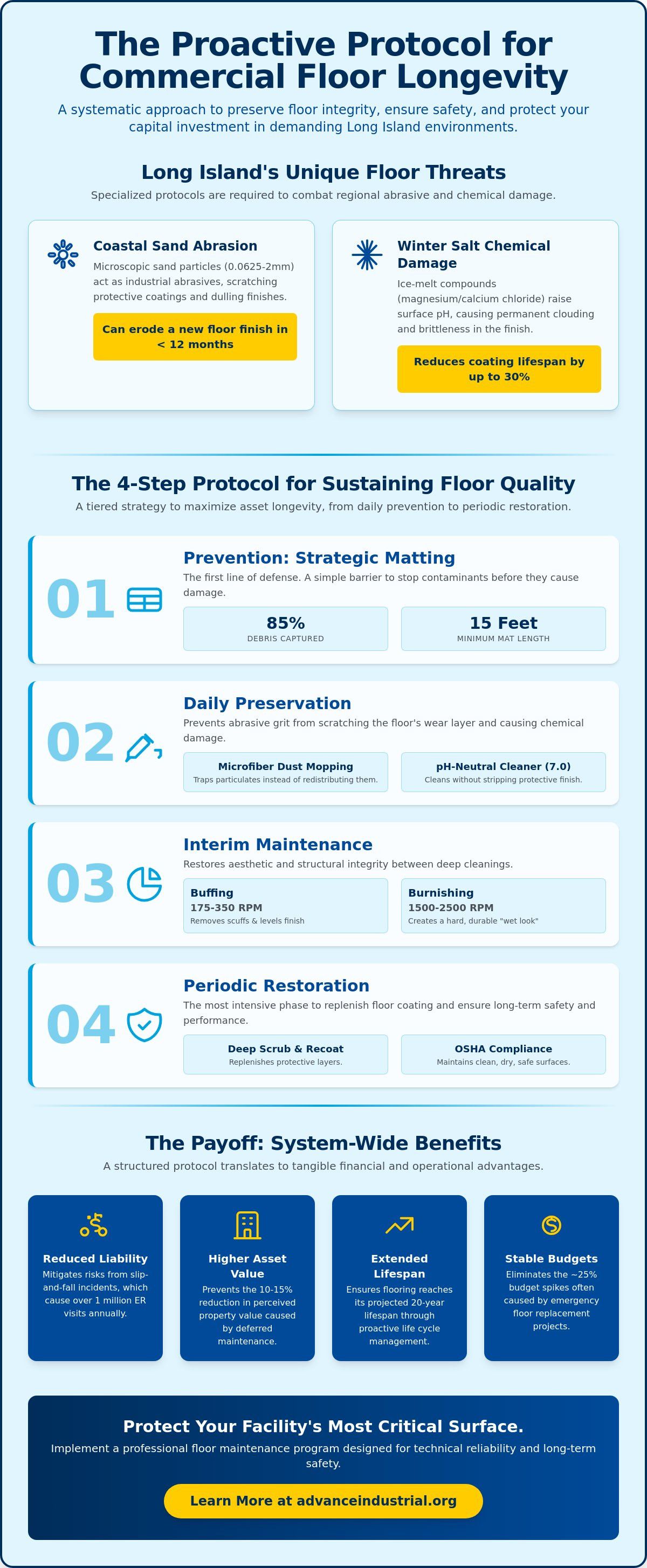
Effective floor maintenance relies on a proactive, tiered strategy to maximize asset longevity. Step 1 focuses on soil prevention. Strategic matting systems at facility entrances capture up to 85% of incoming debris. Facilities should install at least 15 feet of walk-off mats to ensure maximum particulate removal before it reaches the primary flooring surface. This simple barrier protects the finish from the abrasive effects of Long Island's seasonal grit.
Daily Preservation Techniques for Nassau County Offices
Professional dust mopping uses microfiber technology to trap fine particulates that standard sweeping merely redistributes into the air. This process prevents abrasive grit from scratching the floor's wear layer. Maintenance teams must utilize pH-neutral cleaners, typically rated at 7.0 on the pH scale, to clean without stripping the protective finish or causing chemical hazing. This daily preservation ensures operational uptime by preventing premature floor failure.
Interim Care: Buffing and Burnishing Best Practices
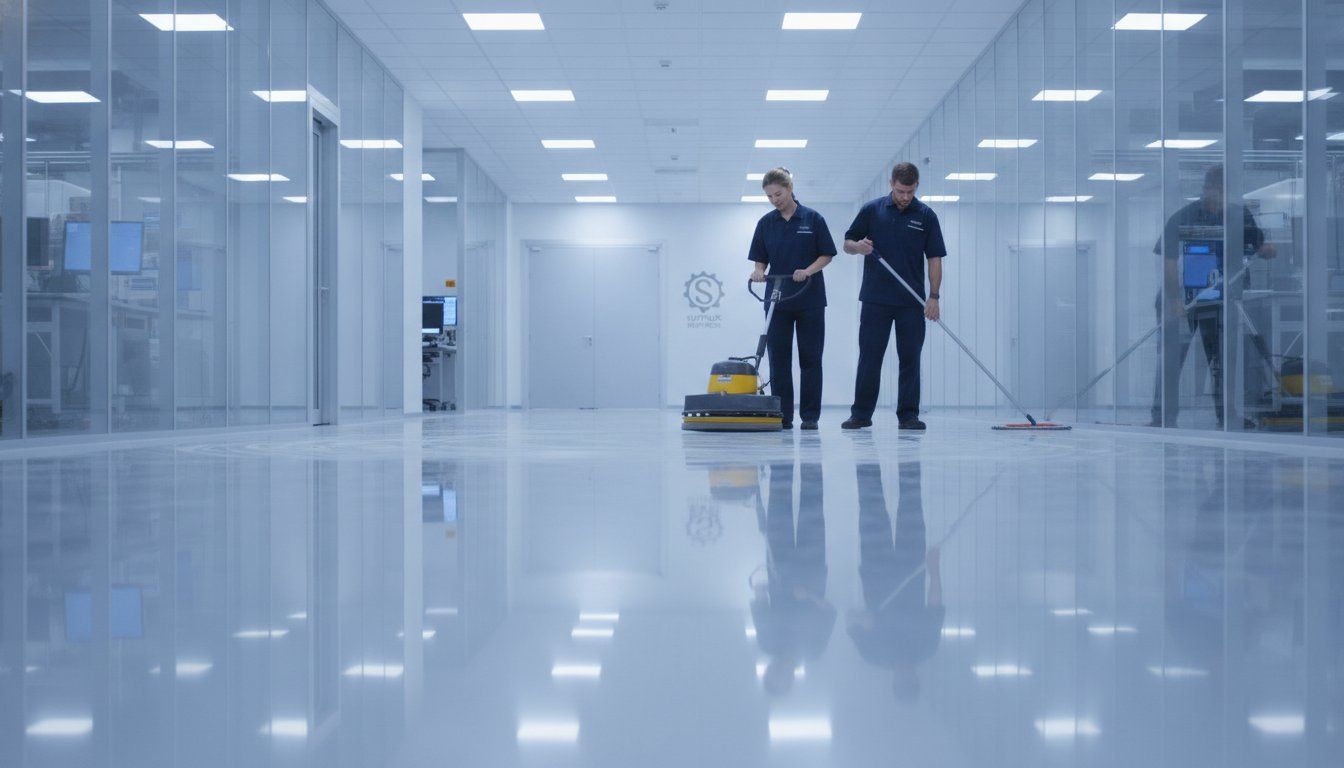
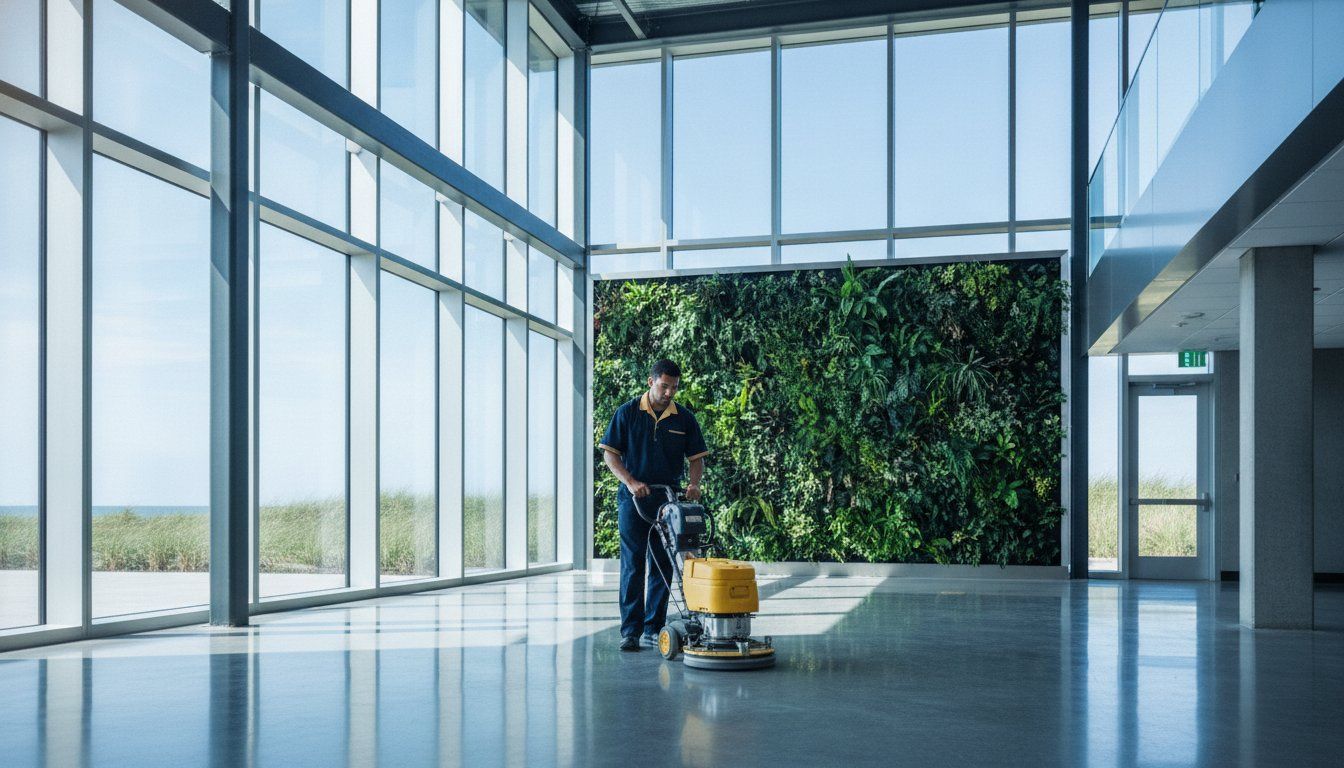
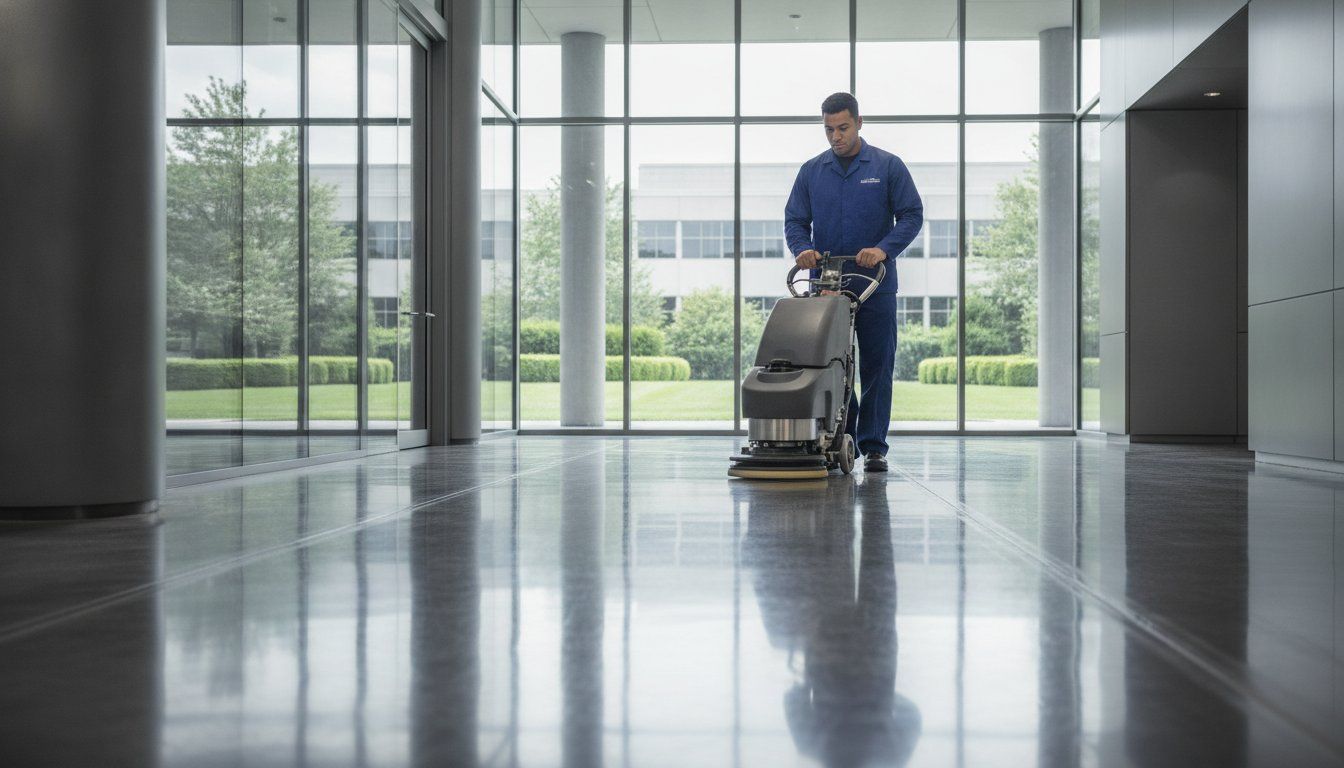
Interim maintenance restores the floor's aesthetic and structural integrity. Buffing operates at lower speeds, usually between 175 and 350 RPM, to remove scuffs and level the finish. High-speed burnishing, reaching 1500 to 2500 RPM, creates the "wet look" by heat-fusing the finish into a harder, more durable surface. Selection of the correct pad is vital. White or tan pads are standard for polishing, while darker, more aggressive pads are reserved for deep scrubbing or stripping procedures.
Step 4 involves periodic restoration. This phase includes deep scrubbing and top-coating to replenish the base material. Adhering to these rigorous protocols ensures compliance with OSHA General Requirements for Walking-Working Surfaces, which mandates that floors be maintained in a clean and dry condition to prevent workplace hazards. This systematic approach reduces long-term MRO supplies costs while supporting industrial excellence. Facilities looking to optimize their supply chain can review our latest technical updates via our resource feed to maintain consistent results.
Transitioning to Professional Restoration and Safety Standards
Professional floor maintenance is a critical component of industrial risk management. Neglected surfaces account for a high percentage of workplace injuries. According to the Bureau of Labor Statistics, slips, trips, and falls resulted in 805 fatalities in 2020. Adhering to standards set by ISSA, the worldwide cleaning industry association, ensures that your facility remains compliant with OSHA safety regulations. It's a proactive approach that reduces liability and protects operational uptime.
Identifying When Your Suffolk Facility Needs Stripping and Waxing
Maintenance teams must recognize when routine cleaning doesn't suffice. Visual indicators include a distinct yellowing of the floor surface, deep scratching that penetrates the protective layers, or finish-through where the raw substrate is exposed. When these signs appear, a full restoration is necessary. This technical process involves chemical stripping to emulsify and remove old, contaminated finish layers. It clears away embedded grit that standard mopping can't reach, preparing the surface for a fresh, high-durability application.
Advance Industrial leverages 40 years of experience across Long Island to develop maintenance schedules tailored to specific industrial environments. We act as a single-source provider, treating floor maintenance as a strategic partnership rather than a one-time service. This long-term perspective ensures that your facility avoids the 20% to 30% increase in repair costs typically associated with deferred maintenance. Our team coordinates with your plant managers to align work with production cycles, ensuring uninterrupted productivity. By maintaining high-performance standards, we protect both your capital investment and your workforce safety. This commitment to asset protection should also extend to your fleet; you can explore Collision Repair at Ariel Auto Collision to ensure your vehicles meet the same rigorous safety and professional standards.
Optimize Your Facility’s Operational Standards
Sustaining a high-performance environment requires a shift from reactive cleaning to a proactive, engineered strategy. Implementing a structured 4-step protocol ensures your surfaces meet safety standards while maximizing the lifespan of your physical assets. A rigorous approach to floor maintenance reduces operational downtime and maintains the professional environment required for Nassau and Suffolk County businesses. Advance Industrial Maintenance brings over 40 years of experience to every facility we service. Our teams utilize specialized industrial equipment designed for diverse floor types and high-traffic environments. We operate as a single-source provider, delivering the technical precision needed to sustain your facility’s infrastructure. Reliability in maintenance translates directly to uninterrupted productivity and long-term cost control for your operation. Every square foot of your facility represents a significant investment that deserves professional oversight. You don't have to manage these complex requirements alone when a seasoned partner is available to streamline the process. We're ready to help you achieve a cleaner, safer workspace today. For those seeking similar high-standard care in other regions, Smart Cleaning Service House Cleaning Seattle and Eastside provides professional residential and commercial cleaning solutions throughout the Seattle and Eastside areas.
Request a Professional Floor Assessment from Advance Industrial Maintenance to ensure your facility remains a safe and productive environment for years to come.
Frequently Asked Questions
How often should commercial floors in Long Island be waxed?
Commercial floors in Long Island require waxing 2 to 4 times per year based on foot traffic and environmental factors. High-traffic retail corridors or healthcare facilities often follow a quarterly schedule to protect against abrasive winter salt and sand. Low-traffic industrial zones might extend this cycle to 12 or 18 months. Regular waxing maintains the protective seal and ensures your facility remains operational without costly surface degradation.
What is the difference between floor cleaning and floor maintenance?
Floor cleaning focuses on the daily removal of surface soil while floor maintenance encompasses a strategic program to preserve the material's structural integrity. Cleaning involves routine sweeping and mopping to address immediate debris. Maintenance includes technical processes like high-speed burnishing and chemical stripping. A structured maintenance plan can extend the lifespan of commercial flooring by 5 to 10 years compared to simple cleaning routines.
Can professional floor maintenance reduce my business insurance premiums?
Professional floor maintenance can lead to lower business insurance premiums by reducing the risk of slip and fall incidents. Data from the National Floor Safety Institute shows these accidents cause over 8 million emergency room visits every year. Insurance providers often provide premium credits to facilities that document consistent use of UL listed slip resistant coatings. Maintaining these safety standards proves a proactive approach to risk management and workplace safety.
What equipment is essential for a basic commercial floor care program?
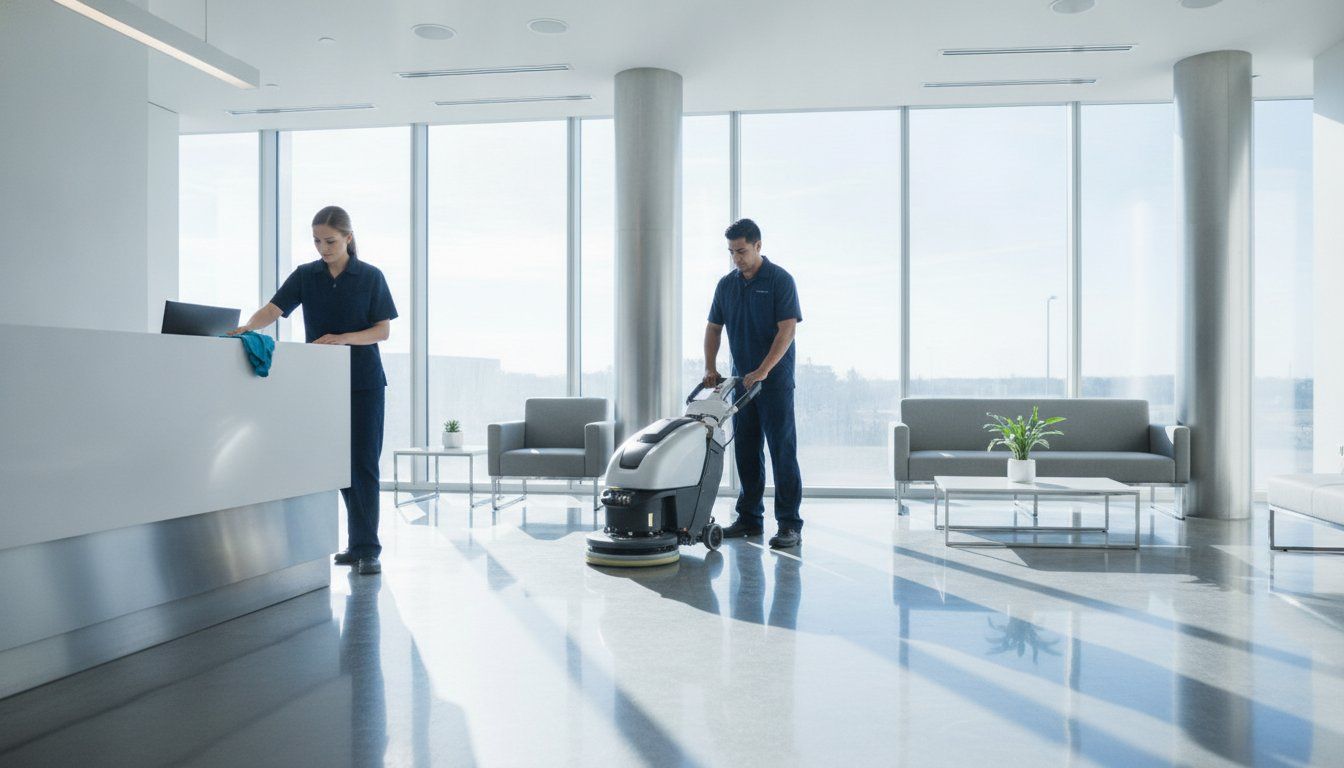
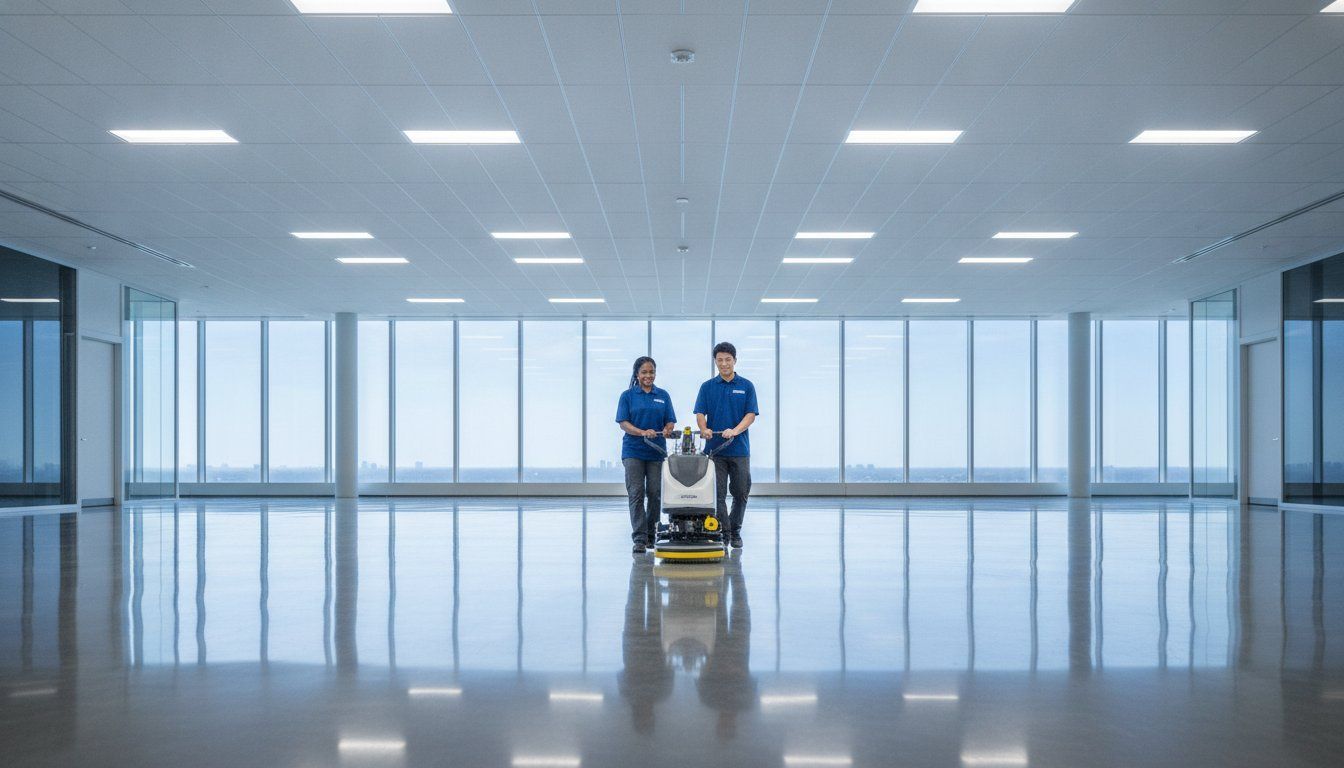
Essential equipment for a commercial floor care program includes an automatic scrubber, a high-speed burnisher, and a wet or dry industrial vacuum. Automatic scrubbers improve cleaning efficiency by 400 percent over manual methods in facilities larger than 5,000 square feet. You'll also need specific accessories like microfiber applicators and grit-specific stripping pads. Utilizing professional-grade machinery reduces labor costs and ensures the technical precision required for heavy-duty industrial environments.