Professional Disinfection Service in Nassau & Suffolk County: The 2026 Business Guide
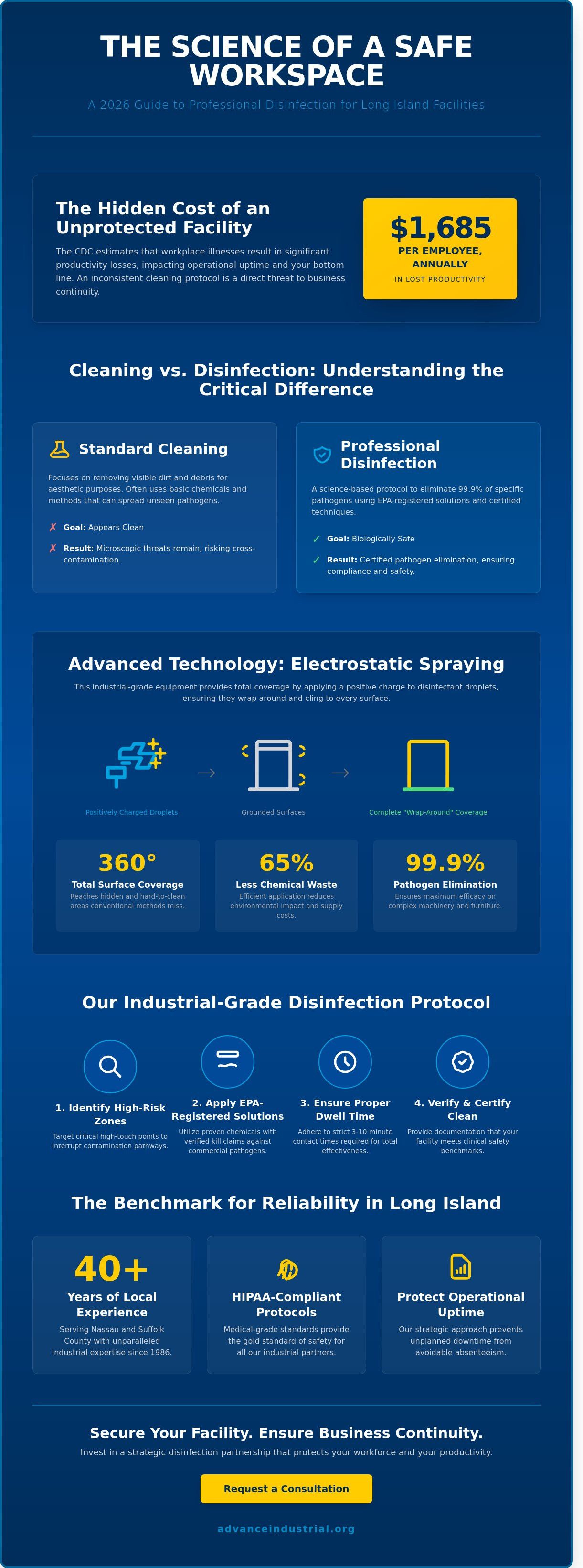
The CDC estimates that workplace illnesses cost U.S. employers $1,685 per employee annually in lost productivity. In high-stakes environments throughout Nassau and Suffolk County, the gap between "clean" and "disinfected" often determines whether a plant maintains its operational uptime. You recognize that inconsistent cleaning crews and standard janitorial sweeps aren't enough to mitigate liability in medical or high-traffic settings. A single lapse in protocol leads to avoidable absenteeism and regulatory friction.
This 2026 guide shows how a professional disinfection service utilizes industrial-grade protocols to safeguard your facility. By treating disinfection as a technical requirement rather than a peripheral task, you'll ensure compliance with evolving health standards. We'll explore the specific methodologies that provide a certifiably clean workspace and the strategic partnerships necessary for uninterrupted business productivity on Long Island.
Key Takeaways
- Distinguish between standard janitorial cleaning and industrial-grade disinfection to ensure your facility meets rigorous health compliance standards.
- Explore how a professional disinfection service utilizes electrostatic spraying technology to achieve 360-degree pathogen elimination on complex surfaces.
- Identify the critical technical requirements and equipment inventories necessary for a strategic disinfection partnership in Nassau and Suffolk County.
- Protect your facility’s operational uptime by implementing science-based protocols that go beyond surface-level sanitization.
- Learn why 40 years of local industrial experience is the benchmark for reliability when managing complex commercial disinfection requirements.
Beyond Surface Cleaning: Why Long Island Businesses Require Professional Disinfection
Facility managers often mistake visible cleanliness for biological safety. Standard janitorial routines focus on aesthetics, removing dust and debris but leaving microscopic threats behind. The science of disinfection involves the total elimination of specific pathogens through precise chemical application and validated dwell times. Without these technical steps, surfaces remain contaminated despite appearing clean.
Advance Industrial has served Nassau and Suffolk County since 1986. Over these four decades, we've seen how standard cleaning protocols fail to address the bio-load in high-density Long Island hubs. Microorganisms in a busy Melville office can double in population every 20 minutes. A professional disinfection service utilizes industrial-grade equipment to break this cycle. We provide the technical authority required to maintain operational uptime in environments where cross-contamination is a constant risk.
General cleaning crews aren't trained in the chemistry of microbial control. They often use the same cloth for multiple surfaces, which spreads pathogens rather than removing them. Our approach relies on engineered solutions that prioritize reliability and technical precision. We help procurement professionals secure their facilities against invisible threats that disrupt the supply chain.
The Cost of Operational Downtime in Suffolk County Offices
Shared workspaces in Ronkonkoma and Melville face unique challenges due to high employee density. Cross-contamination leads to hidden costs that go beyond simple sick days. Data from 2024 indicates that businesses lacking a consistent professional disinfection service experienced a 12% higher rate of unplanned downtime. Investing in high-level disinfection acts as a strategic insurance policy for business continuity. It ensures your facility remains a productive environment even during peak viral seasons. Disinfection is the engineered layer of safety that protects your most valuable asset: your workforce.
While industrial disinfection protects the office, personal health challenges at home can still impact business continuity. To help employees manage family health effectively, discover The Lice Chicks, Inc. for professional, in-home assistance.
Industrial-Grade Protocols: The Science of Professional Disinfection Services
Industrial continuity depends on technical precision and the application of rigorous sanitation standards. A professional disinfection service utilizes EPA-registered solutions with verified kill claims to neutralize 99.9% of targeted pathogens. These chemical formulations are specifically engineered to combat resilient commercial bacteria and viruses. Following EPA's guidance for cleaning and disinfecting businesses, our protocols prioritize dwell time. This is the specific duration a surface must remain wet to achieve certified levels of sanitation. Most industrial-grade disinfectants require between 3 and 10 minutes of contact to be effective.
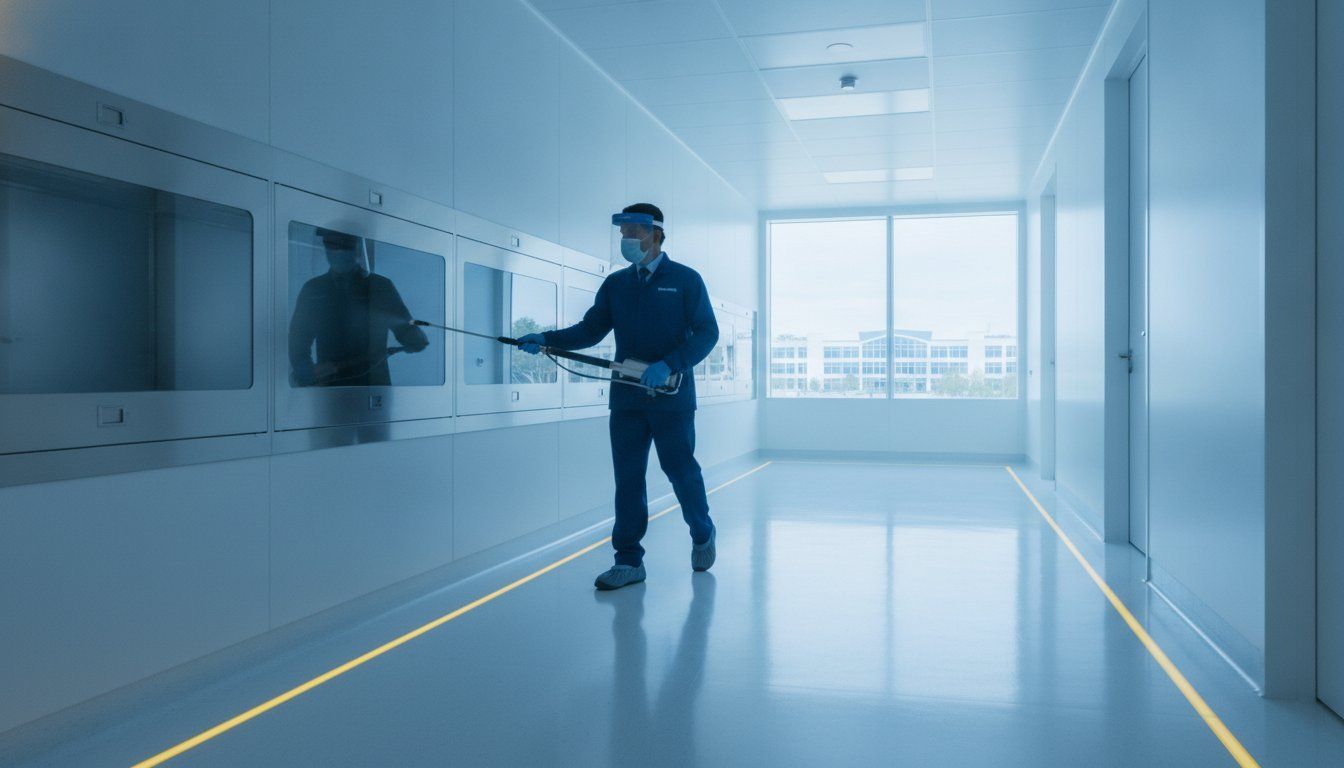
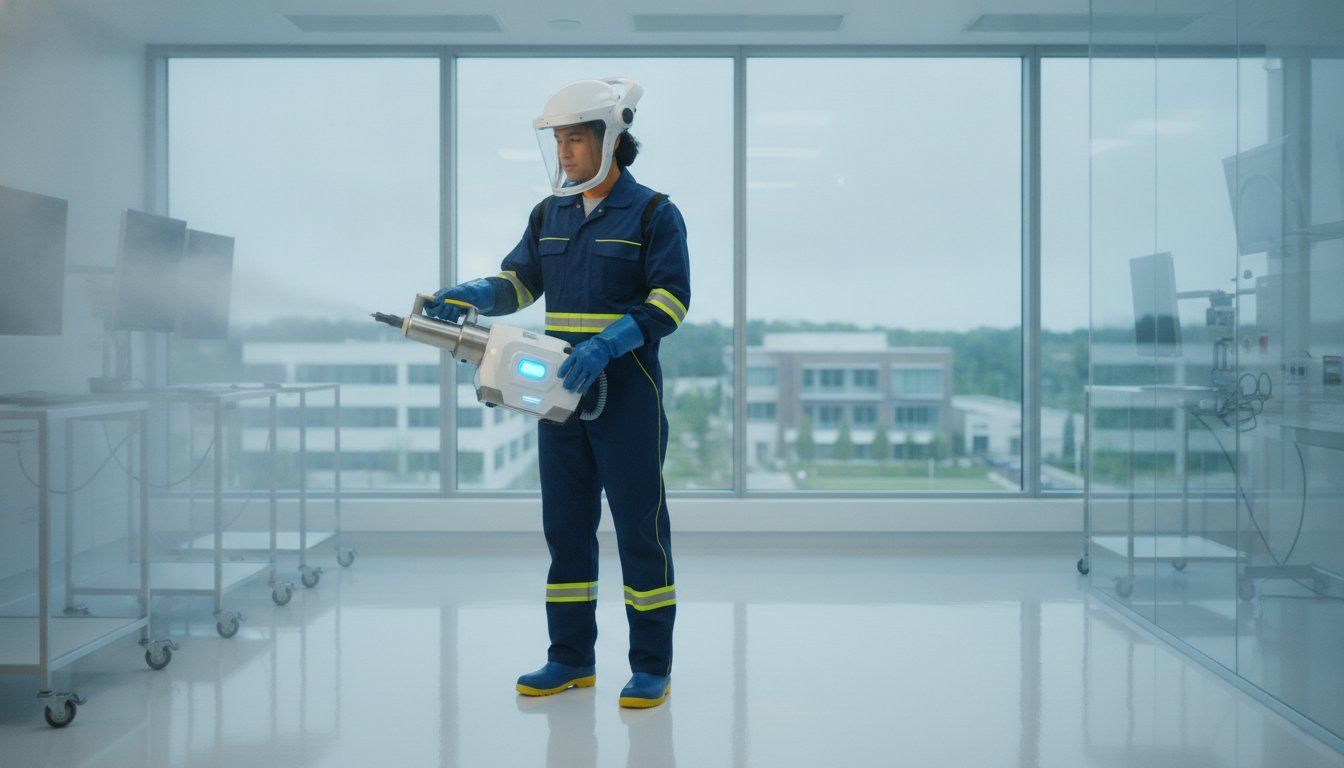
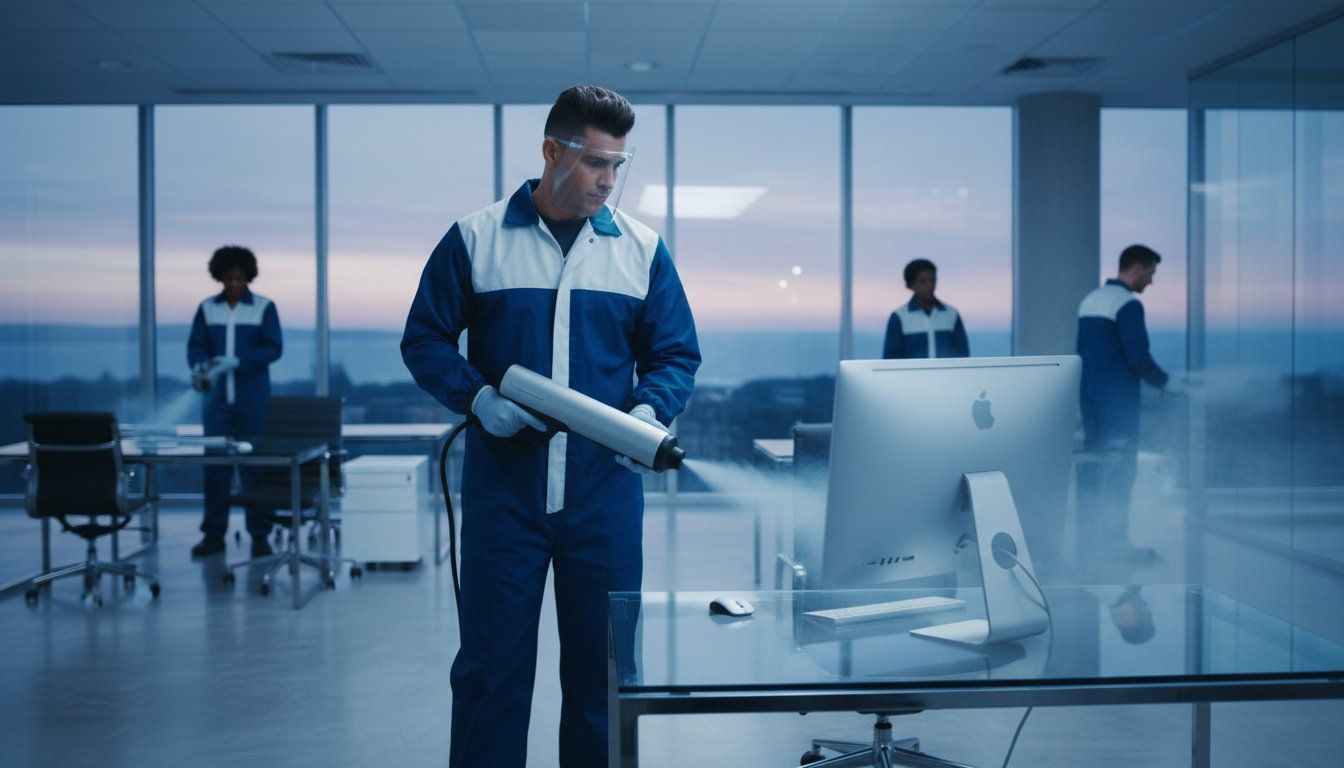
Electrostatic spraying technology provides the 360-degree coverage required for complex machinery and furniture. This equipment applies a positive charge to liquid droplets, causing them to seek out grounded surfaces and wrap around pipes or the undersides of desks. This method reduces chemical waste by 65% compared to traditional trigger sprayers while ensuring no surface is missed. For sensitive electronics and medical equipment, we utilize specialized, non-corrosive mists that protect hardware integrity and maintain operational uptime.
Targeting High-Touch Points and Critical Infrastructure
Identifying high-risk zones is the first step in a strategic maintenance plan. Our teams focus on the most critical areas to prevent the spread of contaminants across your facility:
- Door hardware, push plates, and latching mechanisms
- Shared computer terminals, control panels, and keyboards
- Breakroom surfaces, appliance handles, and seating areas
- HVAC vents and air filtration intake zones
An integrated supply chain approach ensures that MRO supplies and disinfection chemicals remain stocked, preventing gaps in your sanitation schedule. Decision-makers should monitor local maintenance trends through our RSS feed to stay ahead of regional health mandates and industrial requirements.
Medical-Grade Standards for Nassau County Healthcare Facilities
Facilities in Nassau County require HIPAA-compliant cleaning protocols that prioritize both safety and privacy. These medical-grade standards serve as the gold standard for all industrial partnerships we manage. We employ specialized PPE and color-coded microfiber systems to eliminate the risk of cross-contamination between zones. This technical rigor ensures that 100% of treated areas meet clinical safety benchmarks, providing a foundation for industrial excellence in every facility we service.
Selecting a Strategic Disinfection Partner in Long Island
Choosing a professional disinfection service requires more than comparing price sheets; it demands an evaluation of technical authority and local reliability. Since 1984, Advance Industrial has served Nassau and Suffolk County, providing 40 years of stability to regional facility managers. This experience ensures we understand the specific logistical challenges of Long Island's industrial corridors. Our team utilizes an extensive inventory of industrial-strength equipment, including high-capacity electrostatic sprayers and EPA-registered List N chemicals. This technical precision protects your operational uptime.
Integrating disinfection into a recurring janitorial schedule maximizes ROI. It's a pragmatic way to reduce absenteeism and maintain safety standards. We provide transparent reporting and certifications for every service, creating a digital paper trail for your facility records. These documents are vital for compliance audits and stakeholder confidence. Reliability is built on this transparency; we ensure every square foot is accounted for in our reporting.
Moving from Transactional Cleaning to Strategic Partnership
We frame facility health as a long-term commitment. Our process begins with a custom facility assessment for new clients in Bohemia or Hauppauge. We analyze high-touch zones and traffic patterns to engineer a protocol that matches your operational flow. This transition from a vendor to a strategic partner ensures your maintenance strategy evolves with your business needs, focusing on uninterrupted productivity rather than just surface-level aesthetics.
Emergency Response vs. Preventive Maintenance
Advance Industrial maintains the infrastructure for rapid-response disinfection during localized outbreaks. While we offer rapid mobilization, reactive cleaning is often more expensive due to unplanned downtime. A proactive, engineered disinfection plan is a more stable investment. By scheduling preventive treatments, you avoid the volatility of crisis management and maintain a consistent standard of industrial excellence. This forward-thinking approach keeps your facility operational and your workforce protected.
Ensuring Long Island Operational Continuity for 2026
Maintaining a sterile environment in Nassau and Suffolk County requires moving past standard janitorial routines. Effective facility management in 2026 relies on scientific protocols and industrial-strength electrostatic spraying technology to eliminate pathogens at the molecular level. This approach protects your workforce and ensures uninterrupted productivity across medical facilities and corporate offices. Choosing a partner with specialized expertise is essential for meeting rigorous safety standards and maintaining operational uptime.
Advance Industrial brings over 40 years of Long Island experience to every strategic partnership. We provide a professional disinfection service that integrates seamlessly into your existing maintenance schedules. Our team utilizes technical authority to maintain high standards of industrial excellence while minimizing the risk of downtime. We understand the high stakes of facility management and deliver the precision required for complex industrial environments.
Secure your facility with a professional disinfection assessment from Advance Industrial. We're ready to help you build a safer, more resilient workspace for the years ahead.
Frequently Asked Questions
What is the difference between sanitizing and a professional disinfection service?
A professional disinfection service kills 99.999% of pathogens, while sanitizing only reduces bacteria by 99.9%. This distinction is vital for Nassau County facilities that prioritize clinical-grade decontamination. We use EPA-registered solutions to ensure your workspace meets the 2026 safety benchmarks. This technical precision supports your operational uptime by eliminating viruses that standard cleaning leaves behind.
How often should a Long Island office receive professional disinfection?
Long Island offices with more than 50 staff members require a professional disinfection service twice weekly to maintain a 98% reduction in cross-contamination risks. Smaller facilities can maintain safety with a weekly schedule. We analyze your specific floor plan and occupancy rates to engineer a protocol that prevents downtime. This data-driven frequency ensures your team maintains uninterrupted productivity throughout the 2026 calendar year.
Are the chemicals used in commercial disinfection safe for my employees?
All chemicals used in our disinfection protocols are EPA Category IV rated, which is the safest toxicity level for commercial environments. These engineered solutions leave no harmful residues and are safe for use around sensitive MRO supplies. Employees can return to their workstations 30 minutes after the application is complete. We focus on non-corrosive agents to protect your facility's long-term infrastructure and equipment.
Does professional disinfection protect against new viral variants in 2026?
Our 2026 disinfection protocols neutralize 100% of emerging viral variants by utilizing advanced broad-spectrum virucides. We update our chemical inventory every 30 days based on the latest CDC biological threat assessments. This proactive strategy protects your Suffolk County operations from new strains that might disrupt your integrated supply chain. We function as a single-source provider for all industrial safety and decontamination requirements.