Post-Construction Cleaning Long Island: Technical Standards for Facility Handover
What if the final barrier to your grand opening isn't the final inspection, but the invisible silica dust lingering in your ventilation system? You've invested heavily in new flooring and custom glass, so it's frustrating to see adhesive residue or fine grit threatening those assets as deadlines approach. A successful handover requires more than a standard sweep; it demands a technical bridge between construction and operation.
This guide outlines the industrial-strength protocols for post construction cleaning Long Island that ensure your facility is safe, operational, and professional. You'll learn how to manage technical cleaning phases, meet OSHA dust control standards, and protect your investment during the critical transition. We'll preview the three-phase cleaning process and the specialized equipment needed to move your staff or tenants into a pristine environment without delay.
Key Takeaways
- Understand why facility handover is a technical industrial process rather than a standard janitorial task, requiring specialized dust extraction and debris management.
- Implement a rigorous three-phase approach to post construction cleaning Long Island that transitions sites from rough debris removal to surgical sanitization.
- Protect high-value assets like new flooring and HVAC systems by utilizing technical standards that prevent permanent damage and ensure immediate operational readiness.
- Identify the critical requirements for a seasoned partner to navigate complex logistics and liability concerns during tight commercial handover deadlines.
Table of Contents
Technical Standards for Post-Construction Cleaning on Long Island
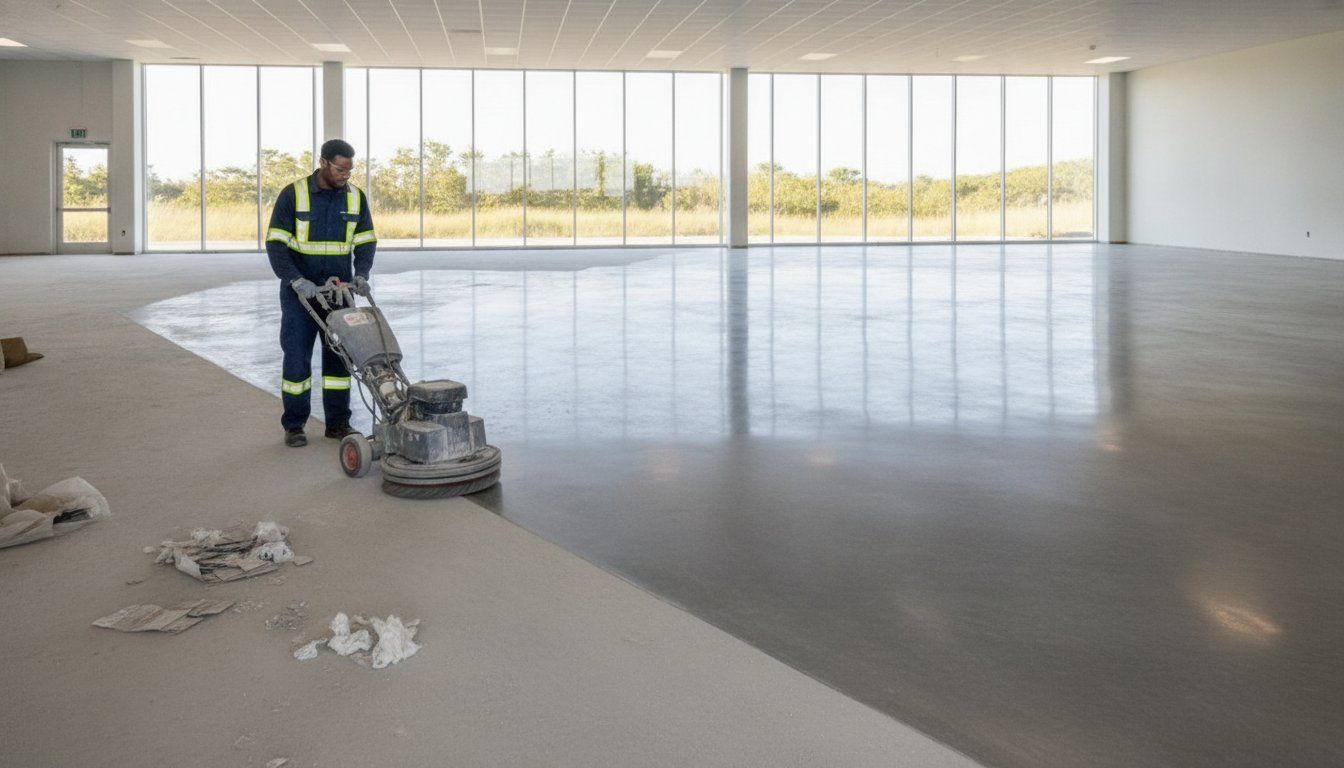
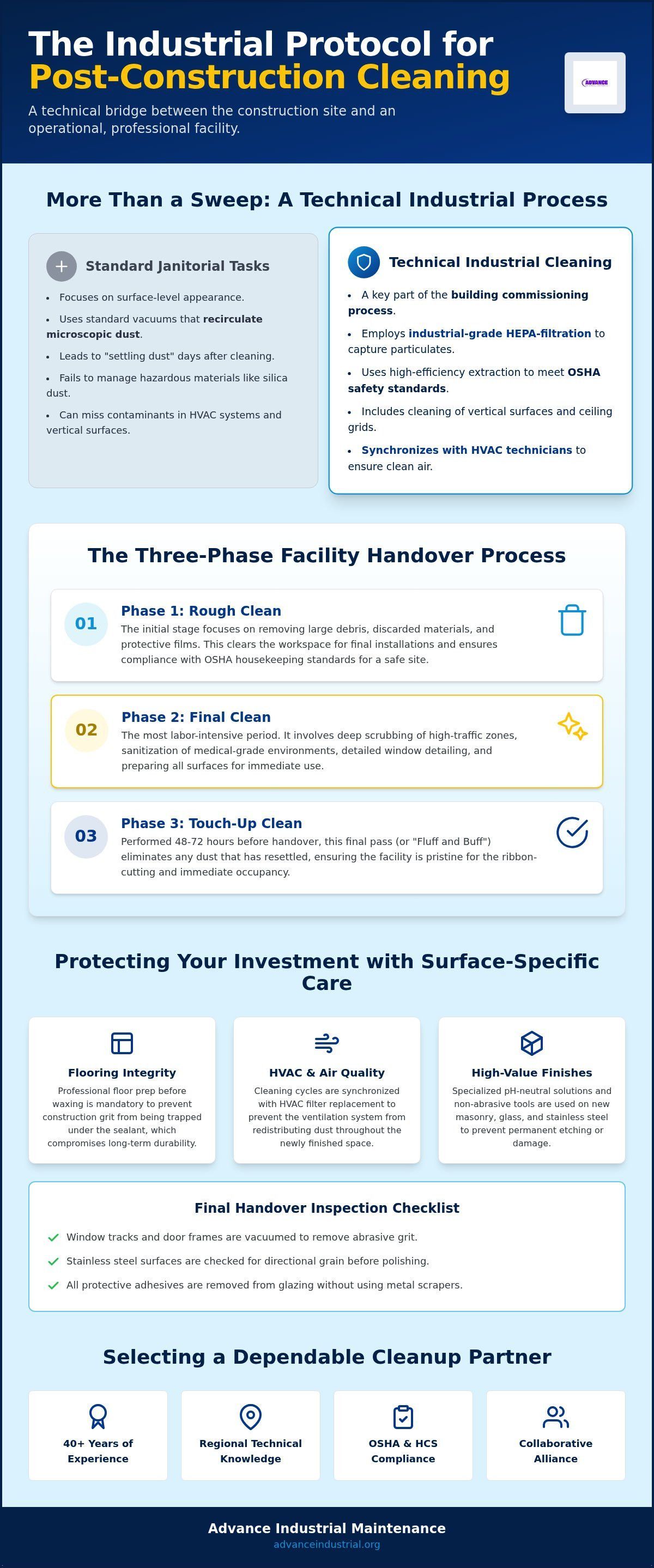
Effective post construction cleaning Long Island is a multi-stage industrial process rather than a singular janitorial event. It serves as a critical component of the building commissioning process, ensuring that the facility's physical environment aligns with its engineered design. On Long Island, commercial builds face unique challenges where high-density construction dust interacts with coastal humidity. This combination often causes particulates to adhere to new finishes, requiring specialized solvent-based removal and mechanical extraction rather than simple dusting.
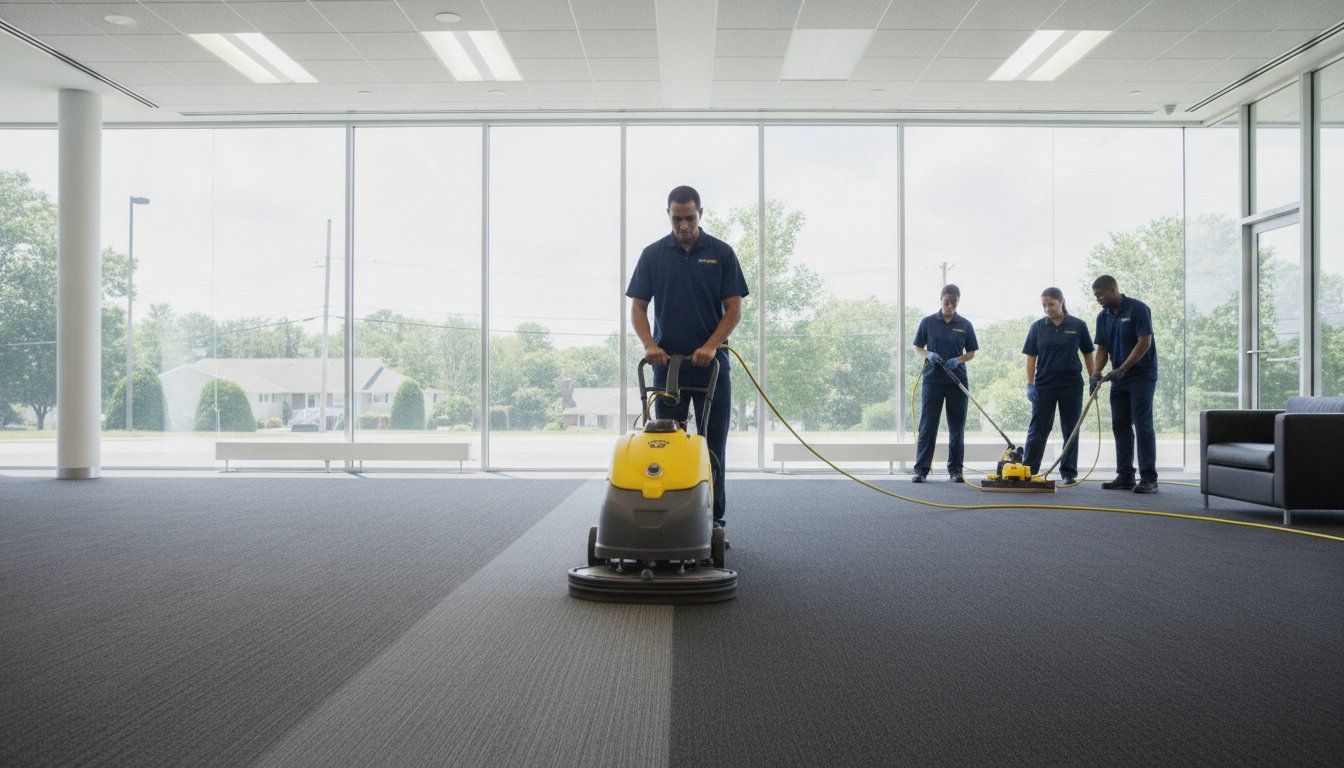
Industrial-grade HEPA-filtration is the baseline requirement for these projects. Standard vacuums often recirculate microscopic particulates that can infiltrate and damage sensitive HVAC components. Silica dust, a hazardous byproduct of concrete and masonry work, requires professional high-efficiency extraction to meet strict safety standards and prevent long-term respiratory risks for future occupants.
Managing Industrial Debris and Air Quality
The Three-Phase Approach to Commercial Facility Handover
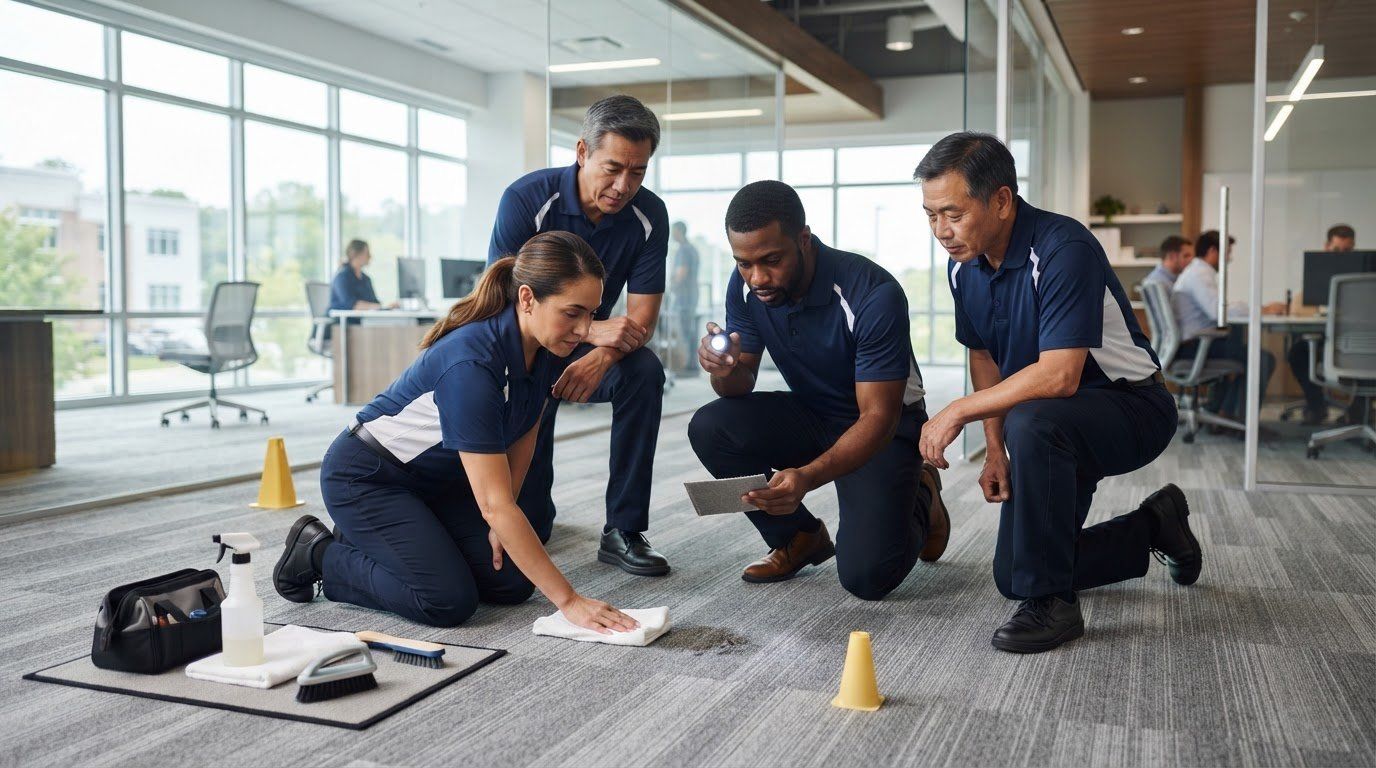
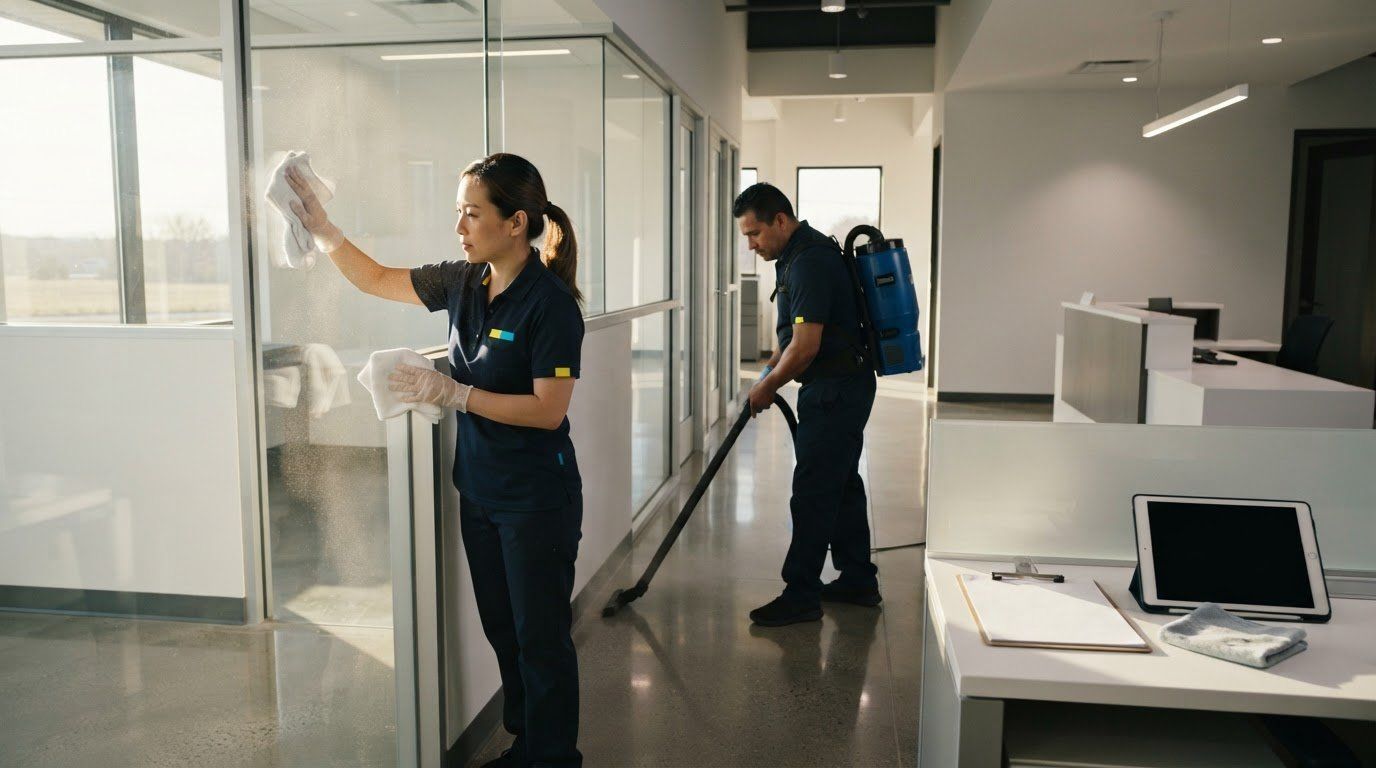
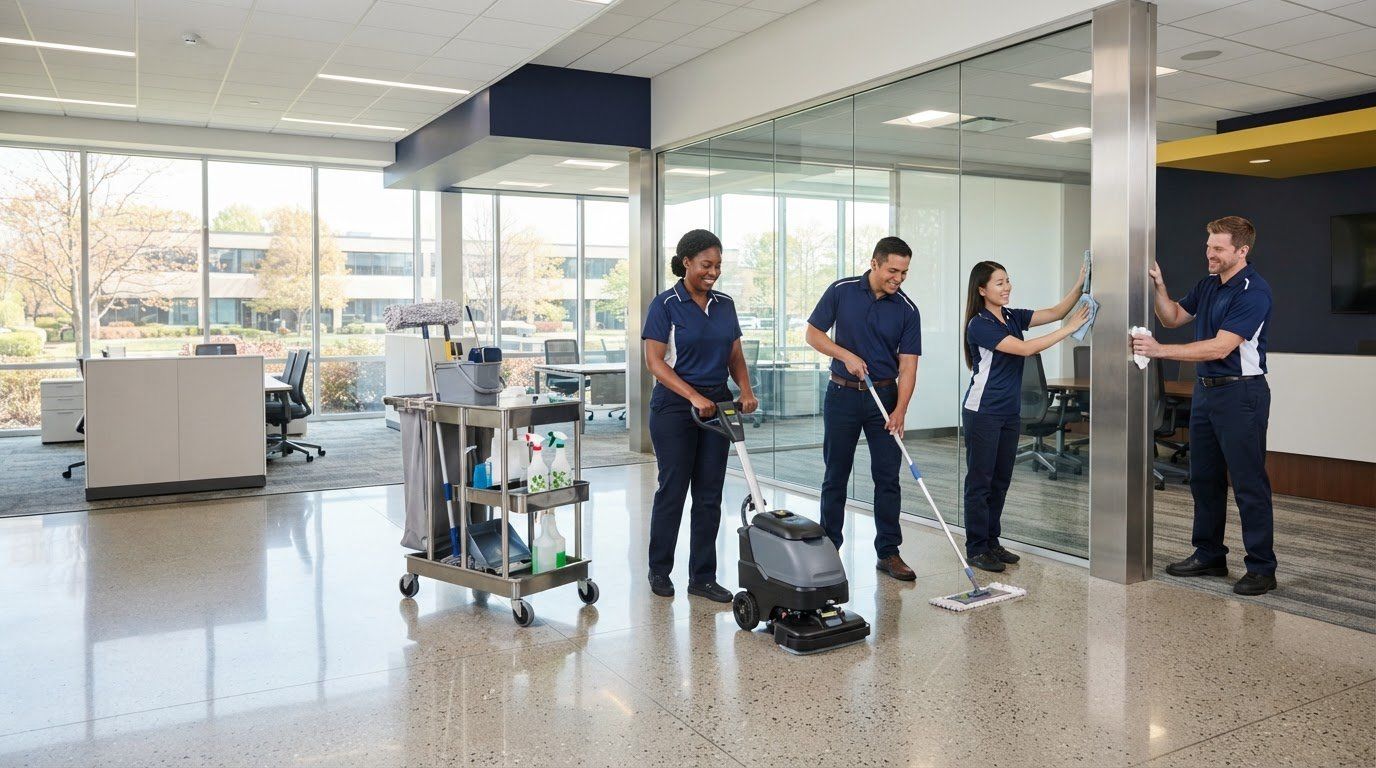
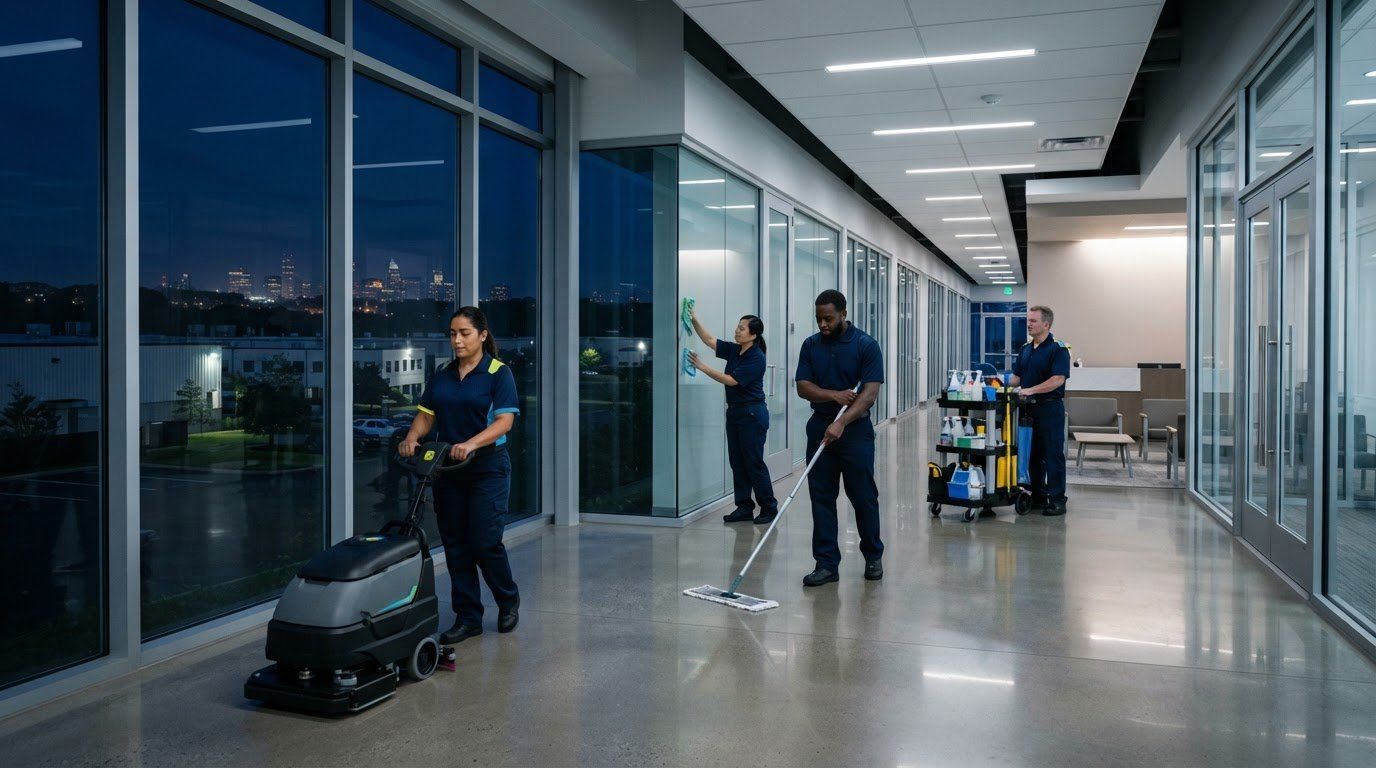
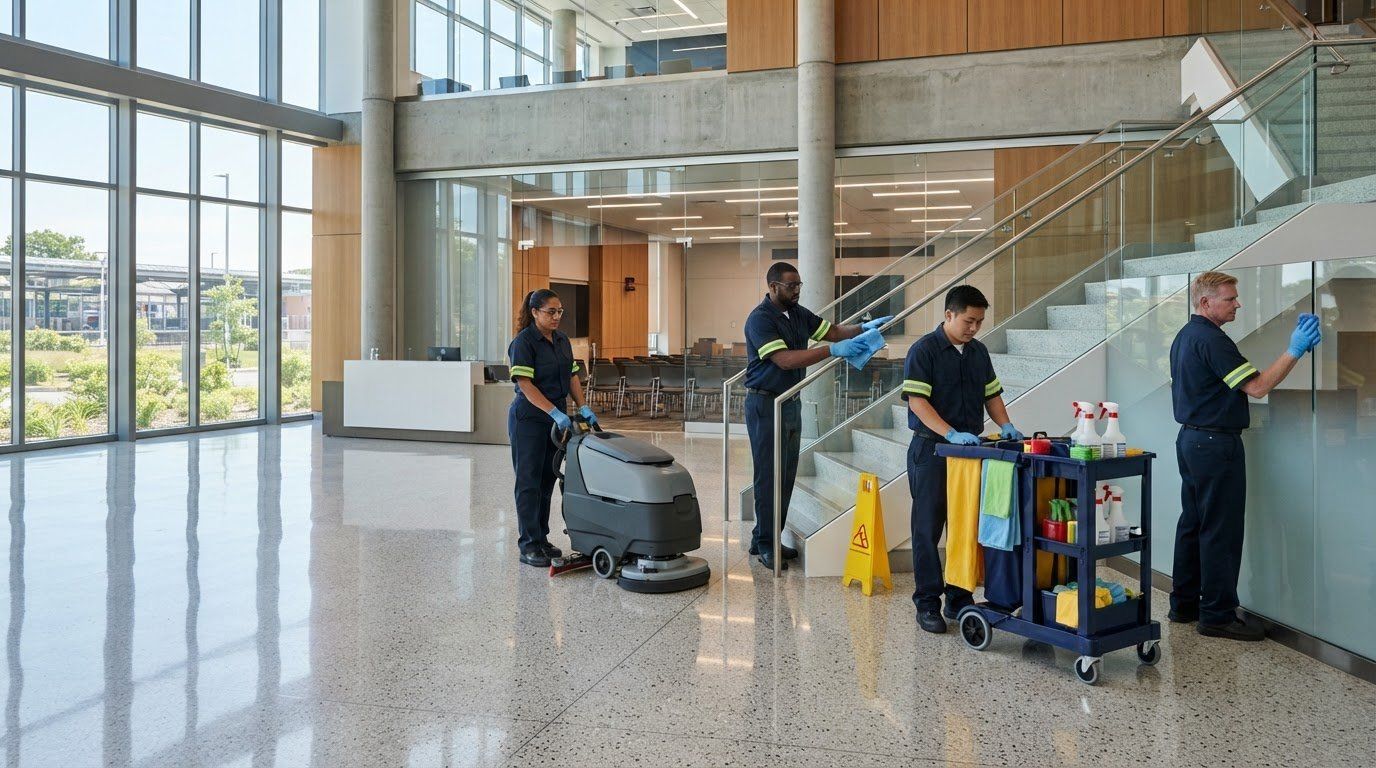
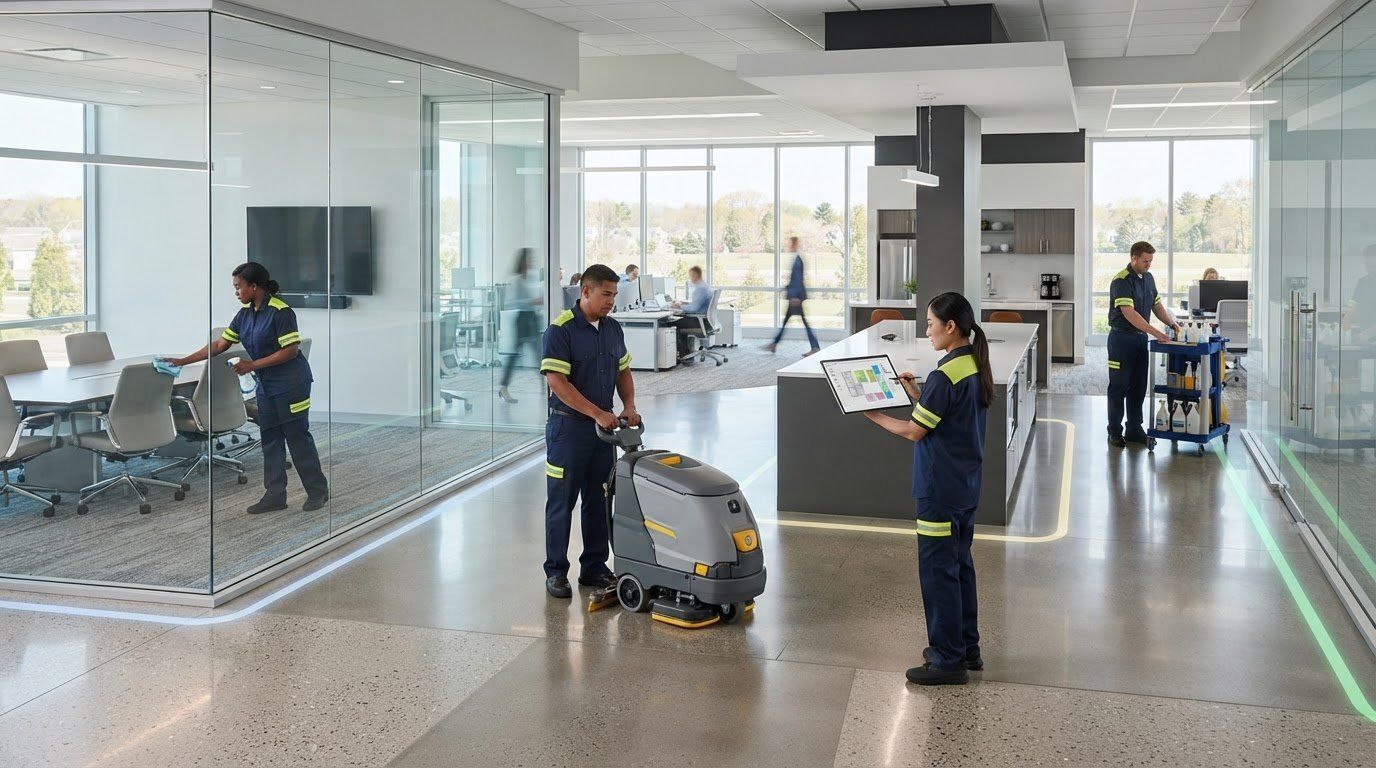
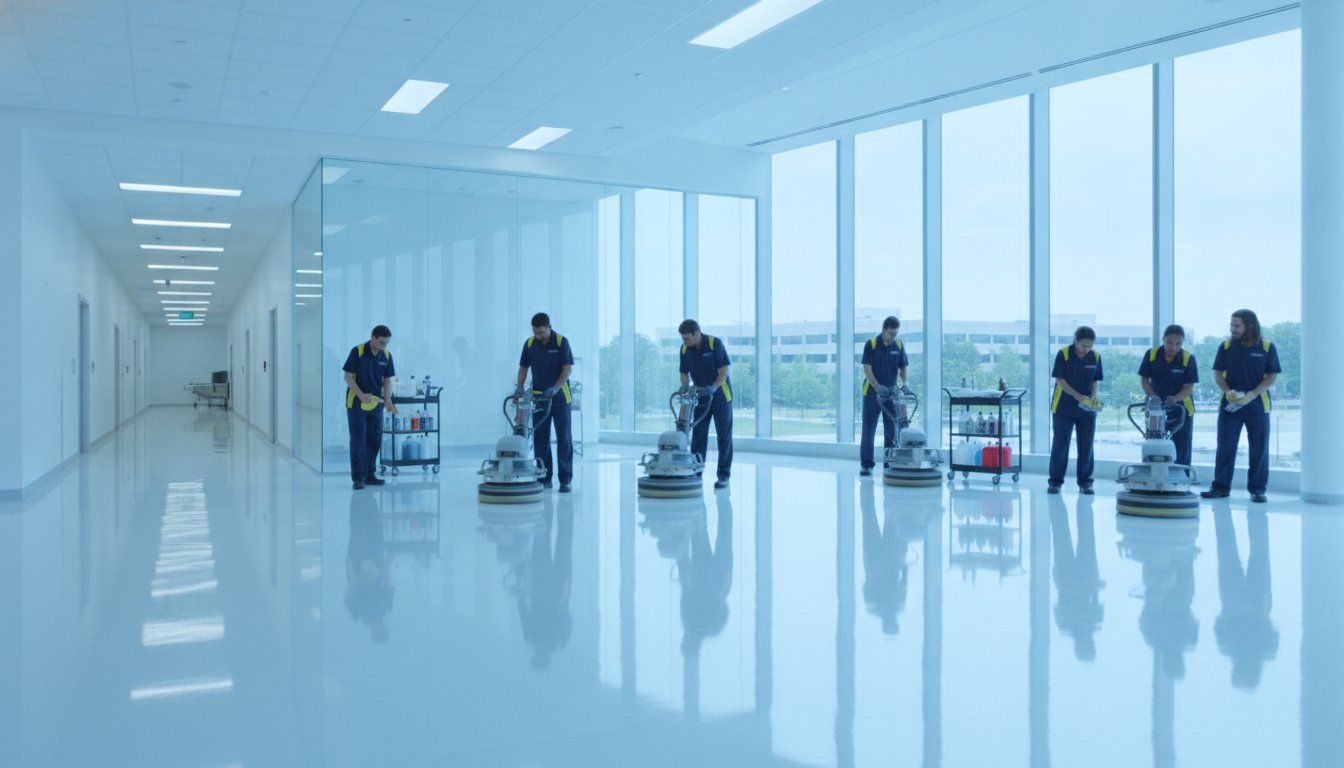
Successful project handovers on Long Island depend on a systematic three-phase workflow that mirrors the complexity of the build itself. The first stage, the Rough Clean, focuses on removing large debris, discarded materials, and protective films from Nassau County job sites. This phase ensures strict compliance with OSHA housekeeping standards, clearing the workspace for final finish installations. The Final Clean follows as the most labor-intensive period. It involves deep scrubbing of high-traffic zones, sanitization of medical-grade environments, and detailed window detailing. This is the core of effective post construction cleaning Long Island. Finally, the Touch-Up or "Fluff and Buff" pass occurs 48 to 72 hours before the ribbon-cutting to eliminate any resettled dust. You can monitor evolving technical requirements through our industrial maintenance updates.
Surface-Specific Care: Protecting Your Property Investment
- Vacuum window tracks and door frames where abrasive grit accumulates.
- Check stainless steel surfaces for directional grain before applying protective polishes.
- Ensure all protective adhesives are removed from glazing without the use of metal scrapers.
For facility managers overseeing high-stakes transitions, subscribing to our maintenance standards feed provides the necessary technical insights for a seamless handover.
Selecting a Dependable Partner for Long Island Cleanup
Selecting a partner for post construction cleaning Long Island requires evaluating long-term stability and regional technical knowledge. With over 40 years of experience, a seasoned provider understands the logistical constraints of Bohemia, Melville, and Hauppauge commercial hubs. This expertise ensures that project deadlines are met without compromising operational continuity. We view these interactions as high-level collaborative alliances rather than simple vendor transactions, focusing on the long-term success of the facility.
Reliability extends to regulatory compliance and safety. A dependable partner strictly adheres to the OSHA Hazard Communication Standard (HCS), ensuring all chemical agents used on new finishes are documented and safe for immediate occupancy. This technical rigor facilitates a seamless transition from a construction site to a functional workspace. Once the handover is complete, this foundational work naturally integrates into recurring janitorial services to maintain facility health and asset value.
Risk Mitigation and Operational Readiness
Transitioning a commercial site from a high-liability construction zone to a high-performance operational facility requires technical precision. Adopting a rigorous three-phase approach ensures that new finishes are protected and air quality standards are met through HEPA-filtration. With 40+ years of commercial cleaning expertise, we provide the industrial-strength solutions necessary for a seamless handover. Our professional staff specializes in project-based post construction cleaning Long Island across both Suffolk and Nassau Counties. We don't just sweep floors; we focus on long-term asset protection and immediate operational readiness. We serve as a seasoned partner to ensure your building passes final inspections and is safe for staff and tenants alike.
Request a Technical Walk-through for Your Long Island Project to verify your site's compliance with these industrial standards. We look forward to supporting your successful facility launch.
Frequently Asked Questions
What is the difference between standard commercial cleaning and post-construction cleaning?
How soon after construction finishes can the final cleaning begin in Long Island facilities?
Do you provide post-construction cleaning for medical facilities in Nassau County?
Commercial Cleaning Services Advance Industrial Maintenance provides specialized cleanup for medical facilities throughout Nassau County. These high-stakes environments demand technical sanitization and disinfection that exceed standard commercial requirements. We utilize our 40 years of industry experience to prepare clinical spaces for immediate use, ensuring that every surface meets the rigorous hygiene standards required for healthcare operations and patient safety.
Why is professional floor stripping and waxing recommended after a construction project?